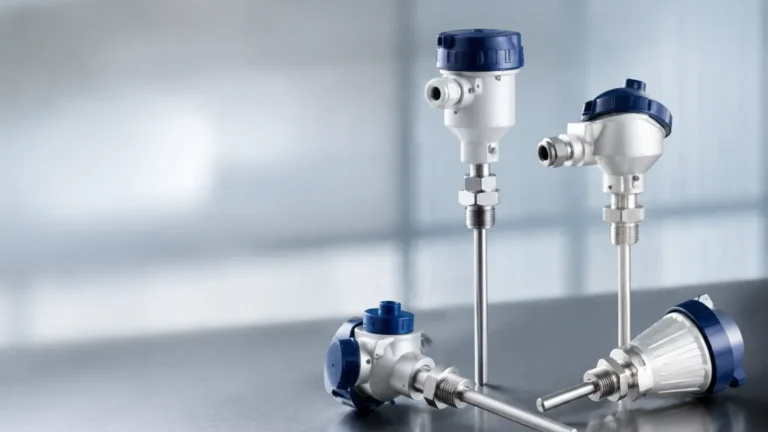
Water Tank Level Monitoring System
Water Tank Level Monitoring System
In industrial and municipal infrastructure, the implementation of a robust water tank level monitoring system is essential for operational efficiency, safety, and resource management. Whether managing fire water reserves, potable water storage, or industrial process fluids, precise level measurement prevents overflow, ensures pump protection, and facilitates automated inventory control. Modern systems have evolved from simple mechanical floats to sophisticated electronic sensing technologies that provide real-time data for local control and remote monitoring via SCADA or IoT platforms.
Selecting the appropriate technology requires an understanding of the physical principles governing different sensors, as well as the specific environmental conditions of the tank. This guide provides a technical overview of the primary measurement technologies, selection criteria, and installation best practices for industrial water tank applications.
Core Measurement Principles
Before selecting a water tank level monitoring system, it is critical to understand the underlying measurement principles. Industrial level instruments generally fall into two categories: non-contact and contact-based measurement.
1. Ultrasonic Level Measurement (Non-Contact)
Ultrasonic sensors operate on the Time-of-Flight (ToF) principle. The sensor, mounted at the top of the tank, emits high-frequency sound pulses toward the water surface. These pulses reflect off the surface and return to the transducer. By measuring the time taken for the pulse to travel to the surface and back, the system calculates the distance based on the speed of sound in air.
* Formula: $Distance = (Speed of Sound \times Time) / 2$
* Advantages: No moving parts, relatively low cost, and no contact with the liquid, which reduces maintenance.
* Limitations: Sensitive to surface foam, heavy steam, and significant temperature fluctuations which can alter the speed of sound.
2. Radar Level Measurement (Non-Contact)
Radar sensors also use the ToF principle but utilize high-frequency electromagnetic waves (typically 26GHz or 80GHz) instead of sound waves. These waves travel at the speed of light and are unaffected by air temperature, pressure, or vacuum conditions.
* 80GHz Radar: Offers a narrower beam angle, allowing for precise measurement even in tanks with internal obstructions like ladders or agitators.
* Advantages: Extremely accurate (up to ±1 mm), works in harsh environments with dust or steam, and provides high reliability.
* Limitations: Higher initial capital expenditure compared to ultrasonic sensors.
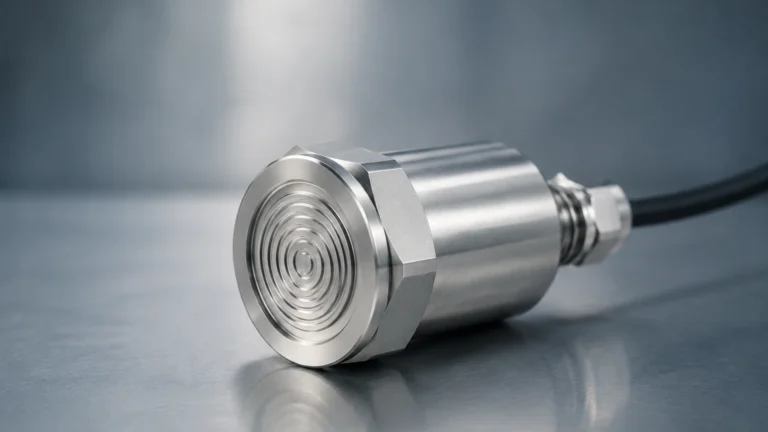
3. Hydrostatic Pressure Measurement (Contact)
Hydrostatic level transmitters measure the pressure exerted by the liquid column above the sensor. For an open-to-atmosphere tank, the pressure is directly proportional to the height of the water.
* Formula: $P = \rho \cdot g \cdot h$ (where $P$ is pressure, $\rho$ is density, $g$ is gravity, and $h$ is height).
* Design: These are typically submersible sensors dropped to the bottom of the tank or externally mounted sensors at the tank base.
* Advantages: Simple to install in deep tanks or reservoirs and highly cost-effective for clean water applications.
4. Magnetic Level Gauges (Contact)
Magnetic level gauges utilize a float containing an internal magnet that moves with the liquid level inside a bypass chamber. This magnet actuates external flags or a transmitter to provide visual and electronic feedback.
* Advantages: Provides a clear local visual indication without requiring power; highly durable for high-pressure or high-temperature industrial water tanks.
* Limitations: Requires a bypass chamber (side-mounting), which may not be feasible for all tank geometries.
Technical Selection Criteria
Choosing the right water tank level monitoring system involves evaluating the physical characteristics of the tank and the operational requirements of the facility. The following table provides a comparison of common technologies used in industrial water management.
Technology Comparison Table
| Technology | Accuracy | Measuring Range | Typical Application | Environmental Suitability |
| :— | :— | :— | :— | :— |
| Ultrasonic | ±0.25% to 0.5% | 0.3m to 15m | Potable water, sumps | Moderate (Avoid foam/steam) |
| 80GHz Radar | ±1 mm to 2 mm | Up to 30m+ | Process water, chemicals | High (Dust, steam, vapors) |
| Hydrostatic | ±0.1% to 0.5% | 1m to 200m | Deep wells, reservoirs | High (Submerged use) |
| Magnetic Gauge | ±5 mm to 10 mm | 0.5m to 6m | Boiler feed, industrial tanks | High (Mechanical durability) |
When reviewing options, engineers should consult a Main Page of a professional manufacturer like Welk to compare specific model specifications against project requirements.
System Architecture and Communication
A complete water tank level monitoring system consists of more than just the sensor. The architecture typically includes three layers:
1. Sensing Layer: The level transmitter (Radar, Ultrasonic, etc.) that generates a signal (4-20mA, RS485 Modbus, or HART).
2. Control and Display Layer: A digital level controller or PLC (Programmable Logic Controller) that receives the signal, displays the value in meters or liters, and manages relay outputs for pump control or alarms.
3. Connectivity Layer: In modern smart factories, data is often transmitted via 4G/5G, LoRaWAN, or Ethernet to a cloud platform or local SCADA system. This allows for remote monitoring on smartphones or centralized control rooms.
Installation Considerations and Best Practices
Proper installation is as critical as selecting the right sensor. Poor placement can lead to false readings or premature equipment failure.
Positioning the Sensor
* Avoid the Inlet: Never install a level sensor directly above or near the water inlet. The turbulence and falling water will cause signal interference and erratic readings.
* Dead Zones (Blocking Distance): Ultrasonic and radar sensors have a "dead zone" immediately below the transducer (typically 0.1m to 0.5m). The sensor must be mounted high enough so that the maximum water level never enters this zone.
* Beam Angle: Ensure the sensor’s signal beam does not hit the tank wall or internal structures like reinforcement struts. A narrower beam angle (common in 80GHz radar) provides more flexibility in tight spaces.
Mounting and Environment
* Stilling Wells: In tanks with high turbulence or surface agitation, installing the sensor inside a stilling well (a vertical pipe) can provide a stable surface for more accurate measurement.
* Venting: For hydrostatic sensors in sealed tanks, ensure the vent tube in the cable is clear to allow for atmospheric pressure compensation. Failure to do so will result in significant errors as weather patterns change.
* Sunlight Protection: For outdoor installations, use a sunshade to prevent the sensor housing from overheating, which can affect the electronics and the speed-of-sound calculations in ultrasonic units.
Common Risks and Limitations
While modern water tank level monitoring systems are highly reliable, certain conditions can compromise performance:
* Foam and Turbulence: Thick foam can absorb ultrasonic signals, leading to a "loss of echo." In such cases, radar or hydrostatic sensors are preferred.
* Condensation: In high-humidity environments, water droplets can form on the transducer face. While many Welk sensors feature "drip-off" designs, heavy condensation can still interfere with ultrasonic pulses.
* Scaling and Build-up: For contact-based sensors, such as magnetic floats or hydrostatic diaphragms, mineral build-up (scaling) from hard water can cause the float to stick or the diaphragm to become less sensitive. Regular inspection is required in these applications.
Maintenance and Troubleshooting
To ensure long-term accuracy, a routine maintenance schedule should be implemented:
1. Visual Inspection: Check for corrosion on mounting brackets and integrity of cable seals every 6 months.
2. Cleaning: For ultrasonic and radar sensors, gently wipe the transducer face if dust or salt spray accumulates. For hydrostatic sensors, ensure the protective cap is not clogged with silt.
3. Calibration Verification: Periodically compare the sensor's digital reading against a manual dip-tape measurement. Most digital controllers allow for an "offset" adjustment to realign the system without full recalibration.
Frequently Asked Questions (FAQs)
Q: Can I use one system for multiple tanks?
A: Yes, many multi-channel level controllers can receive signals from 4 to 8 different sensors and display them on a single interface. However, each tank still requires its own dedicated sensor.
Q: What is the best sensor for a 10-meter deep underground concrete reservoir?
A: Hydrostatic level transmitters are often the most practical choice for deep underground reservoirs because they are unaffected by the narrow top-entry access and can be easily lowered to the bottom.
Q: How do I prevent my pumps from running dry?
A: A water tank level monitoring system should be configured with a "Low-Low" alarm relay. This relay is wired into the pump's motor starter circuit to physically cut power if the water level drops below a safe threshold, regardless of the PLC software state.
Q: Does the material of the tank (plastic vs. steel) affect the sensor?
A: For ultrasonic and radar, the tank material generally does not affect the measurement of the water surface. However, radar can sometimes "see through" plastic tank tops, allowing for measurement without cutting a hole in the tank, provided the material is non-conductive.
Conclusion
Implementing an effective water tank level monitoring system requires a balance of technology, proper installation, and a clear understanding of the application's constraints. By selecting between ultrasonic, radar, and hydrostatic technologies based on the specific needs of the environment, industrial operators can ensure reliable data, protect expensive pumping equipment, and optimize water usage. For complex applications or customized OEM requirements, engaging with a specialized manufacturer like Welk ensures that the selected instrumentation meets the rigorous demands of industrial automation.