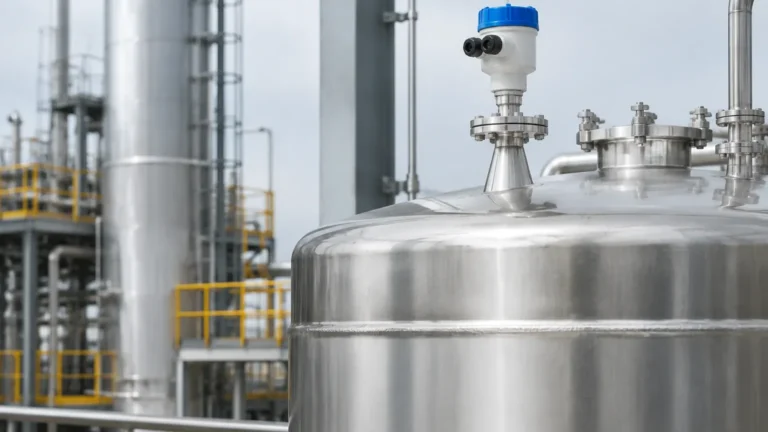
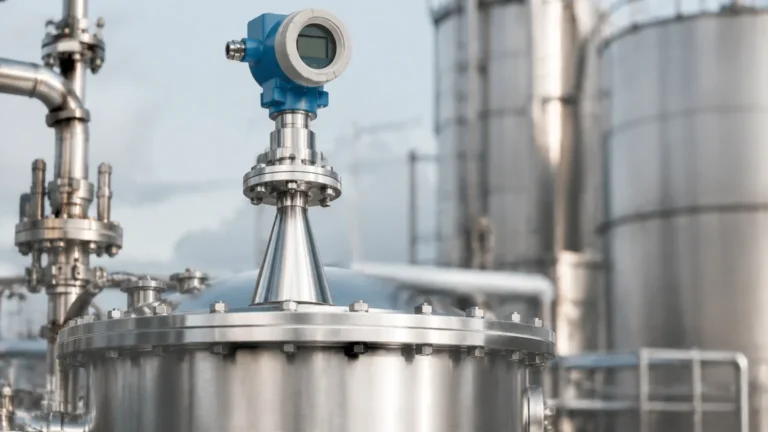
Battery Operated Radar Level Transmitter
Engineering Guide to Battery Operated Radar Level Transmitters
In the landscape of modern industrial automation, the requirement for precise level measurement often extends to remote or geographically isolated locations where traditional wired power infrastructure is either cost-prohibitive or physically impossible to install. The battery operated radar level transmitter has emerged as a critical solution for these scenarios, combining the high accuracy of microwave-based measurement with ultra-low-power electronics and wireless communication protocols.
This guide examines the technical principles, selection criteria, and practical installation requirements for deploying battery-powered radar systems in industrial environments such as water treatment, chemical storage, and environmental monitoring.
1. Measurement Principles of Radar Level Meters
Before evaluating battery-powered variants, it is essential to understand the core technology. Radar Level Meters primarily utilize two methods of microwave measurement: Pulse Radar and Frequency Modulated Continuous Wave (FMCW).
Time of Flight (ToF) and Pulse Radar
Pulse radar instruments emit short microwave pulses toward the surface of the medium. The device measures the time it takes for the pulse to travel to the surface and return to the sensor. Since the speed of light is constant, the distance is calculated as:
Distance = (Speed of Light × Time of Flight) / 2
Historically, pulse radar was preferred for battery applications because the transmitter could be powered down completely between pulses, significantly conserving energy.
FMCW Radar (Frequency Modulated Continuous Wave)
Modern high-performance radar units, particularly those operating at 80 GHz, typically use FMCW technology. In this method, the transmitter emits a continuous signal with a constantly changing frequency. The reflection from the product surface is received and compared to the signal being emitted at that moment. The frequency difference between the transmitted and received signals is proportional to the distance.
For a battery operated radar level transmitter, FMCW has become more viable due to advancements in micro-processing power. By using high-frequency 80 GHz signals, these units can achieve a narrower beam angle (often as small as 3°), which reduces interference from tank walls or internal obstructions and allows for smaller antenna sizes.
2. Power Management and Wireless Connectivity
The defining characteristic of a battery-powered unit is its energy budget. Unlike 4-20mA loop-powered or mains-powered sensors, these devices must manage energy consumption meticulously to ensure a service life of 3 to 5 years.
Sleep Cycles and Sampling Rates
To conserve power, the transmitter remains in a "deep sleep" mode for the majority of its operational life. At pre-configured intervals (e.g., every 15 minutes or once per hour), the device wakes up, performs a measurement, transmits the data via a wireless module, and returns to sleep.
Communication Protocols
The choice of wireless protocol directly impacts battery longevity and signal range:
* NB-IoT (Narrowband IoT): Ideal for urban or industrial areas with existing cellular coverage. It offers deep penetration into structures and low power consumption.
* LoRaWAN (Long Range Wide Area Network): Best for private networks across large industrial sites or remote fields. It features extremely low power consumption and can transmit over several kilometers.
* 4G/LTE-M: Used when higher data throughput or more frequent updates are required, though it consumes more battery than NB-IoT or LoRa.
3. Selection Criteria for Industrial Applications
When selecting a battery operated radar level transmitter, engineers must balance measurement accuracy with environmental constraints.
Technical Specification Comparison
| Feature | Standard Radar (Wired) | Battery Operated Radar |
| :— | :— | :— |
| Power Source | 24V DC / 220V AC | Lithium Thionyl Chloride (Li-SOCl2) |
| Update Rate | Continuous / Real-time | Periodic (e.g., 5 min to 24 hours) |
| Accuracy | ±1 mm to ±3 mm | ±2 mm to ±5 mm |
| Beam Angle | 3° to 10° | 3° to 8° (typically 80 GHz) |
| Data Integration | Modbus, HART, 4-20mA | MQTT, CoAP, Web API |
| Installation Cost | High (Cabling/Trenching) | Low (Mount and Configure) |
Chemical Compatibility and Housing
For chemical or wastewater applications, the wetted parts of the radar must be resistant to corrosion. Common materials include PTFE (Polytetrafluoroethylene) or PP (Polypropylene) for the antenna cover. The housing should be rated at least IP68 to protect the internal battery and electronics from moisture ingress and flooding.
4. Installation Considerations and Best Practices
Correct installation is paramount to ensuring the reliability of the signal, especially since battery-powered units often have less "raw power" to push through heavy foam or steam compared to high-voltage industrial units.
Beam Angle and Obstructions
The radar beam expands as it travels. Engineers must ensure the "keep-out zone" (the cone defined by the beam angle) is free from ladders, pipes, or agitators. An 80 GHz transmitter is highly recommended for battery applications because its narrow beam allows for installation in narrow tanks or through small nozzles without signal degradation.
Mounting Position
* Vertical Alignment: The sensor must be mounted perpendicular to the liquid surface. A tilt of even a few degrees can cause the reflected signal to miss the receiver, leading to "loss of echo" errors.
* Dead Zone (Blocking Distance): Every radar has a minimum detection distance (typically 50 mm to 200 mm from the antenna). The sensor should be mounted high enough so the maximum liquid level never enters this dead zone.
* Nozzle Geometry: If mounting on a nozzle, the antenna should ideally extend slightly past the bottom of the nozzle to prevent internal reflections (ringing) that can mask the true level signal.
Environmental Temperature
Battery performance is highly temperature-dependent. In extremely cold climates (below -20°C), the peak current delivery of Lithium batteries drops. If the transmitter is installed in an outdoor environment subject to freezing temperatures, the housing should be UV-resistant and potentially insulated, or a high-capacity battery pack should be specified.

5. Engineering Limitations and Application Risks
While highly versatile, battery-powered radar is not a "one-size-fits-all" solution. Users must be aware of the following limitations:
1. Dynamic Level Changes: Because the unit only measures at intervals, it is not suitable for safety-critical overfill protection in high-speed filling applications where levels change by several meters per minute.
2. Dielectric Constant (εr): Radar relies on the reflectivity of the medium. Liquids with very low dielectric constants (like certain oils or liquefied gases) reflect less energy. In battery-powered units, where signal processing is optimized for low power, measuring low-εr liquids may require specialized high-gain antennas.
3. Data Latency: There is an inherent delay between the measurement occurring and the data appearing on the end-user's SCADA or cloud dashboard. This must be factored into process control logic.
6. Maintenance and Lifecycle Management
Maintenance for a battery operated radar level transmitter is significantly lower than for mechanical systems like float switches or ultrasonic sensors that may suffer from fouling. However, a lifecycle plan is necessary:
* Battery Replacement Cycles: Based on the transmission frequency (e.g., 1-hour intervals), the battery should be replaced every 3-5 years. Most modern units provide a "Battery Voltage" diagnostic via the wireless link.
* Signal Strength Monitoring: In wireless deployments, environmental changes (new buildings, growing vegetation, or interference) can affect the Signal-to-Noise Ratio (SNR). Monitoring the RSSI (Received Signal Strength Indicator) is a standard part of industrial health monitoring.
* Firmware Updates: Many industrial IoT (IIoT) radar units support Over-the-Air (OTA) updates. This allows engineers to optimize measurement algorithms or security patches without visiting remote sites.
7. Frequently Asked Questions (FAQ)
Q: Can battery-powered radar be used in hazardous areas (Ex-zones)?
A: Yes, many units are designed with Intrinsic Safety (IS) ratings (e.g., ATEX/IECEx Zone 0 or 1). Because they operate on low-voltage batteries and have no high-power storage components, they are well-suited for explosive atmospheres.
Q: How does foam affect the measurement?
A: Heavy, thick foam can absorb radar signals. For battery-powered units, which may use lower emission power to save energy, foam can be a challenge. In these cases, selecting an 80 GHz unit with advanced signal processing is critical.
Q: What happens if the wireless signal is lost?
A: Most industrial battery-powered transmitters include internal logging memory. If the connection to the gateway or cellular tower is lost, the device continues to measure and stores the data locally, uploading the backlog once the connection is restored.
Q: Is it possible to use solar power instead of just batteries?
A: Yes, some systems use a small solar panel to trickle-charge a secondary battery or capacitor. This is common in regions with high solar radiation, though it increases the initial hardware cost and footprint.
Conclusion
The battery operated radar level transmitter represents a significant leap in the accessibility of high-accuracy level data for remote industrial assets. By understanding the trade-offs between update frequency, battery life, and wireless protocol, engineering teams can deploy reliable monitoring solutions in environments previously considered unreachable. When selecting equipment, prioritizing 80 GHz technology and robust IP68-rated enclosures ensures that the instrument can withstand the rigors of industrial use while providing the precision required for modern process management.