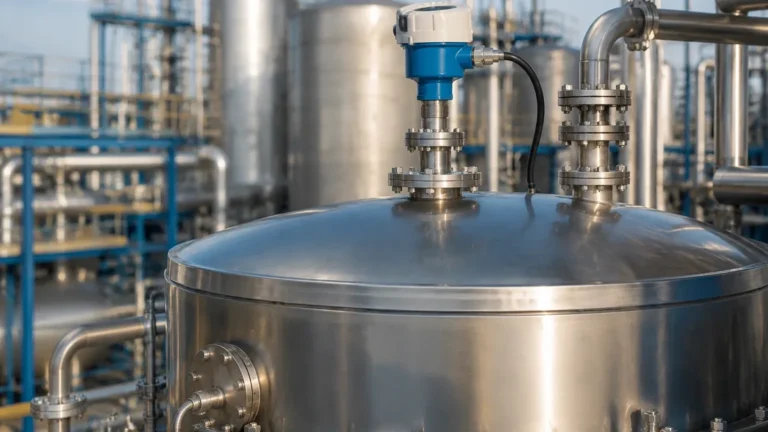
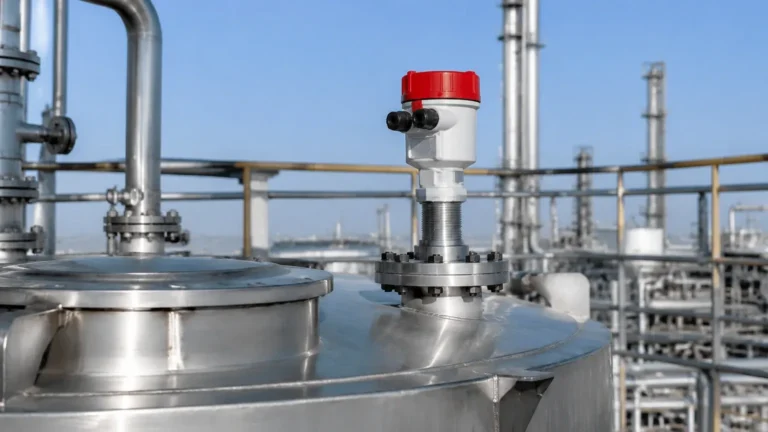
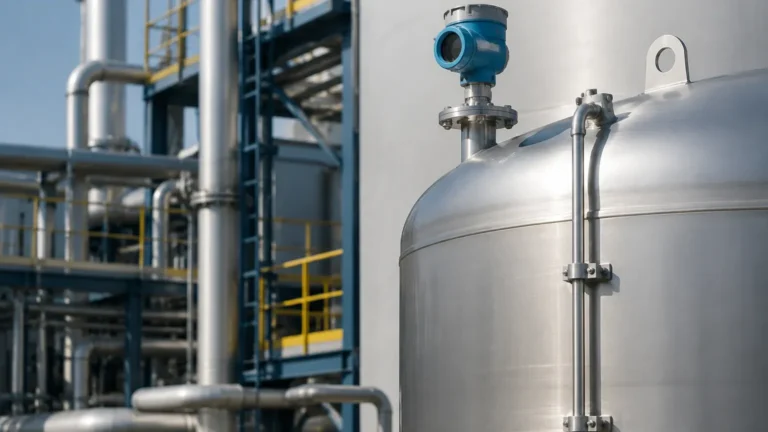
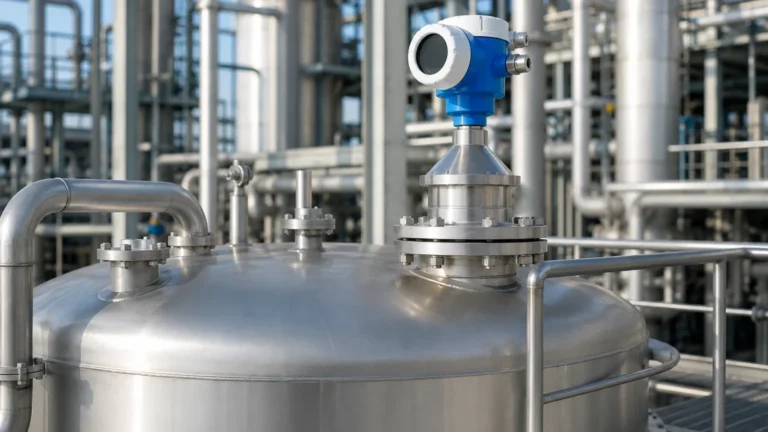
Radar Level Transmitter Krohne
Radar Level Transmitter Krohne: A Technical Guide to Industrial Implementation
In the landscape of industrial process control, the demand for non-contact, high-precision level measurement has led to the widespread adoption of radar technology. Among the industry leaders, the radar level transmitter Krohne series—specifically the OPTIWAVE family—has established a benchmark for Frequency Modulated Continuous Wave (FMCW) technology. For engineers and procurement specialists, understanding the nuances of these instruments is essential for ensuring process safety, reducing maintenance overhead, and optimizing inventory management.
This guide examines the core principles of radar measurement, the specific technical advantages of the Krohne portfolio, and the critical selection criteria required when integrating Radar Level Meters into complex industrial environments.
1. Understanding the Measurement Principle: FMCW vs. Pulse Radar
Before selecting a specific radar level transmitter Krohne model, it is vital to understand the underlying physics of the measurement. Radar level instruments generally fall into two categories: Pulse Radar (Time of Flight) and FMCW.
Frequency Modulated Continuous Wave (FMCW)
Krohne pioneered the use of FMCW in industrial level measurement. Unlike pulse radar, which measures the time a discrete microwave pulse takes to travel to the product surface and back, FMCW transmitters emit a continuous signal with a constantly changing frequency.
When the signal is reflected and received, it is compared to the frequency being emitted at that exact moment. The difference between the transmitted and received frequencies is directly proportional to the distance. This method provides several advantages:
* Higher Signal Resolution: FMCW offers a much larger signal bandwidth, allowing the device to distinguish between the actual product level and noise or internal tank obstructions.
* Improved Accuracy: Because it measures frequency shifts rather than nanosecond time intervals, FMCW is inherently more precise, often achieving accuracies within ±1 mm.
* Better Signal-to-Noise Ratio: Continuous emission allows for more energy to be reflected back to the sensor, which is critical when measuring media with low dielectric constants (εr).
Pulse Radar
Pulse radar remains common for simpler applications. It sends out short microwave bursts and measures the return time. While cost-effective for large tanks with stable surfaces, it often struggles in agitated liquids or environments with heavy vapor, where FMCW excels.
2. The Radar Level Transmitter Krohne Portfolio
The Krohne OPTIWAVE series is categorized primarily by the microwave frequency used—typically 10 GHz, 24 GHz, or 80 GHz. Each frequency serves a specific industrial purpose.
24 GHz Transmitters (e.g., OPTIWAVE 7400 / 6400)
24 GHz is the "all-rounder" frequency. It features a beam angle narrow enough to avoid most internal obstructions while maintaining enough wavelength to penetrate light foam or dust.
* OPTIWAVE 7400: Designed for liquids in harsh environments, often featuring a metallic horn or drop antenna.
* OPTIWAVE 6400: Optimized for solids, such as granulates or powders, where the surface is often uneven.
80 GHz Transmitters (e.g., OPTIWAVE 7500 / 6500)
80 GHz technology represents the current peak of radar engineering. The higher frequency allows for a much smaller antenna and an extremely narrow beam angle (as low as 2°).
* OPTIWAVE 7500: Ideal for liquids in small tanks with narrow nozzles or internal agitators. The narrow beam ensures the signal does not hit the tank walls.
* OPTIWAVE 3500: A specialized version for hygienic applications in the food and pharmaceutical industries, featuring flush-mounted antennas to prevent bacterial growth.
6 GHz / 10 GHz Transmitters (e.g., OPTIWAVE 5200)
Lower frequency radars are less affected by surface turbulence, foam, or heavy steam. The OPTIWAVE 5200 is a 2-wire FMCW radar designed for basic liquid applications where high-end 80 GHz precision is not required but reliability is paramount.
3. Technical Comparison and Selection Matrix
When evaluating a radar level transmitter Krohne against other Radar Level Meters, the following technical parameters should be compared:
| Feature | 24 GHz (Liquids) | 80 GHz (Liquids/Solids) | 10 GHz (General Purpose) |
| :— | :— | :— | :— |
| Typical Accuracy | ±2 mm | ±1 mm | ±5 mm |
| Measuring Range | Up to 100 m | Up to 100 m | Up to 30 m |
| Beam Angle | 8° to 15° | 2° to 4° | 10° to 20° |
| Process Temp. | -50°C to +250°C | -50°C to +200°C | -40°C to +150°C |
| Process Pressure | Up to 10 MPa (100 bar) | Up to 4 MPa (40 bar) | Up to 4 MPa (40 bar) |
| Best Use Case | Agitated tanks, corrosive acids | Narrow nozzles, small vessels | Large storage tanks, simple liquids |
4. Engineering Installation Guidelines
Proper installation is the most critical factor in the performance of a radar level transmitter. Even the most advanced FMCW device will fail if the signal path is compromised.
Nozzle Geometry
The nozzle height and diameter must be matched to the antenna type. For 80 GHz transmitters, the antenna can often be flush-mounted. However, for horn antennas, the horn should ideally extend slightly beyond the nozzle to prevent "ringing" or internal reflections that create a dead zone at the top of the tank.
Obstruction Avoidance
Radar signals spread in a cone. Any metallic object within this cone—such as ladders, heating coils, or agitator blades—will reflect the signal.
* The 80 GHz Advantage: Because the beam is so narrow, it can often be positioned between the tank wall and an agitator blade without interference.
* False Signal Suppression: Modern Krohne software allows for "Empty Tank Mapping," where the transmitter records reflections from fixed obstructions and ignores them during operation.
Orientation and Polarization
The radar signal is polarized. Aligning the transmitter so that the polarization plane is parallel to the tank wall can help reduce interference from wall reflections. Most Krohne devices have markings on the flange to assist with this alignment.
5. Limitations and Application Risks
While radar is highly versatile, it is not a "universal" solution. Engineers must account for the following risks:
1. Low Dielectric Constants (εr): Materials like liquefied gases or certain hydrocarbons have very low reflectivity. If εr is below 1.4, a guided wave radar (TDR) may be more appropriate than a non-contact radar level transmitter Krohne.
2. Heavy Foam: While FMCW can penetrate light foam, thick, dense foam (like fire-fighting foam) can absorb the microwave signal entirely, leading to a "Loss of Echo" error.
3. Condensation and Buildup: In high-humidity applications, water droplets can form on the antenna. While many Krohne antennas feature a PTFE "Drop" shape to shed condensate, extreme buildup of sticky or conductive media can still attenuate the signal.
6. Procurement Checklist for International Buyers
When sourcing Radar Level Meters for global projects, verify the following specifications with the manufacturer:
* Certification Requirements: Does the application require ATEX, IECEx, or FM approvals for explosive atmospheres?
* Wetted Materials: Ensure the antenna and flange materials (e.g., 316L Stainless Steel, Hastelloy, PTFE) are compatible with the process media.
* Communication Protocols: Confirm whether the system requires 4-20mA HART, FOUNDATION Fieldbus, Profibus PA, or Modbus output.
* Process Connection: Verify flange standards (ANSI vs. DIN) and pressure ratings.
7. Frequently Asked Questions (FAQ)
Q: Can a radar level transmitter Krohne measure through a plastic tank roof?
A: Yes. Since plastic is non-conductive and has a low dielectric constant, microwaves can pass through it. This allows for "tank-side" measurement without cutting into the vessel, provided the roof material is not too thick or reinforced with metal carbon fibers.
Q: What is the difference between the OPTIWAVE and OPTIFLEX series?
A: The OPTIWAVE series consists of non-contact radar meters. The OPTIFLEX series consists of Guided Wave Radar (TDR) meters, which use a physical probe or cable to guide the microwave signal. TDR is generally preferred for very low dielectric liquids or interface measurement (e.g., oil over water).
Q: How does dust affect the measurement in solids applications?
A: High-frequency radar (24 GHz and 80 GHz) is generally unaffected by dust clouds. However, if the dust is extremely dense and conductive, it may attenuate the signal. In these cases, a purging system (using compressed air) is often added to the antenna to keep the lens clean.
Q: Is 80 GHz always better than 24 GHz?
A: Not necessarily. While 80 GHz offers a narrower beam, 24 GHz is often more robust in the presence of heavy steam or surface turbulence because the longer wavelength is less susceptible to scattering.
Conclusion
Selecting the right radar level transmitter Krohne requires a balance of frequency selection, antenna design, and a deep understanding of the process environment. By leveraging FMCW technology, these instruments provide the reliability needed for modern industrial automation. Whether dealing with corrosive chemicals, agitated liquids, or bulk solids, following the engineering principles of signal path clarity and material compatibility will ensure a successful, long-term installation.