Radar Level Transmitter Price
Radar Level Transmitter Price: A Technical and Commercial Engineering Guide
In the landscape of industrial automation, selecting the appropriate instrumentation requires a balance between technical precision and budgetary constraints. Radar level measurement has become the gold standard for non-contact level sensing in challenging environments, ranging from wastewater treatment to volatile chemical storage. However, for procurement engineers and plant managers, the radar level transmitter price is not a static figure; it is a variable influenced by frequency, materials of construction, and signal processing capabilities.
This guide explores the underlying technology of Radar Level Meters, the engineering factors that dictate their market cost, and the practical considerations necessary for a successful installation.
Understanding Radar Level Measurement Principles
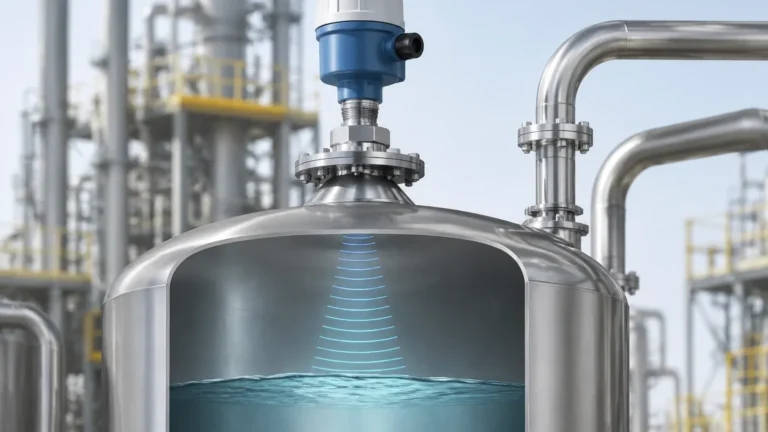
Before evaluating the radar level transmitter price, it is essential to understand how these devices function. Radar level sensors utilize electromagnetic waves to determine the distance to a liquid or solid surface. Unlike ultrasonic sensors, which rely on sound waves and are affected by air temperature and vacuum conditions, radar waves travel at the speed of light and are largely unaffected by the vapor space composition.
Time of Flight (ToF) and Signal Processing
There are two primary methods used in industrial radar measurement:
1. Pulse Radar: The transmitter emits a short microwave pulse toward the medium. The time it takes for the pulse to reflect off the surface and return to the sensor is measured. Distance is calculated using the formula: *Distance = (Speed of Light × Travel Time) / 2*.
2. FMCW (Frequency Modulated Continuous Wave): The transmitter emits a continuous signal with a constantly changing frequency. The difference in frequency between the emitted signal and the reflected signal is proportional to the distance. FMCW is generally more accurate and provides better signal-to-noise ratios in complex environments, such as tanks with internal obstructions or heavy turbulence.
The Role of Frequency
The frequency of the radar signal—typically 6 GHz, 26 GHz, or 80 GHz—is a primary driver of both performance and cost. Higher frequencies, such as 80 GHz, allow for smaller antenna sizes and narrower beam angles, which reduces the risk of interference from tank walls or internal structures like agitators and ladders.
Key Factors Influencing Radar Level Transmitter Price
When requesting quotes for industrial instrumentation, several technical specifications will cause the radar level transmitter price to fluctuate. Understanding these variables allows engineers to avoid over-specifying equipment while ensuring process safety.
1. Operating Frequency and Precision
* Low Frequency (6-10 GHz): Often used in applications with heavy foam or steam, as longer wavelengths can penetrate these layers. These units are often more robust but may require larger nozzles.
* High Frequency (80 GHz): These offer the highest precision (often ±1 mm to ±2 mm) and the narrowest beam angles (as low as 3°). While the initial investment is higher, the ease of installation and reliability in narrow tanks often results in a lower Total Cost of Ownership (TCO).
2. Materials of Construction (Wetted Parts)
The chemical compatibility of the transmitter is vital. Standard units often use Stainless Steel 316L. However, if the medium is highly corrosive (e.g., sulfuric acid or chlorine), the antenna must be encapsulated in PTFE (Polytetrafluoroethylene) or constructed from specialized alloys like Hastelloy. These material upgrades can increase the base price by 30% to 100%.
3. Pressure and Temperature Ratings
Standard radar transmitters are designed for atmospheric pressure and temperatures up to 80°C (176°F). High-pressure versions (rated for 40 bar / 580 psi or higher) and high-temperature versions (up to 250°C / 482°F or more) require specialized ceramic seals and cooling fins, which significantly impact the manufacturing cost.
4. Certifications and Housing
For applications in the oil and gas or chemical sectors, Explosion-Proof (Ex-d) or Intrinsically Safe (Ex-i) certifications are mandatory. Furthermore, the housing material—ranging from plastic for light industrial use to aluminum or investment-cast stainless steel for offshore environments—will influence the final quote.
Selection Criteria and Comparison Table
Choosing the right technology requires comparing the application requirements against the capabilities of different radar types. The following table provides a general comparison for engineering reference.
| Feature | 26 GHz Pulse Radar | 80 GHz FMCW Radar | Guided Wave Radar (GWR) |
| :— | :— | :— | :— |
| Best Use Case | Large storage tanks, liquids | Narrow silos, agitated tanks | Low dielectric liquids, bypass pipes |
| Beam Angle | 8° to 20° | 3° to 8° | N/A (Contacting) |
| Accuracy | ±3 mm to ±5 mm | ±1 mm to ±2 mm | ±2 mm |
| Max Range | 30m (approx. 98 ft) | 120m (approx. 393 ft) | 30m (approx. 98 ft) |
| Relative Price | Moderate | Higher | Moderate to High |
| Obstruction Handling | Fair | Excellent | N/A (Follows probe) |
Engineering Installation Considerations
Even the most expensive radar transmitter will fail to provide accurate data if installed incorrectly. To maximize the value of the radar level transmitter price paid, engineers must follow strict installation protocols.
Beam Angle and Nozzle Geometry
The "beam angle" is the area where the radar energy is concentrated. Any metal object within this beam will create a false reflection (echo).
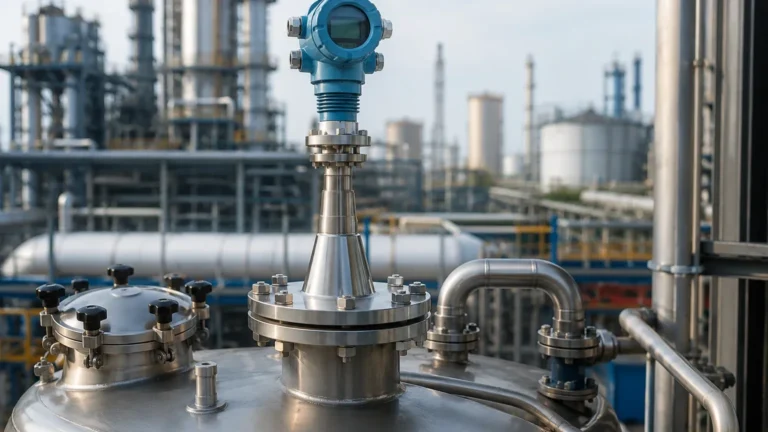
* Nozzle Height: The antenna should ideally extend slightly beyond the bottom of the mounting nozzle to prevent "ringing" or internal reflections within the nozzle itself.
* Distance from Wall: Transmitters should generally be mounted at 1/4 to 1/6 of the tank diameter away from the side wall to avoid interference from wall seams or weld beads.
Avoiding Internal Obstructions
Agitators, heating coils, and ladders are common sources of measurement errors. While modern software allows for "False Echo Suppression" (mapping out static reflections), it is best practice to install the sensor in a location with a clear line of sight to the product surface. If the tank is too cluttered, a Guided Wave Radar (GWR) or a high-frequency 80 GHz unit with a narrow beam is preferred.
Blind Zones (Dead Bands)
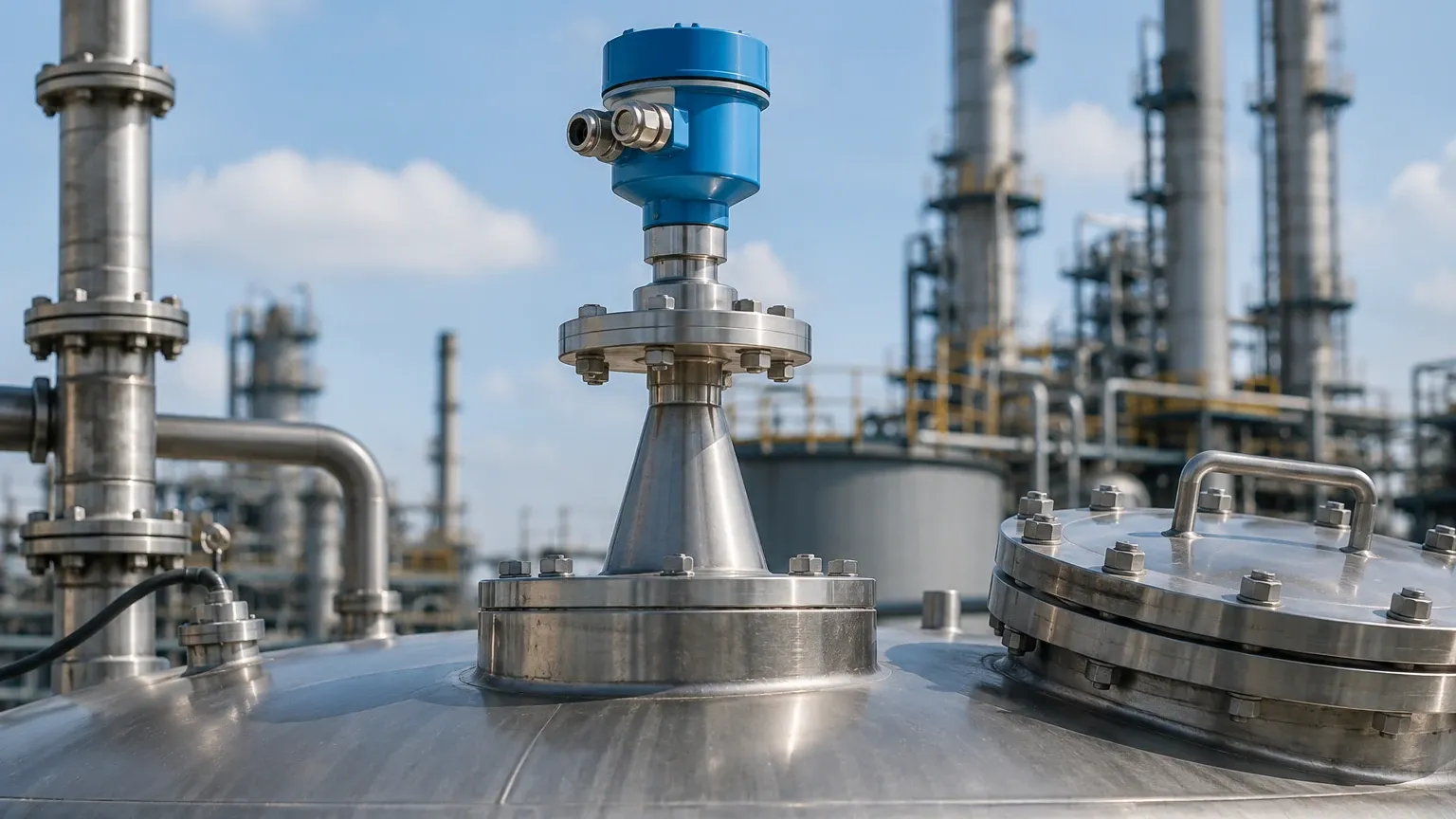
Every radar sensor has a minimum detection distance, known as the blind zone or blocking distance, near the antenna. If the liquid level rises into this zone, the sensor may report an error or a fixed maximum value. Engineers must account for this when determining the maximum fill level of the vessel.
Limitations and Application Risks
While radar is highly versatile, it is not a universal solution for every process. Engineers should be aware of the following limitations:
1. Low Dielectric Constant (εr): Radar waves reflect best off materials with high dielectric constants (e.g., water, εr ≈ 80). Hydrocarbons and oils have low dielectric constants (εr < 2), which result in weaker return signals. In these cases, high-sensitivity electronics or Guided Wave Radar may be required.
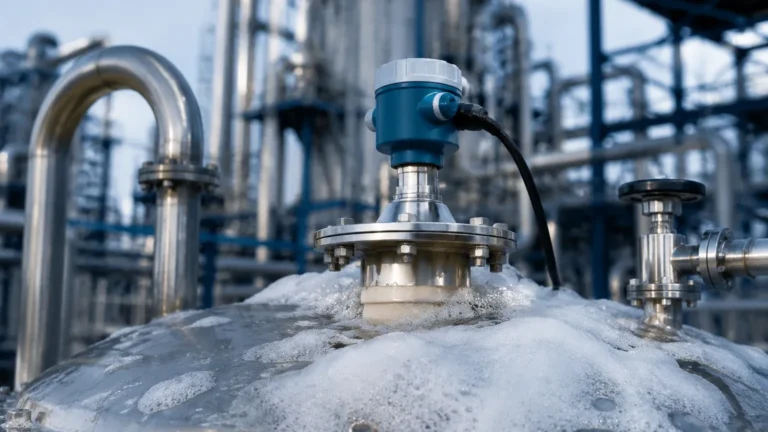
2. Heavy Foam: Dense, thick foam can absorb radar signals, leading to signal loss. If foam is a constant factor, low-frequency radar or contact-based measurement (like magnetic level gauges) might be more reliable.
3. Turbulence and Waves: Rapidly moving surfaces can scatter the radar signal. This is usually mitigated through software damping or by installing the radar inside a stilling well or bypass chamber.
Procurement Checklist for International Industrial Buyers
When sourcing Radar Level Meters from global manufacturers, confirming the following details will ensure the equipment meets local standards and process requirements:
* Process Connection: Confirm the flange standard (ANSI, DIN, JIS) or thread type (NPT, G) to ensure a match with existing tank ports.
* Output Protocol: Does the facility require a simple 4-20mA signal, or is digital communication like HART, RS485 Modbus, or Foundation Fieldbus necessary for remote monitoring?
* OEM/ODM Capabilities: For large-scale projects or equipment integrators, check if the manufacturer offers customized branding or specialized housing configurations.
* Quality Documentation: Request calibration certificates, material traceability reports (MTRs), and ingress protection (IP) ratings (e.g., IP67 or IP68).
Frequently Asked Questions (FAQ)
Q: Why is the radar level transmitter price so much higher than ultrasonic sensors?
A: Radar technology involves more complex high-frequency electronics and sophisticated signal processing algorithms. It also offers superior performance in vacuum, high pressure, and high temperature—conditions where ultrasonic sensors typically fail.
Q: Can radar measure the level of solids like grain or plastic pellets?
A: Yes. However, solids typically require high-frequency (80 GHz) radar to handle the uneven surface and low dielectric properties of the material. The angle of repose of the solid must also be considered during installation.
Q: How long is the typical lifespan of a radar level meter?
A: In a well-specified application, a radar transmitter can last 10 to 15 years. Because they have no moving parts and are non-contact, mechanical wear is non-existent. The primary failure modes are usually electronics degradation due to extreme heat or chemical ingress into the housing.
Q: Does the radar transmitter require frequent recalibration?
A: Generally, no. Radar sensors are highly stable. Most industrial users perform a verification check annually or bi-annually as part of their standard maintenance cycle, but the internal quartz oscillators used for timing rarely drift.
Conclusion
Investing in radar level technology is a strategic decision that impacts process safety and efficiency. While the radar level transmitter price is a significant factor, it must be weighed against the accuracy and reliability requirements of the specific application. By understanding the measurement principles and installation constraints, engineering teams can select a solution that provides long-term value and precise control over their industrial assets.