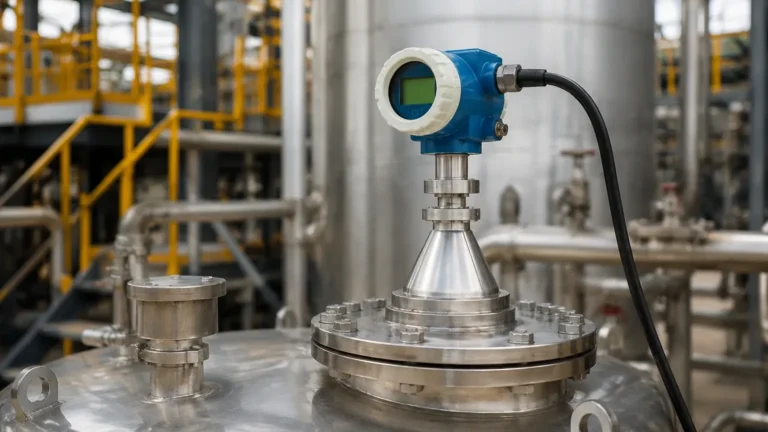
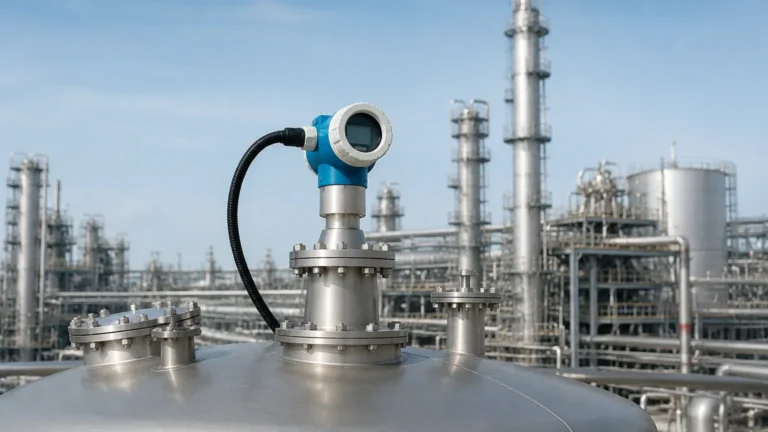
Radar Type Level Transmitter Hsn Code
Radar Type Level Transmitter HSN Code: A Technical and Regulatory Guide for Industrial Measurement
In the landscape of industrial automation, the precision of level measurement directly impacts process safety, inventory management, and operational efficiency. Radar level transmitters have emerged as a gold standard for non-contact measurement in challenging environments. For international procurement managers and engineers, understanding the technical specifications of Radar Level Meters is only half the battle; navigating the logistical and regulatory framework, specifically the radar type level transmitter hsn code, is essential for seamless cross-border trade and compliance.
This guide provides a comprehensive technical overview of radar level measurement principles, selection criteria, and the classification standards required for global industrial distribution.
Understanding Radar Level Measurement Principles
Before addressing the regulatory classification and HSN codes, it is vital to understand how these instruments function. Radar level transmitters utilize electromagnetic waves—typically in the microwave frequency range—to detect the distance to a product surface.
Time of Flight (ToF) Principle
Most radar level meters operate on the Time of Flight principle. The sensor emits a high-frequency signal from the antenna toward the material surface. This signal reflects off the media and returns to the receiver. Since the speed of light (and electromagnetic waves) is constant, the time taken for the signal to travel to the surface and back is directly proportional to the distance. The internal electronics then convert this time delay into a level or volume reading.
Pulse Radar vs. FMCW
There are two primary methods used in modern industrial radar transmitters:
1. Pulse Radar: The instrument sends out a series of short microwave pulses. It measures the time interval between the transmission and the reception of the echo. This method is energy-efficient and suitable for many standard liquid applications.
2. Frequency Modulated Continuous Wave (FMCW): The transmitter emits a continuous signal with a constantly changing frequency. The difference between the frequency of the emitted signal and the reflected signal at any given moment is proportional to the distance. FMCW radar, particularly at higher frequencies like 80GHz, offers superior accuracy and better signal-to-noise ratios in turbulent or dusty environments.
The Radar Type Level Transmitter HSN Code and Classification
For engineers and procurement officers involved in the international movement of goods, the Harmonized System of Nomenclature (HSN) code is a critical identifier. The radar type level transmitter hsn code ensures that the equipment is taxed correctly and meets the import/export regulations of the destination country.
Standard HSN Classification
Generally, industrial level measurement instruments fall under Chapter 90 of the HSN system, which covers "Optical, photographic, cinematographic, measuring, checking, precision, medical or surgical instruments and apparatus."
Specifically, radar level transmitters are usually classified under:
* HSN Code 9026: Instruments and apparatus for measuring or checking the flow, level, pressure, or other variables of liquids or gases.
* Subheading 9026.10: For measuring or checking the level of liquids.
Depending on the specific country (such as India or the EU), the 8-digit code might be 9026.10.10 or 9026.10.90. It is important to note that while radar technology uses electromagnetic waves, it is classified by its *function* (level measurement) rather than its *technology* (radio waves), which distinguishes it from telecommunications equipment found in Chapter 85.
Selection Criteria for Industrial Radar Level Meters
Selecting the correct radar transmitter requires a deep dive into the process conditions. A mismatch between the instrument and the application can lead to signal loss or inaccurate readings.
1. Frequency Selection (26GHz vs. 80GHz)
* 26GHz Radar: Ideal for most liquid applications in larger tanks. The wider beam angle can be an advantage in certain agitated liquids but may pick up interference from tank internals.
* 80GHz Radar: The current industry standard for precision. The high frequency allows for a very narrow beam angle (often as low as 3 degrees), which easily avoids internal obstructions like agitators, ladders, or heating coils.
2. Media Dielectric Constant (εr)
Radar waves reflect best off materials with high dielectric constants (e.g., water, εr ≈ 80). Hydrocarbons and oils have low dielectric constants (εr < 2.5), which results in weaker reflections. In such cases, high-sensitivity radar or Guided Wave Radar (GWR) may be required.
3. Process Environment
Consider the temperature and pressure. Welk radar transmitters are designed to handle extremes, with some models rated for up to 250°C and pressures exceeding 40 bar (4.0 MPa).
Selection Table for Radar Level Transmitters
| Application Type | Recommended Frequency | Antenna Material | Dielectric Constant (Min) | Key Advantage |
| :— | :— | :— | :— | :— |
| Water/Wastewater | 26GHz / 80GHz | PP / Stainless Steel | > 1.9 | Non-contact, low maintenance |
| Corrosive Chemicals | 80GHz | PTFE Encapsulated | > 2.0 | Chemical resistance, narrow beam |
| Solid Powders/Bulk | 80GHz | Lens Antenna | > 1.6 | Penetrates dust, handles angles |
| High-Pressure Steam | Guided Wave Radar | 316L Stainless Steel | > 1.4 | Unaffected by steam/density changes |
Installation Considerations and Best Practices
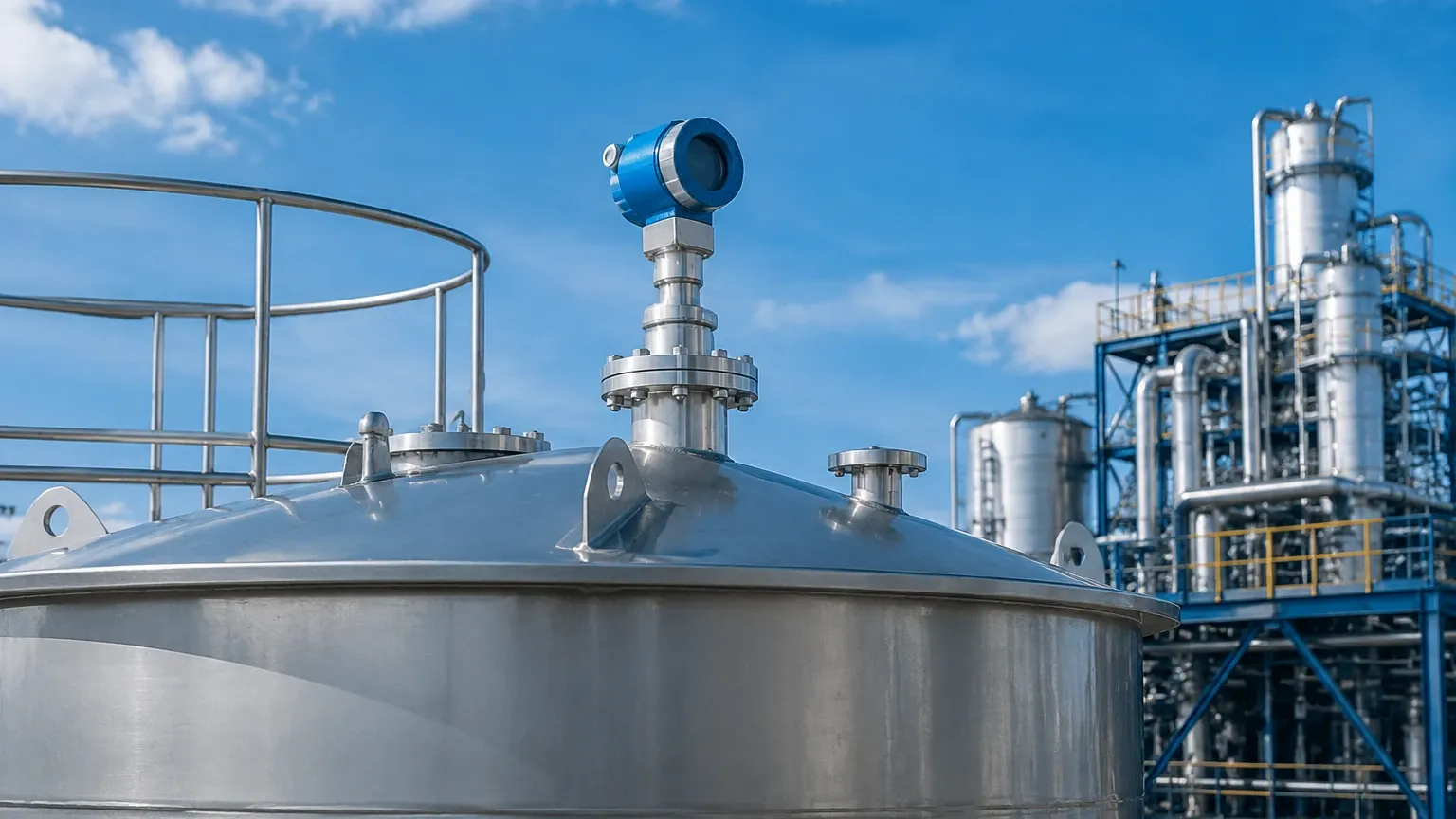
Proper installation is the most significant factor in the long-term reliability of a radar level transmitter. Engineers should adhere to the following guidelines:
1. Nozzle Height and Diameter: The antenna should ideally extend slightly beyond the mounting nozzle to prevent "ringing" or signal interference from the nozzle walls. If using an 80GHz radar, nozzle interference is significantly reduced due to the narrow beam.
2. Positioning: Avoid mounting the transmitter in the center of a tank (which can cause multiple reflections) or too close to the tank wall (which can cause signal attenuation). A common rule of thumb is to place the sensor at 1/6th of the tank diameter from the wall.
3. Obstruction Clearance: Ensure the "signal beam path" is clear of agitators, pipes, and ladders. If obstructions are unavoidable, most modern Radar Level Meters offer "False Echo Suppression" software to map out and ignore these static reflections.
4. Orientation: For solid materials, a swiveling flange may be necessary to aim the radar beam at the angle of repose to ensure a strong return signal.
Limitations and Application Risks
While radar is highly versatile, it is not a universal solution. Engineers must be aware of the following limitations:
* Heavy Foam: Dense, thick foam can absorb the radar signal entirely, leading to a "Loss of Echo" (LOE) error. In such cases, a contact-based method like a magnetic level gauge or a hydrostatic transmitter might be more reliable.
* Extreme Turbulence: While radar can handle surface ripples, extreme turbulence can scatter the signal. Using a stilling well or bypass chamber can mitigate this.
* Vacuum Conditions: While radar works in a vacuum (unlike ultrasonic sensors which require a medium), the mechanical seals of the transmitter must be rated for vacuum service to prevent internal damage.
Maintenance and Troubleshooting
Radar transmitters are generally low-maintenance because they have no moving parts and do not touch the media. However, periodic checks are recommended:
* Antenna Cleaning: In applications with heavy condensation or crystallization, the antenna may need periodic cleaning. PTFE-coated lens antennas are designed to minimize buildup.
* Signal Strength Monitoring: Most digital transmitters (HART, Profibus, Modbus) allow operators to monitor the "echo curve." A diminishing signal-to-noise ratio often indicates buildup on the antenna or a change in the media's dielectric properties.
Frequently Asked Questions (FAQs)
Q: Does the radar type level transmitter hsn code change if the device is wireless?
A: Generally, no. The primary function remains level measurement (9026). However, some customs jurisdictions may require additional classification under Chapter 85 if the wireless transmission component is considered the primary feature, though this is rare for industrial sensors.
Q: Can radar measure level through a plastic tank wall?
A: Yes. Because plastic has a low dielectric constant, radar signals can penetrate the wall of a plastic (HDPE/PP) tank to measure the liquid inside. This allows for completely external installation.
Q: What is the difference between Radar and Ultrasonic level sensors?
A: Ultrasonic sensors use sound waves, which are affected by air temperature, pressure, and vapors. Radar uses electromagnetic waves, which are unaffected by these environmental factors, making radar much more accurate in complex process conditions.
Q: How do I verify the HSN code for my specific country?
A: You should consult the local Customs Tariff Schedule or work with a freight forwarder. While 9026 is the global standard, the specific sub-codes (the last 4 digits) vary by region.
Conclusion
Implementing radar level measurement requires a balance of technical expertise and regulatory awareness. By understanding the measurement principles—such as FMCW and ToF—and ensuring the correct radar type level transmitter hsn code is used for procurement, industrial operations can achieve high-precision monitoring while maintaining compliance. For robust, industrial-grade solutions, manufacturers like Welk provide the necessary documentation and technical support to ensure these instruments are integrated seamlessly into global supply chains.
For more technical specifications and to explore the full range of non-contact measurement solutions, Review product options and application support.