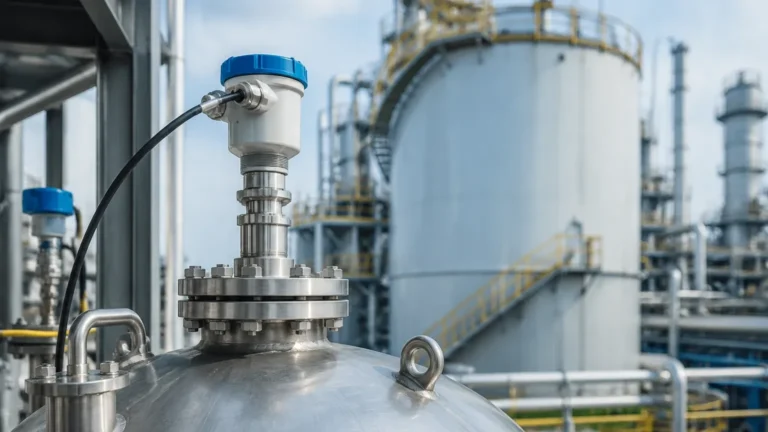
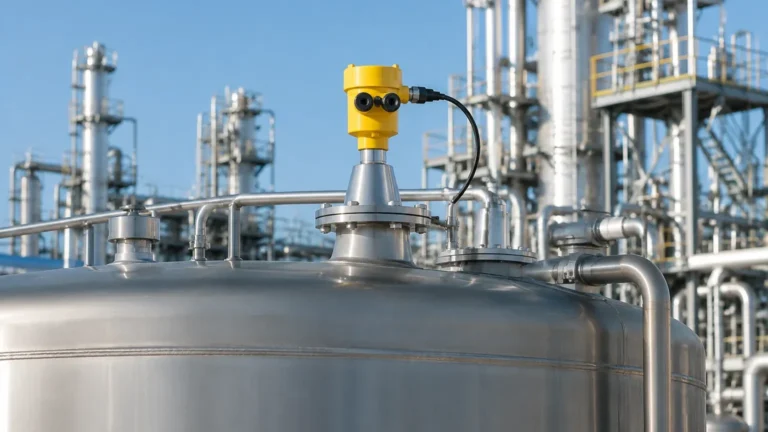
Radar vs Guided Wave Radar Level Transmitter
Radar vs Guided Wave Radar Level Transmitter: A Practical Engineering Comparison
In the field of industrial process automation, selecting the correct level measurement technology is critical for operational safety, inventory accuracy, and process efficiency. Among the most reliable technologies available today are microwave-based systems. However, engineers often face a choice between two distinct types: non-contacting radar and guided wave radar (GWR). Understanding the nuances of a radar vs guided wave radar level transmitter is essential for optimizing performance in challenging environments such as chemical processing, water treatment, and oil and gas storage.
This guide examines the underlying physics, application strengths, and installation requirements of both technologies to help procurement and engineering teams make informed decisions.
Measurement Principles: How They Work
Both technologies utilize electromagnetic pulses (microwaves) to detect the distance to a product surface. However, the method of delivery and the physics of the return signal differ significantly.
Non-Contact Radar Level Meters
Non-contact Radar Level Meters emit electromagnetic waves through the air from an antenna. These waves travel at the speed of light, reflect off the surface of the medium, and return to the sensor. The transmitter calculates the distance ($D$) based on the time of flight ($t$) using the formula: $D = (c \times t) / 2$, where $c$ is the speed of light.
Modern non-contact radars primarily use two methods:
1. Pulse Radar: Sends a microwave pulse and measures the time it takes to return.
2. Frequency Modulated Continuous Wave (FMCW): Emits a continuous signal with a constantly changing frequency. The difference in frequency between the emitted and received signal is proportional to the distance. FMCW is generally preferred for its higher accuracy and better signal-to-noise ratio in complex environments.
Guided Wave Radar (GWR)
Guided Wave Radar is based on Time Domain Reflectometry (TDR). Instead of broadcasting waves through open space, the microwave pulses are guided along a physical probe (a rod or cable) that is immersed in the medium. When the pulse reaches the surface of the product, the change in the dielectric constant causes a portion of the pulse to reflect back up the probe to the transmitter.
Because the energy is concentrated along the probe rather than being dispersed in a cone, GWR systems often provide a stronger signal reflection, making them highly effective for materials with low dielectric constants or in vessels with significant internal obstructions.
Comparative Analysis: Radar vs Guided Wave Radar Level Transmitter
When evaluating a radar vs guided wave radar level transmitter, several technical factors must be considered to ensure the device suits the specific process conditions.
1. Media Properties and Dielectric Constant
All radar technologies depend on the dielectric constant ($ε_r$) of the material. A higher dielectric constant reflects more energy.
* Non-contact Radar: Generally requires a higher dielectric constant to achieve a reliable reflection, especially over long distances. If the surface is turbulent or the material has a low $ε_r$ (like some oils), the signal may be lost.
* Guided Wave Radar: Highly efficient at measuring low dielectric materials. Because the signal is confined to the probe, less energy is lost. GWR can often measure materials with a dielectric constant as low as 1.4.
2. Physical Obstructions and Tank Geometry
* Non-contact Radar: The signal spreads in a beam (beam angle). If there are agitators, ladders, or pipes within this beam, they can create "false echoes" that interfere with the level reading. Advanced software can "map out" these echoes, but it complicates commissioning.
* Guided Wave Radar: Since the signal stays on the probe, it is largely unaffected by tank internals, provided the probe does not physically touch the obstructions. This makes GWR ideal for narrow tanks or vessels with complex internal structures.
3. Surface Conditions: Foam, Turbulence, and Vapor
* Turbulence: GWR is generally better at handling turbulent surfaces because the probe acts as a stabilizing guide for the signal.
* Foam: This is a challenge for both. Light, airy foam may be transparent to radar, while dense foam can reflect the signal prematurely. Non-contact radar is often better at "seeing through" light foam to the liquid below, whereas GWR might trigger a reflection at the top of the foam layer.
* Vapor and Dust: Non-contact radar can be affected by heavy steam or dust if the frequency is not chosen correctly (e.g., 80GHz vs 26GHz). GWR is virtually unaffected by dust or vapor in the headspace because the signal is guided.
Selection Criteria and Practical Table
Choosing between these two involves balancing the physical constraints of the tank with the chemical properties of the medium.
| Feature | Non-Contact Radar | Guided Wave Radar (GWR) |
| :— | :— | :— |
| Installation Type | Top-mounted, non-intrusive | Top-mounted, intrusive (probe in liquid) |
| Maintenance | Extremely low (no contact) | Low (requires periodic probe cleaning) |
| Low Dielectric Media | Moderate performance | Excellent performance |
| Internal Obstructions | Sensitive to beam interference | Unaffected (if probe clearance is maintained) |
| Vacuum/High Pressure | Excellent | Excellent |
| Coating/Buildup | No effect (unless on antenna) | Can cause errors if material builds up on probe |
| Max Range | Up to 100m+ | Typically limited to 30m-60m (cable length) |
Installation Considerations
Correct installation is paramount for both technologies to prevent signal loss and ensure longevity.
Non-Contact Radar Installation
1. Nozzle Dimensions: The nozzle height and diameter must allow the radar beam to clear the bottom edge of the nozzle to prevent signal ringing.
2. Beam Path: Ensure the beam does not hit the tank wall. For a 10-meter (approx. 33 ft) tank with a 10-degree beam angle, the beam diameter at the bottom will be approximately 1.75 meters (5.7 ft).
3. Orientation: The antenna should be perpendicular to the liquid surface to ensure the maximum reflected signal returns to the receiver.
Guided Wave Radar Installation
1. Probe Selection: Choose a rod probe for shorter distances (up to 6m / 20ft) and high-viscosity liquids. Use a cable probe for tall silos or tanks (up to 30m-60m). Coaxial probes are best for low dielectric liquids in bypass chambers.
2. Clearance: The probe must not touch the tank wall or any internal metal structures, as this will create a false level signal.
3. Mounting: Ensure the mounting connection can support the weight of the probe, especially in tall silos where the pull-down force of solids can be significant.

Limitations and Application Risks
While both technologies are robust, they are not universal solutions.
* Non-Contact Limitations: The primary risk is signal attenuation due to heavy foam or extremely low dielectric constants. In high-pressure steam applications (like boiler drums), the change in the refractive index of the gas phase can cause measurement errors unless specialized high-frequency units are used.
* GWR Limitations: The main risk is mechanical. In applications with high-viscosity or sticky fluids, material can build up on the probe. While GWR can compensate for some coating, heavy buildup can lead to "bridging," where the device reads a constant high level. Additionally, in high-flow bypass pipes, the lateral force of the liquid can bend or break long rod probes.
Frequently Asked Questions (FAQs)
Q: Can I use non-contact radar for solids?
A: Yes, but it requires a high-frequency (typically 80GHz) transmitter and often a swiveling flange to aim the beam at the material's angle of repose. GWR is also used for solids, but the tensile load on the cable probe must be calculated.
Q: Which is better for corrosive chemicals?
A: Non-contact radar is often preferred because the instrument does not touch the process media. However, GWR probes can be coated in PTFE or made from exotic alloys (Hastelloy, Tantalum) to handle aggressive acids.
Q: Is GWR more expensive than non-contact radar?
A: Generally, the electronics are similar in cost. However, the physical probe of a GWR unit adds to the price, especially if it is a long, high-alloy cable or rod. Non-contact radar may have a lower total cost of ownership in corrosive environments where probe replacement would be frequent.
Conclusion
The choice in the radar vs guided wave radar level transmitter debate depends on the specific geometry of your vessel and the physical properties of the substance being measured. Non-contact radar offers the advantage of zero-maintenance, non-intrusive measurement, making it ideal for corrosive or hygienic applications. Conversely, Guided Wave Radar provides a more focused signal, making it the superior choice for low-dielectric liquids, narrow tanks, and processes with heavy turbulence.
Welk provides a comprehensive range of industrial level measurement solutions, including high-frequency radar and TDR-based guided wave systems. For complex applications, consulting with a technical engineer is recommended to perform a dielectric analysis and beam-path calculation before procurement.
Download Radar vs Guided Wave Radar Level Transmitter as a PDF