Ultrasonic Height Measurement
Ultrasonic Height Measurement: A Comprehensive Guide to Industrial Application
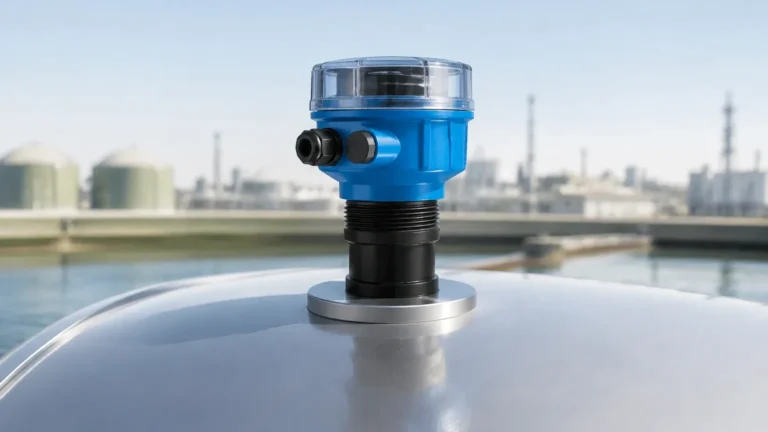
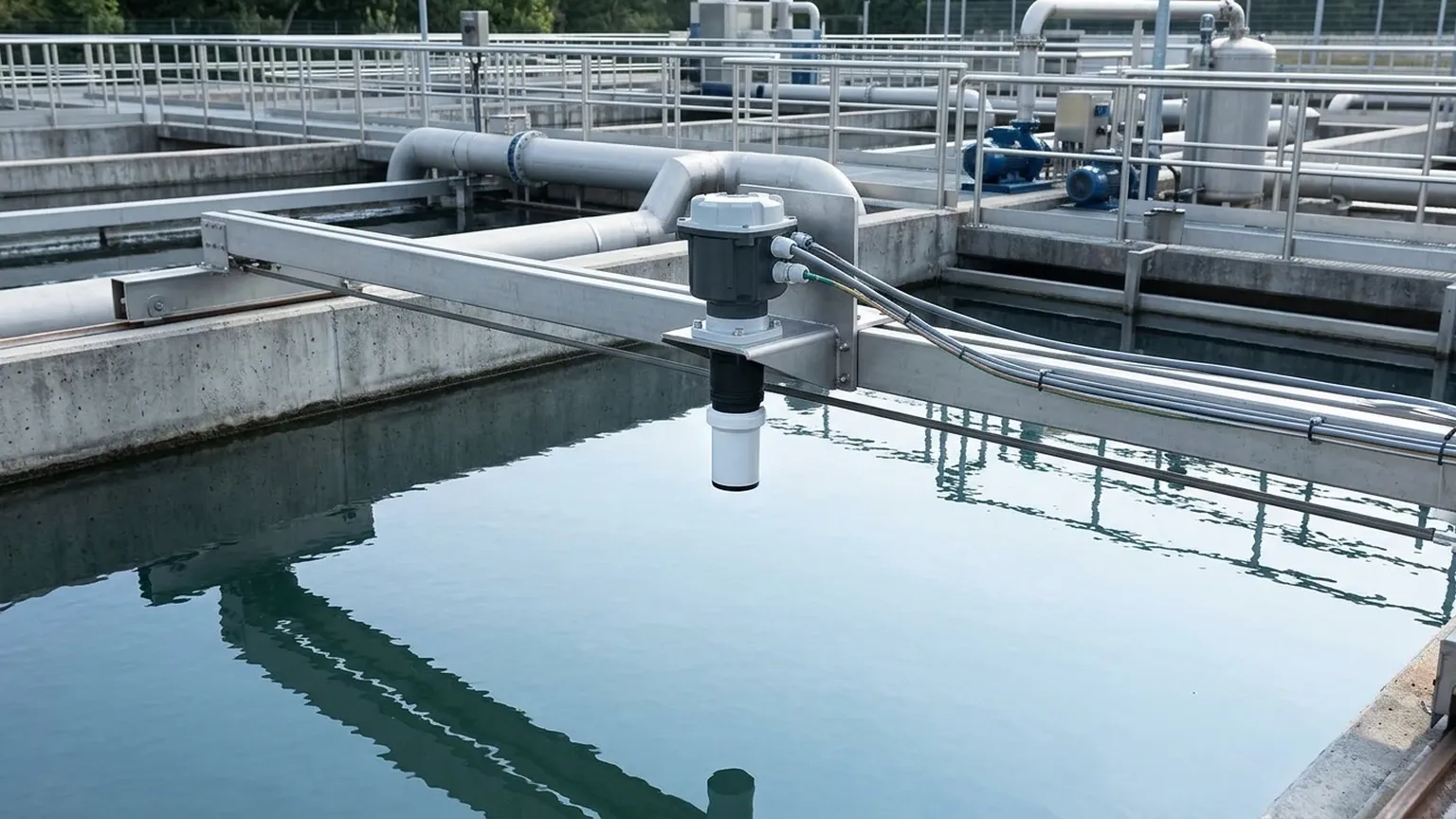
In modern industrial automation, the ability to monitor the contents of tanks, silos, and open channels without physical contact is a fundamental requirement for efficiency and safety. Ultrasonic height measurement has emerged as one of the most reliable and cost-effective methods for achieving this. By utilizing high-frequency sound waves, Ultrasonic Level Meters provide precise data on the distance between a sensor and a material surface, which is then translated into height, level, or volume.
This guide explores the technical principles, selection criteria, and installation best practices for engineers and plant managers looking to implement ultrasonic technology in their processes.
Understanding the Physics of Ultrasonic Height Measurement
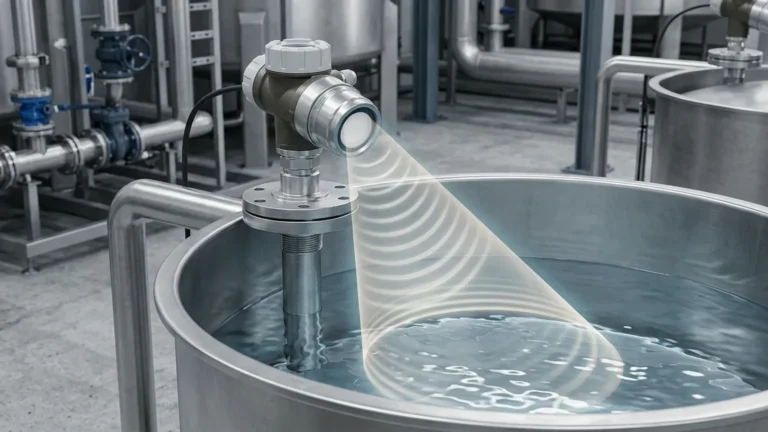
Ultrasonic height measurement operates on the "Time-of-Flight" (ToF) principle. The instrument consists of a transducer that serves both as a transmitter and a receiver.
The Measurement Cycle
1. Emission: The transducer emits a pulse of ultrasonic sound energy (typically between 20 kHz and 200 kHz).
2. Propagation: The sound wave travels through the air or gas space toward the target material.
3. Reflection: Upon hitting the surface of the liquid or solid, the pulse is reflected back toward the sensor.
4. Detection: The transducer receives the returning echo.
5. Calculation: The internal electronics measure the time interval between the emission and the reception.
The distance ($D$) from the sensor to the surface is calculated using the formula:
$$D = \frac{v \times t}{2}$$
Where:
* $v$ is the speed of sound in the medium (approximately 343 m/s in air at 20°C).
* $t$ is the total time elapsed for the round trip.
To determine the actual height ($H$) of the material in a vessel, the device subtracts the measured distance ($D$) from the total height of the tank ($L$), which is programmed during commissioning: $H = L – D$.
The Role of Temperature Compensation
The speed of sound is not constant; it varies with the temperature of the medium through which it travels. In air, the speed of sound changes by approximately 0.17% per degree Celsius. To maintain accuracy in ultrasonic height measurement, high-quality sensors include an integrated temperature probe. This allows the device to automatically adjust the distance calculation based on real-time ambient temperature fluctuations.
Key Components of an Ultrasonic Level Meter System
An integrated ultrasonic system typically comprises three main elements:
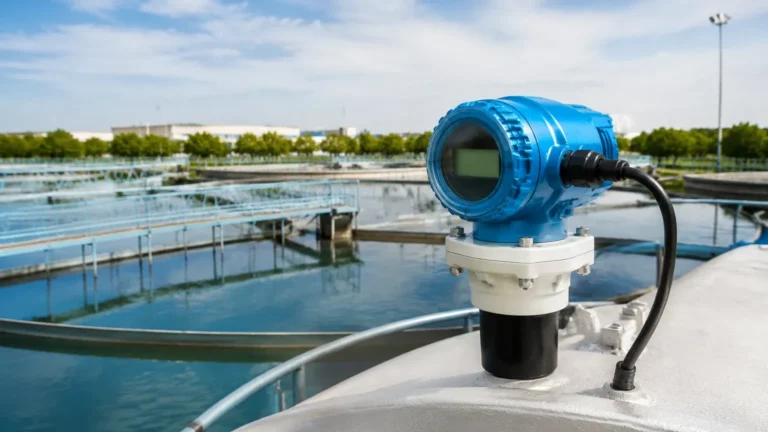
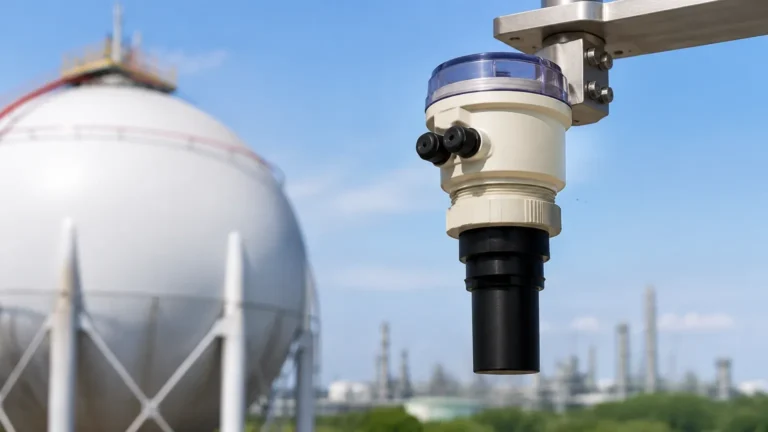
1. The Transducer: Usually made of piezoelectric crystals encased in chemically resistant materials like PVDF or PTFE. It converts electrical energy into mechanical vibrations (sound) and vice versa.
2. The Electronic Controller: This unit processes the signals, filters out noise, and performs the mathematical conversions. In modern "smart" sensors, this is integrated into the sensor head.
3. Signal Output: The data is typically transmitted via 4-20mA analog loops, Modbus RS485, or HART protocols to a PLC (Programmable Logic Controller) or SCADA system.
Selection Criteria: Matching Technology to Application
When evaluating ultrasonic height measurement solutions, several factors must be considered to ensure long-term reliability. Not all environments are suitable for ultrasonic waves, and selecting the wrong specification can lead to signal loss.
Practical Selection Table
| Factor | Requirement | Consideration |
| :— | :— | :— |
| Measurement Range | 0.2m to 30m | Higher ranges require lower frequency transducers to overcome air attenuation. |
| Material State | Liquid or Solid | Liquids provide a cleaner echo; solids (powders/grains) may require higher power due to sound absorption. |
| Chemical Compatibility | Corrosive vs. Inert | Use PVDF or PTFE-faced transducers for acids or bases. |
| Process Pressure | < 3 Bar (typical) | High pressure increases air density, affecting sound speed; vacuum prevents sound propagation entirely. |
| Accuracy Needs | ±0.25% to ±0.5% | Standard for most industrial inventory applications. |
Installation Best Practices and Geometric Considerations
Proper installation is the most critical factor in the success of ultrasonic height measurement. Because sound waves spread out as they travel, the physical environment of the tank must be accounted for.
1. The Dead Zone (Blocking Distance)
Every ultrasonic sensor has a "dead zone" immediately in front of the transducer face where it cannot receive an echo. This is because the transducer is still vibrating from the transmission and cannot yet switch to receiving mode. If the material height enters this zone, the reading will become erratic or fixed at a maximum value. Always mount the sensor high enough so the maximum expected level remains below the dead zone (typically 0.2m to 0.6m depending on the model).
2. Beam Angle and Obstructions
The ultrasonic pulse is emitted in a cone shape, usually between 5° and 12°. Any internal tank structures—such as ladders, pipes, or agitators—that fall within this cone will create "false echoes."
* Mounting Position: Ideally, mount the sensor at 1/2 or 1/3 of the tank radius away from the wall.
* Avoid the Center: In rounded-top tanks, mounting in the exact center can result in multiple reflections (parabolic effect) that confuse the sensor.
3. Surface Conditions
* Turbulence: Rapidly moving liquid surfaces can scatter the sound wave. In these cases, a stilling well (a vertical pipe) can be used to provide a calm surface for measurement.
* Foam: Heavy, dense foam can absorb ultrasonic signals entirely, leading to a "Lost Echo" error. If foam is a permanent process feature, radar technology may be a more appropriate alternative.
Limitations and Environmental Constraints
While Ultrasonic Level Meters are versatile, they have physical limits defined by the laws of acoustics:
* Vacuum Applications: Sound requires a medium to travel. In a vacuum, ultrasonic height measurement is impossible.
* Heavy Dust or Steam: While light dust is manageable, extremely dense dust or heavy steam can attenuate the signal. High-power transducers with self-cleaning faces are often required for these environments.
* Gas Composition: If the tank contains a gas other than air (e.g., Nitrogen, CO2, or Methane), the speed of sound will differ significantly. The instrument must be calibrated for the specific gas constant of the medium.
* Temperature Extremes: Most ultrasonic sensors are rated for temperatures between -40°C and +80°C. Beyond this range, the piezoelectric components may degrade, and the speed of sound calculation becomes less reliable.
Maintenance and Troubleshooting
Ultrasonic sensors are generally low-maintenance because they have no moving parts. However, periodic checks ensure continued accuracy.
1. Transducer Cleaning: In applications with high humidity or splashing, condensation or material buildup can occur on the sensor face. A gentle wipe with a soft cloth and mild solvent is usually sufficient.
2. Signal Strength Monitoring: Most modern units provide a signal-to-noise ratio (SNR) or "echo strength" value. A declining SNR often indicates either a dirty sensor or changing process conditions like increased foam.
3. Firmware Updates: Manufacturers occasionally release updates to improve signal processing algorithms, especially for filtering out false echoes in complex tank geometries.
Frequently Asked Questions (FAQ)
Q: Can ultrasonic height measurement work through a plastic tank wall?
A: No. While some technologies can sense through walls, standard ultrasonic pulses reflect off the first dense surface they hit. The sensor must have a clear path to the material or be mounted in a nozzle that penetrates the tank top.
Q: How does wind affect measurement in open-air applications?
A: In outdoor applications like reservoir monitoring or open channel flow, strong crosswinds can "blow" the sound wave away from the receiver. In these cases, using a protective shroud or a lower-frequency sensor can help stabilize the reading.
Q: What is the difference between ultrasonic and radar level measurement?
A: Ultrasonic uses sound waves (mechanical energy), while radar uses electromagnetic waves. Radar is unaffected by air temperature, vacuum, or dust, but it is generally more expensive. Ultrasonic remains the preferred choice for water-based liquids and general-purpose applications where cost-efficiency is a priority.
Q: How do I handle a "Lost Echo" alarm?
A: First, check the transducer face for buildup. Second, verify that the material level hasn't entered the dead zone. Third, check for new obstructions in the tank or excessive foam on the surface. Adjusting the "gain" or "sensitivity" settings in the controller can often resolve intermittent signal loss.
Conclusion
Ultrasonic height measurement provides a robust, non-contact solution for a wide array of industrial level sensing needs. By understanding the relationship between sound speed and environmental factors, and by following strict installation guidelines regarding beam angles and dead zones, engineers can achieve highly accurate and maintenance-free monitoring. Whether managing water treatment facilities or chemical storage, selecting the appropriate Ultrasonic Level Meters is a critical step toward operational efficiency and safety.