Ultrasonic Level Sensor Application
Ultrasonic Level Sensor Application: A Comprehensive Engineering Guide
In the landscape of industrial automation, precise level measurement is critical for inventory management, process safety, and operational efficiency. Among the various technologies available, ultrasonic measurement has emerged as a preferred non-contact solution for a wide range of media. This guide explores the fundamental principles, technical selection criteria, and practical ultrasonic level sensor application strategies across diverse industrial sectors.
Understanding the Measurement Principle
Before determining the suitability of an ultrasonic level sensor application, it is essential to understand the physics governing the technology. Ultrasonic level meters operate on the "Time-of-Flight" (ToF) principle.
The instrument’s transducer emits high-frequency sound pulses (typically ranging from 20 kHz to 70 kHz). These acoustic waves travel through the air or gas space in a vessel, strike the surface of the target medium, and reflect back to the transducer. The electronics within the meter measure the total time interval ($t$) between the pulse emission and the echo reception.
Since the speed of sound in air ($c$) is a known constant (approximately 344 m/s at 20°C), the distance ($D$) from the sensor to the material surface is calculated using the formula:
$$D = \frac{c \times t}{2}$$
The device then subtracts this distance from the total tank height (programmed during commissioning) to determine the actual level of the liquid or solid. Because this method is non-contact, it is inherently resistant to issues that plague invasive sensors, such as corrosion, coating, or mechanical wear.
Primary Ultrasonic Level Sensor Application Scenarios
Ultrasonic Level Meters are versatile tools utilized in numerous sectors. Welk provides specialized solutions tailored to the following primary applications:
1. Water and Wastewater Management
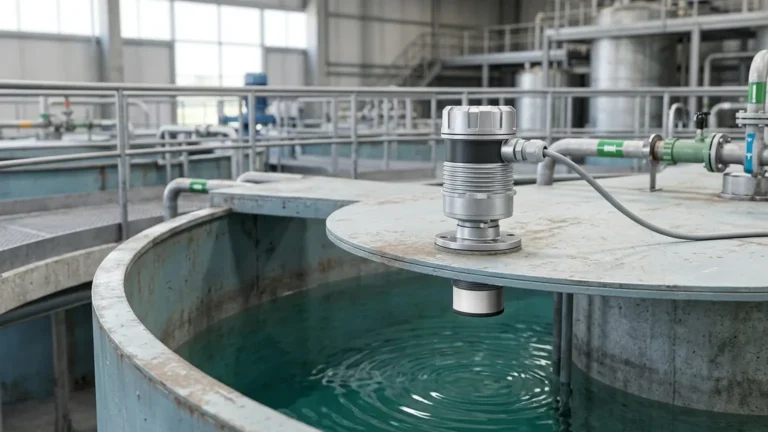
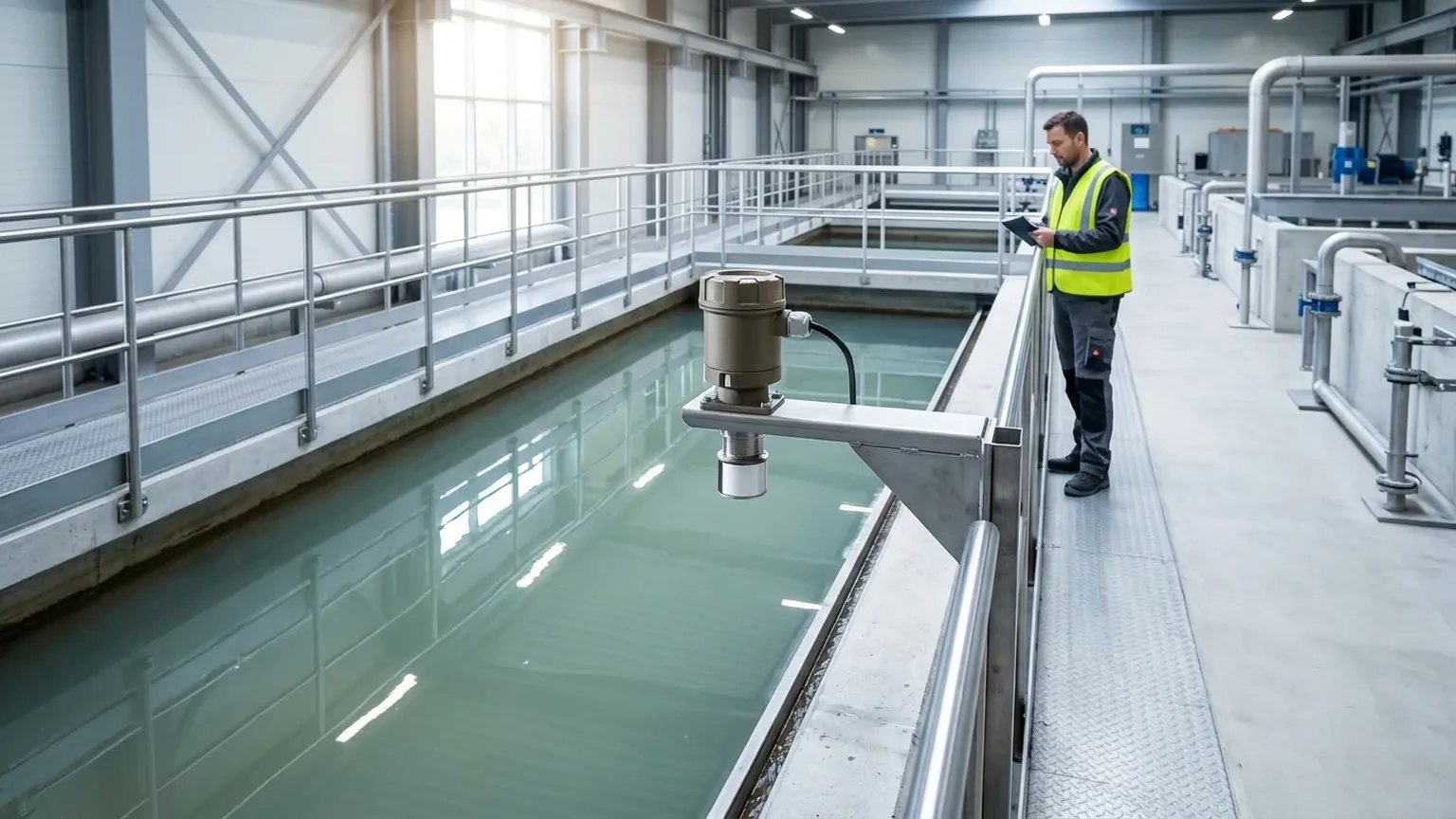
This is perhaps the most common ultrasonic level sensor application. In municipal water treatment, these sensors are used to monitor levels in wet wells, pump stations, and chemical storage tanks (such as sodium hypochlorite or alum). Because the sensors do not touch the liquid, they are unaffected by the debris or biological growth common in wastewater.
2. Chemical Processing
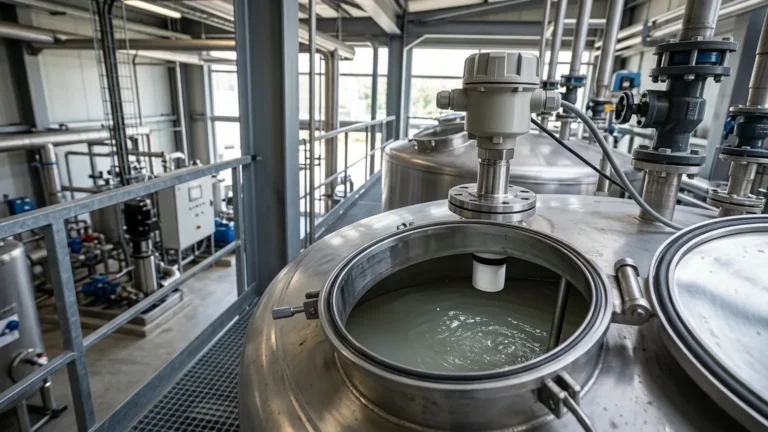
In the chemical industry, storage tanks often contain corrosive acids or bases. Traditional float switches or pressure transmitters may degrade quickly in these environments. A non-contact ultrasonic sensor housed in PVDF or PTFE can accurately monitor levels without risking material degradation or process contamination.
3. Open Channel Flow Measurement
Beyond simple tank levels, ultrasonic sensors are frequently applied in open channel flow monitoring. By mounting the sensor over a flume or weir, the meter can convert the measured head height into a volumetric flow rate using standard hydraulic equations (e.g., Parshall or Khafagi flumes).
4. Industrial Automation and Food & Beverage
In food processing, hygiene is paramount. Ultrasonic sensors allow for level monitoring without introducing probes into the product, maintaining the integrity of sanitary batches. They are commonly found in CIP (Clean-in-Place) tanks and beverage bottling lines.
Technical Selection Criteria for Industrial Environments
Selecting the correct instrument requires an evaluation of the specific process conditions. Not every environment is suitable for ultrasonic technology. Engineers should consider the following parameters:
Measurement Range
Ultrasonic sensors are available in various power outputs. Short-range sensors (up to 5 meters) are ideal for small sumps, while high-power transducers can reach distances of 30 meters or more. It is critical to select a range that accounts for the "Dead Zone."
The Dead Zone (Blocking Distance)
Every ultrasonic transducer has a minimum distance near the sensor face where it cannot receive an echo because it is still vibrating from the pulse emission. This is known as the dead zone. Typically, this ranges from 0.2 meters to 0.8 meters depending on the frequency. The maximum expected level in the tank must never enter this dead zone, or the sensor will provide an error or a false reading.
Temperature and Pressure
The speed of sound is highly dependent on air temperature. A change of 1°C can result in a 0.17% error in distance measurement. Professional-grade Ultrasonic Level Meters from Welk include integrated temperature sensors to provide real-time compensation. However, extreme temperatures (above 80°C) or high pressures (above 3 bar) can significantly alter the air density and the reliability of the acoustic signal.
Chemical Compatibility
The housing and transducer face must be compatible with the vapors present in the tank. While the sensor is non-contact, the transducer is still exposed to fumes. Common materials include Polypropylene (PP) for general use and PVDF for aggressive chemical environments.
Installation Best Practices and Considerations
Correct installation is the most significant factor in the success of an ultrasonic level sensor application. Even the most advanced meter will fail if the acoustic path is obstructed.
1. Perpendicular Alignment: The transducer face must be mounted perfectly parallel to the liquid surface. If the sensor is tilted, the pulse will reflect away from the transducer rather than back to it.
2. Avoid the "Beam Angle" Obstructions: The ultrasonic pulse spreads out in a cone shape (typically 5° to 12°). Ensure that no internal tank structures—such as ladders, agitators, or reinforcement struts—intersect this cone. If an obstruction is unavoidable, many modern meters offer "False Echo Suppression" software to ignore these fixed reflections.
3. Nozzle Height and Diameter: If mounting the sensor on a pipe nozzle, the nozzle must be wide enough and short enough to prevent the pulse from reflecting off the nozzle walls before it even enters the tank.
4. Inflow Interference: Never mount the sensor directly above the tank inlet. The turbulence and splashing from the incoming material will scatter the ultrasonic signal and create "noise" that leads to unstable readings.
Identifying and Managing Performance Limitations
While highly effective, ultrasonic technology has physical limitations that engineers must recognize during the design phase:
* Heavy Foam: Foam acts as an acoustic absorber. If a thick layer of dense foam forms on the liquid surface, it may absorb the ultrasonic pulse entirely, resulting in a "Lost Echo" error. In such cases, radar or hydrostatic transmitters may be more appropriate.
* Vacuum Conditions: Sound requires a medium (air or gas) to travel. Ultrasonic sensors cannot function in a vacuum.
* Heavy Dust or Steam: While light dust is manageable, extremely heavy dust (common in cement or flour silos) or dense steam can scatter the sound waves. High-frequency sensors are more susceptible to this than low-frequency models.
* Surface Turbulence: Rapidly boiling or highly agitated liquids can disperse the signal. This can often be mitigated by using a stilling well—a vertical pipe that shields the liquid surface from turbulence while allowing the level to equalize.
Comparison and Selection Table
The following table provides a quick reference for evaluating the suitability of an ultrasonic level sensor application based on process conditions.
| Process Condition | Suitability | Recommendation |
| :— | :— | :— |
| Atmospheric Water Tanks | Excellent | Standard PP housing; integrated temp compensation. |
| Corrosive Acids/Bases | Excellent | Use PVDF or PTFE coated transducers. |
| Vacuum Vessels | Not Suitable | Switch to Guided Wave Radar or Hydrostatic. |
| High-Pressure Boilers | Poor | Pressure affects sound speed; use Radar. |
| Open Channels (Flumes) | Excellent | Ensure sensor is mounted at the specified head point. |
| Heavy Surface Foam | Marginal | Test with low-frequency sensors or use Radar. |
| Solid Powders (Dusty) | Fair | Use high-power, low-frequency transducers. |
Frequently Asked Questions (FAQ)
Q1: Can ultrasonic level meters measure solids?
Yes, but with caveats. Solids like grain, sand, or plastic pellets often form a conical pile rather than a flat surface. This causes the sound to reflect in multiple directions. For solid ultrasonic level sensor application, it is recommended to use a sensor with a higher power output and a narrower beam angle to ensure a sufficient return signal.
Q2: How does wind affect the measurement in outdoor applications?
Strong wind can "blow" the ultrasonic pulse away from the transducer, especially over long distances. For outdoor reservoirs or open channels, it is best to use a sensor with a higher signal-to-noise ratio or install a protective sun/wind shield to stabilize the air column beneath the sensor.
Q3: What is the difference between a two-wire and a four-wire ultrasonic meter?
A two-wire meter is loop-powered, meaning the same two wires provide power (usually 24V DC) and carry the 4-20mA signal. These are easier to install but have less power for the transducer. Four-wire meters have separate power and signal circuits, allowing for higher-power pulses which are better for challenging applications with dust or longer ranges.
Q4: Does the color of the liquid affect the measurement?
No. Unlike optical or laser sensors, ultrasonic technology relies on sound waves, which are unaffected by the color, transparency, or dielectric constant of the medium. This makes it ideal for dark or opaque liquids like wastewater or oil.
Conclusion
Successful ultrasonic level sensor application depends on matching the instrument's technical specifications to the physical realities of the environment. By understanding the constraints of the dead zone, the impact of temperature, and the necessity of a clear acoustic path, engineers can implement highly reliable and maintenance-free level measurement systems.
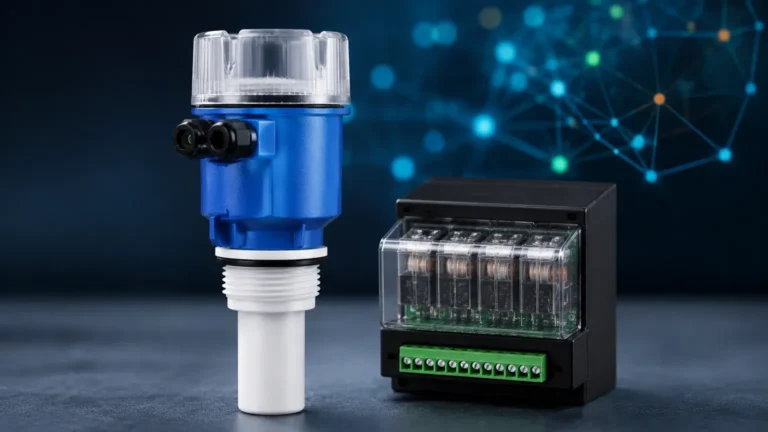
For those seeking robust hardware for industrial projects, Welk offers a range of Ultrasonic Level Meters designed for accuracy and durability in the most demanding conditions. Whether managing a municipal water facility or a complex chemical process, selecting the right ultrasonic solution ensures long-term operational success.