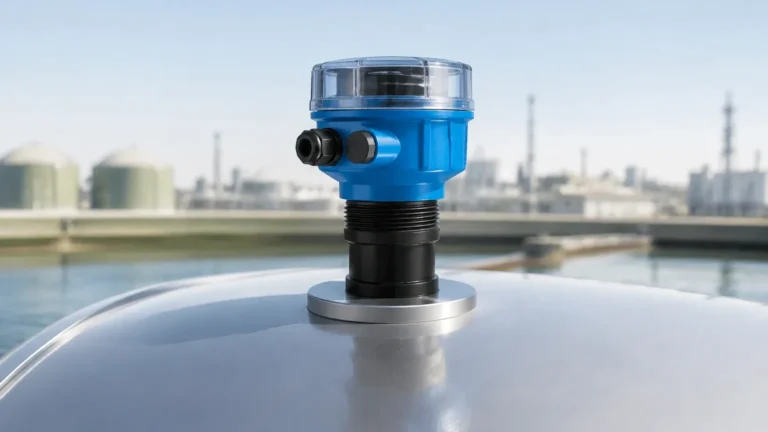
Ultrasonic Level Sensor Ifm
Ultrasonic Level Sensor IFM: Engineering Guide for Selection and Industrial Application
In the modern industrial landscape, precision and reliability in level measurement are fundamental to operational efficiency and safety. Among the diverse array of sensing technologies, ultrasonic measurement remains a cornerstone for non-contact applications. This guide provides a detailed technical analysis of the ultrasonic level sensor IFM, compares it with broader industrial Ultrasonic Level Meters, and outlines the engineering considerations necessary for successful integration into automated process environments.
The Physics of Ultrasonic Level Measurement
To effectively deploy an ultrasonic level sensor IFM or any industrial-grade meter, engineers must first understand the underlying physical principles. Ultrasonic sensors utilize high-frequency sound waves, typically above the range of human hearing (20 kHz to 200 kHz), to determine the distance to a target medium.
The Time-of-Flight (ToF) Principle
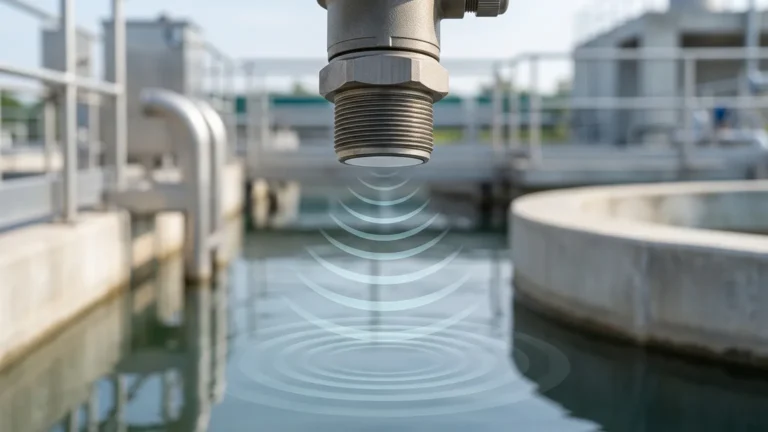
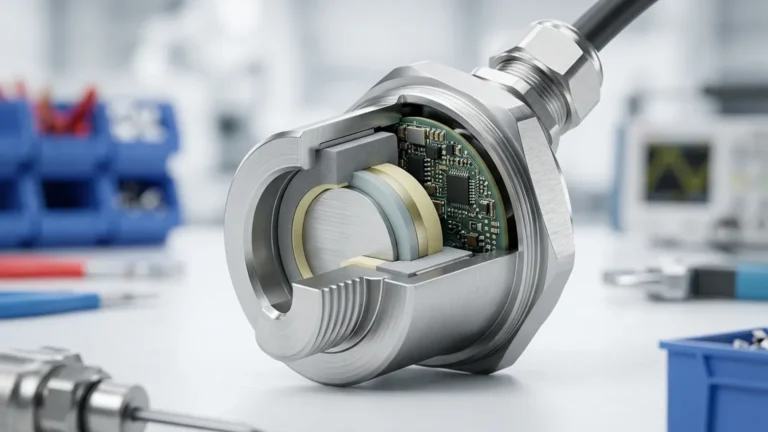
The sensor’s transducer acts as both a transmitter and a receiver. It emits a short burst of ultrasonic energy that travels through the air at the speed of sound. When these waves encounter a change in acoustic impedance—such as the surface of a liquid or a solid—they are reflected back toward the sensor. The internal electronics measure the time interval between the emission of the pulse and the reception of the echo.
The distance is calculated using the formula:
Distance = (Speed of Sound × Time) / 2
Frequency and Beam Spread
The frequency of the sensor dictates its performance characteristics. Higher frequencies (e.g., 200 kHz) allow for smaller transducers and shorter dead zones, making them ideal for compact sensors like the ultrasonic level sensor IFM used in machine building. Lower frequencies (e.g., 20 kHz to 40 kHz) have greater energy and can travel longer distances, which is characteristic of large-scale industrial Ultrasonic Level Meters used in deep silos or large wastewater basins.
Temperature Compensation
The speed of sound in air is not constant; it varies with temperature (approximately 0.6 m/s per degree Celsius). Without compensation, a 10°C temperature shift could result in a measurement error of nearly 2%. Professional sensors incorporate an integrated NTC or PT1000 temperature element to adjust the calculation in real-time, ensuring accuracy across varying seasonal or process temperatures.
Evaluating the Ultrasonic Level Sensor IFM Portfolio
IFM Electronic is a prominent manufacturer in the factory automation sector, specializing in sensors that bridge the gap between simple component sensing and complex process control. Their ultrasonic range is frequently utilized in applications where space is at a premium and digital communication is required.
Compact Automation Focus
Most models in the ultrasonic level sensor IFM lineup, such as the UGT or UG series, are designed with M12, M18, or M30 threaded housings. These are optimized for mounting on small tanks, conveyor systems, or mobile machinery. Their primary advantage lies in their "plug-and-play" nature and high ingress protection (IP67 or IP69K), making them suitable for washdown environments in food and beverage production.
IO-Link Capability
A defining feature of the modern ultrasonic level sensor IFM is the inclusion of IO-Link technology. This point-to-point digital communication interface allows for:
* Remote Parameterization: Engineers can set sensing ranges and output logic from a PLC or PC, eliminating the need for manual adjustment at the sensor head.
* Diagnostic Data: The sensor can report its "echo quality," allowing maintenance teams to identify when the transducer face is dirty or if the signal is being obstructed before a total failure occurs.
* Digital Accuracy: By transmitting the level value as a digital process data point, the system avoids the signal degradation and EMI issues associated with traditional 4-20mA analog loops.
Critical Selection Parameters for Process Engineers
When specifying a level measurement solution, it is vital to distinguish between a factory automation sensor and a dedicated process meter. While an ultrasonic level sensor IFM is excellent for machine-level tasks, larger industrial Ultrasonic Level Meters are often required for complex chemical or environmental applications.
Technical Comparison Table
| Specification | Compact Sensor (e.g., IFM UGT) | Industrial Process Meter (e.g., Welk LMS) |
| :— | :— | :— |
| Measuring Range | 0.05m to 2.5m (typical) | 0.3m to 30m |
| Housing Material | Stainless Steel (316L) / PBT | PVDF / Cast Aluminum / PP |
| Output Options | IO-Link, PNP/NPN, 4-20mA | 4-20mA/HART, Modbus RTU, GPRS/NB-IoT |
| Display | LED Status / 2-digit numeric | Multi-line Backlit LCD with Graphing |
| Mounting | M18/M30 Thread | Flange (DN50/80) or G2" Thread |
| Beam Angle | ~8° to 12° | ~5° to 10° (focused) |
Chemical Compatibility
The material of the transducer face (the part that "sees" the process) is critical. In many automation-grade sensors, the transducer is made of a PE (polyethylene) or epoxy resin. While durable, these may not withstand concentrated acids or solvents. In such cases, selecting a process meter with a full PVDF (polyvinylidene fluoride) wetted surface is mandatory to prevent chemical etching of the sensor diaphragm.
Advanced Installation Strategies and Beam Management
Even the highest quality ultrasonic level sensor IFM will fail if installed incorrectly. The most common issues in the field relate to physical placement and the management of the ultrasonic beam.
The Blocking Distance (Dead Zone)
Every ultrasonic sensor has a minimum distance it cannot measure, known as the dead zone. This is caused by the time required for the transducer to stop vibrating (ringing) after emitting a pulse before it can listen for the return. If the liquid level rises into this zone, the sensor may report a full tank as empty or provide a "stuck" reading. Engineers must ensure the sensor is mounted high enough that the maximum possible level remains below this threshold.
Avoiding False Echoes
The ultrasonic pulse spreads out in a cone. Any physical object within this cone—such as a ladder, a cooling coil, or even a rough tank wall—will create a reflection. This is known as a "false echo."
* Clearance: Maintain a minimum distance from the tank wall, typically 10% of the total tank height.
* Inlet Positioning: Never mount the sensor directly above a fill pipe. The turbulence and falling liquid will scatter the sound waves.
* Agitators: If the tank has an agitator, the sensor should be positioned where the blades do not cross the beam path, or software "masking" must be used to ignore the periodic reflections from the blades.
Mounting in Nozzles
If the sensor is mounted in a standpipe or a tall nozzle, the nozzle must be smooth and free of burrs. If the nozzle is too narrow or too long, the ultrasonic pulse will bounce off the internal walls of the nozzle, creating a strong false echo that masks the actual liquid level. In these scenarios, a sensor with a narrower beam angle or a specialized nozzle extension setting is required.

Environmental Constraints and Technology Limitations
While ultrasonic technology is robust, it is not a "one-size-fits-all" solution. Understanding where it fails is as important as knowing where it succeeds.
1. Pressure Extremes: Ultrasonic sensors are generally designed for atmospheric or near-atmospheric pressure. High pressure changes the density of the air, significantly altering the speed of sound and measurement accuracy. For high-pressure vessels, Guided Wave Radar (GWR) is the preferred alternative.
2. Heavy Foam: Foam is the "kryptonite" of ultrasonic sensors. Because foam is mostly air trapped in thin liquid walls, it absorbs acoustic energy rather than reflecting it. If a process involves significant foaming (e.g., fermentation or soap production), a non-contact radar or a hydrostatic pressure transmitter should be used.
3. Vapors and Gas Composition: The speed of sound is calibrated for air (78% Nitrogen, 21% Oxygen). If the tank contains a high concentration of CO2, Methane, or heavy solvent vapors, the speed of sound changes drastically. Unless the sensor allows for custom gas constant calibration, the readings will be inaccurate.
4. Vacuum: Sound cannot travel in a vacuum. Therefore, ultrasonic sensors cannot be used in vacuum distillation or similar processes.
Industrial Maintenance and Performance Optimization
One of the primary benefits of using an ultrasonic level sensor IFM or a Welk industrial meter is the low maintenance requirement due to the lack of moving parts. However, a routine check-up is still recommended for mission-critical applications.
* Transducer Cleaning: In applications involving condensation or dust, a film can build up on the transducer face. While many sensors can "fire through" light condensation, a thick layer of dried material will attenuate the signal. A soft cloth and mild detergent are usually sufficient for cleaning.
* Firmware and Mapping: Periodically review the "echo curve" if the sensor supports it. As tanks age or internal structures change, re-mapping the false echoes ensures the sensor continues to track the correct surface.
* Power Supply Integrity: Ultrasonic sensors are sensitive to voltage drops and electrical noise, especially those with analog 4-20mA outputs. Ensuring a stable 24V DC power supply and using shielded cables is essential for preventing signal "jitter."
Sector-Specific Applications
Water and Wastewater Management
This is the most common application for Ultrasonic Level Meters. They are used for monitoring levels in wet wells, lift stations, and open channels. Because the sensor does not touch the water, it is immune to the grease, rags, and corrosive gases (like H2S) that typically destroy contact-based sensors.
Food and Beverage Processing
In dairies and breweries, the ultrasonic level sensor IFM is valued for its hygienic design. Stainless steel housings and the ability to measure through a plastic tank wall (in some configurations) or via a hygienic fitting make it ideal for monitoring milk, beer, or CIP chemicals.
Chemical Distribution
For IBC (Intermediate Bulk Container) monitoring, compact ultrasonic sensors provide a cost-effective way to track chemical usage. When integrated with IO-Link or wireless gateways, they enable automated reordering systems, optimizing the supply chain for industrial manufacturers.
Frequently Asked Questions (FAQ)
Q: Can an ultrasonic level sensor IFM measure the level of solids like plastic pellets?
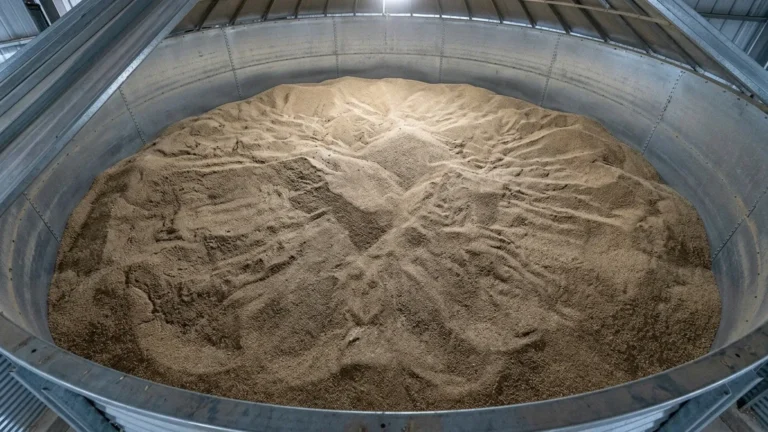
A: Yes, but the range is typically reduced by 50% compared to liquids. Solids do not have a flat, reflective surface; they form a cone, which scatters the sound waves. It is important to select a sensor with sufficient power and to mount it away from the fill point where the cone's peak forms.
Q: How does wind affect an outdoor ultrasonic sensor?
A: Strong wind can "blow" the ultrasonic pulse away from the receiver, especially over long distances (e.g., >5 meters). For outdoor applications like river level monitoring, it is often better to use a sensor with a high-power transducer or a protective stilling well to shield the measurement path.
Q: What is the difference between an ultrasonic sensor and a radar sensor?
A: Ultrasonic uses sound waves (mechanical energy), while radar uses microwaves (electromagnetic energy). Radar is unaffected by air temperature, vacuum, or heavy dust, but it is generally more expensive. Ultrasonic is more cost-effective for standard liquid applications at atmospheric pressure.
Q: How do I handle condensation on the sensor face?
A: Many industrial Ultrasonic Level Meters feature a vibrating face that naturally sheds small droplets. If condensation is heavy, mounting the sensor at a slight angle (less than 3°) or using a sensor with a PTFE or PVDF face can help prevent water droplets from clinging to the transducer.
Q: Can I use IO-Link sensors over long distances?
A: The standard limit for an IO-Link cable is 20 meters. If the distance between the ultrasonic level sensor IFM and the control cabinet is greater, you will need to use an IO-Link master/gateway located closer to the sensor or switch to a traditional 4-20mA signal with a shielded twisted pair.
By carefully considering the acoustic environment, chemical compatibility, and digital integration requirements, engineers can leverage ultrasonic technology to create robust, maintenance-free level control systems. Whether utilizing a compact ultrasonic level sensor IFM for machine-level tasks or a high-capacity industrial meter for plant-wide processes, the key to success lies in adhering to fundamental installation and physics-based boundaries.