Ultrasonic Level Sensor Vega
A Technical Guide to Ultrasonic Level Measurement: Evaluating Industrial Solutions
In the landscape of industrial process control, selecting the correct instrumentation for liquid and solid level monitoring is critical for operational efficiency and safety. Among the most prevalent non-contact technologies are ultrasonic level meters. These devices have become a staple in water treatment, chemical processing, and general industrial automation due to their lack of moving parts and ease of installation.
When engineers evaluate high-performance options, such as the ultrasonic level sensor vega series or specialized industrial solutions from manufacturers like Welk, understanding the underlying physics and application constraints is essential. This guide provides a comprehensive technical overview of ultrasonic technology, selection criteria, and installation best practices to ensure reliable measurement performance.
1. Measurement Principles of Ultrasonic Technology
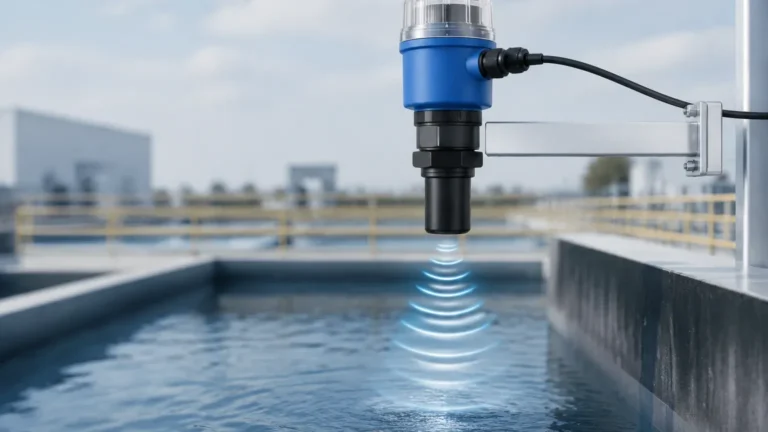
Ultrasonic level measurement is based on the "Time-of-Flight" (ToF) principle. The instrument’s transducer emits a series of high-frequency ultrasonic pulses (typically ranging from 20 kHz to 70 kHz) toward the surface of the medium. These sound waves travel through the air or gas space above the material, bounce off the surface, and return to the transducer.
The Calculation Formula
The distance ($D$) between the sensor and the material surface is calculated using the formula:
$$D = \frac{c \times t}{2}$$
Where:
* $c$: The speed of sound in the medium (usually air).
* $t$: The measured time elapsed between the emission of the pulse and the reception of the echo.
Because the pulse must travel to the surface and back, the total distance is divided by two. The level ($L$) of the material in the tank is then determined by subtracting the measured distance ($D$) from the total height of the vessel ($H$): $L = H – D$.
The Role of Temperature Compensation
The speed of sound is not a constant; it varies significantly with air temperature. In air at sea level, the speed of sound increases by approximately 0.6 meters per second for every degree Celsius increase in temperature. To maintain accuracy, modern Ultrasonic Level Meters incorporate an integrated temperature sensor. This sensor allows the device’s microprocessor to adjust the distance calculation in real-time based on the ambient temperature within the vessel.
2. Evaluating the Market: Ultrasonic Level Sensor Vega and Industrial Alternatives
When researching the ultrasonic level sensor vega (such as the VEGASON series), users often find a focus on high-end signal processing and robust housing materials. These sensors are well-regarded for their ability to filter out noise in complex environments. However, for many industrial applications, the choice often comes down to balancing these high-end features with cost-effectiveness and specific integration needs.
Industrial manufacturers like Welk provide comparable technology that focuses on reliability in standard water treatment and chemical storage applications. When comparing a specialized ultrasonic level sensor vega to other professional-grade ultrasonic level meters, engineers should look at the following technical overlaps:
* Signal Processing: Both utilize sophisticated algorithms to distinguish between the true material echo and false echoes caused by internal tank obstructions (ladders, agitators, or weld seams).
* Material Compatibility: Transducers are typically available in PVDF (Polyvinylidene fluoride) or PP (Polypropylene) to resist corrosive chemical vapors.
* Output Protocols: Standard 4-20mA signals with HART, Modbus RS485, or Profibus are common across both premium and standard industrial models.
3. Key Selection Criteria for Ultrasonic Level Meters
Selecting the right instrument requires more than just knowing the tank height. Engineers must consider several technical parameters to ensure the sensor functions correctly throughout the entire process cycle.
Measuring Range and Frequency
The maximum range of an ultrasonic sensor is determined by its frequency. Lower frequency sensors (e.g., 20 kHz) can measure longer distances (up to 30 or 40 meters) because lower frequencies suffer less attenuation in the air. Conversely, higher frequency sensors (e.g., 60 kHz) are better suited for shorter ranges (0.25 to 10 meters) and offer better resolution and smaller "dead zones."
The Dead Zone (Blocking Distance)
Every ultrasonic sensor has a "dead zone" (also known as the blocking distance) directly beneath the transducer face. This is the minimum distance required for the transducer to stop vibrating from the transmission pulse before it can begin listening for the return echo. If the liquid level enters this zone, the sensor will provide an erratic or "full" reading. Typical dead zones range from 0.2 meters to 0.8 meters depending on the frequency.
Beam Angle
The ultrasonic pulse does not travel in a straight line but spreads out in a cone. The beam angle (usually between 5° and 12°) determines the footprint of the signal at the material surface. A narrow beam angle is preferable in narrow tanks or vessels with internal obstructions to prevent false reflections from the walls.
4. Technical Comparison Table
The following table outlines typical specifications for industrial ultrasonic level meters used in standard process environments.
| Feature | Standard Industrial Level Meter | High-Precision / Vega-Equivalent |
| :— | :— | :— |
| Measuring Range | 0.4m to 15m | 0.25m to 30m |
| Accuracy | ±0.5% of Full Scale | ±0.2% of Full Scale |
| Resolution | 1mm to 3mm | 1mm |
| Beam Angle | 10° – 12° | 5° – 8° |
| Housing Material | ABS / Nylon / Aluminum | Stainless Steel / PBT |
| Transducer Material | PP / PVC | PVDF / PTFE / ETFE |
| Protection Rating | IP65 / IP66 | IP67 / IP68 |
5. Installation Considerations and Best Practices
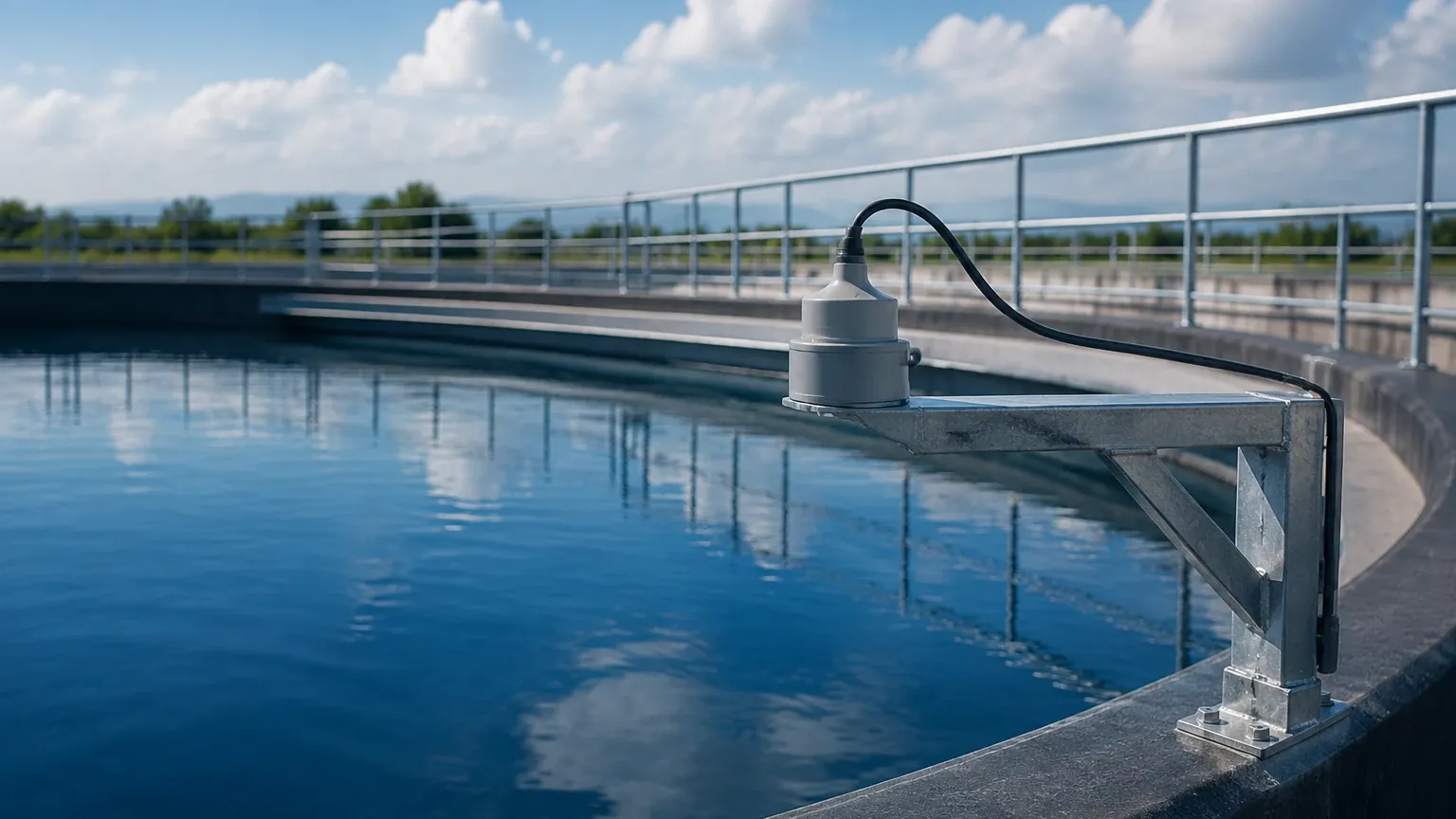
Proper installation is the single most important factor in the success of an ultrasonic level measurement system. Even a high-end ultrasonic level sensor vega will fail if mounted incorrectly.
1. Vertical Alignment
The sensor must be mounted perfectly perpendicular to the liquid surface. If the sensor is tilted, the ultrasonic pulse will hit the surface and reflect away from the transducer rather than back toward it, resulting in a "Loss of Echo" (LOE) error.
2. Positioning Relative to Tank Walls
To avoid interference from wall echoes, the sensor should not be mounted too close to the vessel side. A general rule of thumb is to place the sensor at a distance from the wall equal to at least 1/6th of the tank height.
3. Avoiding Obstructions
The "clear path" of the ultrasonic beam must be free of ladders, pipes, and fill streams. If an obstruction is unavoidable, many modern Ultrasonic Level Meters allow for "False Echo Mapping," where the user tells the sensor to ignore echoes at a specific distance.
4. Nozzle Geometry
If the sensor is mounted on a standpipe or nozzle, the inner diameter of the nozzle must be smooth and free of burrs. Furthermore, the transducer face should ideally extend slightly beyond the bottom of the nozzle to prevent ringing within the pipe.
6. Limitations and Environmental Constraints
While ultrasonic technology is versatile, it is not a universal solution. Certain environmental factors can attenuate the signal or change the speed of sound beyond the capabilities of temperature compensation.
* Vacuum Applications: Sound waves require a medium (gas) to travel. Ultrasonic sensors cannot function in a vacuum.
* High Pressure: High-pressure environments change the density of the gas, which can affect the propagation of sound waves and the physical integrity of the transducer.
* Heavy Foam: Thick, dense foam on the surface of a liquid acts as an acoustic absorber. In such cases, the pulse is absorbed rather than reflected, leading to signal loss.
* Heavy Dust or Steam: While light dust is manageable, extremely dense dust (in silos) or heavy steam can scatter the ultrasonic signal. In these scenarios, Radar (GWR or Non-contact) is often recommended over ultrasonic.
7. Frequently Asked Questions (FAQ)
Q: Can I use an ultrasonic level sensor for solids?
A: Yes, but with caveats. Solids like grain or plastic pellets often have an angle of repose, which can deflect the signal. You must choose a sensor with a higher power output and often a lower frequency to compensate for the uneven surface.
Q: How do I handle turbulence in the tank?
A: Turbulence can cause the surface to be uneven, leading to fluctuating readings. This can be mitigated by increasing the "damping" or "averaging" setting in the sensor’s software or by using a stilling well (a vertical pipe that stabilizes the liquid surface).
Q: What is the difference between a 2-wire and 4-wire ultrasonic meter?
A: A 2-wire sensor is loop-powered, meaning the power and the 4-20mA signal share the same two wires. These are easier to wire but have less power for signal processing. A 4-wire sensor has separate wires for power (often 24VDC or 110/220VAC) and signal, allowing for a stronger pulse and more features.
Q: Is an ultrasonic level sensor vega better than a standard industrial brand?
A: It depends on the application. For highly specialized, mission-critical pharmaceutical or offshore oil applications, the advanced certifications of a Vega sensor may be required. For the vast majority of industrial water, wastewater, and chemical storage applications, standard professional-grade meters provide the necessary accuracy and durability at a significantly lower total cost of ownership.
Conclusion
Ultrasonic level measurement remains one of the most reliable and cost-effective methods for non-contact monitoring in the process industries. Whether you are considering an ultrasonic level sensor vega for a complex installation or a robust industrial meter for a water treatment plant, the success of the project depends on a thorough understanding of the application's physical environment. By respecting the dead zone, ensuring proper vertical alignment, and accounting for the chemical nature of the medium, engineers can achieve precise and maintenance-free level control.
For those seeking to compare specific models or explore customized OEM options, reviewing the technical specifications of modern Ultrasonic Level Meters is the recommended next step in the procurement process.