Ultrasonic Level Meter Price
Understanding Ultrasonic Level Meter Price: A Comprehensive Engineering Guide
In the landscape of industrial automation, selecting the right instrumentation requires a balance between technical performance and budgetary constraints. For many facilities, Ultrasonic Level Meters represent the "sweet spot" of level measurement—offering non-contact reliability without the high capital expenditure associated with sophisticated radar systems. However, procurement teams often find that the ultrasonic level meter price varies significantly across different models.
This guide examines the underlying technology of ultrasonic sensors, the technical factors that dictate their market cost, and the practical considerations engineers must evaluate to ensure a high return on investment (ROI).
Measurement Principle: How Ultrasonic Technology Works
Before evaluating the ultrasonic level meter price, it is essential to understand the physical principles that drive the instrument's design. Ultrasonic level measurement is based on the "Time of Flight" (ToF) principle.
The Transducer Mechanism
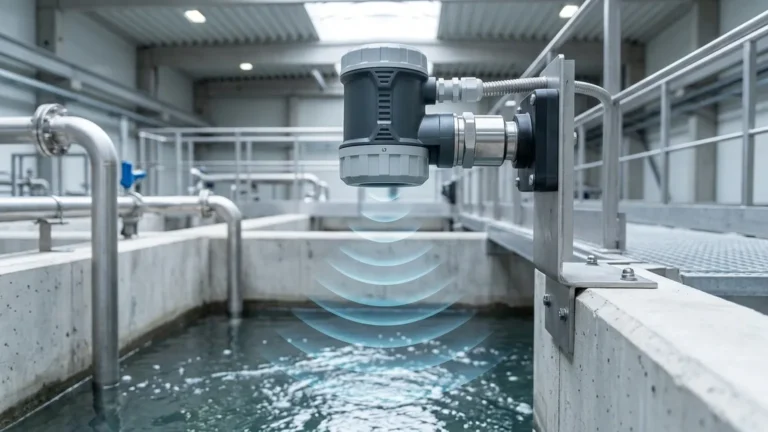
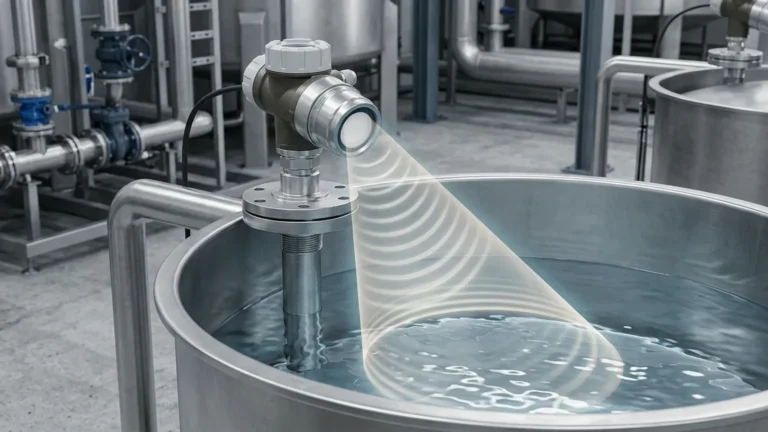
The core of the meter is the transducer, which contains a piezoelectric crystal. When energized, this crystal vibrates at a high frequency (typically between 20 kHz and 200 kHz), emitting a pulse of mechanical sound energy. This pulse travels through the air space in a tank or vessel, reflects off the surface of the material (liquid or solid), and returns to the transducer.
Calculation and Compensation
The electronics within the meter measure the time interval ($t$) between the emission of the pulse and the reception of the echo. Since the speed of sound in air ($c$) is known, the distance ($D$) is calculated using the formula:
$$D = \frac{c \times t}{2}$$
Because the speed of sound is affected by air temperature—changing by approximately 0.6 m/s per degree Celsius—most professional-grade instruments, such as those manufactured by Welk, include an integrated temperature sensor to provide real-time compensation. This ensures accuracy across fluctuating process conditions.
Factors Influencing Ultrasonic Level Meter Price
An entry-level sensor for a simple water tank will differ greatly in cost from a heavy-duty unit designed for chemical processing. The following factors are the primary drivers of the ultrasonic level meter price:
1. Measuring Range and Power
Standard ultrasonic sensors typically cover ranges from 5 meters (16.4 ft) to 15 meters (49.2 ft). As the required range increases—up to 30 meters (98.4 ft) or more—the transducer must be larger and more powerful to overcome signal attenuation over long distances. High-power transducers require more sophisticated electronics to filter out ambient noise, which increases the manufacturing cost.
2. Material Compatibility and Ingress Protection
The housing and transducer face materials significantly impact the price.
* Standard: ABS or Polypropylene (PP) housings are cost-effective for water and non-corrosive liquids.
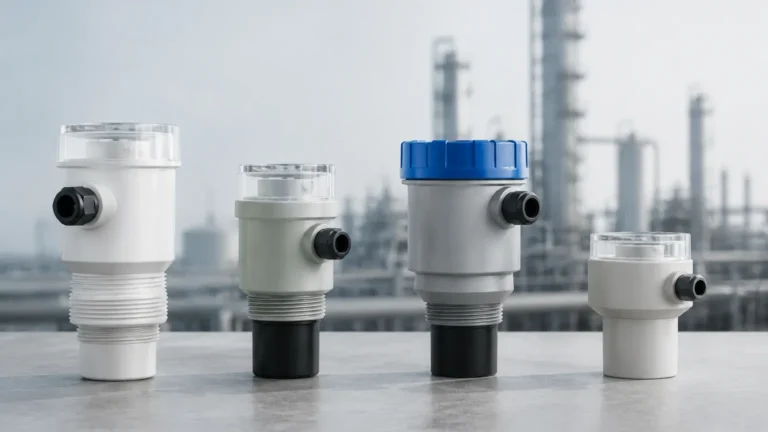
* Premium: For aggressive chemicals or solvents, transducers may be coated in PTFE (Teflon) or housed in PVDF. Additionally, high-end units often carry IP68 ratings for full submersion or NEMA 4X for outdoor corrosion resistance.
3. Accuracy and Signal Processing
Basic meters may offer an accuracy of 0.5% of the full scale, while precision models reach 0.2% or 0.1%. Achieving higher precision requires advanced Digital Signal Processing (DSP) to distinguish the true level echo from "false echoes" caused by internal tank obstructions like ladders, agitators, or weld seams.
4. Hazardous Area Certifications
If the instrument is to be installed in an environment with explosive gases or dust (e.g., oil and gas or chemical storage), it must be intrinsically safe or explosion-proof. Obtaining ATEX, IECEx, or UL certifications adds a layer of testing and specialized component costs to the final ultrasonic level meter price.
5. Communication and Integration
Simple 4-20mA analog outputs are standard. However, modern industrial IoT (IIoT) requirements often demand digital protocols. Options such as HART, Modbus RS485, or Profibus allow for remote configuration and advanced diagnostics, which adds to the unit's complexity and cost.
Selection Table: Matching Application to Budget
When reviewing an ultrasonic level meter price list, use the following table to categorize your needs:
| Feature Level | Typical Range | Target Application | Key Characteristics |
| :— | :— | :— | :— |
| Entry-Level | 2m – 5m | Small water tanks, sumps | Plastic housing, 4-20mA only, basic display. |
| Mid-Range | 5m – 12m | Wastewater treatment, chemical storage | Temperature compensation, PTFE options, Modbus/HART. |
| High-End | 15m – 30m+ | Silos, deep wells, hazardous zones | High-power pulse, Ex-proof, advanced false-echo suppression. |
| Remote/Split | Varies | High-vibration or inaccessible areas | Separate transducer and display unit for easier maintenance. |
Critical Installation Considerations
A common mistake in industrial procurement is focusing solely on the ultrasonic level meter price while neglecting the costs associated with improper installation. To ensure the meter performs as specified, engineers must account for the following:
The Dead Zone (Blanking Distance)
Every ultrasonic sensor has a "dead zone" directly beneath the transducer face where it cannot measure. This is the time required for the crystal to stop vibrating after emitting a pulse before it can listen for the return. Typically, this ranges from 0.2m to 0.8m (0.6 ft to 2.6 ft). If the liquid level rises into this zone, the meter will provide erratic readings or a "full" error. Users must mount the sensor high enough to account for the maximum fill level.
Beam Angle and Obstructions
The ultrasonic pulse spreads out in a cone, usually between 5° and 12°. If this cone intersects with a tank wall or a pipe before reaching the liquid, it will trigger a false echo.
* Rule of Thumb: Install the sensor at least 200mm (8 inches) away from the tank wall for every meter of depth.
* Avoid the Fill Stream: Never mount the sensor directly above the point where liquid enters the tank, as the turbulence and falling liquid will scatter the signal.
Mounting Orientation
The transducer face must be perfectly parallel to the liquid surface. A tilt of even a few degrees can cause the reflected pulse to miss the receiver, leading to signal loss (often displayed as a "Lost Echo" error).

Limitations and Practical Challenges
While ultrasonic level meters are versatile, they are not universal solutions. Understanding their limitations prevents costly misapplications:
1. Vacuum Conditions: Sound requires a medium (air or gas) to travel. Therefore, ultrasonic meters cannot function in a vacuum.
2. Heavy Foam: Thick, dense foam on the surface of a liquid acts as an acoustic absorber. In these cases, the signal may not return at all. For foamy applications, a Welk radar level meter or a hydrostatic transmitter may be more appropriate.
3. High Pressure/Temperature: Extreme pressure changes the density of the air, affecting the speed of sound beyond what standard compensation can handle. Generally, ultrasonic meters are limited to pressures below 3 bar (43.5 psi).
4. Dust and Vapor: While light dust is manageable, extremely heavy dust (in grain silos) or dense steam can attenuate the sound pulse.
Frequently Asked Questions (FAQ)
Q: How long do ultrasonic level meters last?
A: In standard water or wastewater applications, a high-quality meter from a reputable manufacturer like Welk can last 7 to 10 years. The lack of moving parts significantly reduces wear and tear.
Q: Does the ultrasonic level meter price include the mounting hardware?
A: Usually, the price covers the instrument and a standard locking nut. Specialized flanges, brackets, or submersible mounting kits are typically sold as accessories.
Q: Can I use an ultrasonic meter for solids like sand or gravel?
A: Yes, but with caveats. Solids do not reflect sound as uniformly as liquids. You must select a model with high-power signal processing and consider the "angle of repose" of the material, which may require a swiveling mounting flange to align the sensor with the slope of the pile.
Q: Is it difficult to calibrate these sensors?
A: Most modern units feature "push-button" or menu-driven calibration. You simply input the tank height (Empty Distance) and the desired measurement range (Full Distance). Advanced models allow for PC-based software configuration to map out false echoes.
Conclusion
Evaluating the ultrasonic level meter price requires a holistic view of the application environment, required precision, and long-term durability. While a lower-cost sensor might suffice for a simple irrigation tank, critical industrial processes demand the robust signal processing and material integrity found in professional-grade instrumentation. By understanding the measurement principles and installation requirements, engineering teams can select a solution that provides accurate, maintenance-free data for years to come.
For specific technical datasheets or to request a quote tailored to your facility's requirements, you can explore the full range of Ultrasonic Level Meters and consult with application engineers to ensure the selected model aligns with your operational goals.