Ultrasonic Sensor Level Controller
Ultrasonic Sensor Level Controller: A Practical Engineering Guide
In modern industrial process automation, the ability to monitor and control liquid or solid levels without physical contact is a significant advantage. An ultrasonic sensor level controller serves as the primary interface between raw physical measurement and actionable process logic. By utilizing high-frequency sound waves, these systems provide a reliable, non-mechanical solution for inventory management, pump control, and safety monitoring across water treatment, chemical processing, and general manufacturing sectors.
As a professional manufacturer, Welk specializes in providing integrated and remote Ultrasonic Level Meters designed to withstand the rigors of industrial environments. This guide examines the underlying physics, system configurations, and critical selection criteria for engineers and plant managers tasked with implementing level control solutions.
Measurement Principle: Time-of-Flight (ToF)
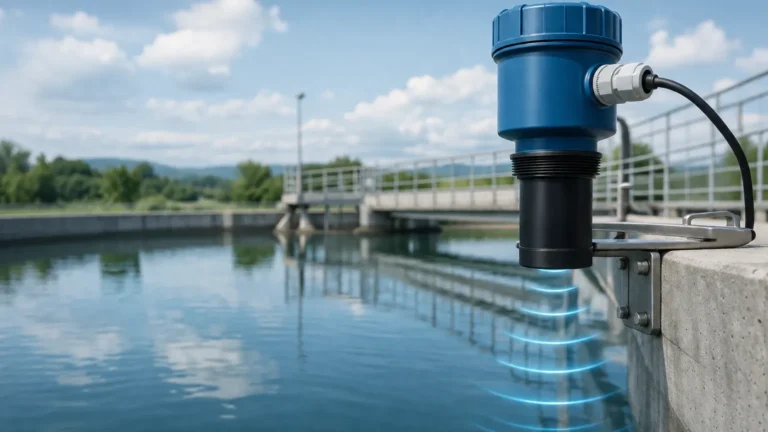
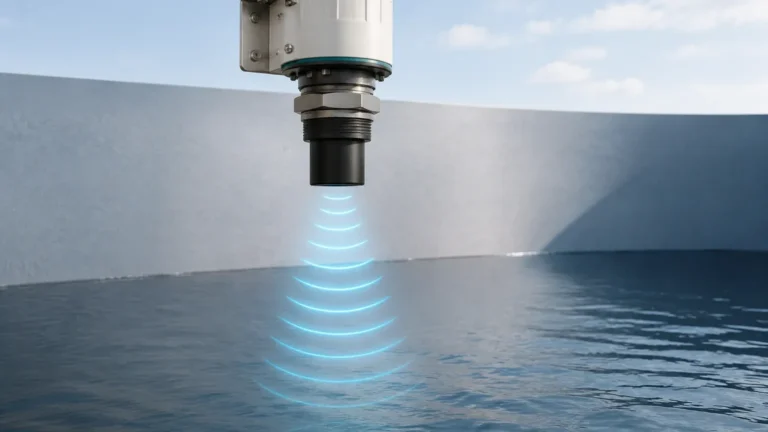
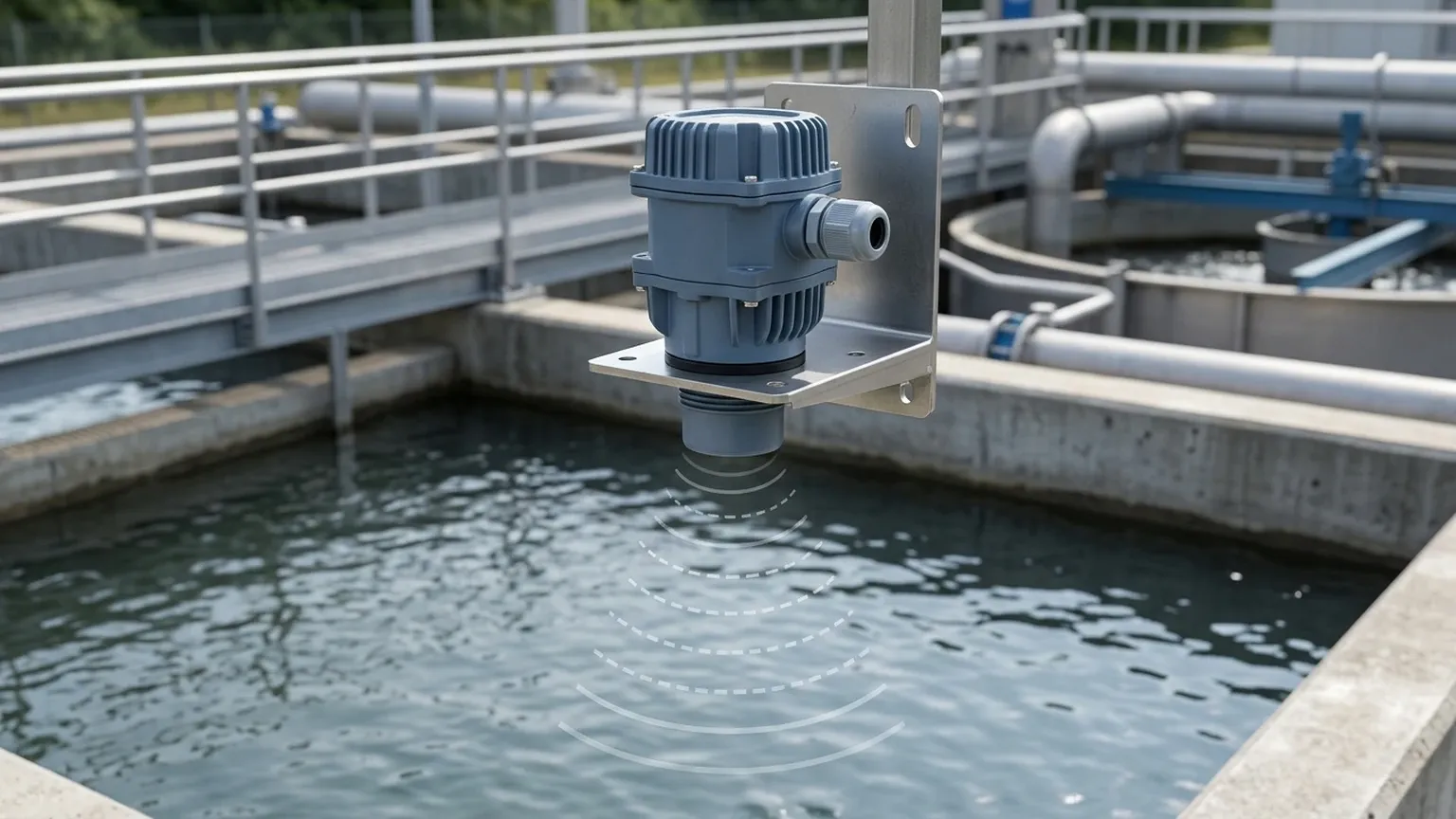
The operation of an ultrasonic sensor level controller is based on the "Time-of-Flight" principle. The sensor’s transducer acts as both a transmitter and a receiver. It emits a burst of ultrasonic pulses—typically in the frequency range of 20 kHz to 200 kHz—which travel through the air toward the surface of the medium.
Upon hitting the surface, the sound waves are reflected back to the transducer. The controller’s internal microprocessor measures the time interval between the transmission of the pulse and the reception of the echo. Since the speed of sound in air is known (approximately 340 m/s at 20°C), the distance to the surface is calculated using the formula:
Distance (D) = (Speed of Sound × Time) / 2
The level of the material in the tank is then determined by subtracting this distance from the total height of the vessel (the "Empty" calibration point).
Temperature Compensation
Because the speed of sound varies with air temperature (increasing by roughly 0.6 m/s for every 1°C rise), accurate ultrasonic sensor level controllers must include an integrated temperature sensor. This allows the controller to dynamically adjust the calculation, maintaining accuracy even as ambient or process temperatures fluctuate.
System Components and Configurations
When selecting an ultrasonic system, engineers must choose between two primary architectures: integrated (compact) and remote (split) designs.
1. Integrated Ultrasonic Level Meters
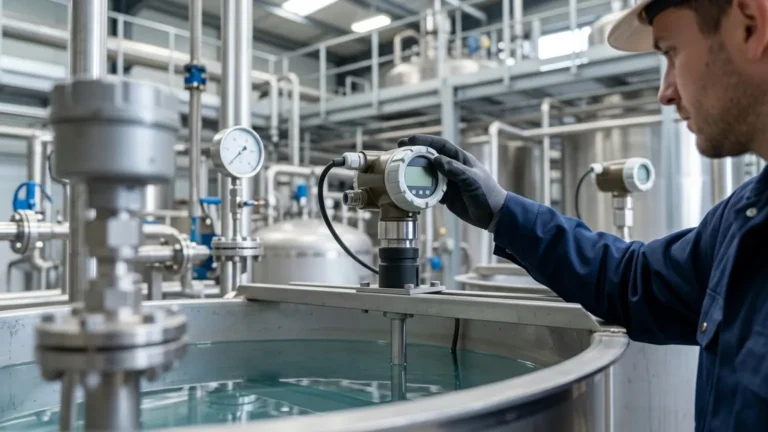
In this configuration, the transducer and the controller electronics are housed in a single unit. This is the most common choice for standard applications where the sensor is easily accessible. Integrated units typically output a 4-20mA signal or a digital communication protocol (like HART or RS485) directly to a central PLC or SCADA system.
2. Remote (Split) Systems
In a remote system, the transducer is mounted at the measurement point, while the controller/display unit is mounted in a more accessible location, such as a control panel or eye-level wall bracket. This is ideal for:
* Hazardous areas where the display needs to be in a safe zone.
* High-vibration environments that might damage sensitive electronics.
* Applications requiring multiple relay outputs for complex pump control logic.
Key Functionalities of a Level Controller
An ultrasonic sensor level controller does more than just report a distance; it manages the logic of the process. Key features often include:
* Relay Outputs: Used for high-level and low-level alarms, or to trigger pumps and valves.
* Pump Alternation: In wastewater sumps, the controller can alternate between two or more pumps to ensure even wear and tear.
* Volume Calculation: Built-in libraries for standard tank shapes (cylindrical, spherical, flumes) allow the controller to convert distance measurements into volume (liters/gallons) or flow rate.
* False Echo Suppression: Advanced algorithms allow the user to "map out" fixed internal obstructions like ladders or agitators, ensuring the controller only tracks the true material surface.
Practical Selection Table
Choosing the right instrument requires balancing performance requirements with environmental constraints. The following table provides a general comparison of typical specifications for Welk ultrasonic solutions.
| Feature | Standard Integrated Unit | High-Power Remote Unit | Chemical-Resistant Series |
| :— | :— | :— | :— |
| Measuring Range | 0.4m to 10m | 0.5m to 30m | 0.3m to 12m |
| Accuracy | ±0.25% to 0.5% of range | ±0.25% of range | ±0.5% of range |
| Beam Angle | 8° to 12° | 5° to 8° | 10° |
| Output Signals | 4-20mA, RS485 | 4-20mA, RS485, Relays | 4-20mA, HART |
| Housing Material | ABS / Nylon | Cast Aluminum / Polycarbonate | PVDF / PTFE |
| Protection Class | IP65 / IP67 | IP66 (Controller) / IP68 (Sensor) | IP67 / IP68 |
Installation Considerations
Proper installation is the most critical factor in ensuring the reliability of an ultrasonic sensor level controller. Engineers should adhere to the following guidelines:
1. The Blocking Distance (Dead Zone)
Every ultrasonic sensor has a "dead zone" immediately below the transducer face where it cannot measure. This is the time required for the transducer to stop vibrating after sending a pulse before it can listen for the echo. Ensure the maximum liquid level never enters this zone (typically 0.2m to 0.6m depending on the model).
2. Beam Angle and Obstructions
The ultrasonic pulse spreads out in a cone. The "beam angle" defines the area that must remain clear of obstructions. If a ladder, pipe, or weld seam enters this cone, it may create a false echo. As a rule of thumb, the sensor should be mounted at a distance from the wall equal to at least 1/10th of the tank height.
3. Mounting Orientation
The transducer face must be perfectly parallel to the liquid surface. If the sensor is tilted, the sound wave will reflect away from the transducer rather than back to it, resulting in a "Loss of Echo" (LOE) error.
4. Environmental Factors
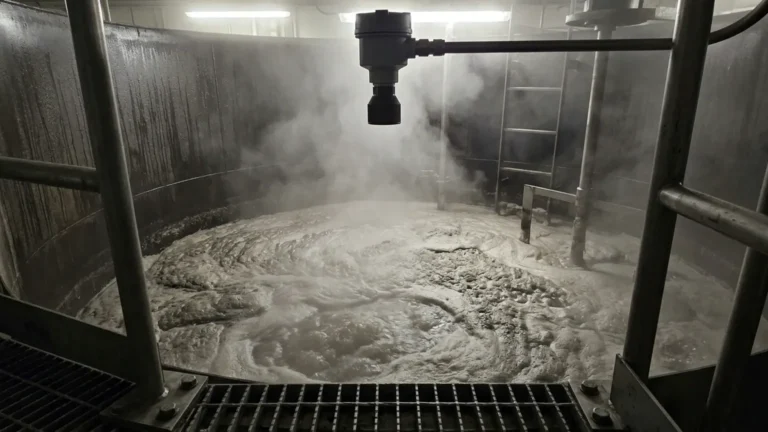
* Turbulence: Heavy agitation or splashing can scatter the sound wave. In these cases, a stilling well (a vertical pipe) can be used to provide a calm surface for measurement.
* Foam: Thick, dense foam absorbs ultrasonic signals. If heavy foam is present, a radar level meter or a hydrostatic transmitter may be a more appropriate choice.
* Vacuum/Pressure: Ultrasonic waves require a medium (air or gas) to travel. They do not work in a vacuum and are generally limited to near-atmospheric pressures (typically -0.5 to 3 bar).
Common Limitations and Risks
While highly versatile, ultrasonic technology is not a "one-size-fits-all" solution. Understanding its limitations prevents costly specification errors:
* Dust and Vapor: While light dust is manageable, extremely heavy dust (common in grain silos) or dense steam can attenuate the signal. High-frequency sensors are more susceptible to this than low-frequency, high-power models.
* Temperature Gradients: If there is a significant temperature difference between the liquid and the air space (e.g., hot liquid in a cold tank), sound refraction can occur, leading to inaccuracies.
* Surface Geometry: Solids (like coal or plastic pellets) do not reflect sound as uniformly as liquids. They form a "cone of repose," which can scatter the signal. Using a sensor with a wider beam or a higher power output is often necessary for solids.
Frequently Asked Questions (FAQ)
Q: Can I use an ultrasonic sensor level controller for boiling liquids?
A: Generally, no. Boiling liquids create heavy steam and surface turbulence, both of which interfere with the ultrasonic pulse. Radar technology is usually recommended for such applications.
Q: How do I handle a tank with an internal agitator?
A: Most modern Ultrasonic Level Meters include a "False Echo Storage" or "Masking" feature. You can program the controller to ignore echoes at specific distances where the agitator blades are located.
Q: What is the maximum distance an ultrasonic sensor can measure?
A: While some specialized high-power sensors can reach up to 40 meters (approx. 131 ft), most industrial applications stay within the 2-meter to 15-meter range for optimal reliability.
Q: Does the color or transparency of the liquid affect the measurement?
A: No. Unlike optical or laser sensors, ultrasonic waves reflect off the physical density interface. The color, clarity, or opacity of the liquid has no impact on accuracy.
Conclusion
The ultrasonic sensor level controller remains a cornerstone of industrial level measurement due to its lack of moving parts, ease of installation, and cost-effectiveness. By understanding the physics of sound propagation and respecting the installation constraints regarding beam angles and dead zones, engineers can implement robust control loops for a wide variety of media.
For projects requiring precise automation, Welk provides a comprehensive range of measurement instruments tailored to specific chemical compatibilities and distance requirements. Selecting the correct configuration—whether integrated for simplicity or remote for enhanced control—is the first step toward a maintenance-free level monitoring system.