What Is a Vortex Flow Meter
What Is a Vortex Flow Meter
In the realm of industrial process control, accurately measuring the movement of liquids, gases, and steam is fundamental to operational efficiency and safety. Among the various technologies available, the vortex flow meter stands out as a versatile and robust solution. This article explores the engineering principles, application scenarios, and selection criteria for this technology, providing a comprehensive reference for engineers and procurement professionals.
The Fundamental Principle: The von Kármán Effect
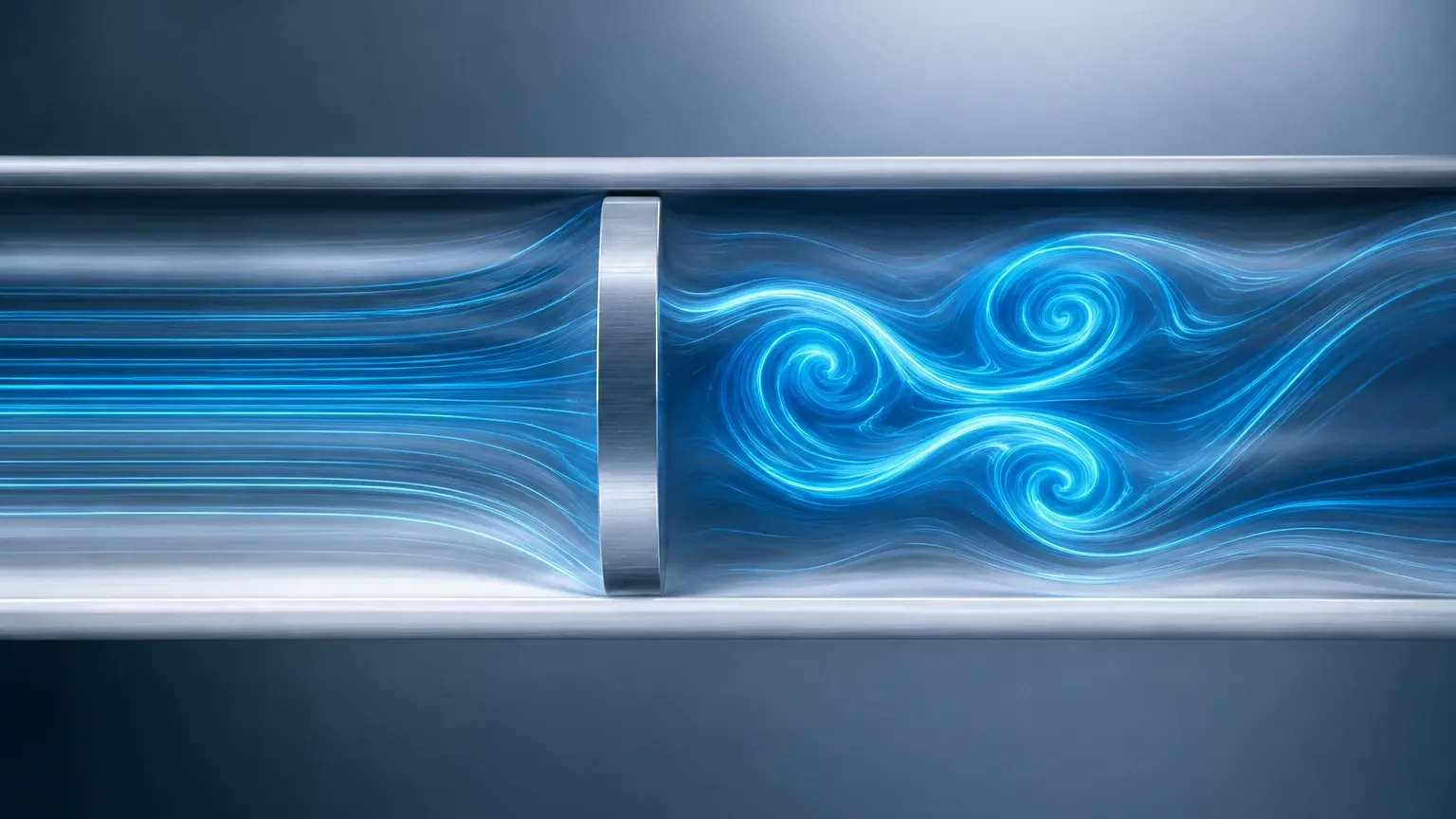
To understand what is a vortex flow meter, one must first understand the fluid dynamics principle upon which it is based: the von Kármán effect. Named after the Hungarian-American physicist Theodore von Kármán, this phenomenon describes the periodic shedding of vortices that occurs when a fluid flows past a non-streamlined object, often referred to as a "bluff body" or "shedder bar."
How Vortices Are Created
When a fluid (liquid, gas, or steam) encounters the shedder bar inside the flow meter, it cannot follow the sharp contours of the object. As a result, the fluid separates from the surface of the bar, creating alternating areas of high and low pressure. These pressure differentials manifest as swirling eddies, or vortices, which detach from the sides of the bar in a staggered, oscillating pattern.
The Mathematical Relationship
The frequency at which these vortices are shed is directly proportional to the velocity of the fluid moving through the pipe. This relationship is expressed by the Strouhal equation:
f = (St × V) / d
Where:
* f is the frequency of vortex shedding (Hz).
* St is the Strouhal number (a dimensionless constant specific to the shape of the shedder bar).
* V is the flow velocity (m/s).
* d is the width of the shedder bar (m).
Because the shedder bar width and the Strouhal number remain constant across a wide range of Reynolds numbers, the flow meter can determine the flow velocity simply by counting the number of vortices over a specific period. By multiplying this velocity by the cross-sectional area of the pipe, the device calculates the volumetric flow rate.
Components of a Vortex Flow Meter
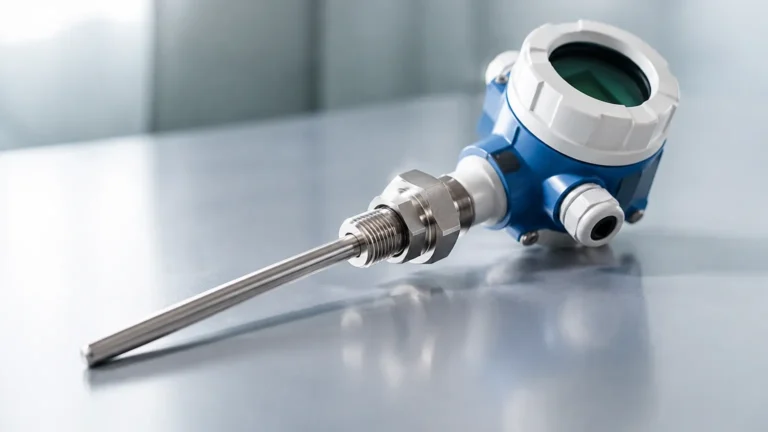
A standard vortex flow meter consists of three primary components that work in tandem to provide accurate measurements:
1. The Meter Body: A robust housing, typically made of stainless steel or carbon steel, that is installed inline with the process piping. It contains the shedder bar and provides the path for the fluid.
2. The Shedder Bar: A stationary obstruction placed across the flow stream. Its geometry is precision-engineered to ensure consistent vortex shedding across different flow rates.
3. The Sensor and Transmitter: A sensor (often a piezoelectric crystal or an ultrasonic transducer) detects the pressure fluctuations or ultrasonic phase shifts caused by the vortices. The transmitter then converts these mechanical signals into an electrical output, such as a 4-20mA signal, pulse, or digital protocol like HART or Modbus.
Key Applications in Process Industries
Vortex flow meters are favored in environments where durability and low maintenance are priorities. Because they have no moving parts to wear out or clog, they are suitable for a wide variety of media.
Steam Measurement
Perhaps the most common application for vortex technology is steam flow measurement. Whether it is saturated steam for heating or superheated steam for power generation, vortex meters handle high temperatures and pressures effectively. Unlike differential pressure (DP) meters, they do not require impulse lines that can freeze or leak.
Gas and Compressed Air
Industrial facilities use vortex meters to monitor compressed air consumption and the flow of natural gas or nitrogen. Their ability to operate over a wide range of velocities makes them ideal for detecting both peak demand and low-flow leaks.
Low-Viscosity Liquids
While not suitable for highly viscous fluids like heavy oils or slurries, vortex meters excel at measuring water, chemicals, and light hydrocarbons. They are frequently used in water treatment plants and chemical processing facilities for dosing and monitoring.
Selection Criteria and Technical Limitations
Selecting the right instrument requires a deep understanding of the process conditions. While the vortex meter is highly capable, it is not a universal solution for every application.
Reynolds Number Requirements
The accuracy of a vortex flow meter depends on a fully developed, turbulent flow profile. This is measured by the Reynolds number (Re). Most vortex meters require a minimum Reynolds number of approximately 10,000 to 20,000 to function. If the flow is laminar (low Re), vortices will not form consistently, leading to inaccurate readings or a "zero" flow indication.
Pressure Drop
Because the shedder bar acts as an obstruction, it inevitably causes a permanent pressure drop in the system. Engineers must ensure that the downstream pressure remains high enough to prevent "flashing" or "cavitation" in liquid applications, which can damage the meter and the piping.
Vibration Sensitivity
Since the sensors detect mechanical pressure pulses, external pipe vibration can sometimes be misinterpreted as vortex shedding. High-quality meters utilize dual-sensor designs or advanced signal processing to filter out mechanical noise, but it remains a critical factor during the selection phase.
Material Compatibility
The meter body and shedder bar must be compatible with the process fluid to prevent corrosion. Standard materials include 316 Stainless Steel, but exotic alloys like Hastelloy may be required for aggressive chemical services.
Installation Considerations
To achieve the specified accuracy (typically ±1% for liquids and ±1.5% for gases/steam), proper installation is paramount.
Straight Pipe Runs
Flow disturbances caused by valves, elbows, or pumps can distort the flow profile and interfere with vortex formation. A general rule of thumb is to provide:
* Upstream: 10 to 40 pipe diameters (D) of straight, unobstructed pipe.
* Downstream: 5 pipe diameters (D) of straight pipe.
If space is limited, flow straighteners or conditioners may be installed upstream to reduce the required straight-run distance.
Alignment and Gaskets
The meter must be perfectly centered within the pipe. Misalignment can create parasitic vortices that skew the data. Furthermore, gaskets must not protrude into the flow stream, as this creates turbulence that the sensor may misinterpret.
Orientation
* Liquid Service: The meter should ideally be installed in a vertical pipe with the flow moving upward. This ensures the pipe remains full and prevents air bubbles from accumulating at the sensor.
* Steam/Gas Service: Horizontal installation is common. In steam applications, the meter should be installed such that condensate does not pool around the shedder bar or sensor.
Comparison Table: Vortex vs. Other Technologies
| Feature | Vortex Flow Meter | Differential Pressure (Orifice) | Ultrasonic (Transit-Time) |
| :— | :— | :— | :— |
| Moving Parts | None | None | None |
| Media | Liquid, Gas, Steam | Liquid, Gas, Steam | Clean Liquids/Gases |
| Accuracy | High (±1%) | Moderate (±2-3%) | High (±0.5-1%) |
| Pressure Drop | Moderate | High | Negligible |
| Maintenance | Low | High (Impulse lines) | Low |
| Turndown Ratio | 10:1 to 30:1 | 3:1 to 5:1 | Up to 100:1 |
| Temperature Limit | Up to 400°C (750°F) | Very High | Limited by Transducer |
Practical Selection Table for Engineers
When evaluating a vortex flow meter for your facility, use the following table to confirm compatibility:
| Parameter | Requirement/Range | Notes |
| :— | :— | :— |
| Fluid State | Single-phase | Avoid multi-phase (e.g., water with high gas content) |
| Viscosity | < 10-15 cP | Higher viscosity dampens vortex formation |
| Velocity (Liquid) | 0.5 to 7 m/s (1.6 to 23 ft/s) | Avoid cavitation at high velocities |
| Velocity (Gas/Steam) | 5 to 80 m/s (16 to 260 ft/s) | Subject to pipe size and density |
| Pipe Size | 15mm to 300mm (0.5" to 12") | Insertion types available for larger pipes |
Frequently Asked Questions (FAQ)
Q: Can a vortex flow meter measure bi-directional flow?
A: No. Vortex meters are inherently uni-directional because the shedder bar and sensor are optimized for flow from a specific direction.
Q: What happens if the flow rate falls below the minimum Reynolds number?
A: The meter will typically enter a "low-flow cutoff" state. Because the vortices become too weak or irregular to detect, the meter will report zero flow even if there is slight movement in the pipe.
Q: Is it necessary to calibrate a vortex meter frequently?
A: Since there are no moving parts to wear and the shedder bar geometry does not change under normal conditions, the "K-factor" (pulses per unit volume) remains very stable over time. Re-calibration is usually only required for regulatory compliance or after extreme process upsets.
Q: How does temperature and pressure affect the reading?
A: Vortex meters measure volumetric flow. If you need mass flow (especially for steam or compressed air), you must use a multivariable vortex meter that includes integrated temperature and pressure sensors to calculate density compensation in real-time.
Conclusion
Understanding what is a vortex flow meter is the first step toward optimizing your plant's fluid management. By leveraging the von Kármán effect, these meters provide a reliable, low-maintenance, and highly accurate way to track steam, gas, and liquid flows across diverse industrial sectors. When properly sized and installed according to the guidelines mentioned above, they offer a long-term solution for process transparency.
For engineers seeking to integrate these instruments into broader automation systems, it is essential to consult with a professional manufacturer. To explore a wide range of industrial measurement technologies and find the right fit for your specific application, you can Review product options and application support to ensure your instrumentation strategy meets the highest standards of precision and reliability.