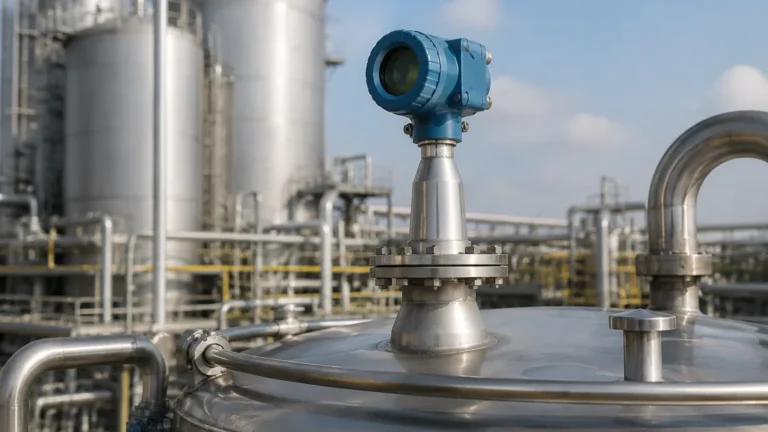
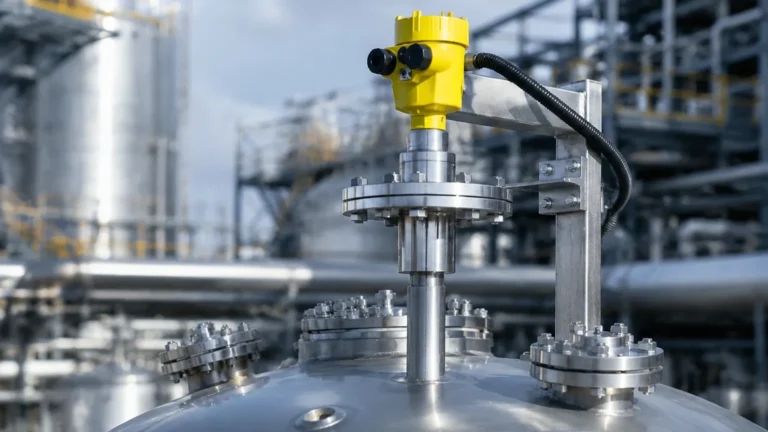
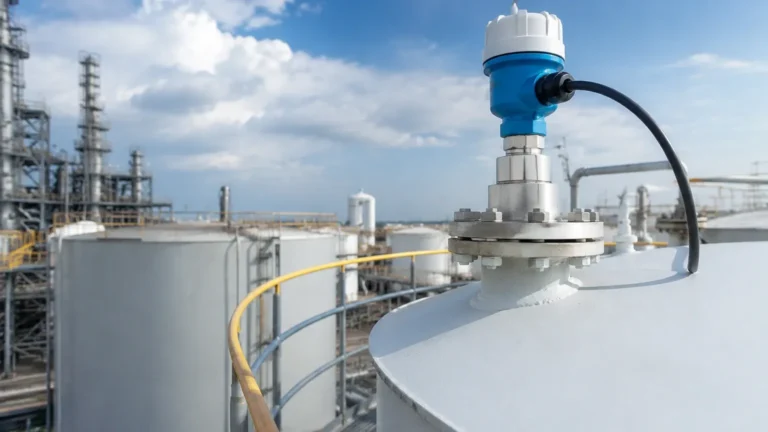
Sitrans Lr100 Radar Level Transmitter
Sitrans Lr100 Radar Level Transmitter: Engineering Guide for Industrial Applications
In the landscape of modern industrial automation, precise level measurement is a cornerstone of process efficiency and safety. Among the various technologies available, non-contacting radar has emerged as a preferred solution due to its immunity to changes in temperature, pressure, and vapor conditions. The sitrans lr100 radar level transmitter represents a specific class of high-frequency radar sensors designed to provide reliable data in compact and demanding environments. This guide explores the technical principles, selection criteria, and installation requirements for this technology within the broader context of Radar Level Meters.
Understanding the 80 GHz FMCW Principle
Before selecting a specific instrument, it is essential to understand the underlying measurement principle. The sitrans lr100 radar level transmitter utilizes Frequency Modulated Continuous Wave (FMCW) technology operating at a high frequency of 80 GHz.
Unlike older pulse radar systems that measure the time-of-flight of a single microwave burst, FMCW transmitters emit a continuous signal with a constantly changing frequency. The signal travels to the surface of the material, reflects, and returns to the sensor. By the time the signal returns, the transmitter is emitting a different frequency. The difference between the transmitted frequency and the received frequency is directly proportional to the distance to the material surface.
The Advantage of 80 GHz Frequency
The shift from 6 GHz or 24 GHz to 80 GHz has significant engineering implications:
1. Narrow Beam Angle: Higher frequencies allow for a much narrower beam (typically around 8 degrees for the LR100). This minimizes interference from internal tank obstructions like ladders, pipes, or agitators.
2. Smaller Antenna Size: The short wavelength of 80 GHz signals allows for high-gain antennas to be housed in very compact enclosures, making the LR100 suitable for small vessels or plastic tanks.
3. Improved Accuracy: The wide bandwidth associated with 80 GHz technology provides better resolution, allowing the device to distinguish between the actual material level and nearby noise or buildup on the sensor face.
Technical Specifications and Performance Boundaries
The sitrans lr100 radar level transmitter is engineered as a basic, cost-effective solution for liquid level measurement. It is typically housed in a hermetically sealed PVDF (Polyvinylidene Fluoride) enclosure, providing excellent chemical resistance.
| Feature | Specification (Metric) | Specification (Imperial) |
| :— | :— | :— |
| Measurement Range | Up to 8 meters | Up to 26.2 feet |
| Frequency | 80 GHz FMCW | 80 GHz FMCW |
| Accuracy | ± 5 mm | ± 0.2 inches |
| Process Temperature | -40 to +60 °C | -40 to +140 °F |
| Process Pressure | -1 to 3 bar | -14.5 to 43.5 psi |
| Beam Angle | 8° | 8° |
| Output Signal | 4-20 mA | 4-20 mA |
It is important to note that the LR100 is often the entry-level model in a series. For applications requiring longer ranges (up to 15m or 30m) or digital communication protocols like HART or Modbus RTU, engineers often look toward the LR110 or LR120 variants within the same product family.
Selection Criteria: When to Choose the LR100
Selecting the right instrument from the diverse range of Radar Level Meters requires matching the device capabilities to the process environment. The sitrans lr100 radar level transmitter is best suited for the following scenarios:
1. Water and Wastewater Management
Due to its narrow beam and compact size, the LR100 is ideal for monitoring levels in wet wells, lift stations, and chemical storage tanks used in water treatment. Its IP66/IP68 rating ensures durability in flood-prone or humid environments.
2. Small Vessel Applications
In industries like food and beverage or specialty chemicals, vessels are often small and crowded with internal hardware. The 8-degree beam angle allows the LR100 to "see" past obstructions that would cause false echoes in lower-frequency radar units.
3. Plastic Tank Measurement
Because 80 GHz signals can penetrate plastic, the LR100 can often measure the level of a liquid through the top of a plastic IBC (Intermediate Bulk Container) or a polyethylene storage tank without the need for a process connection, provided the tank roof is not metallic or reinforced with metal mesh.
Installation Considerations and Engineering Constraints
Proper installation is the most critical factor in ensuring the long-term reliability of a radar level transmitter. Engineers must account for several physical constraints during the design phase.
Mounting Position
The sensor should be mounted at least 200 mm (approx. 8 inches) away from the tank wall. A general rule of thumb for 80 GHz sensors is to maintain a distance from the wall equal to 1/10th of the total tank height to avoid signal degradation from wall reflections.
Nozzle Geometry
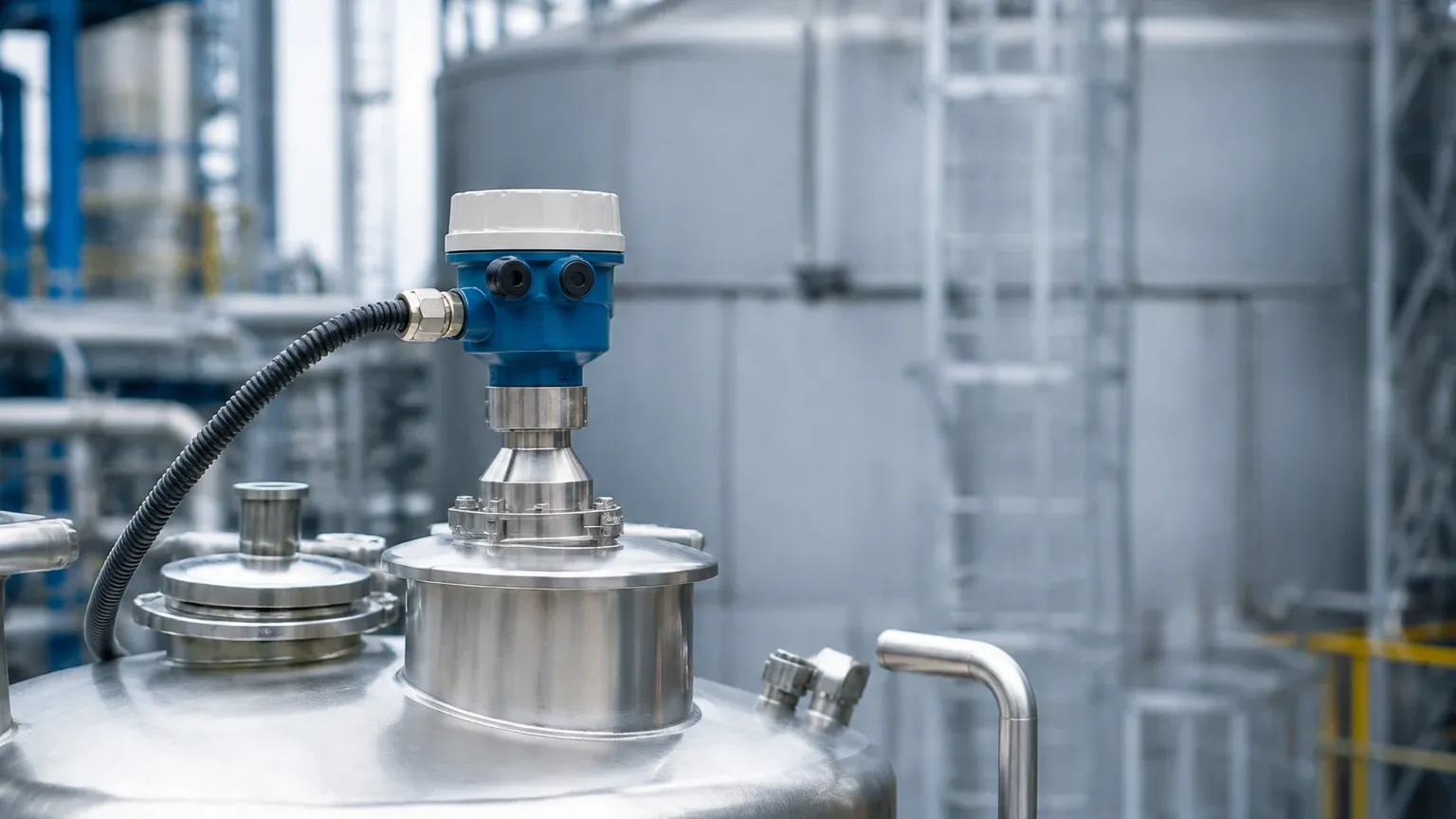
While the LR100 is designed to be versatile, the mounting nozzle should be as short as possible. If a long nozzle is required, the inner surface must be smooth and free of burrs or welds. Because the LR100 has an integrated antenna, the end of the antenna should ideally extend slightly beyond the bottom of the nozzle to prevent "ringing" or internal reflections within the pipe.
Obstructions and Agitators
Even with a narrow 8-degree beam, large obstructions can interfere with the signal. If an agitator is present, the device should be mounted where the beam will not hit the blades directly. Most modern Radar Level Meters include software for "Auto False Echo Suppression," which allows the transmitter to learn the location of fixed obstructions and ignore them.
The "Dead Zone" (Blocking Distance)
Every radar sensor has a minimum detection distance, often called the blocking distance or dead zone. For the LR100, this is typically around 0.25 meters (approx. 10 inches) from the sensor face. If the liquid level rises into this zone, the measurement may become unreliable or default to an error state.
Application Risks and Limitations
While highly capable, the sitrans lr100 radar level transmitter has specific physical limitations that must be addressed during the engineering phase.
1. Low Dielectric Constants (dk): Radar relies on the reflection of electromagnetic waves. Materials with a very low dielectric constant (such as certain oils or liquefied gases) reflect less energy. If the dk is below 1.6, a guided wave radar or a higher-power non-contact radar may be required.
2. Heavy Foam: Dense, thick foam can absorb the 80 GHz signal rather than reflecting it. While light foam is usually penetrable, engineers should test the specific foam characteristics if the application involves heavy surfactants or aeration.
3. Condensation and Buildup: Although 80 GHz radar is better at ignoring buildup than lower frequencies, extreme coating on the sensor face can eventually attenuate the signal. The PVDF face of the LR100 is designed to shed droplets, but in high-condensation environments, a sloping mount or air purge may be considered for other models.
4. Turbulent Surfaces: Rapidly churning liquids can scatter the radar signal. While the LR100's signal processing can handle moderate turbulence, extreme cases may require the use of a stilling well or a bypass pipe to provide a calm surface for measurement.
Digital Integration and Commissioning
A significant feature of the sitrans lr100 radar level transmitter is its support for wireless commissioning. Using Bluetooth technology and mobile applications (such as SITRANS Mobile IQ), technicians can configure the device from a distance of up to 10 meters (33 feet). This is a vital safety feature for sensors mounted on top of tall tanks or in hazardous locations where physical access is difficult.
Parameters that should be confirmed during commissioning include:
* Low Calibration Point: The distance from the sensor face to the 0% (empty) level.
* High Calibration Point: The distance from the sensor face to the 100% (full) level.
* Damping Value: A time constant used to smooth out fluctuations caused by surface turbulence.
* Application Profile: Pre-set algorithms for "Liquid," "Liquid Storage," or "Fast Level Change."
Buyer’s Checklist for International Procurement
When sourcing Radar Level Meters for global projects, procurement officers and engineers should confirm the following details with the supplier to ensure compatibility:
1. Certification Requirements: Does the site require ATEX, IECEx, or FM approvals for explosive atmospheres? (Note: The standard LR100 is often for non-hazardous areas; the LR110/120 are typically used for hazardous zones).
2. Process Connection: Confirm thread types (NPT, BSP, or G-threads) and sizes. The LR100 commonly uses a 1-1/2" thread.
3. Cable Requirements: The LR100 usually comes with an integrated cable. Confirm the required length (e.g., 5m, 10m, or 30m) as these are factory-sealed for IP68 integrity.
4. Supply Voltage: Ensure the local control system can provide the necessary 12-35V DC loop power.
Conclusion
The sitrans lr100 radar level transmitter represents a significant advancement in making high-frequency FMCW radar accessible for everyday industrial applications. By understanding the 80 GHz principle and adhering to strict installation guidelines regarding beam angles and dielectric properties, engineers can implement a maintenance-free level solution that outperforms traditional ultrasonic or pressure-based sensors. For more complex requirements involving solids, high pressure, or longer ranges, exploring the full catalog of Radar Level Meters is recommended to find the optimal match for the specific process environment.
***
Frequently Asked Questions (FAQ)
Q: Can the LR100 measure solids or powders?
A: The LR100 is optimized for liquids. For solids, the signal scattering is more significant, and a device with a higher power output and specific solids-processing algorithms, such as the LR120 or dedicated solids radar, is preferred.
Q: Is a display available on the unit?
A: The LR100 is a blind transmitter designed for a compact footprint. Monitoring and configuration are performed via a remote control system (PLC/HMI) or through the Bluetooth mobile interface.
Q: How does the LR100 handle vacuum conditions?
A: While the LR100 can operate in a vacuum, the mechanical seal is rated for -1 to 3 bar. For high-vacuum process vessels, specialized flange-mounted radar meters with high-pressure seals are required.