Flow Meter Ultrasonic Portable
Flow Meter Ultrasonic Portable
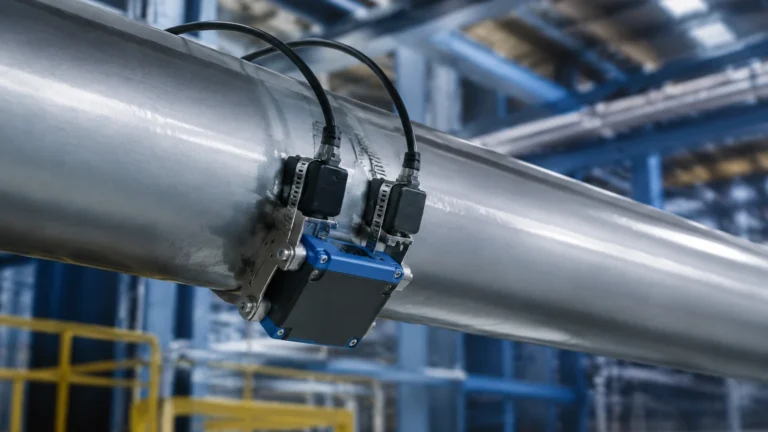
In the field of industrial process control and fluid management, the flow meter ultrasonic portable has emerged as an indispensable diagnostic and verification tool. Unlike permanent inline flow meters that require pipe cutting and process downtime for installation, portable ultrasonic units utilize clamp-on technology to measure flow rates from the outside of the pipe. This non-invasive approach ensures that the integrity of the piping system remains intact while providing high-accuracy data for water treatment, chemical processing, and HVAC applications.
For engineers and plant managers, understanding the underlying physics, selection criteria, and installation nuances of these devices is critical for ensuring reliable data. While manufacturers like Welk specialize in level measurement technologies—such as radar and ultrasonic level sensors—the integration of flow and level data is a cornerstone of modern industrial automation. Comprehensive information on these integrated measurement solutions can be explored through the Main Page.
Measurement Principles: Transit-Time vs. Doppler
Portable ultrasonic flow meters primarily operate using two distinct physical principles. The choice between them depends entirely on the characteristics of the fluid being measured.
Transit-Time Method
Transit-time technology is the most common method used in a flow meter ultrasonic portable device. It relies on the principle that the speed of an ultrasonic signal is affected by the velocity of the liquid it travels through. Two transducers are clamped onto the pipe, acting as both transmitters and receivers.
One transducer sends a signal upstream, while the other sends a signal downstream. The time it takes for the signal to travel against the flow (upstream) is longer than the time it takes to travel with the flow (downstream). The meter measures this time difference ($Δt$) with nanosecond precision. Since the distance between sensors and the pipe geometry are known, the device calculates the flow velocity using the formula:
$$V = K · D ·
rac{Δt}{t_{up} · t_{down}}$$
Where $V$ is velocity, $K$ is a calibration constant, and $D$ is the distance between transducers. This method is ideal for clean liquids with less than 2% total suspended solids (TSS) or aeration.
Doppler Effect Method
The Doppler method is utilized when the liquid contains significant amounts of particulate matter or entrained gas bubbles. The transducers transmit an ultrasonic beam into the fluid at a known frequency. This beam reflects off the moving particles or bubbles. Because the reflectors are moving, the frequency of the reflected signal is shifted (the Doppler effect). The meter measures this frequency shift to determine the flow velocity. This method requires a minimum concentration of "reflectors" (typically 100 ppm of particles larger than 100 microns) to function correctly.
Key Evaluation Criteria for Selection
When selecting a flow meter ultrasonic portable, several technical parameters must be evaluated to ensure the device meets the specific needs of the facility. The following table provides a comparison of typical specifications found in professional-grade portable units.
| Feature | Transit-Time Portable | Doppler Portable |
| :— | :— | :— |
| Fluid Type | Clean liquids (Water, Oils, Chemicals) | Dirty liquids, Slurries, Aerated fluids |
| Accuracy | ±0.5% to ±2.0% of velocity | ±2.0% to ±5.0% of velocity |
| Pipe Size Range | DN15 to DN6000 (1/2" to 240") | DN25 to DN6000 (1" to 240") |
| Velocity Range | 0.01 to 12 m/s | 0.05 to 10 m/s |
| Data Logging | Standard (SD card or Internal) | Standard (Internal) |
| Battery Life | 10 to 20 hours (Rechargeable) | 8 to 15 hours (Rechargeable) |
| Response Time | <1 second | 1 to 5 seconds |
Transducer Frequency
Frequency selection is vital. High-frequency transducers (e.g., 2 MHz) are used for small-diameter pipes (DN15–DN100) because they provide higher resolution. Low-frequency transducers (e.g., 0.5 MHz to 1 MHz) are required for large-diameter pipes or pipes with significant internal scaling, as lower frequencies penetrate thicker materials and travel longer distances more effectively.
Installation Considerations and Mounting Methods
The accuracy of a flow meter ultrasonic portable is highly dependent on correct installation. Unlike level sensors that may be mounted at the top of a tank—as seen in the radar and ultrasonic level solutions on the Main Page—flow transducers must be positioned on the side of the pipe to avoid interference from sediment at the bottom or air pockets at the top.
Pipe Preparation
Before mounting, the pipe surface must be cleaned. Rust, loose paint, and debris should be removed using a wire brush or sandpaper. A couplant (ultrasonic gel or grease) must be applied between the transducer face and the pipe wall to eliminate air gaps, which would otherwise reflect the ultrasonic signal and prevent it from entering the pipe.
Mounting Configurations
There are three primary mounting configurations depending on the pipe size and liquid condition:
1. V-Method (Two Passes): The transducers are mounted on the same side of the pipe. The signal reflects off the opposite wall. This is the standard method for pipes ranging from DN15 to DN200.
2. Z-Method (One Pass): Transducers are mounted on opposite sides of the pipe. This is used for large pipes (DN200 to DN6000) or when the fluid is slightly attenuated, as the signal only travels across the pipe diameter once.
3. W-Method (Four Passes): Used for very small pipes (typically under DN50) to increase the signal path length and improve measurement resolution.
Straight Pipe Requirements
To ensure a stable, laminar flow profile, the transducers should be installed on a straight section of pipe. The general rule of thumb is the "10D/5D" rule: 10 pipe diameters of straight run upstream from the sensors and 5 pipe diameters downstream. If there are pumps or valves nearby, the upstream requirement may increase to 20D or 30D.
Technical Limitations and Common Risks
While highly versatile, the flow meter ultrasonic portable is not a universal solution for every scenario. Engineers must be aware of the following limitations:
* Pipe Material and Liners: Ultrasonic signals travel well through carbon steel, stainless steel, and plastic (PVC/PE). However, materials like cast iron or concrete-lined pipes can be problematic because they are porous or non-homogeneous, causing signal scattering.
* Wall Thickness Uncertainty: The meter calculates velocity based on the internal diameter of the pipe. If the wall thickness is unknown or incorrectly entered into the meter's software (due to internal corrosion or scaling), the resulting flow rate will be inaccurate. Using an ultrasonic thickness gauge in conjunction with the flow meter is recommended.
* Temperature Extremes: Standard transducers are usually rated up to 80°C or 100°C. For high-temperature steam condensate or thermal oil applications, specialized high-temperature transducers and high-viscosity couplants are required.
* Signal Attenuation: Highly viscous liquids or those with high concentrations of entrained air can absorb the ultrasonic signal, leading to a "Signal Lost" error.
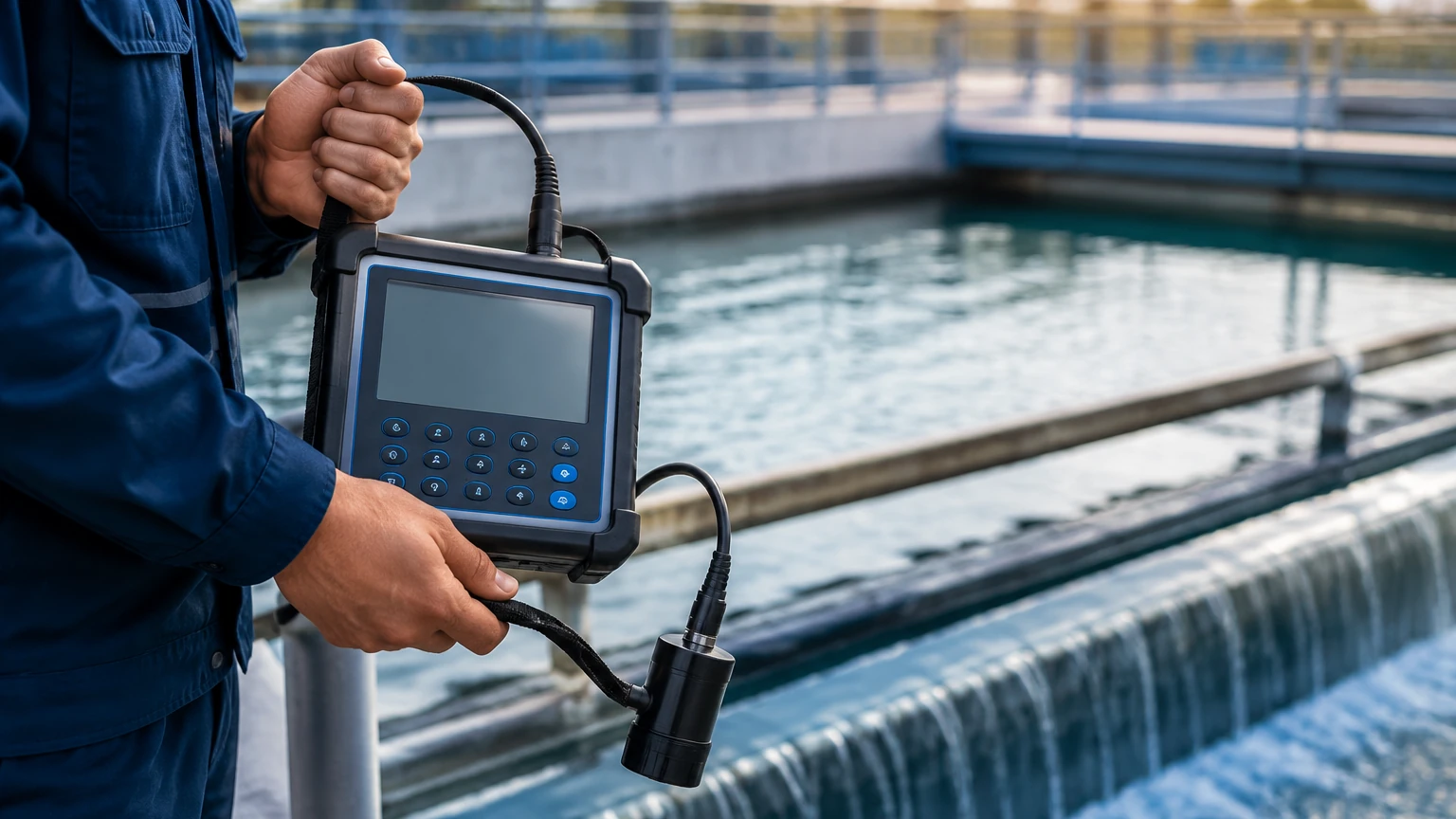
Practical Applications in Industrial Diagnostics
The portability of these meters makes them ideal for several critical industrial tasks:
1. Pump Performance Testing: By measuring the actual output of a pump and comparing it to its performance curve, maintenance teams can identify wear or cavitation issues.
2. Leak Detection: Comparing flow rates at different points in a closed-loop system can help isolate leaks without shutting down operations.
3. Calibration Verification: Portable units are frequently used to verify the accuracy of older, permanent flow meters (such as electromagnetic or turbine meters) that may have drifted over time.
4. Energy Audits: In HVAC systems, portable flow meters are used to measure chilled water or hot water flow to calculate heat transfer efficiency in BTUs or Kilowatts.
Integration with Level Measurement Systems
In many process applications, flow and level measurement are intrinsically linked. For example, in open channel flow (such as flumes or weirs), an ultrasonic level sensor is used to measure the head of the water, which is then converted into a flow rate using a programmed formula.
Similarly, in tank inventory management, a flow meter ultrasonic portable can be used to verify the inflow or outflow rates as recorded by a hydrostatic or radar level transmitter. If a radar level meter indicates a volume change that does not match the flow meter's reading, it may signal a leak, a sensor calibration error, or an unauthorized diversion. For those seeking reliable instrumentation for these complex monitoring tasks, the Main Page provides access to a wide range of industrial-grade level transmitters and switches that complement portable flow diagnostics.
Frequently Asked Questions (FAQ)
Q: Can a portable ultrasonic flow meter measure flow in a pipe that is only half full?
A: No. Transit-time and Doppler ultrasonic flow meters require a full pipe to function correctly. If the pipe is partially full, the ultrasonic signal will reflect off the air-liquid interface, resulting in an error. For partially full pipes, an area-velocity flow meter or a level-to-flow conversion using a flume is required.
Q: How often should the transducers be re-greased with couplant?
A: For portable use, couplant should be applied every time the sensors are moved. For temporary installations lasting several weeks, a high-viscosity silicone grease or a solid coupling pad should be used to prevent the couplant from drying out or washing away.
Q: Does the pipe material affect the accuracy?
A: Indirectly, yes. The meter requires the user to input the "Sound Speed" of the pipe material. Most modern meters have a built-in library for common materials like Steel, Copper, and PVC. If the material is unknown, the meter's accuracy will suffer.
Q: Can it measure the flow of gases?
A: Most portable units are designed for liquids. Measuring gas requires much higher frequency transducers and significantly more power because gas is much less dense than liquid, making it a poor conductor of ultrasonic waves. Specialized portable gas flow meters do exist but are distinct from standard liquid units.
Conclusion
The flow meter ultrasonic portable is a powerful asset for modern industrial engineering. Its ability to provide real-time flow data without process interruption makes it essential for maintenance, auditing, and system optimization. By understanding the differences between transit-time and Doppler methods, adhering to strict installation guidelines, and recognizing the limitations of pipe materials, operators can achieve high-precision measurements that rival permanent installations. When paired with the advanced level measurement technologies found on the Main Page, these tools provide a complete picture of fluid dynamics and inventory status across any industrial facility.