Efficiency Hydrogen Electrolysis
Efficiency Hydrogen Electrolysis
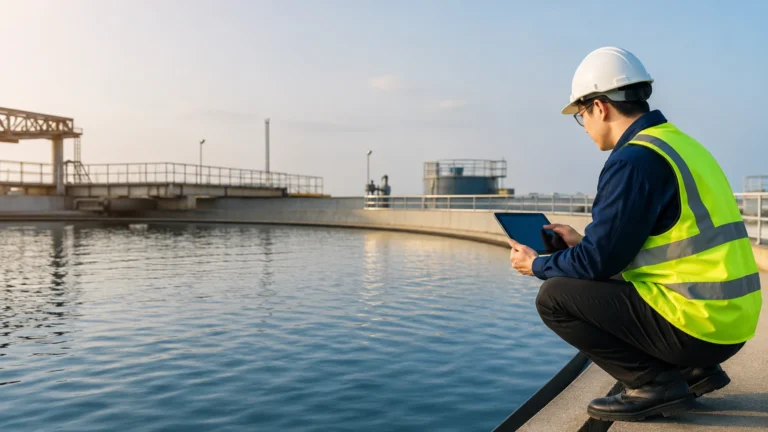
The global transition toward decarbonization has positioned green hydrogen as a critical energy vector. At the heart of this transition is the electrolysis process, where water is split into hydrogen and oxygen using renewable electricity. Achieving high efficiency hydrogen electrolysis is not merely a matter of electrochemical cell design; it requires precise process control and robust instrumentation. In industrial applications, the efficiency of an electrolyzer is significantly influenced by the management of fluid levels, pressures, and temperatures within the system.
For engineers and plant operators, understanding the intersection of electrochemical performance and mechanical process control is essential. This guide explores the technical principles of electrolysis efficiency and the critical role that level measurement instrumentation plays in maintaining optimal performance.
Understanding the Fundamentals of Electrolysis Efficiency
Efficiency in hydrogen electrolysis is typically measured by how much electrical energy is required to produce a specific volume of hydrogen gas (kWh/Nm³). This is generally broken down into two primary metrics: Faraday efficiency and voltage efficiency.
Faraday Efficiency
Faraday efficiency, also known as current efficiency, refers to the ratio of the actual amount of hydrogen produced to the theoretical amount calculated based on the electrical current passed through the cell. Losses in Faraday efficiency usually occur due to parasitic reactions or gas crossover, where hydrogen molecules migrate through the membrane or diaphragm into the oxygen stream, or vice versa. Maintaining precise fluid levels in the gas-liquid separators is vital to preventing these crossovers.
Voltage Efficiency
Voltage efficiency is the ratio of the theoretical decomposition voltage (thermodynamic limit) to the actual voltage applied across the cell. Industrial electrolyzers operate at higher voltages than the theoretical minimum (1.23V at standard conditions) to overcome internal resistances, such as electrolyte resistance, membrane resistance, and electrode overpotentials. High efficiency hydrogen electrolysis seeks to minimize these "overpotentials" through advanced catalyst materials and optimized cell geometry.
The Critical Role of Level Measurement in Electrolyzer Efficiency
In a commercial electrolysis plant, whether using Alkaline (ALK), Proton Exchange Membrane (PEM), or Anion Exchange Membrane (AEM) technology, the balance of fluids is a constant challenge. Level measurement instruments are used in several critical areas:
1. Electrolyte Storage and Circulation: In alkaline systems, a concentrated potassium hydroxide (KOH) solution is circulated. Accurate level monitoring ensures the pumps do not run dry and the concentration remains stable.
2. Gas-Liquid Separators: After the electrolysis reaction, the resulting gas (H2 or O2) is mixed with water or electrolyte. These must be separated in tanks. If the liquid level is too high, water can be carried over into the gas treatment system; if it is too low, gas can enter the liquid circulation loop, causing pump cavitation and efficiency drops.
3. Deionized Water Feed: Electrolyzers consume high-purity water. Level sensors in the feed tanks trigger the replenishment process to ensure continuous operation.
To explore specific instrumentation options for these applications, engineers can refer to the Main Page for detailed product specifications.
Measurement Principles for Level Instrumentation
Before selecting a device for hydrogen service, it is important to understand the physical principles behind the most common measurement technologies used in the industry.
Radar Level Measurement (ToF)
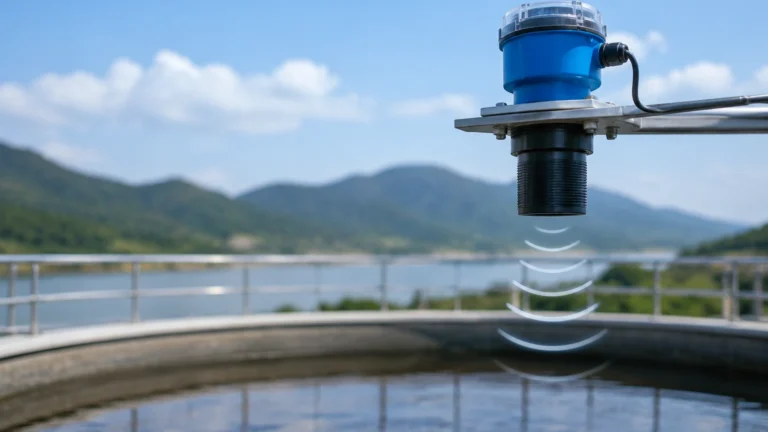
Radar level meters operate on the Time-of-Flight (ToF) principle. The device emits high-frequency microwave pulses (typically in the 26GHz or 80GHz range) that travel to the liquid surface and reflect back to the sensor. By measuring the time interval between emission and reception, the distance—and thus the level—is calculated.
* Application in Electrolysis: Radar is highly effective for hydrogen separators because it is non-contact and unaffected by the density changes of the gas or liquid. 80GHz radar, in particular, offers a narrow beam angle, which is useful in small separator tanks with internal structures.
Ultrasonic Level Measurement
Ultrasonic sensors also use the ToF principle but utilize sound waves instead of electromagnetic waves. A transducer emits an ultrasonic pulse that reflects off the liquid surface.
* Application in Electrolysis: These are generally used for atmospheric pressure tanks, such as deionized water storage. However, they are less suitable for pressurized hydrogen tanks because the speed of sound varies significantly with gas composition and pressure, leading to measurement errors.
Hydrostatic Pressure Measurement
This principle relies on the relationship between the height of a liquid column and the pressure it exerts at the base (P = ρgh). A pressure transmitter at the bottom of the tank measures the head pressure, which is then converted to a level reading based on the known density of the fluid.
* Application in Electrolysis: Hydrostatic sensors are common in alkaline electrolyzers. However, they require compensation for the top-side gas pressure (differential pressure) to provide an accurate level reading in pressurized systems.
Magnetic Level Gauges
Magnetic level gauges utilize a float containing a permanent magnet that moves with the liquid level inside a bypass chamber. Outside the chamber, a series of magnetic flags or a sensing reed-chain tracks the float's position.
* Application in Electrolysis: These provide a clear visual indication for operators and are highly reliable for high-pressure hydrogen applications where electronic components need to be isolated from the process media.
Technical Selection Table for Hydrogen Electrolysis
Choosing the right technology depends on the specific process conditions. The following table provides a comparison based on typical industrial requirements.
| Technology | Typical Accuracy | Max Pressure | Chemical Compatibility | Best Use Case |
| :— | :— | :— | :— | :— |
| 80GHz Radar | ±2 mm | Up to 100 bar | Excellent (PTFE/PEEK) | High-pressure H2/O2 Separators |
| Magnetic Gauge | ±5 mm | Up to 320 bar | High (Stainless/Alloy) | Visual monitoring & high pressure |
| Hydrostatic | ±0.1% FS | Varies | Good | Electrolyte circulation tanks |
| Ultrasonic | ±0.25% FS | Atmospheric | Good | Deionized water storage |
Installation Considerations for Efficiency Hydrogen Electrolysis
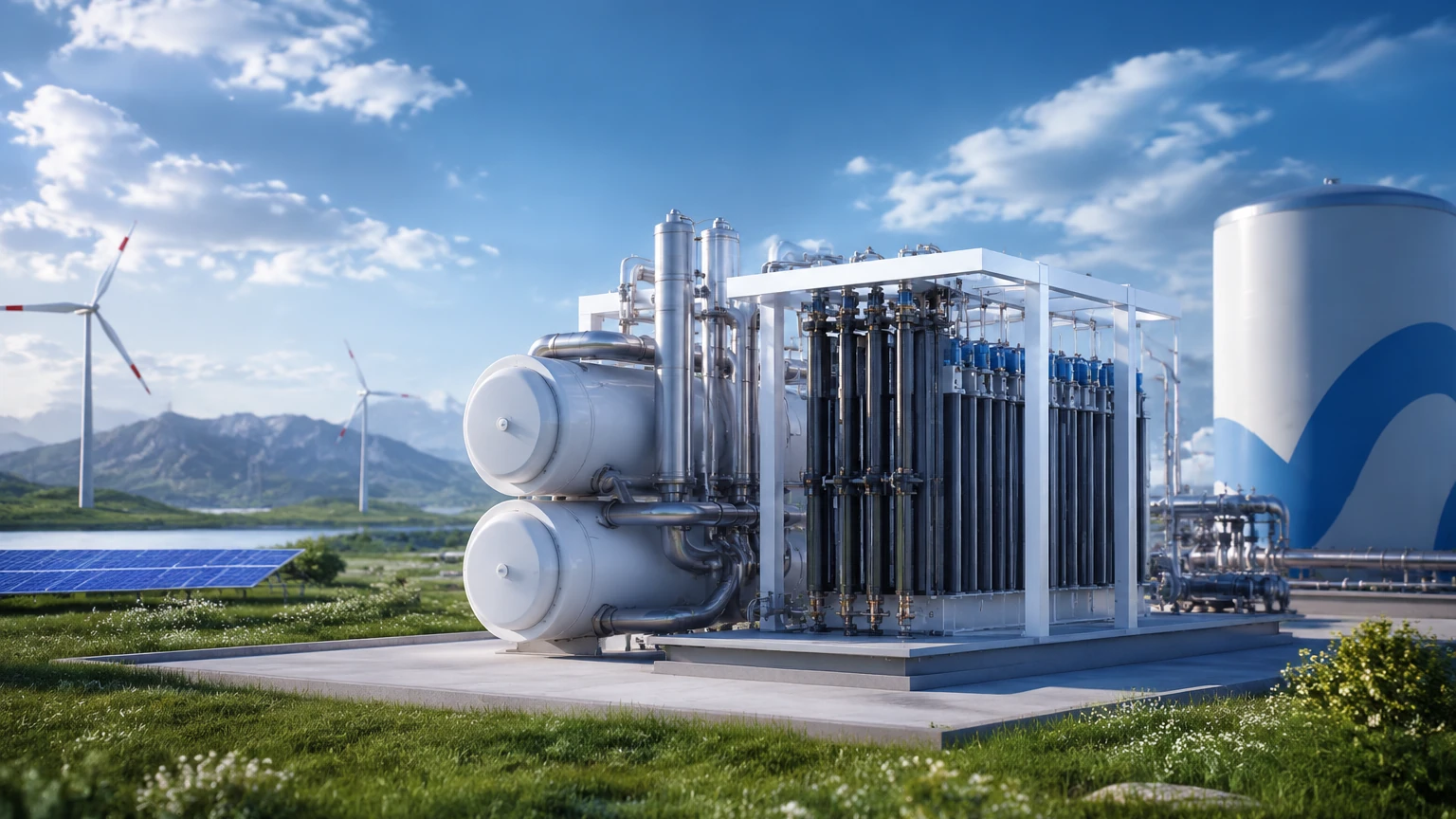
To maintain efficiency hydrogen electrolysis, the installation of level sensors must account for the unique properties of hydrogen and the corrosive nature of electrolytes.
Material Compatibility
In alkaline electrolysis, the 25-30% KOH solution is highly corrosive. Sensors must use compatible materials such as 316L stainless steel, PEEK, or PTFE. For hydrogen service, materials must be selected to avoid hydrogen embrittlement, a phenomenon where hydrogen atoms diffuse into the metal lattice, causing cracks. 316L stainless steel is generally the standard for these applications.
Pressure and Temperature
Modern high-efficiency electrolyzers often operate at elevated pressures (30 to 50 bar) and temperatures (60°C to 90°C). These conditions improve the kinetics of the reaction but place stress on the sensor seals. It is critical to ensure that the level meter’s process connection and gaskets are rated for both the maximum operating pressure and the specific gas medium.
Hazardous Area Certification
Hydrogen is highly flammable with a wide explosive range (4% to 75% in air). All level measurement instrumentation installed near the electrolyzer stack or separator tanks must carry appropriate hazardous area certifications, such as ATEX, IECEx, or UL/CSA (e.g., Ex d or Ex i).
Challenges and Limitations
While advanced instrumentation supports efficiency, several physical challenges remain:
* Foaming: In alkaline electrolyzers, the movement of gas through the KOH solution can create foam. This foam can scatter radar signals or cause false readings in ultrasonic sensors. Selecting a radar with advanced signal processing can help filter out foam interference.
* Gas Bubbles: The presence of gas bubbles in the liquid (void fraction) changes the effective density of the fluid. This can affect hydrostatic level measurements. In such cases, non-contact radar is often the preferred alternative.
* Signal Attenuation: While radar is generally effective, extremely high pressures can slightly alter the dielectric constant of the gas space, requiring fine-tuning of the sensor calibration for maximum precision.
Frequently Asked Questions (FAQ)
Q: How does level control impact the overall energy efficiency of the plant?
A: Precise level control allows the system to operate at the smallest possible safety margins. By maintaining the optimal liquid level in separators, you minimize gas crossover (which wastes energy) and ensure that the heat exchangers and pumps operate at their design points, reducing auxiliary power consumption.
Q: Can I use a standard level switch for high-pressure hydrogen?
A: Standard switches may not be rated for hydrogen service. You must verify that the switch materials are resistant to hydrogen embrittlement and that the electrical housing is explosion-proof.
Q: Why is 80GHz radar preferred over 26GHz for electrolyzers?
A: 80GHz radar has a much smaller wavelength, allowing for smaller antennas and a narrower beam. This is critical because electrolyzer separator tanks are often small and contain internal baffles or cooling coils that could interfere with a wider 26GHz beam.
Conclusion
Maximizing efficiency hydrogen electrolysis requires a holistic approach that combines advanced electrochemical cell design with precise process instrumentation. Level measurement is a cornerstone of this control strategy, ensuring gas purity, equipment safety, and continuous operation. By selecting the appropriate measurement principle—whether it be the precision of 80GHz radar or the reliability of magnetic level gauges—operators can significantly improve the performance and safety of their hydrogen production facilities.
For technical assistance in selecting the right level measurement solution for your hydrogen project, visit the Main Page to review available technologies and application support.