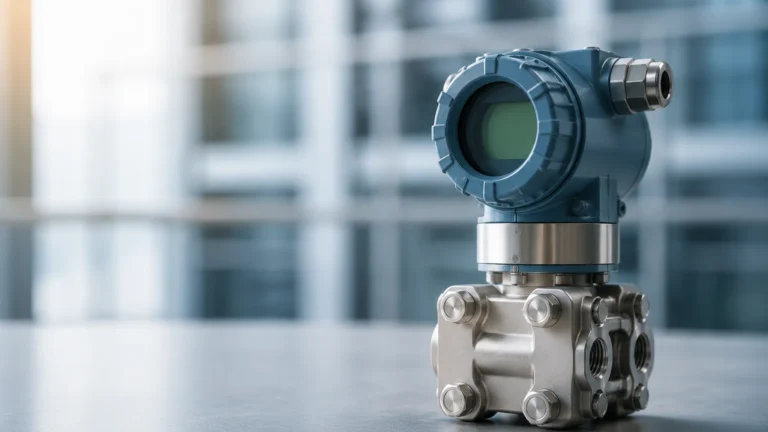
Food Plant Efficiency
Food Plant Efficiency
In the competitive landscape of the modern food and beverage industry, food plant efficiency is no longer a secondary objective; it is the fundamental driver of profitability and sustainability. For process engineers and plant managers, achieving peak efficiency involves a complex orchestration of raw material handling, precise processing, and rigorous waste management. At the heart of this orchestration lies the ability to accurately monitor and control the volume of ingredients and products throughout the facility. Level measurement technology serves as a critical sensory input for automation systems, directly influencing the throughput, safety, and hygiene of the entire production line.
Maximizing food plant efficiency requires moving beyond manual checks and legacy mechanical gauges. Digital, high-precision level sensors provide the real-time data necessary to optimize inventory cycles, reduce product loss (often referred to as "shrink"), and ensure that expensive processing equipment operates within its ideal parameters. This article explores the technical relationship between level measurement and operational efficiency, providing a comprehensive guide for selecting and installing the right instrumentation for food-grade environments.
The Critical Link Between Level Measurement and Food Plant Efficiency
Efficiency in a food processing facility is measured by the ratio of high-quality output to the resources consumed, including time, energy, and raw materials. Level measurement instruments impact this ratio in several key areas:
Inventory Management and Supply Chain Continuity
Inaccurate level data in storage silos or tanks can lead to two costly scenarios: stockouts and overstocks. A stockout of a vital ingredient like flour, sugar, or oil can halt an entire production line, leading to hours of downtime and lost labor costs. Conversely, overstocking perishable ingredients increases the risk of spoilage. High-precision radar or ultrasonic sensors allow for automated reordering systems, ensuring that the plant maintains the "just-in-time" inventory levels essential for modern food plant efficiency.
Reduction of Product Waste
Product loss during transfer and filling is a major efficiency drain. Overfilling a mixing tank not only wastes expensive ingredients but also creates a significant cleaning burden and potential environmental compliance issues. By using high-accuracy level transmitters, plants can fill vessels to their maximum safe capacity without the risk of overflow. Furthermore, point-level switches act as redundant safety layers, preventing pump dry-runs or tank overfills in the event of a primary control loop failure.
Optimization of CIP and SIP Cycles
Clean-in-Place (CIP) and Steam-in-Place (SIP) are essential for food safety but represent non-productive downtime. Level sensors that can accurately track the volume of cleaning agents and rinse water help optimize these cycles. By knowing exactly when a tank is empty or when a cleaning solution has reached the required level, the automation system can minimize water and chemical usage, directly contributing to the plant's overall resource efficiency.
Core Measurement Principles and Technology Overview
Before selecting a device, it is important to understand the physical principles that govern level measurement. In the food industry, the choice of technology depends on the physical state of the medium (liquid, powder, or granular solid), the presence of foam or steam, and the geometry of the vessel.
1. Radar Level Measurement (Non-Contact and Guided)
Radar technology is widely considered the gold standard for high-accuracy applications. It operates by emitting electromagnetic pulses and measuring the time it takes for the signal to reflect off the product surface and return to the sensor.
* Non-Contact Radar: These sensors emit signals through the air. High-frequency versions (such as 80GHz) offer a narrow beam angle, allowing them to avoid internal obstructions like agitators or spray balls. They are unaffected by vacuum, pressure, or temperature shifts.
* Guided Wave Radar (GWR): GWR uses a physical probe (rod or cable) to guide the radar pulse to the product surface. This is particularly effective for low-dielectric liquids or applications with heavy surface foam, as the probe ensures the signal reaches the liquid level and returns reliably.
2. Ultrasonic Level Sensors
Ultrasonic sensors function by emitting high-frequency sound waves. The sensor calculates the distance based on the time-of-flight of the sound echo. While cost-effective, ultrasonic sensors are sensitive to the medium through which the sound travels. In food plants, changes in air temperature or the presence of heavy steam can alter the speed of sound, requiring integrated temperature compensation to maintain accuracy.
3. Hydrostatic Level Measurement
This principle relies on the relationship between the height of a liquid and the pressure it exerts at the bottom of a tank. The formula $P = \rho gh$ (where $P$ is pressure, $\rho$ is density, $g$ is gravity, and $h$ is height) allows the sensor to calculate the level. Hydrostatic transmitters are highly reliable for liquids with constant density, such as milk or water, provided they are installed in vented tanks or use differential pressure sensors for pressurized vessels.
4. Capacitance and Vibrating Level Switches
These are typically used for point-level detection rather than continuous measurement.
* Capacitance: Measures the change in electrical capacitance between the probe and the tank wall as the product covers the sensor.
* Vibrating (Tuning) Fork: The sensor vibrates at a specific frequency. When the product reaches the fork, the vibration is dampened, triggering a switch. These are ideal for high/low alarms in both liquids and solids.
Strategic Selection for Diverse Food and Beverage Mediums
To maximize food plant efficiency, the instrumentation must be matched to the specific characteristics of the medium being measured. The following table provides a practical selection guide based on common food industry applications.
| Medium Type | Application Example | Recommended Technology | Key Benefit |
| :— | :— | :— | :— |
| Bulk Solids | Flour, Grain, Sugar Silos | 80GHz Non-contact Radar | Penetrates dust; ignores internal bracing. |
| Low Viscosity Liquids | Water, Juice, Milk | Ultrasonic or Hydrostatic | Cost-effective; high reliability for simple liquids. |
| Viscous/Sticky Liquids | Syrups, Chocolate, Honey | Guided Wave Radar or Flush Hydrostatic | Ignores product buildup on tank walls. |
| Foaming Liquids | Beer, Carbonated Drinks | Guided Wave Radar | Probe guides signal through foam to the liquid. |
| Corrosive Chemicals | CIP Acids/Caustics | Radar with PTFE Flange | Resistance to aggressive cleaning agents. |
| Small Process Vessels | Buffer Tanks, Mixing Bowls | Compact Radar or Point Switch | High precision in confined spaces. |
Selection Considerations for Solids
Measuring solids presents unique challenges, such as the formation of "cones" during filling or "rats-holes" during emptying. Radar sensors with high beam focusing are preferred here because they can be aimed at specific points on the material surface to provide a more representative average level, preventing false "full" readings that could stop production prematurely.
Selection Considerations for Liquids
For liquids, the primary concern is often the presence of agitation. Mixing blades can create turbulent surfaces and vortexes. In these environments, software-based "false echo suppression" or the use of a stilling well (a pipe that protects the sensor from turbulence) is necessary to maintain a stable reading and protect food plant efficiency.
Engineering for Hygiene: Sanitary Installation Standards
In the food industry, an instrument is only as good as its ability to remain sterile. Improperly installed sensors can become breeding grounds for bacteria, leading to batch contamination and massive efficiency losses due to product recalls or extended cleaning downtime.
Material Selection
All wetted parts (the parts of the sensor that touch the food) must be made from non-toxic, non-corrosive materials. 316L Stainless Steel is the industry standard for sensor bodies and probes. For seals and gaskets, materials like PTFE (Teflon), EPDM, or PEEK are used because they can withstand the high temperatures of SIP cycles (up to 140°C / 284°F) and the chemical aggressiveness of CIP solutions.
Sanitary Process Connections
Standard threaded connections are forbidden in many food applications because the threads can trap organic matter. Instead, sensors should use sanitary fittings such as:
* Tri-Clamp: A quick-release flange system that is easy to clean and inspect.
* Varivent: A specialized circular flange that allows for flush-mounting of the sensor, ensuring no "dead zones" where product can stagnate.
* Weld-in Adapters: These allow the sensor to be mounted perfectly flush with the tank wall, which is ideal for hydrostatic transmitters used in viscous products.
Surface Finish
The smoothness of the sensor surface is measured by $Ra$ (Roughness Average). For food plant efficiency and safety, a surface finish of $Ra < 0.8 \mu m$ is typically required. This prevents microscopic food particles from adhering to the metal, making the cleaning process faster and more effective.
Overcoming Operational Challenges and Limitations
Even the most advanced level measurement systems face environmental hurdles in a food plant. Understanding these limitations is the first step toward troubleshooting and maintaining efficiency.
1. The Challenge of Foam
Foam is common in dairy, brewing, and soft drink production. Ultrasonic waves are often absorbed by foam, leading to a "loss of echo." Radar signals can also be scattered. If foam is a persistent issue, engineers should opt for Guided Wave Radar or Hydrostatic Transmitters, which are largely unaffected by surface conditions.
2. High Temperature and Steam
During sterilization, steam can create a dense atmosphere that attenuates ultrasonic signals. Radar is immune to steam, but the sensor's electronics must be protected. Using a remote housing for the electronics or integrated cooling fins can extend the life of the sensor in high-heat environments.
3. Condensation and Buildup
In cold storage or humid processing areas, condensation can form on the sensor face. While some radar sensors can "see through" a thin film of water, heavy buildup of sticky products like caramel or dough can cause signal drift. Choosing sensors with a convex (curved) lens allows condensation to drip off, and some advanced units include a self-cleaning air-purge connection.
4. Tank Geometry and Obstacles
Small tanks with internal heating coils, agitators, or baffles can create "ghost" reflections. Modern digital transmitters feature software that allows the user to "map" the tank when it is empty. This tells the sensor to ignore reflections from fixed internal structures and only report the reflection from the moving product surface.
Maintenance and Calibration for Long-Term Efficiency
To sustain food plant efficiency, level measurement instruments must be part of a proactive maintenance program. While modern solid-state sensors have no moving parts and require less maintenance than mechanical floats, they are not "set and forget" devices.
* Periodic Calibration: Over time, sensors may experience slight electronic drift. Annual calibration against a known reference (like a manual dip-tape or a weighing scale) ensures that the data fed into the PLC remains accurate.
* Diagnostic Monitoring: Many smart sensors now offer HART, Modbus, or IO-Link communication. This allows the sensor to report its own health status. For example, a sensor can send an alert if the signal strength is weakening due to product buildup on the lens, allowing maintenance to be scheduled *before* the sensor fails.
* Seal Inspection: During routine plant shutdowns, gaskets and seals on sanitary fittings should be inspected for signs of wear or brittleness caused by repeated SIP cycles. Replacing a $5 gasket is much more efficient than dealing with a leak in the middle of a production run.
Frequently Asked Questions (FAQs)
Q: How does switching from ultrasonic to radar improve food plant efficiency?
A: Radar provides higher accuracy (often up to ±1mm) and is not affected by the temperature or vapor changes common in food processing. This leads to more consistent batching and less downtime caused by signal loss during cleaning or cooking cycles.
Q: What is the best way to measure the level of a highly viscous product like honey?
A: A hydrostatic transmitter with a flush-mount diaphragm is often best. Because it is flush with the tank wall, there is no probe for the honey to stick to, and the pressure measurement remains accurate regardless of the product's stickiness.
Q: Can level sensors help in reducing water consumption?
A: Yes. By accurately monitoring the levels in wastewater treatment tanks and clean water storage, the plant can optimize water reuse and ensure that cleaning cycles use only the minimum amount of water required to reach the necessary level.
Q: Are there level sensors that can withstand high-pressure washdowns?
A: Yes, sensors with an IP69K rating are specifically designed to withstand the high-pressure, high-temperature water jets used in food plant sanitation.
Conclusion
Achieving superior food plant efficiency is a multifaceted challenge that requires a deep understanding of both process engineering and instrumentation. By implementing the correct level measurement principles—whether it be the precision of 80GHz radar or the reliability of hydrostatic pressure—facilities can significantly reduce waste, protect their equipment, and ensure a consistent flow of high-quality products. As automation continues to evolve, the integration of smart, sanitary sensors will remain the cornerstone of a productive and profitable food processing operation.
For engineers looking to upgrade their current systems or design new process lines, it is essential to consult with experts who understand the unique rigors of the food and beverage industry. To Review product options and application support, visit the Welk Main Page for a complete range of industrial level measurement solutions tailored for global automation requirements.