Industrial Temperature Gauge
Industrial Temperature Gauge
In industrial process control, temperature measurement is as fundamental as pressure or level monitoring. An industrial temperature gauge is a ruggedized instrument designed to provide local or remote thermal readings of fluids, gases, or surfaces within harsh environments. Unlike commercial thermometers, these gauges must withstand high pressures, corrosive media, and mechanical vibrations while maintaining long-term accuracy. For engineers and plant operators, selecting the correct gauge involves understanding the underlying physics of thermal expansion and electronic sensing, as well as the mechanical requirements of the specific installation point.
Measurement Principles of Industrial Temperature Gauges
Before selecting an instrument, it is essential to understand how different technologies translate thermal energy into a readable value. Industrial temperature gauges generally operate on three primary physical principles: bimetallic expansion, filled-system expansion, and electronic resistance.
Bimetallic Expansion
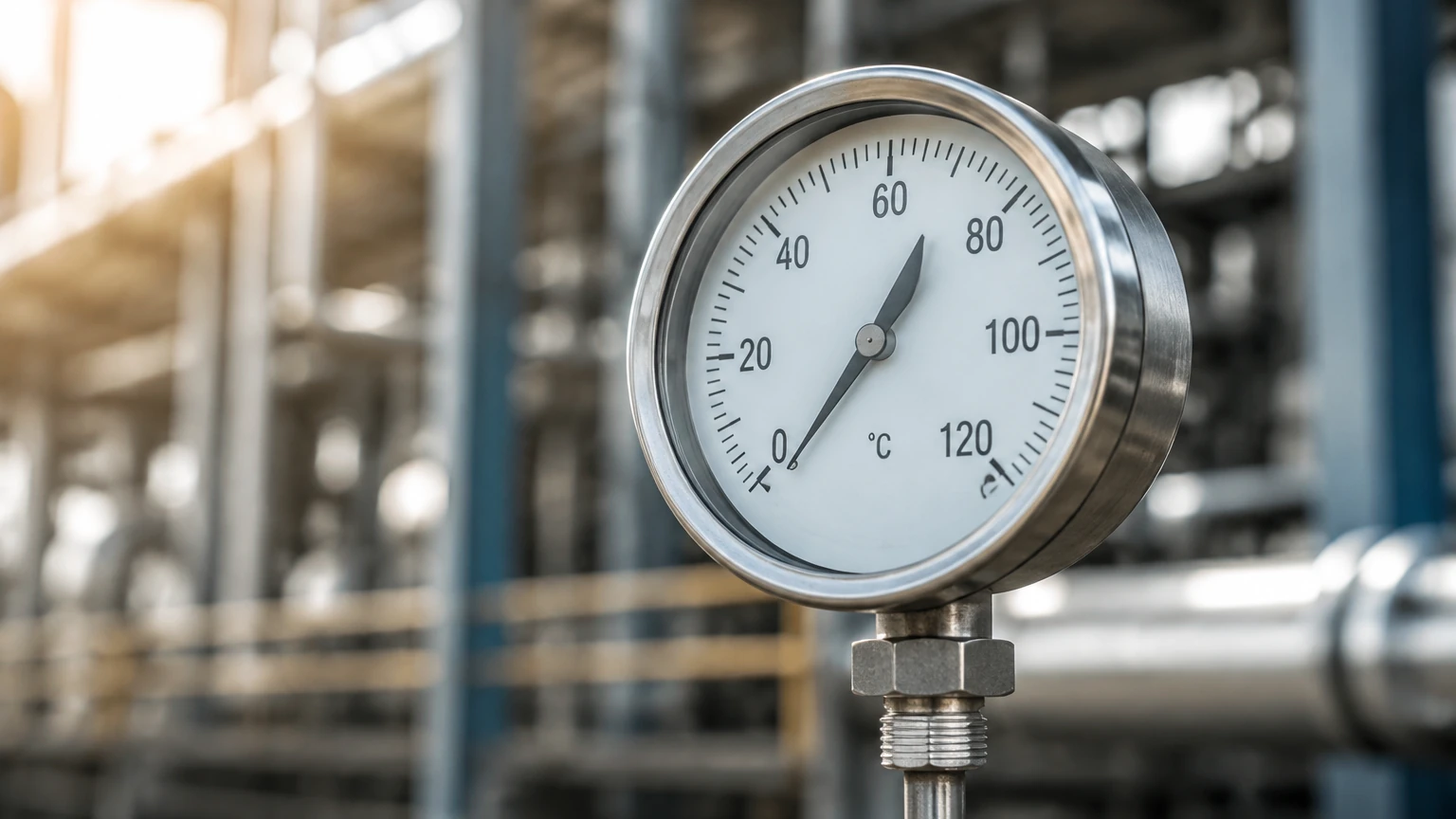
The most common mechanical gauge is the bimetallic thermometer. This device utilizes two strips of different metals (typically steel and copper or brass) bonded together. Because these metals have different coefficients of thermal expansion, the strip bends when subjected to temperature changes. In industrial gauges, this strip is usually wound into a helical coil. One end of the coil is fixed to the bottom of the stem, while the other end is attached to the pointer shaft. As the temperature rises, the coil twists, rotating the pointer across the dial face.
Filled-System (Expansion) Principles
Filled-system gauges rely on the expansion of a fluid—either a liquid, a gas, or a vapor—contained within a closed bulb and capillary system. As the temperature at the bulb increases, the internal pressure rises or the fluid expands, causing a Bourdon tube in the gauge head to deflect.
* Gas-Actuated: Usually filled with nitrogen, these are ideal for very low or very high temperatures and offer linear scales.
* Liquid-Filled: These utilize the thermal expansion of a liquid (such as xylene). They provide high torque for the pointer but are limited by the ambient temperature's effect on the capillary tube.
Electronic Sensing (RTDs and Thermocouples)
While traditional "gauges" are mechanical, modern industrial facilities often use digital temperature gauges that incorporate Resistance Temperature Detectors (RTDs) or thermocouples.
* RTDs: Operate on the principle that the electrical resistance of a metal (usually platinum) increases predictably with temperature. They offer high accuracy and stability.
* Thermocouples: Consist of two dissimilar wires joined at one end. A temperature gradient across the wires produces a small voltage (the Seebeck effect). These are preferred for extremely high-temperature applications.
Common Types of Industrial Temperature Gauges
Choosing the right type depends on the required temperature range, the distance between the measurement point and the display, and the environmental conditions.
Bimetallic Dial Thermometers
These are the workhorses of the industry. They are entirely mechanical, requiring no external power. They are typically used for local indication where the operator can stand directly in front of the process. They are robust but sensitive to extreme vibration, which can cause the pointer to flutter or the internal coil to fatigue.
Gas-Actuated Remote Thermometers
When the measurement point is inaccessible or located in a hazardous area, gas-actuated gauges with capillary tubing are used. The bulb is placed in the process, and a flexible capillary (up to 30 meters or 100 feet) transmits the pressure change to a remote dial. This allows for centralized monitoring without electronic components.
Digital Industrial Gauges
Digital gauges combine the local display of a mechanical gauge with the precision of electronic sensors. They are often battery-powered or loop-powered and feature large LCD screens. Many digital models also provide a 4-20mA signal output, allowing them to function as both a local gauge and a transmitter for an industrial automation system.
Magnetic Surface Gauges
In applications where the process cannot be breached (such as on the outside of a large tank or pipe), magnetic surface gauges are used. These rely on bimetallic sensors that make contact with the metallic surface to provide an approximate temperature reading of the contents.
Selection Criteria for Industrial Applications
When specifying an industrial temperature gauge, engineers must evaluate several technical parameters to ensure reliability and safety. The following table provides a comparison of the most common technologies.
| Feature | Bimetallic Gauge | Gas-Actuated Gauge | Digital (RTD-based) |
| :— | :— | :— | :— |
| Standard Accuracy | ±1.0% to 2.0% of span | ±1.0% of span | ±0.1% to 0.5% of span |
| Temperature Range | -70°C to 500°C | -200°C to 700°C | -200°C to 850°C |
| Remote Reading | Not possible | Possible (Capillary) | Possible (Signal wire) |
| Power Required | None | None | Battery or 24V DC |
| Vibration Resistance | Moderate (if dampened) | High | Very High |
| Response Time | Moderate | Fast | Very Fast |
Key Evaluation Factors:
1. Stem Length and Diameter: The stem must be long enough to reach the moving part of the process fluid but not so long that it causes mechanical stress or flow restriction. Standard diameters are 6mm or 9mm.
2. Dial Size: Common sizes range from 75mm (3") to 150mm (6"). Larger dials are necessary for readability from a distance.
3. Wetted Materials: For corrosive chemical applications, 316 Stainless Steel is the standard. For highly aggressive media, specialized coatings or exotic alloys like Hastelloy may be required.
4. Environmental Rating: Gauges should be rated at least IP65 for outdoor use to prevent moisture ingress into the dial face.
Installation Guidelines and Best Practices
Proper installation is critical to ensure that the gauge reflects the actual process temperature rather than the ambient temperature of the pipe wall or surrounding air.
Use of Thermowells
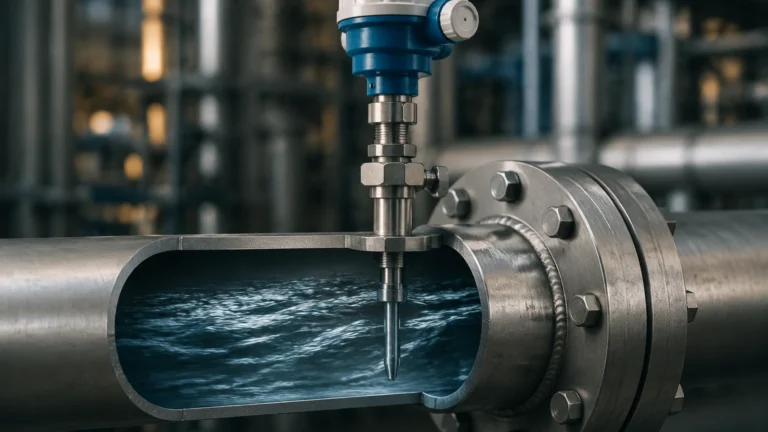
In almost all industrial B2B applications, a temperature gauge should not be installed directly into the process. Instead, it is inserted into a thermowell. A thermowell is a pressure-tight receptacle that protects the gauge from high pressure, velocity, and corrosion.
* Maintenance Advantage: Thermowells allow the gauge to be removed for calibration or replacement without shutting down the process or draining the tank.
* Heat Transfer: To ensure accuracy, the gap between the gauge stem and the thermowell internal wall should be minimized. The use of heat-conductive paste can improve response times.
Insertion Depth
For accurate readings, the sensing element (the tip of the stem) must be fully immersed in the process fluid. A general rule of thumb is that the immersion length should be at least 10 times the diameter of the stem in liquids and 15 times the diameter in gases.
Orientation and Readability
Adjustable-angle gauges (every-angle) allow the dial to be tilted or rotated. This is particularly useful in complex piping layouts where a fixed-back or bottom-connection gauge would be difficult to read. Ensuring that the operator can see the dial clearly from the walkway reduces the risk of process errors.
Relationship Between Temperature and Level Measurement
In the context of industrial automation, temperature measurement is rarely an isolated requirement. For manufacturers like Welk, temperature data is a vital secondary variable for accurate level measurement.
For instance, in hydrostatic level measurement, the sensor calculates the liquid level based on the pressure exerted by the liquid column. However, the density of a liquid changes with its temperature. Without an integrated industrial temperature gauge or sensor to provide compensation data, the level reading would drift as the process heats or cools. Similarly, in ultrasonic level measurement, the speed of sound is highly dependent on the air temperature in the tank vapor space. High-quality measurement systems often integrate temperature compensation to maintain the accuracy of the Main Page level data.
Limitations and Maintenance Risks
While industrial temperature gauges are durable, they are not infallible. Users should be aware of the following risks:
* Thermal Lag: Mechanical gauges have a slower response time than electronic sensors. In processes with rapid temperature fluctuations, a bimetallic gauge may lag behind the actual temperature by several seconds.
* Calibration Drift: Over time, mechanical fatigue in bimetallic coils or gas leakage in filled systems can cause the gauge to drift. Annual calibration against a certified reference thermometer is recommended.
* Vibration Damage: Continuous high-frequency vibration can wear out the internal gears and linkages of a dial gauge. In such environments, liquid-filled casings (usually silicone or glycerin) should be used to dampen the movement and lubricate the internal parts.
* Ambient Temperature Interference: For remote gas-actuated gauges, long capillary runs exposed to the sun or cold winds can influence the pressure inside the tube, leading to errors. Compensated capillaries are necessary for high-precision requirements.
Frequently Asked Questions (FAQs)
Q: Can I use a bimetallic gauge for steam applications?
A: Yes, provided the gauge is used with a thermowell and the temperature range of the gauge exceeds the saturated steam temperature. However, ensure the dial is not subjected to direct steam leaks which can cloud the glass.
Q: What is the difference between a "fixed" and "every-angle" connection?
A: A fixed connection means the dial is permanently set at a 90-degree (bottom) or 180-degree (back) angle to the stem. An every-angle connection has a swivel joint, allowing the user to position the dial for optimal visibility after installation.
Q: Why is my gauge reading lower than the actual process temperature?
A: This is often caused by insufficient insertion depth. If the stem is too short, heat is conducted away from the sensor by the pipe wall or the thermowell head (conduction error). Ensure the stem is deep enough into the flow stream.
Q: When should I choose a digital gauge over a bimetallic one?
A: Choose a digital gauge when you require higher precision (better than 1%), need to record data, or require a backlight for dark environments. Digital gauges are also superior in high-vibration areas where mechanical parts would fail.
Conclusion
Selecting an industrial temperature gauge requires a balance between mechanical durability, measurement accuracy, and ease of maintenance. Whether utilizing the simple reliability of a bimetallic coil or the advanced precision of a digital RTD system, the instrument must be matched to the specific pressures and chemical profiles of the process. By following proper installation practices—particularly the use of correctly sized thermowells—operators can ensure long-term stability in their thermal monitoring. For comprehensive process control, integrating temperature data with other parameters like level and pressure remains the standard for modern industrial efficiency. To explore a full range of instrumentation and support, visit the Main Page for detailed product specifications and application engineering guidance.