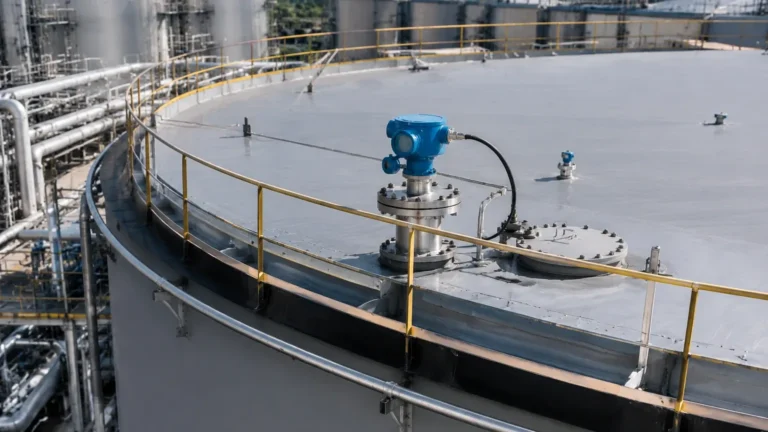
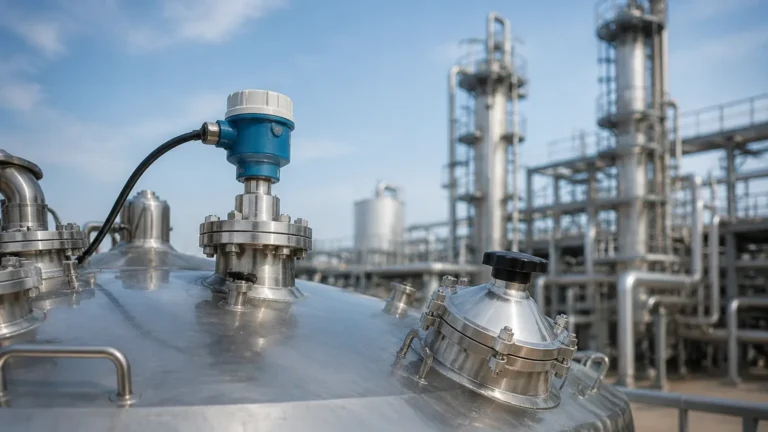
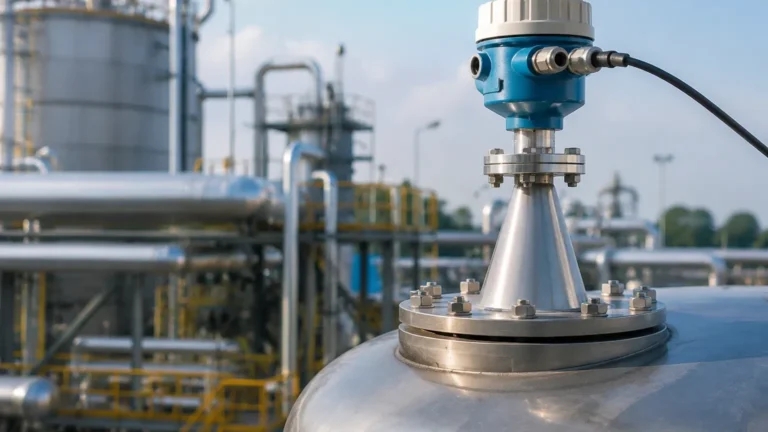
Siemens Sitrans Lr560 Radar Level Transmitter
Siemens Sitrans LR560 Radar Level Transmitter: An Engineering Guide to High-Frequency Level Measurement
In the landscape of industrial process automation, the accurate measurement of bulk solids and liquids in tall, narrow vessels has historically presented significant engineering challenges. Traditional contact-based methods often suffer from mechanical wear, while lower-frequency non-contact sensors frequently struggle with signal interference from vessel walls or internal obstructions. The introduction of high-frequency FMCW (Frequency Modulated Continuous Wave) technology, exemplified by the siemens sitrans lr560 radar level transmitter, has fundamentally shifted the capabilities of non-contact level measurement.
This article provides a technical deep dive into the operating principles, selection criteria, and installation requirements for the Siemens Sitrans LR560, serving as a reference for engineers and procurement professionals evaluating Radar Level Meters for complex industrial environments.
1. Understanding the Measurement Principle: 78 GHz FMCW Technology
To appreciate the performance of the Siemens Sitrans LR560 radar level transmitter, one must first understand the physics behind its operation. Unlike pulse-based radar systems that measure the time-of-flight of a single microwave burst, the LR560 utilizes Frequency Modulated Continuous Wave (FMCW) technology operating at a high frequency of 78 GHz.
The FMCW Advantage
In FMCW radar, the transmitter emits a continuous signal with a frequency that increases linearly over time (a "sweep" or "chirp"). When the signal reflects off the material surface and returns to the sensor, it is compared with the frequency being transmitted at that exact moment. The difference between the transmitted and received frequencies is directly proportional to the distance to the material. This method allows for much higher resolution and accuracy compared to pulse radar, especially at shorter ranges.
Why 78 GHz Matters
The frequency of a radar signal dictates its wavelength and, consequently, the beam angle of the emission. Lower frequency radars (e.g., 6 GHz or 24 GHz) require very large antennas to achieve a narrow beam. At 78 GHz, the wavelength is approximately 4 mm (0.15 inches), allowing the LR560 to produce a highly focused 4-degree beam angle from a compact, 40 mm (1.5 inch) or 100 mm (4 inch) lens antenna.
This narrow beam is critical for:
* Avoiding Obstructions: The signal can pass between narrow gaps in internal vessel structures like ladders, pipes, or agitators without creating false echoes.
* Steep Slopes: High-frequency waves reflect more effectively off the sloped surfaces of solids (the angle of repose), ensuring a stronger return signal to the transmitter.
* Long Range: The LR560 is capable of measuring distances up to 100 meters (328 feet), making it suitable for the largest industrial silos.
2. Technical Features of the Siemens Sitrans LR560
The siemens sitrans lr560 radar level transmitter is designed as a 2-wire, loop-powered instrument, which simplifies wiring and integration into existing control systems. Its technical architecture is optimized for the harshest industrial conditions.
Key Specifications
* Measurement Range: 40 meters (131 feet) or 100 meters (328 feet) versions.
* Accuracy: ±5 mm (0.2 inches).
* Beam Angle: 4 degrees (with 4-inch lens).
* Process Temperature: -40°C to +200°C (-40°F to +392°F).
* Process Pressure: Up to 3 bar g (43.5 psi g) standard; higher options available.
* Enclosure: IP68 / NEMA 6, typically constructed from stainless steel for corrosion resistance.
Signal Processing and "Process Intelligence"
One of the standout features of the LR560 is its advanced signal processing software. It utilizes "Process Intelligence" algorithms to differentiate between true material levels and transient noise caused by dust clouds or filling streams. This ensures that the transmitter maintains a stable reading even during active pneumatic filling of a silo, where dust density is at its peak.
3. Engineering Selection Table for Radar Level Meters
When selecting between various Radar Level Meters, engineers must match the technology to the specific media and vessel geometry. The following table compares the LR560 against other common radar configurations.
| Feature | Siemens Sitrans LR560 | Standard 24 GHz Radar | Guided Wave Radar (GWR) |
| :— | :— | :— | :— |
| Frequency | 78 GHz | 24 – 26 GHz | ~1 – 2 GHz |
| Beam Angle | 4° (Narrow) | 8° – 15° (Moderate) | N/A (Contacting) |
| Best Application | Tall silos, solids, narrow vessels | General purpose liquids/solids | Low dK liquids, interface levels |
| Max Range | 100 m | 30 – 70 m | 30 – 60 m |
| Dust Tolerance | Excellent | Good | Moderate (Build-up risk) |
| Installation | Non-contact | Non-contact | Contacting (Probe) |
| Maintenance | Very Low | Low | Moderate (Probe cleaning) |
4. Installation and Mounting Considerations
Proper installation is paramount to the performance of the siemens sitrans lr560 radar level transmitter. While the narrow beam provides significant flexibility, several engineering constraints must be observed.
Nozzle Design
The LR560 features a lens antenna that is often flush-mounted. Unlike horn antennas used in lower-frequency radars, the lens antenna is less susceptible to material buildup. However, the mounting nozzle should be as short as possible to prevent the radar beam from clipping the edge of the nozzle, which can cause "ringing" or near-field interference.
Aiming and Alignment
For solids applications, the angle of the material surface changes as the silo fills and empties. The LR560 typically comes with an integrated aiming flange (easy-aimer). This allows the engineer to tilt the transmitter (up to 10 degrees) to point the beam toward the center of the discharge cone, maximizing the reflected signal strength from the material's surface.
The "Dead Zone" (Blocking Distance)
Every radar transmitter has a minimum distance below the sensor where it cannot accurately measure, known as the dead zone or blocking distance. For the LR560, this is typically around 400 mm (15.7 inches) from the sensor face. Engineers must ensure the maximum fill level of the vessel does not enter this zone to avoid measurement errors.
Air Purging
In applications involving extremely fine, sticky dust (such as cement or flour), dust can eventually accumulate on the lens antenna. The LR560 includes a built-in air purge connection. By connecting a clean, dry compressed air line, the lens can be kept clear, ensuring long-term reliability without manual cleaning.
5. Application Risks and Limitations
While the siemens sitrans lr560 radar level transmitter is a robust solution, certain application factors can introduce risks to measurement accuracy.
1. Low Dielectric Constant (dK): Radar relies on the reflection of microwaves. Materials with a very low dielectric constant (e.g., plastic pellets or certain dry powders with dK < 1.5) reflect less energy. While 78 GHz technology is very sensitive, extremely low dK materials at long ranges may require careful gain adjustment or the use of a larger antenna.
2. Extreme Pressure: The standard LR560 is designed for atmospheric or low-pressure vessels. If the application involves high-pressure reactors, the mechanical integrity of the lens antenna and the seal must be verified against the process specifications.
3. Heavy Foam: In liquid applications, thick, dense foam can absorb the 78 GHz signal rather than reflecting it. If heavy foam is present, a lower frequency radar or a guided wave radar might be more appropriate.
4. Internal Obstructions: Although the 4-degree beam is narrow, it is not a laser. If a large structural beam is directly in the path of the signal, it will create a reflection. The LR560's "Auto False Echo Suppression" can learn these static reflections and ignore them, but it is always better to mount the unit with a clear line of sight to the material.
6. Pre-Purchase Checklist for International Buyers
Before procuring a siemens sitrans lr560 radar level transmitter or similar Radar Level Meters, international buyers should confirm the following technical details with their supplier:
* Process Connection: Confirm the flange size and standard (e.g., DN100, 4" ANSI, or JIS). Ensure the material of the flange (usually 316L stainless steel) is compatible with the process.
* Communication Protocol: The LR560 supports HART, PROFIBUS PA, or Foundation Fieldbus. Ensure the chosen protocol matches the plant's DCS or PLC architecture.
* Hazardous Area Ratings: Verify if the installation site requires ATEX, IECEx, or FM approvals for explosive dust or gas atmospheres.
* Range Version: Select the 40m or 100m version based on the total height of the vessel, including the mounting nozzle.
* Lens Material: Standard lenses are typically TFM 1600 (a high-performance PTFE). Ensure this is compatible with any chemical vapors present in the vessel.
7. Maintenance and Troubleshooting
The LR560 is essentially a "fit and forget" device due to its lack of moving parts. However, periodic maintenance checks are recommended:
* Visual Inspection: Check the air purge line (if used) for leaks and ensure the air supply is clean.
* Echo Profile Analysis: Using software like Siemens SIMATIC PDM, engineers can download the "echo profile" of the tank. This visual representation of the radar signal helps identify if internal build-up or new obstructions are affecting the signal-to-noise ratio.
* Calibration Verification: Periodically compare the radar reading with a manual tape measure (when safe to do so) to verify that the dielectric properties of the material haven't changed significantly enough to affect the surface reflection.
8. Frequently Asked Questions (FAQs)
Q: Can the LR560 be used for liquids?
A: Yes, while it is optimized for solids, it works exceptionally well for liquids, especially in tall, narrow tanks where traditional radars might pick up wall interference.
Q: Does dust affect the accuracy of the 78 GHz signal?
A: Unlike ultrasonic sensors, which are affected by air density and dust, radar waves pass through dust clouds with minimal attenuation. The LR560 is specifically designed to handle the heavy dust found in cement and grain silos.
Q: What is the power requirement for the transmitter?
A: It is a 2-wire device, typically requiring a 24V DC loop power supply. It consumes a standard 4-20 mA signal, with the digital HART signal superimposed on the loop.
Q: How does the LR560 handle a vacuum?
A: The LR560 can operate in vacuum conditions, but it is important to ensure the process seals and flange connections are rated for vacuum service to prevent ambient air ingress.
Conclusion
The siemens sitrans lr560 radar level transmitter represents a pinnacle of high-frequency radar engineering. By utilizing the 78 GHz FMCW principle, it provides industrial users with a reliable, narrow-beam solution for the most demanding solids level applications. When compared to other Radar Level Meters, its ability to ignore internal vessel obstructions and provide high-resolution data at ranges up to 100 meters makes it a preferred choice for cement, mining, grain, and chemical industries worldwide. By following proper installation guidelines and selecting the correct configuration, engineers can achieve precise level control and improved inventory management in even the most challenging process environments.
Download Siemens Sitrans Lr560 Radar Level Transmitter as a PDF