H2s Analyzers
H2s Analyzers
In industrial process management, the simultaneous monitoring of liquid levels and gas concentrations is essential for safety, environmental compliance, and operational efficiency. Hydrogen sulfide (H2S) is a colorless, highly toxic, and flammable gas often found as a byproduct in wastewater treatment, oil and gas refining, and chemical manufacturing. While level measurement instruments track the volume of substances within a vessel, H2s analyzers monitor the atmosphere above the liquid or within the process stream. Understanding how these two technologies interact is critical for engineers designing robust process control systems.
This guide explores the principles of H2S detection, the different types of analyzers available, and how they integrate with level measurement solutions to ensure a safe and productive industrial environment.
Measurement Principles of H2S Detection
Before selecting an analyzer, it is necessary to understand the physical and chemical principles used to detect hydrogen sulfide. Unlike level measurement, which relies on physical properties like wave reflection or buoyancy, H2S analysis typically involves chemical reactions or optical absorption.
Electrochemical Sensing
Electrochemical sensors are the most common technology used in portable and fixed H2s analyzers. These sensors consist of a sensing electrode, a counter electrode, and a reference electrode immersed in an electrolyte. When H2S gas diffuses into the sensor, it undergoes a chemical redox reaction at the sensing electrode. This reaction generates an electrical current proportional to the gas concentration, typically measured in parts per million (ppm).
Tunable Diode Laser Absorption Spectroscopy (TDLAS)
TDLAS is a sophisticated optical method used for high-precision gas analysis. It works by emitting a laser beam at a specific wavelength that corresponds to the absorption line of the H2S molecule. As the laser passes through the gas sample, the H2S molecules absorb a portion of the light. The analyzer measures the reduction in light intensity to calculate the concentration. This method is non-contact and highly resistant to interference from other gases.
Metal Oxide Semiconductor (MOS)
Solid-state MOS sensors utilize a thin film of metal oxide (such as tin oxide) on a heated substrate. When H2S molecules come into contact with the sensor surface, they react with the adsorbed oxygen, changing the electrical resistance of the oxide layer. This change is measured and converted into a concentration reading. MOS sensors are known for their durability in high-temperature and low-humidity environments.
Lead Acetate Tape Detection
This traditional method involves a paper tape impregnated with lead acetate. When exposed to H2S, the tape changes color (turning brown/black) due to the formation of lead sulfide. An optical system measures the rate of darkening to determine the H2S concentration. While it requires consumables (the tape), it is highly specific to H2S and remains a standard in some laboratory and pipeline applications.
Synergies Between Level Measurement and Gas Analysis
In many applications, H2s analyzers and level meters are installed on the same tank or vessel. The level meter, such as a radar or ultrasonic sensor, monitors the liquid height to prevent overflows or dry-running pumps. Simultaneously, the H2S analyzer monitors the headspace for toxic gas buildup.
1. Safety Interlocks: High H2S levels can trigger ventilation systems or emergency shutdowns, while high-level alarms from level meters prevent spills that could release even more gas into the environment.
2. Corrosion Management: H2S is highly corrosive, especially when it reacts with moisture to form sulfuric acid. Monitoring H2S concentrations helps maintenance teams predict the lifespan of level measurement hardware and other vessel internals.
3. Process Optimization: In anaerobic digesters, H2S levels indicate the health of the biological process, while level meters ensure the optimal volume of feedstock is maintained.
For a comprehensive overview of industrial measurement technologies and to find the right equipment for your facility, you can visit the Main Page of our technical resource center.
Types of H2s Analyzers and Their Applications
Choosing the right analyzer depends on whether the requirement is for personal safety, ambient monitoring, or process-stream analysis.
| Technology | Typical Range | Accuracy | Best For | Compatibility with Level Systems |
| :— | :— | :— | :— | :— |
| Electrochemical | 0–100 ppm | ±2-5% | Ambient safety monitoring | High; standard for tank farms |
| TDLAS | 0–500 ppm+ | ±1% | Pipeline & process gas | High; used in pressurized vessels |
| MOS | 0–100 ppm | ±5% | High-temp environments | Moderate; requires specific mounting |
| Lead Acetate | 0–50 ppm | ±2% | Specificity requirements | Low; usually standalone units |
Material Compatibility and Level Measurement in H2S Environments
When H2S is present, the choice of materials for level measurement instruments is just as important as the analyzer itself. H2S can cause stress corrosion cracking in certain metals and degrade standard elastomers.
* Radar Level Meters: Non-contact radar is often the preferred choice for H2S-rich environments. By using a PTFE (Teflon) or PVDF (Kynar) antenna shield, the sensitive electronic components are protected from the corrosive gas.
* Ultrasonic Sensors: These are common in wastewater applications. However, high concentrations of H2S can slightly alter the speed of sound in the headspace, potentially affecting accuracy. Furthermore, the transducer face must be made of chemical-resistant material to prevent degradation.
* Hydrostatic Transmitters: If using a submersible pressure sensor, the cable and diaphragm must be compatible with H2S. Hastelloy-C or ceramic diaphragms are often recommended over standard 316 stainless steel.
Installation Considerations for H2s Analyzers
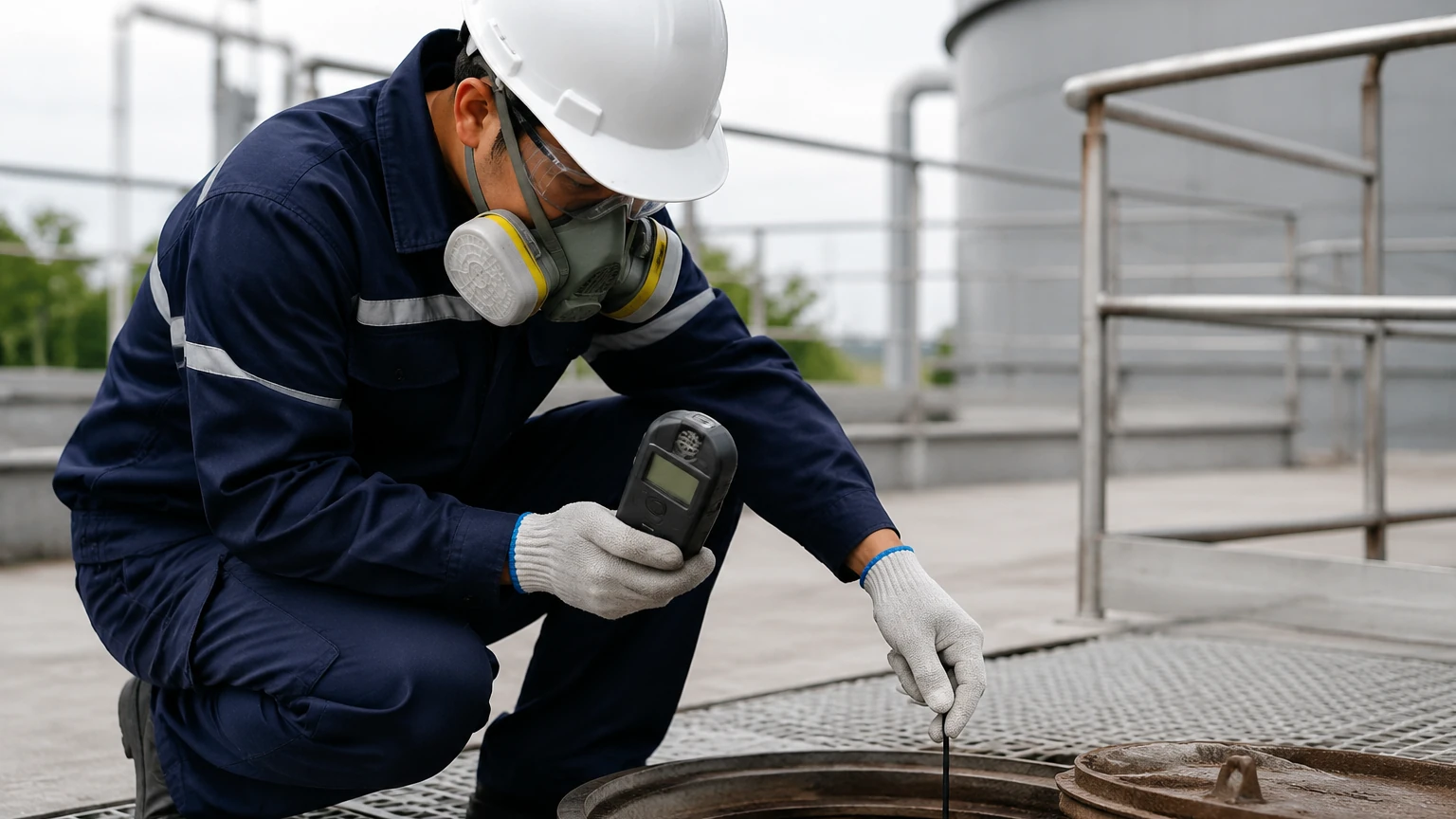
Proper installation is critical for obtaining accurate data from h2s analyzers. Unlike level meters, which are usually top-mounted and look down at the product, gas analyzers must be placed where the gas is most likely to accumulate or pass through.
1. Gas Density: Hydrogen sulfide is heavier than air (vapor density of 1.19). In ambient monitoring, sensors should be placed relatively low to the ground (approximately 30 cm to 1 meter) where the gas will settle. However, in process vessels, the sensor is typically integrated into the headspace or a bypass loop.
2. Airflow and Ventilation: Avoid placing sensors in "dead zones" where air does not circulate, or directly in front of exhaust fans where the gas may be diluted before it reaches the sensor.
3. Calibration Access: H2s analyzers require regular calibration with span gas. Ensure that the mounting location is accessible for technicians or install a remote calibration system.
4. Moisture Control: Many H2S sensors are sensitive to high humidity or liquid ingress. Use moisture traps or heated sample lines if the process gas is saturated.
Limitations and Operational Challenges
While modern h2s analyzers are highly reliable, they are not without limitations. Engineers must account for the following factors:
* Sensor Poisoning: Electrochemical and MOS sensors can be "poisoned" by exposure to certain chemicals like silicones, lead, or high concentrations of other sulfur compounds, which can permanently reduce sensitivity.
* Cross-Sensitivity: Some sensors may react to other gases, such as carbon monoxide (CO) or hydrogen (H2), leading to false positive readings. High-quality analyzers use filters or dual-beam optical paths to mitigate this.
* Life Span: Electrochemical sensors have a finite life, typically 2 to 3 years, as the electrolyte is consumed or the electrodes degrade. Regular testing and replacement schedules are mandatory for safety compliance.
Frequently Asked Questions (FAQ)
Q: How often should H2s analyzers be calibrated?
A: For safety applications, a "bump test" (checking the sensor's response to a known gas) should be performed frequently, while a full calibration is typically required every 3 to 6 months, depending on the environment and manufacturer recommendations.
Q: Can H2S affect the accuracy of my ultrasonic level meter?
A: Yes, but usually only at very high concentrations. Ultrasonic sensors calculate distance based on the speed of sound in air. If the headspace is composed of a significant percentage of H2S, the speed of sound changes. For most safety-level concentrations (under 100 ppm), the effect is negligible.
Q: What is the difference between an H2S monitor and an H2S analyzer?
A: Generally, a "monitor" refers to a device used for safety (detecting if gas is present above a threshold), while an "analyzer" is used for process control (providing a continuous, precise measurement of the gas concentration).
Q: Is H2S corrosive to 316 Stainless Steel?
A: In the presence of moisture, H2S can cause pitting and stress corrosion cracking in 316 stainless steel. For high concentrations, materials like Hastelloy, Monel, or specialized plastics (PTFE/PVDF) are preferred for level sensor housings and analyzer probes.
Conclusion
Integrating h2s analyzers with reliable level measurement systems is a cornerstone of modern industrial safety. By understanding the measurement principles of both technologies, engineers can select the appropriate materials and sensing methods to withstand harsh environments. Whether you are managing a wastewater lift station or a complex refinery process, the combination of accurate gas analysis and precise level tracking ensures that your operations remain within safe and efficient parameters.
For further technical specifications and product selection guides for radar, ultrasonic, and hydrostatic level instruments, please refer to our Main Page.