Inline Raman Spectroscopy
Inline Raman Spectroscopy
In the landscape of modern industrial process control, the ability to monitor chemical composition in real-time has become as critical as monitoring physical parameters like pressure, temperature, and volume. Inline Raman spectroscopy has emerged as a cornerstone of Process Analytical Technology (PAT), allowing engineers to gain a molecular-level understanding of their processes without the delays associated with manual sampling and laboratory analysis.
While physical measurement instruments, such as those found on the Main Page of industrial instrumentation providers, manage the inventory and safety of a vessel, inline Raman spectroscopy manages the chemistry within that vessel. This guide explores the principles, applications, and selection criteria for implementing Raman systems in a B2B industrial environment.
Measurement Principles of Raman Spectroscopy
Raman spectroscopy is a vibrational spectroscopic technique based on the inelastic scattering of monochromatic light, typically from a laser. To understand how it functions in an inline industrial environment, one must first understand the interaction between light and matter.
The Raman Effect
When a laser beam hits a sample, the majority of the photons are scattered elastically. This is known as Rayleigh scattering, where the scattered photons have the same energy (and wavelength) as the incident photons. However, a very small fraction of the light—approximately one in every ten million photons—interacts with the molecular vibrations of the sample, resulting in a change in energy. This is the Raman effect.
* Stokes Shift: If the scattered photon loses energy to the molecule, it shifts to a longer wavelength. This is the most commonly measured phenomenon in industrial Raman systems.
* Anti-Stokes Shift: If the photon gains energy from a molecule already in an excited vibrational state, it shifts to a shorter wavelength.
Because every chemical functional group has a unique vibrational frequency, the resulting Raman spectrum acts as a "chemical fingerprint." By measuring the intensity and position of these shifts, inline systems can identify specific components and determine their concentrations in real-time.
Transitioning from Lab to Inline
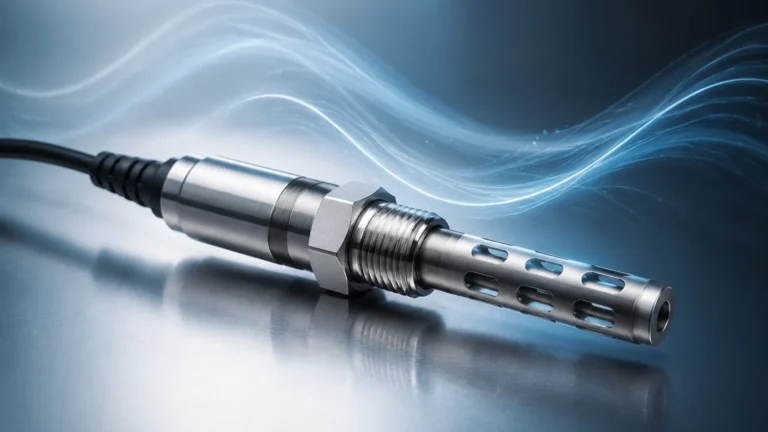
Traditional Raman spectroscopy required a controlled laboratory environment. Inline Raman spectroscopy utilizes fiber-optic probes and ruggedized spectrometers to bring this capability directly into the process piping or reactor. This transition requires high-performance optical components that can withstand the rigors of industrial temperatures, pressures, and corrosive environments.
The Relationship Between Level Measurement and Inline Analysis
In practical process engineering, inline Raman spectroscopy does not operate in a vacuum. It is part of a holistic instrumentation strategy. For an inline Raman probe to provide accurate data, it must remain fully submerged in the process fluid. This is where high-precision level measurement becomes vital.
Instruments such as radar level meters or ultrasonic sensors, which can be explored further at https://www.level-meters.com/, ensure that the liquid level is maintained above the Raman probe's optical window. If the level drops and the probe is exposed to the headspace (vapor phase), the Raman signal will fail or provide misleading data. Furthermore, combining concentration data from Raman with volume data from level transmitters allows for the calculation of total mass balance and reaction yields in real-time.
Key Evaluation Criteria for Industrial Raman Systems
Selecting an inline Raman spectroscopy system requires balancing analytical sensitivity with industrial durability. The following criteria are essential for B2B procurement and engineering teams.
1. Laser Wavelength Selection
The choice of laser wavelength (typically 532 nm, 785 nm, or 1064 nm) is the most critical decision in system design.
* 785 nm: The industry standard. It offers a good balance between signal strength and the avoidance of fluorescence in many organic chemicals.
* 1064 nm: Used for samples that exhibit high fluorescence (such as heavy oils or natural products). While it reduces background noise, the Raman signal is weaker, requiring longer integration times.
* 532 nm: Offers high signal strength but is highly prone to fluorescence, making it more common for inorganic materials or carbon-based materials like graphene.
2. Probe Design and Material Compatibility
The probe is the interface between the spectrometer and the process. It must be constructed from materials that match the chemical resistance of the vessel. Common materials include:
* Body: 316L Stainless Steel, Hastelloy, or Titanium.
* Window: Sapphire is the preferred choice due to its extreme hardness and wide optical transparency.
* Seals: Gold-sealed or brazed windows are preferred over O-rings for high-pressure or high-vacuum applications.
3. Spectral Resolution and Range
Resolution determines the system's ability to distinguish between two closely spaced chemical peaks. For most industrial applications, a resolution of 4 cm⁻¹ to 8 cm⁻¹ is sufficient. The spectral range should cover the "fingerprint region" (typically 200 cm⁻¹ to 2000 cm⁻¹) and, if necessary, the high-frequency region (up to 3500 cm⁻¹) for C-H and O-H stretching.
Comparison Table: Inline Raman vs. Traditional Sampling
| Feature | Inline Raman Spectroscopy | Traditional Laboratory Sampling |
| :— | :— | :— |
| Data Frequency | Continuous (seconds to minutes) | Periodic (hours to days) |
| Sample Handling | None (Non-destructive) | Extraction, transport, and prep |
| Safety | High (No operator exposure) | Moderate (Risk during sampling) |
| Process Control | Real-time feedback loops | Retrospective adjustments |
| Initial Cost | High (CapEx) | Low (CapEx) |
| Operational Cost | Low (Minimal consumables) | High (Labor and reagents) |
Installation Considerations and Best Practices
Successful implementation of inline Raman spectroscopy depends heavily on the physical installation. Engineers should consider the following factors during the design phase:
Probe Placement
The probe should be installed in a location with representative mixing. In a reactor, this is typically away from the impeller to avoid cavitation but within a zone of high turbulence to prevent solids from settling on the probe window. In piping, the probe should be positioned on a vertical run with upward flow to ensure the pipe is always full.
Fouling and Cleaning
Material buildup on the sapphire window (fouling) is the primary cause of signal degradation. Strategies to mitigate this include:
* Using high-velocity flow to "self-clean" the window.
* Installing the probe at an angle (typically 45 degrees) to the flow.
* Utilizing automated retraction and cleaning systems for particularly sticky processes.
Hazardous Area Compliance
Most chemical and oil & gas environments require equipment to be rated for explosive atmospheres (ATEX/IECEx). Because Raman uses high-power lasers, the probe and the fiber-optic cables must be evaluated for "optical inherent safety" to ensure the light energy cannot ignite a flammable atmosphere if a fiber breaks.
Limitations and Risks
While powerful, inline Raman spectroscopy has specific limitations that must be addressed:
1. Fluorescence Interference: Some molecules emit fluorescence that is orders of magnitude stronger than the Raman signal, potentially swamping the detector. This can often be mitigated by selecting a longer wavelength laser (e.g., 1064 nm).
2. Sensitivity Limits: Raman is generally not suitable for trace analysis (parts per billion). It is best used for components present at 0.1% concentration or higher.
3. Sample Heating: In dark or highly absorptive samples, the laser energy can cause localized heating or even degradation of the sample at the probe tip.
4. Cost of Entry: The initial investment for a ruggedized industrial Raman system is significant, often requiring a clear ROI based on yield improvement or waste reduction.
Frequently Asked Questions (FAQ)
Q: Can Raman spectroscopy measure gases inline?
A: Yes, but the molecular density of gases is much lower than liquids, requiring specialized high-pressure cells or long-pathlength probes to achieve a usable signal-to-noise ratio.
Q: How often does an inline Raman system need calibration?
A: The spectrometer itself is usually calibrated against internal standards (like neon lamps or laser lines) automatically. However, the chemometric model used to convert spectra into concentration data may need periodic validation against lab standards, especially if the process chemistry changes.
Q: What is the maximum distance between the probe and the spectrometer?
A: Using high-quality silica fiber optics, the spectrometer can be located up to 100 meters (approx. 328 feet) from the probe. This allows the sensitive electronics to be housed in a controlled rack room while the probe sits in the process area.
Q: Is Raman spectroscopy affected by water?
A: Unlike Mid-Infrared (FTIR) spectroscopy, water is a very weak Raman scatterer. This makes Raman an excellent choice for monitoring reactions in aqueous solutions, as the water signal does not hide the signals of the solutes.
Conclusion and Next Steps
Inline Raman spectroscopy represents a significant leap forward in process transparency. By providing a continuous stream of molecular data, it enables manufacturers to optimize reactions, ensure product quality, and reduce cycle times. However, the success of a Raman installation is inextricably linked to the physical environment of the process.
Before proceeding with a Raman installation, project teams should confirm the compatibility of the process fluid with sapphire and stainless steel, evaluate the potential for fluorescence, and ensure that robust level measurement systems are in place to keep the sensors submerged. For engineering support regarding the integration of level sensors and process instrumentation, professionals are encouraged to review the technical resources available on the Main Page of industry-leading equipment providers.
By combining molecular analysis with reliable physical measurement, industrial facilities can achieve a level of automation and control that meets the demands of the modern global market.