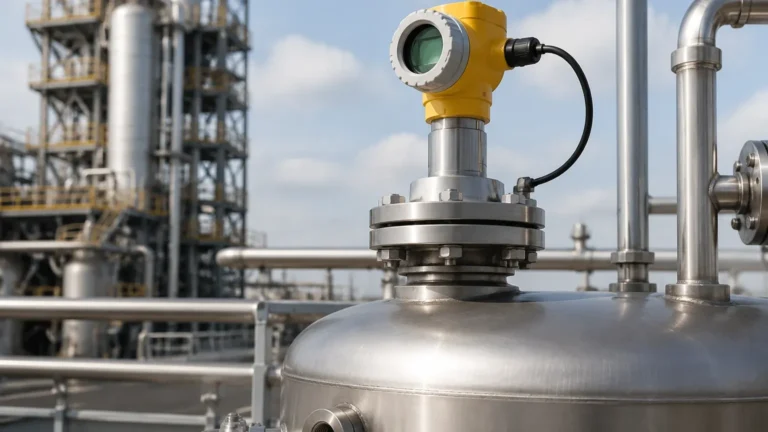
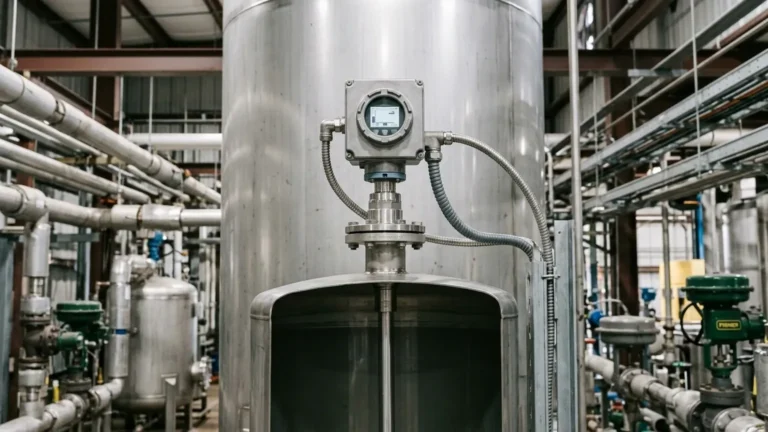
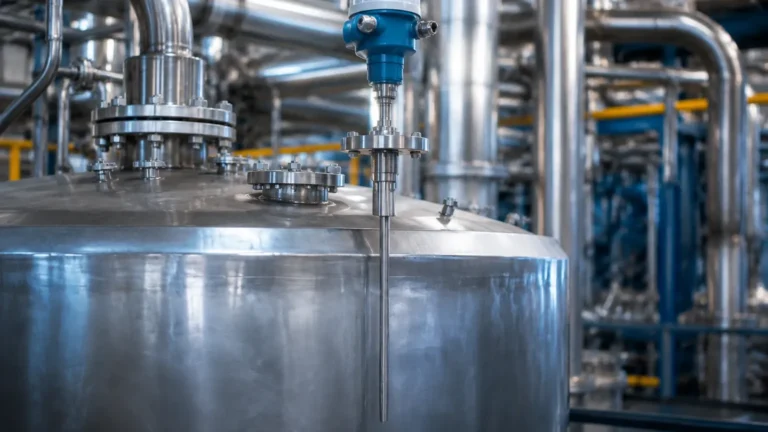
Vegapuls 6x Radar Level Transmitter
Vegapuls 6x Radar Level Transmitter: A Technical Engineering Guide
In the landscape of industrial process automation, the transition toward non-contact level measurement has been driven by the need for higher precision, reduced maintenance, and compatibility with aggressive media. Among the various technologies available, radar-based systems have emerged as the most versatile. The introduction of the vegapuls 6x radar level transmitter represents a significant shift in how engineers approach sensor selection, moving from a multi-model specialized approach to a consolidated platform.
This guide examines the underlying principles of radar level measurement, the specific engineering advantages of the Vegapuls 6x platform, and the practical considerations required for successful deployment in complex industrial environments.
1. Understanding Radar Measurement Principles
Before selecting a specific instrument, it is essential to understand the physics of how Radar Level Meters function. Industrial radar sensors primarily use two methods: Pulse Radar and Frequency Modulated Continuous Wave (FMCW).
Time of Flight (ToF) and Pulse Radar
Traditional radar sensors emit short microwave pulses toward the medium surface. These pulses are reflected and received by the antenna. The instrument measures the time elapsed between emission and reception. Since the speed of light is constant, the distance is calculated as:
*Distance = (Speed of Light × Travel Time) / 2*
Frequency Modulated Continuous Wave (FMCW)
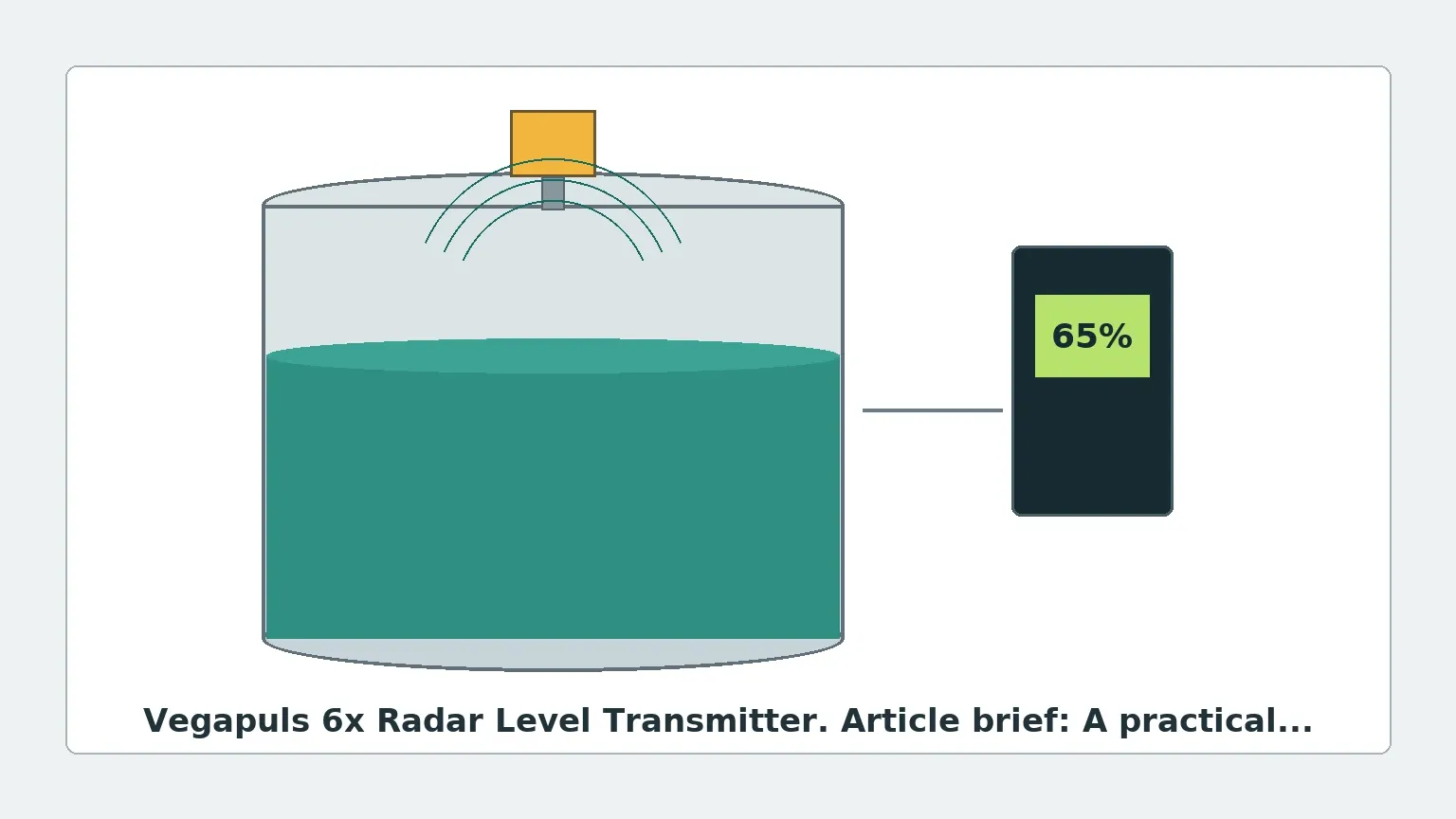
The vegapuls 6x radar level transmitter utilizes FMCW technology, which is generally superior for high-precision industrial applications. Instead of intermittent pulses, the sensor emits a continuous signal with a constantly changing frequency (a frequency sweep). The reflected signal returns with a frequency shift compared to the signal currently being emitted. The difference in frequency (Δf) is directly proportional to the distance.
Advantages of 80 GHz Technology:
The Vegapuls 6x operates at a frequency of 80 GHz. Compared to older 6 GHz or 26 GHz systems, 80 GHz offers a much narrower beam angle. A narrower beam allows the signal to avoid internal tank obstructions such as agitators, heating coils, and ladders, which previously caused "false echoes" and signal interference.
2. The Vegapuls 6x: A Consolidated Engineering Approach
Historically, instrumentation engineers had to choose from a wide array of radar models (such as the VEGAPULS 61, 62, 63, 64, 65, 66, 67, 68, or 69) based on whether they were measuring liquids or solids, or if the environment was high-pressure or high-temperature.
The vegapuls 6x radar level transmitter was designed to replace this entire range with a single, configurable platform. From a B2B procurement and maintenance perspective, this consolidation simplifies spare parts management and reduces the training required for technical staff.
Key Technical Specifications
* Measuring Range: Up to 120 meters (approx. 393 feet).
* Accuracy: ±1 mm.
* Process Temperature: -196 °C to +450 °C.
* Process Pressure: -1 bar to +160 bar (up to 16 MPa).
* Beam Angle: As narrow as 3° depending on the antenna size.
3. Selection Criteria and Antenna Configurations
Choosing the right configuration for a radar level meter depends heavily on the physical properties of the medium and the geometry of the vessel. The Vegapuls 6x offers various antenna designs to suit different process conditions.
Table 1: Antenna Selection Matrix
| Antenna Type | Typical Application | Medium State | Key Benefit |
| :— | :— | :— | :— |
| Plastic Horn / Lens | Water treatment, acid tanks | Liquids | High chemical resistance; cost-effective |
| Thread with Integrated Horn | Small vessels, bypass pipes | Liquids | Compact size; fits small nozzles |
| Flange with Lens Antenna | Large silos, bulk solids | Solids/Dust | Self-cleaning; handles high dust loads |
| Hygienic Encapsulated | Food, Beverage, Pharma | Liquids | CIP/SIP compatible; no crevices |
| High-Temperature Version | Molten glass, furnaces | Liquids/Solids | Ceramic isolation for extreme heat |
Dielectric Constant (εr) Considerations
The reflectability of a radar signal depends on the dielectric constant of the medium. Water has a high εr (~80) and reflects signals very well. Hydrocarbons and oils have low εr values (1.7 to 2.5), which absorb more energy. The high dynamic range of the 80 GHz FMCW technology allows the Vegapuls 6x to measure media with εr as low as 1.1, which was previously difficult for non-contact radar.
4. Installation Engineering and Best Practices
Even the most advanced Radar Level Meters will fail to provide accurate data if installed incorrectly. Engineers must adhere to specific spatial constraints to ensure signal integrity.
Nozzle Geometry
The radar antenna should ideally protrude through the nozzle into the tank. If the antenna is recessed deep within a narrow nozzle, the signal may reflect off the nozzle walls, creating a large "ringing" effect or a dead zone (blocking distance) at the top of the tank. For the Vegapuls 6x, the 80 GHz signal is more forgiving of nozzle length than lower-frequency radars, but the "nozzle-end-to-medium" clearance remains a critical check.
Positioning and Obstructions
1. Distance from Wall: The sensor should not be mounted too close to the vessel wall. A general rule is to maintain a distance of at least 200 mm from the wall to avoid interference from weld seams or wall buildup.
2. Avoiding the Center: In cylindrical tanks with arched or conical tops, mounting the sensor in the exact center can lead to multiple reflections (parabolic effect), which can overwhelm the receiver.
3. Inflow Streams: Never install the sensor directly above the filling stream. The turbulence and the physical presence of the incoming material will cause erratic readings.
Agitators and Turbulence
If a tank contains an agitator, the radar signal will strike the blades. Modern signal processing software in the vegapuls 6x radar level transmitter allows for "False Signal Suppression." The engineer records a scan of the empty tank with the agitator running; the software then filters out these periodic reflections, focusing only on the return signal from the liquid surface.
5. Industrial Application Risks and Limitations
While highly versatile, radar technology is not a universal solution for every scenario. Engineers must evaluate the following risks:
* Heavy Foam: While radar can penetrate some light foam, dense, thick foam (like that found in some fermentation processes) can absorb the microwave signal entirely. In such cases, a guided wave radar or a hydrostatic transmitter might be more appropriate.
* Extreme Steam and Condensation: While 80 GHz radar handles condensation on the lens better than older models, heavy steam can slightly attenuate the signal over long distances. For applications with constant, heavy steam, air purging systems are often integrated into the flange.
* Vacuum Applications: Radar works perfectly in a vacuum because microwaves do not require a medium for propagation (unlike ultrasonic sensors). However, the mechanical seals of the transmitter must be rated for the specific vacuum levels to prevent air ingress or sensor damage.
6. Security and Compliance in Modern Infrastructure
In the era of Industrial IoT (IIoT), the vegapuls 6x radar level transmitter addresses emerging B2B requirements for cybersecurity and functional safety.
Functional Safety (SIL)
The device is designed according to IEC 61508, suitable for use in SIL 2 applications (and SIL 3 in redundant configurations). This is a critical requirement for chemical and petrochemical plants where level overfill prevention is a primary safety function.
Cybersecurity
As industrial instruments become more connected via Bluetooth (for commissioning) and digital protocols (HART, Profibus PA, Foundation Fieldbus), they become potential entry points for cyberattacks. The Vegapuls 6x is one of the first level sensors to comply with the IEC 62443-4-2 cybersecurity standard, ensuring that communication remains encrypted and unauthorized access to process parameters is restricted.
7. Procurement Checklist for International Buyers
When sourcing Radar Level Meters for global projects, procurement managers should confirm the following details with the manufacturer:
1. Process Connection: Ensure the flange standard (DIN, ASME, JIS) matches the existing vessel nozzles.
2. Hazardous Area Certifications: Confirm whether the site requires ATEX, IECEx, or FM approvals for explosive atmospheres.
3. Material Compatibility: Verify that the wetted parts (PTFE, PEEK, 316L Stainless Steel) are compatible with the chemical composition of the medium.
4. Output Protocol: Determine if the control system requires 4-20mA HART, Modbus, or Ethernet-APL.
5. Calibration Certificates: Request factory calibration certificates if the application is for custody transfer or high-accuracy inventory management.
8. Frequently Asked Questions (FAQ)
Q: Can the Vegapuls 6x measure solids and liquids with the same hardware?
A: Yes. The 80 GHz frequency and high dynamic range allow the same sensor platform to be used for both. However, the specific antenna and mounting hardware may differ (e.g., a swivel holder for solids to aim at the angle of repose).
Q: How does the Vegapuls 6x handle buildup on the antenna?
A: The 80 GHz lens antenna is designed with a smooth surface that minimizes the ability of media to stick. Furthermore, the signal processing can compensate for a certain amount of buildup before an error signal is generated.
Q: Is Bluetooth commissioning secure?
A: Yes, the Bluetooth communication is protected by a multi-level security concept, including a unique device PIN and encrypted data transmission, preventing unauthorized smartphone access.
Q: What is the minimum dielectric constant required?
A: Under ideal conditions, the vegapuls 6x radar level transmitter can detect reflections from media with a dielectric constant as low as 1.1, making it suitable for liquefied gases and pure hydrocarbons.
Conclusion
The vegapuls 6x radar level transmitter represents the pinnacle of current radar engineering, offering a simplified, high-performance solution for a wide range of industrial challenges. By understanding the principles of 80 GHz FMCW technology and adhering to rigorous installation standards, engineers can achieve millimeter-precise measurements even in the most demanding environments. For organizations looking to standardize their instrumentation, these Radar Level Meters provide a future-proof platform that balances technical capability with ease of operation.