Temperature Transducers
Temperature Transducers
In the landscape of industrial automation and process control, temperature transducers serve as the primary sensory organs for thermal monitoring. While often overshadowed by more complex analytical instruments, these devices are fundamental to ensuring the safety, efficiency, and quality of manufacturing processes. For engineers and facility managers, understanding the nuances of temperature transducers is essential, particularly when they are integrated into broader systems such as level measurement and fluid handling.
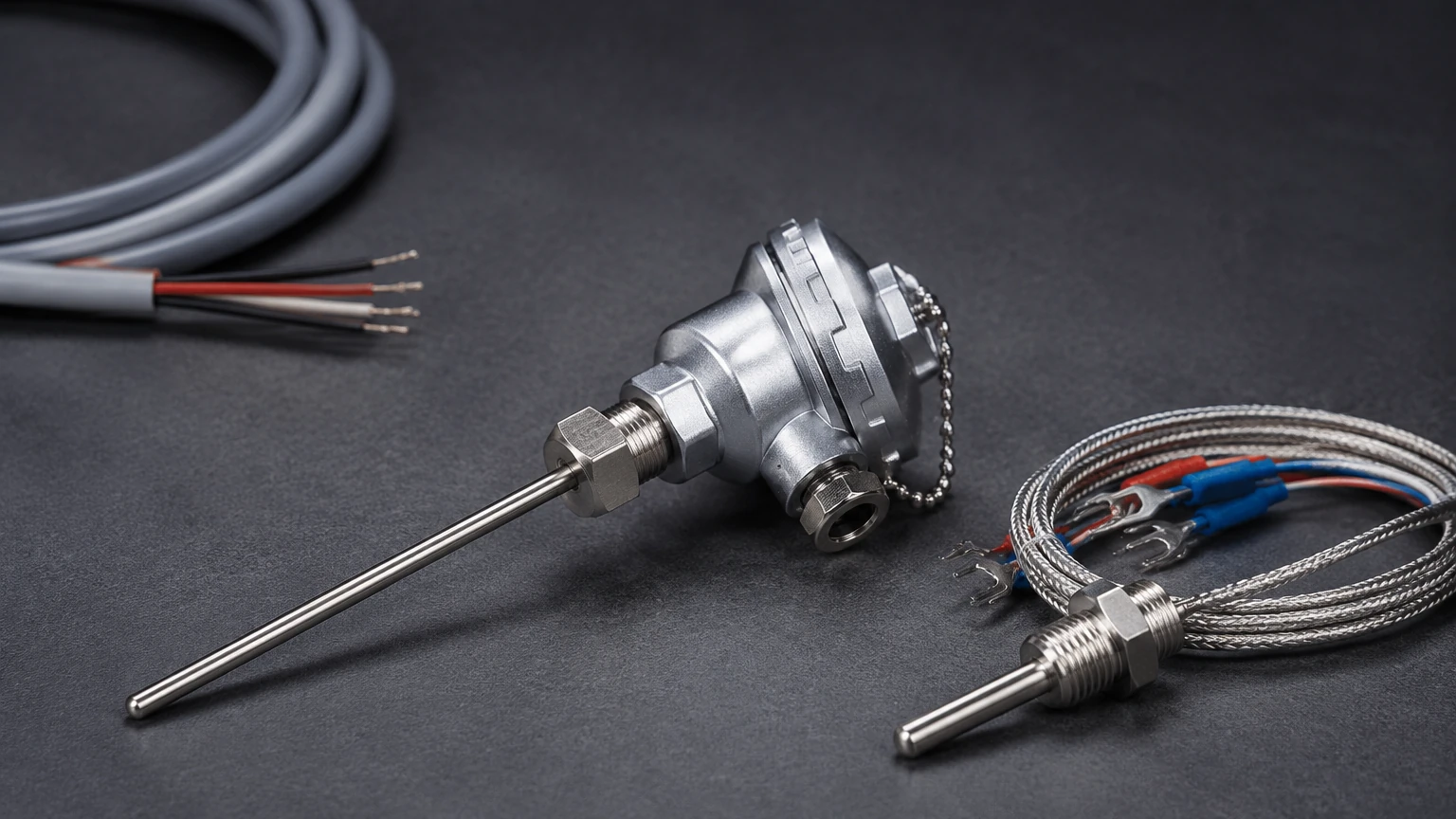
A temperature transducer is an electrical device that converts thermal energy into a measurable electrical signal, such as voltage, resistance, or current. Unlike a simple thermometer that provides a visual reading, a transducer enables the transmission of data to PLC (Programmable Logic Controller) systems, DCS (Distributed Control Systems), and data loggers. This guide explores the principles, selection criteria, and industrial applications of these critical components.
Measurement Principles of Temperature Transducers
Before selecting a transducer for a specific application, it is vital to understand the underlying physical principles that govern different sensing technologies. The most common industrial transducers rely on the predictable relationship between temperature and the electrical properties of materials.
Resistance Temperature Detectors (RTDs)
RTDs operate on the principle that the electrical resistance of a metal increases as its temperature rises. This phenomenon, known as the positive temperature coefficient (PTC), is highly linear and repeatable in certain metals. Platinum is the most common material used (e.g., Pt100 or Pt1000 sensors) because of its chemical inertness and stable resistance-temperature relationship across a wide range, typically from -200°C to 850°C (-328°F to 1562°F).
Thermocouples
Thermocouples function based on the Seebeck Effect. When two dissimilar metal wires are joined at both ends and there is a temperature difference between the junctions, an electromotive force (voltage) is created. This voltage is proportional to the temperature difference between the "hot" junction (measurement point) and the "cold" junction (reference point). Thermocouples are favored for their durability and extremely wide temperature ranges, often exceeding 1,700°C (3,092°F).
Thermistors
Thermistors are ceramic-like semiconductors made from metal oxides. They exhibit a very high change in resistance for a small change in temperature. Most industrial thermistors have a negative temperature coefficient (NTC), meaning resistance decreases as temperature increases. While highly sensitive, they are generally limited to a narrower temperature range, typically -100°C to 300°C (-148°F to 572°F), and are less linear than RTDs.
Integrated Circuit (IC) Sensors
IC temperature transducers utilize the temperature-sensitive voltage-current characteristics of semiconductor junctions (typically silicon). These devices often output a highly linear voltage or current proportional to absolute temperature. They are easy to interface with digital electronics but are limited to lower temperature ranges, usually below 150°C (302°F).
Integration with Level Measurement Systems
In many industrial environments, temperature transducers are not standalone units but are integrated into other measurement technologies. For instance, accurate level measurement often depends on real-time temperature data. At Welk, we recognize that thermal fluctuations can significantly impact the accuracy of level sensors.
1. Ultrasonic Level Sensors: The speed of sound in air is temperature-dependent. Without an integrated temperature transducer to provide compensation, an ultrasonic sensor would report incorrect distances as the ambient air temperature changes. For every 1°C change, the speed of sound changes by approximately 0.6 m/s.
2. Hydrostatic Level Transmitters: These sensors measure the pressure exerted by a liquid column. Since the density of a liquid changes with temperature, a temperature transducer is often embedded within the probe to allow the system to calculate the true level based on the current fluid density.
3. Radar Level Meters: While radar waves are less affected by temperature than ultrasonic waves, extreme temperature shifts can still influence the dielectric constant of the medium or the mechanical integrity of the mounting.
For a comprehensive look at how these technologies work together in industrial environments, you can Review product options and application support on our main site.
Technical Selection Criteria
Selecting the right temperature transducer requires a balance between precision, durability, and cost. Engineers should evaluate the following factors:
* Temperature Range: Determine both the normal operating temperature and the potential excursion limits. Thermocouples are better for high-heat applications (furnaces), while RTDs are superior for high-precision cryogenic or ambient monitoring.
* Accuracy and Stability: RTDs offer the highest stability over time, making them ideal for regulated industries like pharmaceuticals or food processing. Thermocouples may drift over time due to wire contamination or oxidation.
* Response Time: If the process involves rapid temperature fluctuations, a small-diameter thermocouple or a thermistor with low thermal mass is required. Transducers housed in heavy thermowells will have a slower response time.
* Environmental Conditions: Consider the presence of corrosive chemicals, high pressure, or mechanical vibration. In chemical processing, transducers often require specialized sheaths made of Hastelloy or PTFE coating.
* Signal Output: Industrial standards typically require 4-20mA analog outputs or digital protocols like HART, Modbus, or Profibus. This ensures the transducer can communicate effectively over long distances without signal degradation.
Comparison of Industrial Temperature Transducers
| Feature | RTD (Platinum) | Thermocouple | Thermistor | IC Sensor |
| :— | :— | :— | :— | :— |
| Temperature Range | -200 to 850°C | -200 to 1700°C+ | -100 to 300°C | -50 to 150°C |
| Accuracy | Excellent | Medium | High (Narrow range) | Medium |
| Linearity | Excellent | Fair | Poor | Excellent |
| Stability | High | Low to Medium | Medium | Medium |
| Sensitivity | Medium | Low | Very High | Medium |
| Cost | Moderate | Low | Low | Low |
| Durability | Moderate | High | Moderate | Low |
Installation Considerations and Best Practices
Proper installation is as critical as the choice of the transducer itself. Poor placement can lead to "stem conduction" errors or delayed readings.
Thermowell Selection
In most industrial liquid or gas applications, the transducer is inserted into a thermowell. This is a pressure-tight receptacle that protects the sensor from the process media. While thermowells allow for the removal of the sensor without breaking the process seal, they introduce a thermal lag. To minimize this, the gap between the sensor tip and the thermowell bottom should be filled with a thermal conductive paste.
Immersion Depth
To avoid errors caused by heat transfer from the sensor to the ambient environment (stem conduction), the transducer must be immersed to a sufficient depth. A general rule of thumb is to immerse the sensor to a depth at least 10 times the diameter of the protection tube.
Wiring and Shielding
Temperature signals, particularly from thermocouples, are low-voltage and susceptible to electromagnetic interference (EMI). Use shielded twisted-pair cables and ensure that signal wires are kept away from high-voltage power lines. For RTDs, using a 3-wire or 4-wire configuration is recommended to compensate for the resistance of the lead wires themselves.
Limitations and Common Risks
Despite their reliability, temperature transducers are subject to several failure modes and limitations:
* Self-Heating: In RTDs and thermistors, the current used to measure resistance generates a small amount of heat. If the excitation current is too high, the sensor will report a temperature higher than the actual process temperature. This is particularly problematic in still air or low-flow liquids.
* Cold Junction Compensation (CJC): Thermocouples measure the difference between two points. If the temperature at the connection point (the cold junction) is not accurately known or compensated for by the transmitter, the entire measurement will be offset.
* Decalibration: Exposure to extreme temperatures or harsh chemicals can change the physical properties of the sensor material over time, leading to a "drift" in accuracy. Regular calibration cycles are necessary for critical processes.
* Vibration Fatigue: In high-flow pipelines, the mechanical vibration can cause the internal wires of a transducer to fatigue and eventually break. In such cases, vibration-resistant RTDs or heavy-duty thermocouples are required.
Frequently Asked Questions (FAQs)
1. When should I choose a Pt100 over a Pt1000 RTD?
Pt100 sensors (100 ohms at 0°C) are the industry standard and are compatible with the widest range of equipment. Pt1000 sensors (1000 ohms at 0°C) provide higher resolution and are less affected by lead wire resistance, making them suitable for 2-wire configurations or battery-powered applications where low power consumption is key.
2. Can I use a temperature transducer in a vacuum?
Yes, but heat transfer in a vacuum occurs only through radiation and conduction through the mounting. This significantly increases the response time of the sensor. Specialized mounting and sensor types may be required to ensure accurate readings.
3. How often should industrial temperature transducers be calibrated?
Calibration frequency depends on the application. In the chemical and pharmaceutical sectors, annual calibration is standard. In less critical applications, such as general water treatment, a check every 2 to 3 years may suffice, provided there are no signs of drift.
4. What is the difference between a temperature sensor and a temperature transducer?
A sensor is the primary element that detects the temperature (like the thermocouple wire). A transducer includes the sensor and the circuitry required to convert that detection into a standardized electrical signal (like 4-20mA).
Conclusion
Temperature transducers are indispensable tools in the modern industrial toolkit. Whether they are monitoring the heat of a chemical reactor or providing essential compensation data for a hydrostatic level transmitter, their accuracy directly impacts the bottom line. By understanding the principles of RTDs, thermocouples, and thermistors, and by following rigorous installation standards, engineers can ensure long-term reliability and process safety. For further technical specifications and to explore how temperature and level measurement technologies integrate into seamless automation solutions, visit our Main Page for detailed product documentation and engineering support.