Ultrasonic Level Sensor Brands
Ultrasonic Level Sensor Brands: A Comprehensive Engineering Guide to Selection and Application
In industrial automation, selecting the right instrumentation is critical for operational efficiency and safety. Among the various technologies available for liquid and solid level monitoring, ultrasonic sensors remain a primary choice due to their non-contact nature and cost-effectiveness. However, navigating the landscape of ultrasonic level sensor brands requires a deep understanding of both the underlying physics and the specific engineering requirements of the application.
This guide explores the fundamental principles of ultrasonic measurement, provides a framework for evaluating different manufacturers, and outlines the technical criteria necessary for selecting high-performance Ultrasonic Level Meters.
Understanding the Measurement Principle
Before evaluating specific brands, engineers must understand how these devices function to identify which features are essential for their specific environment. Ultrasonic level sensors operate on the "Time of Flight" (ToF) principle.
The Transducer and Sound Waves
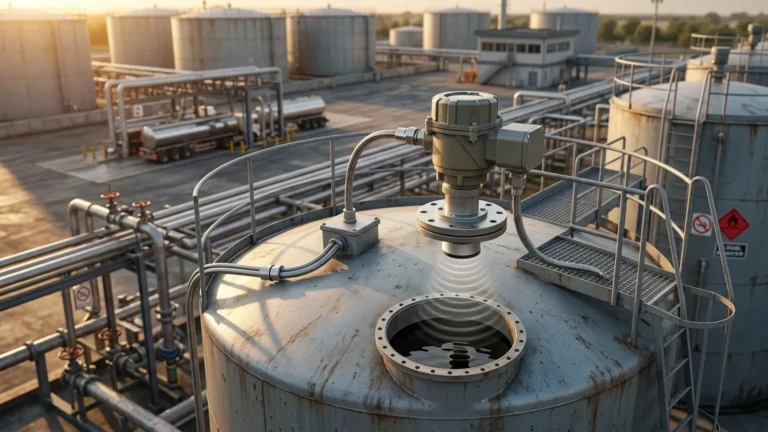
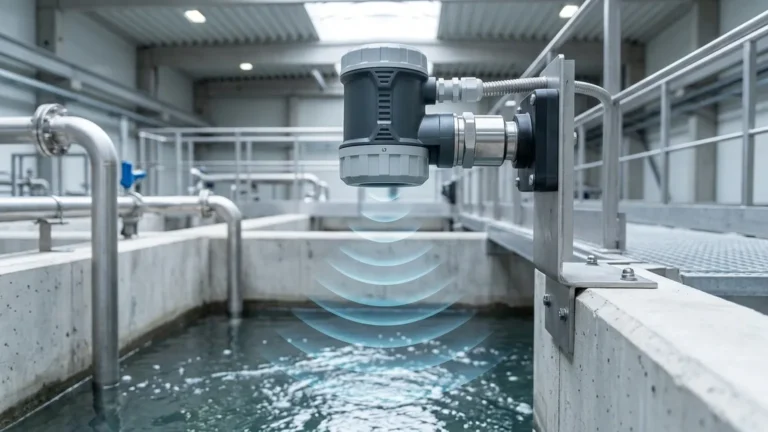
The sensor contains a piezoelectric crystal that acts as a transducer. When energized, this crystal vibrates at a specific frequency (typically between 20 kHz and 200 kHz), emitting a pulse of ultrasonic sound waves. These waves travel through the air or gas medium in the tank until they strike the surface of the material being measured.
Echo Return and Calculation
Upon hitting the surface, a portion of the sound energy is reflected back to the sensor. The transducer then switches to "receive mode" to detect the returning echo. The internal electronics measure the time interval between the transmission of the pulse and the receipt of the echo. The distance is calculated using the formula:
Distance = (Speed of Sound × Time) / 2
Because the speed of sound is affected by air temperature, most professional-grade ultrasonic level sensor brands integrate a temperature sensor near the transducer face to perform real-time compensation, ensuring accuracy remains consistent despite fluctuations in the ambient environment.
Key Evaluation Criteria for Ultrasonic Level Sensor Brands
When comparing different manufacturers, procurement and engineering teams should look beyond the initial price point. The reliability of a level meter is determined by its ability to filter noise and maintain a signal in challenging conditions.
1. Signal Processing Algorithms
The most significant differentiator between entry-level and industrial-grade brands is the software. Advanced sensors use "False Echo Suppression" or "Echo Mapping." This allows the sensor to identify and ignore reflections from internal tank obstructions like ladders, agitators, or weld seams, focusing only on the true liquid level.
2. Material Compatibility and Ingress Protection
For chemical processing or wastewater applications, the housing and transducer face material are vital. Brands offering PVDF (Polyvinylidene fluoride) or PTFE (Polytetrafluoroethylene) transducers provide better resistance to corrosive vapors than standard ABS plastic. Furthermore, an IP68 rating is often required for sensors installed in areas prone to flooding or heavy wash-downs.
3. Beam Angle and Frequency
A narrower beam angle (typically 5° to 12°) is preferable for tall, narrow silos or tanks with internal structures. Higher frequency sensors generally offer better resolution and smaller dead zones but have a shorter effective range. Leading brands provide a variety of frequency options to match the specific geometry of the vessel.
Practical Selection Table
The following table provides a general comparison of common specifications found across reputable industrial ultrasonic level sensor brands.
| Feature | Standard Industrial Grade | High-Performance / Specialized |
| :— | :— | :— |
| Measurement Range | 0.25m to 10m | 0.5m to 30m+ |
| Accuracy | ±0.25% of range | ±0.1% to ±0.2% of range |
| Beam Angle | 10° – 15° | 5° – 8° |
| Output Signals | 4-20mA, Relay | 4-20mA/HART, Modbus RTU, Profibus |
| Operating Temp | -20°C to +60°C | -40°C to +95°C |
| Pressure Rating | Atmospheric | Up to 3 Bar (0.3 MPa) |
| Housing Material | ABS / Polycarbonate | Aluminum / Stainless Steel / PVDF |
Installation Considerations for Optimal Performance
Even the highest quality ultrasonic level sensor brands will fail to provide accurate data if the installation is flawed. Engineering teams should adhere to the following checklists during the design phase:
Positioning and Orientation
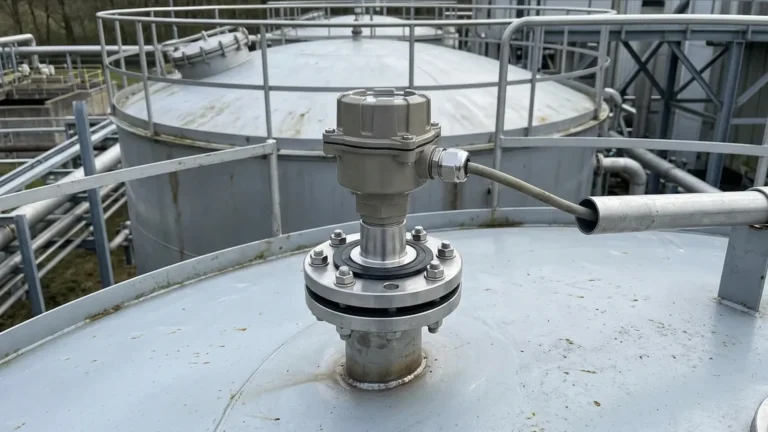
* Vertical Alignment: The sensor must be mounted perfectly perpendicular to the liquid surface. A tilt of even a few degrees can cause the reflected signal to bounce away from the transducer, leading to signal loss.
* Avoid the Center: In round tanks, avoid mounting the sensor in the exact center, as this can create parabolic reflections that amplify noise.
* The Dead Zone: Every ultrasonic sensor has a "blocking distance" or dead zone (typically 0.2m to 0.5m) near the transducer face where measurement is impossible. The sensor must be mounted high enough so that the maximum liquid level never enters this zone.
Environmental Obstructions
* Inflow Streams: Never install a sensor directly above a fill pipe. The turbulence and falling liquid will scatter the ultrasonic pulses.
* Internal Structures: If a tank has cooling coils or support struts, select a sensor with a narrow beam angle and utilize the software's echo-masking features to "map out" these static reflections.
Limitations and Risks of Ultrasonic Technology
While versatile, ultrasonic level meters are not a universal solution. Understanding their limitations is key to avoiding project failures.
1. Vacuum Conditions: Sound requires a medium to travel. Ultrasonic sensors cannot function in a vacuum.
2. Heavy Foam: Thick, dense foam absorbs sound waves rather than reflecting them. In these instances, the sensor may report a "Loss of Echo" or provide an incorrect reading. Radar or hydrostatic transmitters are often better alternatives for foamy liquids.
3. High Dust or Steam: While light dust is manageable, extremely heavy dust (in grain silos) or dense steam (in high-temperature tanks) can attenuate the signal. For steam applications, ensure the brand offers a "self-cleaning" transducer face to prevent condensation buildup.
4. Extreme Temperature Gradients: If there is a significant temperature difference between the liquid and the air space, the speed of sound can vary throughout the path, leading to inaccuracies that standard temperature compensation cannot fully correct.
Why Brand Specialization Matters
In the global market, there is a distinction between generalist automation conglomerates and specialized manufacturers like Welk. While large conglomerates offer broad ecosystems, specialized ultrasonic level sensor brands often provide deeper technical support and customization for specific industrial challenges.
For example, in water treatment and industrial automation, the ability to provide an integrated solution—combining the sensor with customized OEM/ODM services—ensures that the instrument fits the mechanical constraints of the site perfectly. Reliability in these sectors is not just about the sensor's accuracy, but its long-term stability under continuous operation.
Frequently Asked Questions (FAQs)
Q1: Can ultrasonic level sensors measure solids?
Yes, but with caveats. Solids like powders or granules do not reflect sound as uniformly as liquids. The effective range is typically reduced by 50%, and a sensor with a higher power output and specialized signal processing is usually required.
Q2: How does wind affect outdoor installations?
Strong wind can "blow" the sound waves away or create air turbulence that disrupts the signal. For outdoor sumps or open channels, it is recommended to use a protective shroud or a stilling well to shield the measurement path.
Q3: What is the difference between a 2-wire and 4-wire sensor?
A 2-wire sensor is loop-powered (the same two wires carry both power and the 4-20mA signal), which is easier to wire but provides less power for the transducer. A 4-wire sensor has separate power and signal lines, allowing for higher-intensity pulses and longer measurement ranges.
Q4: How often do these sensors need calibration?
Under stable conditions, ultrasonic sensors are very low-maintenance. However, it is good practice to verify the zero and span points annually, especially if the sensor is exposed to extreme temperatures or corrosive vapors that might affect the transducer face.
Conclusion
Selecting from the available ultrasonic level sensor brands requires a balance between technical specifications and application-specific needs. By prioritizing signal processing capabilities, material compatibility, and proper installation geometry, engineers can ensure high accuracy and long-term reliability. For those seeking cost-effective yet technically advanced solutions, exploring professional manufacturers that specialize in industrial level measurement—offering everything from radar to Ultrasonic Level Meters—is the most effective path toward optimizing industrial process control.