Endress Hauser Level Switches
Endress Hauser Level Switches
In the landscape of industrial automation, point level detection remains a fundamental requirement for process safety, inventory management, and overfill prevention. Level switches are the primary instruments used to detect whether a substance—be it liquid, paste, or bulk solid—has reached a specific height within a vessel or pipe. Among the global leaders in this sector, Endress+Hauser has established a comprehensive portfolio of sensors designed to withstand the rigors of chemical processing, water treatment, and food production.
Understanding the technical nuances of Endress Hauser level switches requires a deep dive into the physical principles they employ. Whether an engineer is specifying a Liquiphant for a safety-critical overfill system or a Soliphant for bulk solids handling, the choice of technology dictates the long-term reliability of the measurement. This guide examines the measurement principles, selection criteria, and installation requirements for these essential industrial components.
Core Measurement Principles of Level Switches
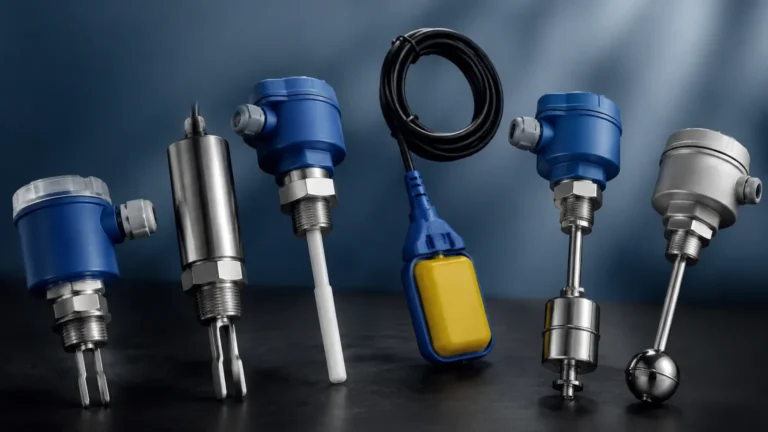
Before selecting a specific model, it is vital to understand the physics behind the sensor. Different media properties—such as dielectric constant, conductivity, density, and viscosity—determine which switching principle is most effective.
Vibronic (Tuning Fork) Principle
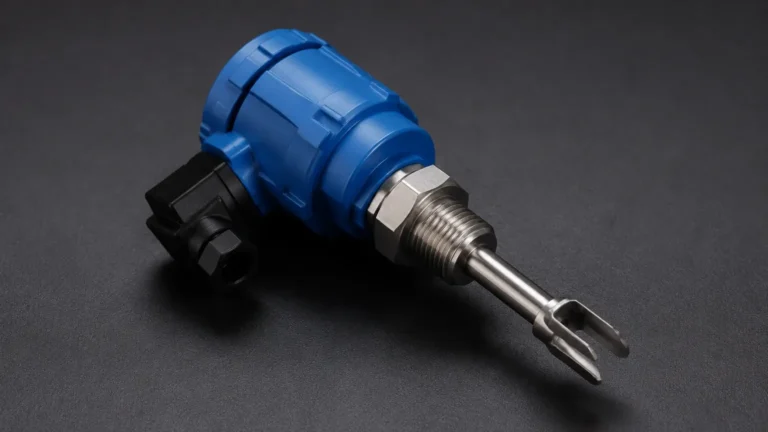
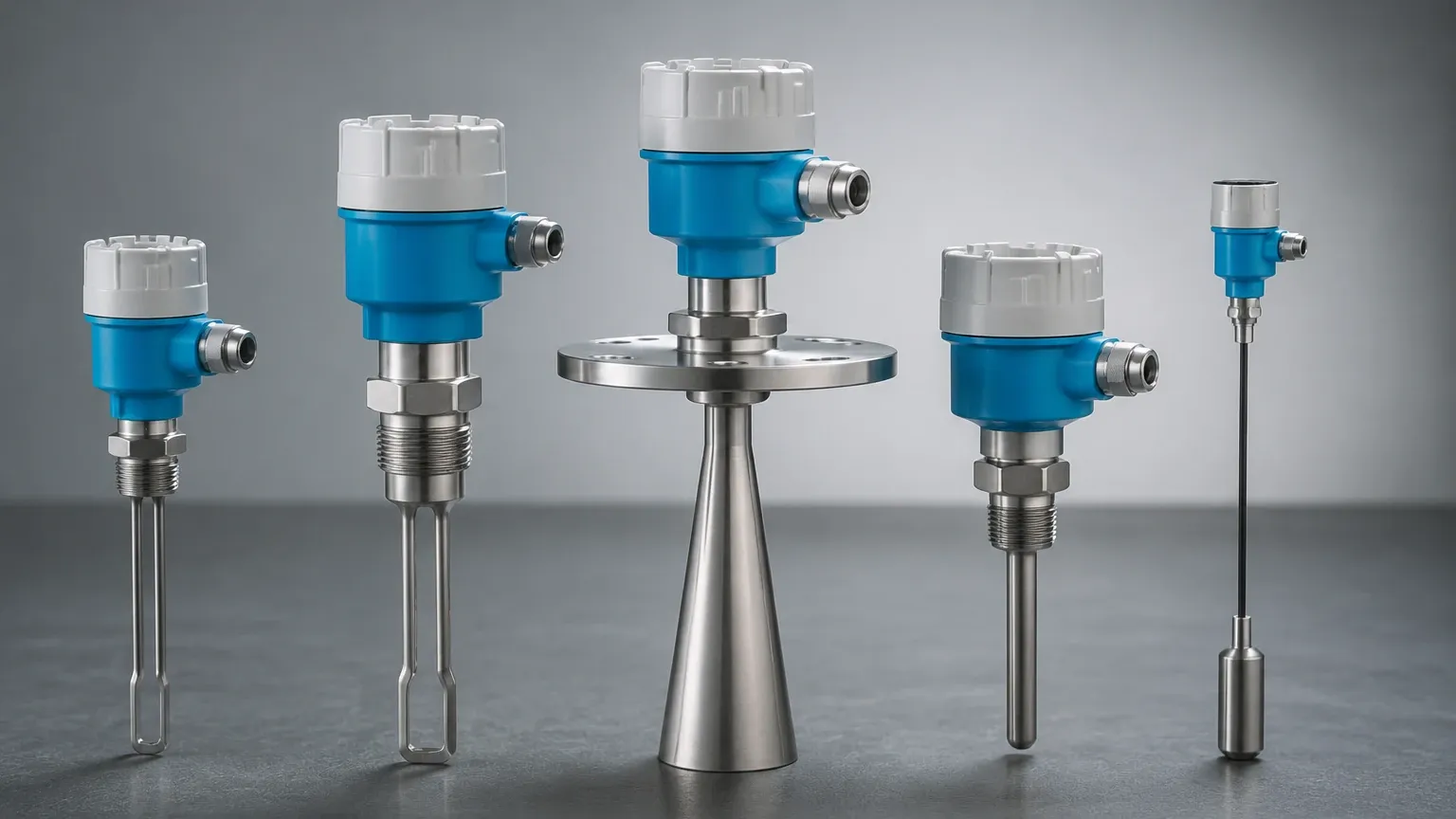
This is perhaps the most widely used technology in the Endress+Hauser range, particularly within the Liquiphant and Soliphant series. The sensor consists of a tuning fork that is piezoelectrically excited to vibrate at its resonant frequency.
* Liquids: When the fork is immersed in a liquid, its frequency changes due to the increased density of the surrounding medium. The electronics detect this frequency shift and trigger a switching signal. This method is largely independent of the liquid’s physical properties like pressure, temperature, or foam.
* Solids: For bulk solids, the vibration is dampened when the material covers the fork. The reduction in amplitude or frequency indicates the presence of the material.
Capacitive Principle
Capacitive level switches treat the probe and the tank wall (or a second probe) as two electrodes of a capacitor. As the level of the medium rises, it displaces air (which has a low dielectric constant) with the process material (which typically has a higher dielectric constant). This change in capacitance is measured and converted into a switching signal. These are ideal for detecting interfaces or for use in non-conductive media.
Conductive Principle
Used exclusively for conductive liquids, this principle relies on the medium completing an electrical circuit between two electrodes or an electrode and the metallic tank wall. When the liquid touches the probe, a small alternating current flows, triggering the switch. It is a simple, cost-effective solution for water-based applications but is unsuitable for oils or hydrocarbons.
Radiometric (Gamma) Principle
In extreme environments where non-contact measurement is mandatory (e.g., high-pressure reactors or highly corrosive acids), radiometric switches use a gamma source and a detector mounted on opposite sides of the vessel. The medium attenuates the radiation, allowing the detector to determine if the path is blocked by the material. This is typically a last-resort technology due to the regulatory requirements surrounding radioactive sources.
The Endress+Hauser Product Portfolio
Endress+Hauser categorizes its switches based on the medium and the application requirements. The following series represent the core of their offering:
Liquiphant Series (Liquids)
The Liquiphant is the benchmark for vibronic liquid level detection. It is frequently used in SIL2 and SIL3 (Safety Integrity Level) loops.
* FTL51B: Designed for high temperatures and pressures, often used in the chemical and oil and gas industries.
* FTL31: A compact version tailored for the machinery industry and OEM applications where space is limited.
Soliphant Series (Bulk Solids)
For powders, grains, and fine-grained solids, the Soliphant utilizes the vibronic principle but with a fork design optimized for solids.
* FTM50/51: Robust switches for applications in silos containing flour, cement, or plastic granules. They are resistant to build-up and mechanical wear.
Liquipoint and Nivector
* Liquipoint FTW: These utilize the conductive or capacitive principle for simple point level detection in conductive liquids.
* Nivector FTI: A capacitive switch designed specifically for solids, often used in small containers or for detecting the presence of material in pipes.
Technical Selection Criteria
Selecting the correct Level Switches involves more than just identifying the medium. Engineers must evaluate several environmental and process variables to ensure the instrument does not fail prematurely.
| Criteria | Consideration | Recommended Technology |
| :— | :— | :— |
| Media Type | Low-density powders vs. viscous liquids | Vibronic (Solids) vs. Vibronic (Liquids) |
| Dielectric Constant | Is the material non-conductive (e.g., oil)? | Capacitive or Vibronic |
| Conductivity | Is the liquid water-based? | Conductive |
| Process Temperature | Cryogenic to high-heat furnace levels | Radiometric or High-Temp Vibronic |
| Process Pressure | Vacuum to 100+ bar | Vibronic or Capacitive (High Pressure) |
| Build-up/Coating | Does the material stick to the probe? | Vibronic (with coating compensation) |
Density and Viscosity
For vibronic switches, the density of the medium is a critical factor. Most Liquiphant models require a minimum density of 0.5 g/cm³ (optional 0.4 g/cm³). If the medium is extremely viscous (e.g., heavy syrups or bitumen), the damping effect on the tuning fork might be too great even when the tank is empty, leading to false positives. In such cases, capacitive or microwave barrier switches may be more appropriate.
Safety and Certification
In B2B environments, compliance is non-negotiable. Endress Hauser level switches often carry ATEX, IECEx, and FM approvals for explosive atmospheres. Furthermore, for overfill prevention in hazardous chemical tanks, the switch must be rated for SIL2 or SIL3, ensuring a high probability of successful operation during an emergency.
Installation Best Practices
A level switch is only as reliable as its installation. Incorrect positioning can lead to false switching or mechanical damage to the probe.
1. Orientation: For liquids, vibronic switches can be mounted from the top, side, or bottom. However, for bulk solids, side mounting is common, but the fork must be oriented so that the material flows over the "thin" edge of the forks to prevent bridge formation or mechanical stress.
2. Avoid Turbulence: Do not install the switch directly in the path of the filling stream. The force of the falling material can damage the probe or cause intermittent switching due to splashing.
3. Nozzle Length: The probe must extend far enough into the vessel to clear the nozzle. If the fork is partially inside the nozzle, material can become trapped (dead zone), causing the switch to remain in the "covered" state even when the tank is empty.
4. Cable Glands: Always point cable entries downward to prevent moisture from entering the housing via the cable. Use a drip loop in the wiring to ensure condensation runs off before reaching the sensor head.
Limitations and Operational Risks
While Endress Hauser level switches are highly engineered, they are not universal solutions. Engineers should be aware of the following limitations:
* Mechanical Wear: In abrasive applications (like mining or coal handling), tuning forks can wear down over time. This changes their resonant frequency and can lead to failure. In these instances, non-contact methods or heavy-duty capacitive probes are preferred.
* Bridging: In solids, if the material is damp or sticky, it can form a "bridge" between the tines of a tuning fork. This tricks the sensor into thinking it is permanently covered.
* Foam Interference: While vibronic switches are generally excellent at ignoring foam, extremely dense foam can sometimes trigger a switch meant for liquids. If the goal is to detect the liquid level *under* the foam, specific capacitive settings or hydrostatic sensors might be required.
Maintenance and Troubleshooting
Most modern level switches are designed to be maintenance-free. However, periodic proof-testing is required for safety-critical applications (SIL).
* Visual Inspection: Check for corrosion on the probe and ensure the housing seal is intact.
* Function Test: Most Endress+Hauser switches include a test magnet or a button on the electronics insert that simulates a covered state, allowing the user to verify the entire signal chain from the sensor to the control room.
* Cleaning: If the medium is prone to crystallization or heavy scaling, the probes may require periodic cleaning to ensure the physical principle (vibration or capacitance) is not hindered.
Conclusion
Endress Hauser level switches represent a high standard in process instrumentation, offering diverse technologies to meet the challenges of modern industrial environments. By understanding the underlying measurement principles—from vibronic to capacitive—and carefully considering process conditions like density, pressure, and potential build-up, engineers can ensure high system availability and safety. For those seeking reliable alternatives or specialized configurations in water treatment and automation, companies like Welk provide a range of robust level measurement solutions that complement these industry standards.
Frequently Asked Questions (FAQs)
Q: Can a Liquiphant be used for solids?
No. The Liquiphant is tuned for the density and damping characteristics of liquids. For solids, the Soliphant series should be used, as it is designed to handle the mechanical stresses and different frequency shifts associated with bulk materials.
Q: What is the maximum temperature for these switches?
Standard models typically handle up to 150°C, but specialized versions with temperature spacers or high-temperature ceramic seals can operate in environments exceeding 280°C.
Q: How do I handle build-up on a capacitive switch?
Many capacitive switches feature "active shield" technology, which ignores the capacitance contributed by material coating the probe, focusing only on the bulk material in the tank.
Q: Is it possible to use a level switch for continuous measurement?
No, level switches are point-level devices (on/off). For continuous monitoring (0-100%), you would require a radar, ultrasonic, or hydrostatic transmitter.