3 Position Limit Switch
3 Position Limit Switch
In industrial automation and fluid management, the 3 position limit switch serves as a critical interface between mechanical movement and electrical control logic. While standard limit switches typically operate in a binary "on/off" or "open/closed" state, the three-position variant introduces a neutral or intermediate state. This functionality is essential in complex level control systems where a process requires more than simple high or low detection.
For engineers and plant operators, understanding the nuances of these switches is vital for ensuring the safety and efficiency of automated systems. This guide explores the mechanical principles, selection criteria, and the integration of these devices alongside broader Level Switches technologies.
Understanding the 3 Position Limit Switch Principle
A limit switch is an electromechanical device consisting of an actuator mechanically linked to a set of contacts. When an object comes into contact with the actuator, the device operates the contacts to make or break an electrical connection.
The 3 position limit switch differs by offering three distinct states. These are typically organized as:
1. Position A (Left/Up): Actuated in one direction, closing one set of contacts.
2. Neutral (Center): The default or resting position where no primary action is triggered, or a specific "safe" state is maintained.
3. Position B (Right/Down): Actuated in the opposite direction, closing a different set of contacts.
Mechanical Operation
These switches are often designed with a spring-return mechanism or a maintained-contact design. In a spring-return (momentary) setup, the actuator returns to the center neutral position as soon as the external force is removed. In a maintained-contact setup, the switch remains in the last actuated position until forced into another.
In the context of level control, these switches are frequently used in valve actuators. For instance, a valve might be "Fully Open," "Fully Closed," or in an "Intermediate/Traveling" state. The 3 position limit switch provides the feedback necessary for the control system to identify these three specific conditions.
Application in Industrial Level Control
While primary level detection is handled by sensors such as radar or ultrasonic meters, the execution of level management often relies on mechanical actuators. This is where the integration with Level Switches becomes critical.
Valve Position Feedback
In a tank filling application, a high-level switch may trigger a motorized valve to close. A 3 position limit switch mounted on the valve actuator provides confirmation:
* State 1: Valve is at 0% (Closed).
* State 2: Valve is at 100% (Open).
* State 3: Valve is in transit or stopped at a partial flow position.
Diverter Gates and Chutes
In bulk solids handling, where level switches detect the height of grain or minerals in a silo, 3 position limit switches are used on diverter gates. The gate can direct material to Silo A, Silo B, or remain in a neutral/blocked position to prevent overflow or cross-contamination.
Redundancy and Safety
Using a 3-position configuration allows for "fail-safe" logic. If the control system detects that the switch is in the neutral position when it should be at an extreme, it can trigger an alarm, indicating a mechanical failure or a blockage in the level control hardware.
Technical Specifications and Selection Criteria
Selecting the correct 3 position limit switch requires a detailed analysis of the operating environment and the electrical load. The following table outlines the primary evaluation criteria for industrial applications.
| Feature | Specification Range | Application Context |
| :— | :— | :— |
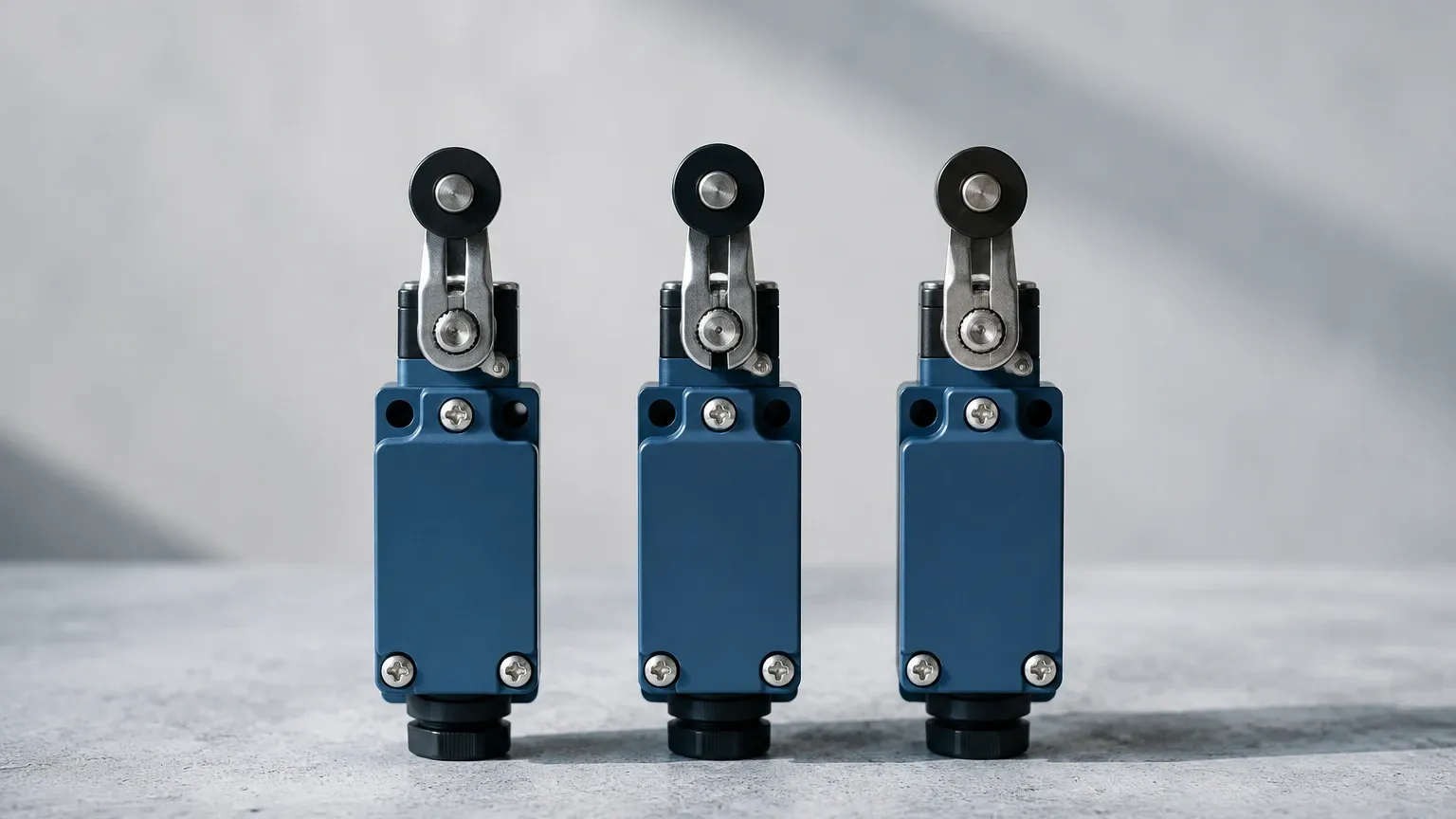
| Actuator Type | Roller lever, adjustable rod, plunger | Determines how the switch interacts with the moving part. |
| Contact Rating | 5A to 15A at 250VAC | Must match the inrush current of the connected load or PLC input. |
| Enclosure Rating | IP65, IP66, IP67 | Protection against dust and water ingress in wash-down areas. |
| Operating Temp | -25°C to +80°C (-13°F to 176°F) | Critical for outdoor installations or high-heat chemical processes. |
| Mechanical Life | 10 to 50 million cycles | Determines the maintenance interval for high-frequency operations. |
| Housing Material | Die-cast aluminum, Zinc alloy, or Plastic | Metal is preferred for high-impact industrial environments. |
Contact Configurations
The internal wiring of a 3 position limit switch usually involves Double Pole Double Throw (DPDT) or Single Pole Double Throw (SPDT) arrangements. For a three-position output, the wiring must be configured so that the center position represents a distinct logic state (often "Open" for both circuits) compared to the two end-travel positions.
Installation and Wiring Considerations
Proper installation is paramount to the longevity of the switch. Because these are mechanical devices, physical alignment is the most common point of failure.
1. Alignment of the Cam/Dog: The component that strikes the switch actuator (the cam or dog) must be aligned to ensure it does not over-travel. Excessive force can bend the lever or damage the internal contact block.
2. Mounting Stability: The switch must be mounted on a rigid surface. Vibration in industrial pumping stations can cause "contact bounce," where the switch rapidly opens and closes, sending false signals to the PLC.
3. Conduit Entry: Always use proper cable glands. In level control applications, moisture often travels down the cable (wicking). Pointing the conduit entry downwards or using a drip loop prevents water from entering the switch housing.
4. Wiring for Logic: When integrating with Level Switches, ensure the ground and common wires are clearly labeled. In a 3-position setup, the "Neutral" position is often inferred by the absence of a signal from either Position A or Position B, although some specialized switches have a dedicated center-position contact.
Common Challenges and Limitations
Despite their reliability, 3 position limit switches have inherent limitations compared to solid-state sensors.
* Mechanical Wear: Because they rely on physical contact, the actuator and internal springs will eventually fatigue. In high-cycle applications (e.g., a valve cycling every 30 seconds), a non-contact inductive proximity sensor might be a better alternative, though these rarely offer three distinct positions in a single unit.
* Environmental Sensitivity: While IP-rated, extreme ice buildup or thick sludge can jam the actuator. In such cases, the switch may fail to return to the neutral position.
* Hysteresis: There is always a small distance between the point where the contacts trip and the point where they reset. Engineers must account for this "dead band" in their control logic to prevent rapid cycling of motors or pumps.
Comparison: Limit Switches vs. Continuous Level Sensors
It is important to distinguish between the role of a limit switch and a continuous level transmitter. Welk provides a range of solutions, and choosing the right one depends on the process requirements.
* 3 Position Limit Switch: Best for discrete feedback of mechanical components (valves, gates, arms). It answers the question: "Where is the hardware located?"
* Level Switches: Best for point-level detection within a tank. It answers the question: "Has the liquid reached this specific height?"
* Radar/Ultrasonic Transmitters: Best for continuous monitoring. It answers the question: "Exactly how much liquid is in the tank right now?"
In a sophisticated B2B industrial setup, these technologies are used in tandem. The level switch detects the liquid, the PLC processes the logic, and the 3 position limit switch confirms that the mechanical response (the valve movement) has been completed successfully.
Frequently Asked Questions (FAQ)
1. What is the difference between a 3-position selector switch and a 3-position limit switch?
A selector switch is manually operated by an operator (e.g., a knob on a control panel). A limit switch is automatically operated by the movement of a machine part or actuator.
2. Can a 3 position limit switch be used in hazardous areas?
Yes, but you must specify an "Explosion-Proof" or "Intrinsically Safe" model. These switches feature heavy-duty enclosures designed to contain any internal spark, preventing the ignition of flammable gases or dust common in oil and gas or chemical processing.
3. How do I troubleshoot a switch that won't return to the center?
First, check for mechanical obstructions or debris around the actuator. If the exterior is clear, the internal return spring may have failed. Disconnect power and check the continuity of the contacts in all three positions to determine if the internal block is damaged.
4. Can I use a 3 position limit switch to control a motor directly?
While some switches have high current ratings (up to 15A), it is best practice to use the switch as a pilot device. The switch should trigger a relay or a contactor, which then handles the high-current load of the motor. This extends the life of the switch contacts significantly.
5. Are there electronic versions of these switches?
Yes, some manufacturers offer magnetic or inductive "limit switches" that can detect three positions without physical contact. However, these often require multiple sensors or a specialized target, whereas a mechanical 3 position limit switch is a self-contained, cost-effective solution for most industrial applications.
Conclusion
The 3 position limit switch remains a staple of industrial engineering due to its simplicity and clear logic. By providing feedback on the "middle ground" of mechanical movement, it allows for more nuanced control than standard two-position devices. When integrated correctly with high-quality Level Switches and control systems, these components ensure that level management processes are both measurable and verifiable.
For project managers and engineers, the key to success lies in matching the switch's mechanical durability and electrical specifications to the specific rigors of the application environment. Whether managing water treatment valves or chemical processing gates, the 3 position limit switch provides the essential physical-to-digital link required for modern automation.