Level Switch Fork
Level Switch Fork
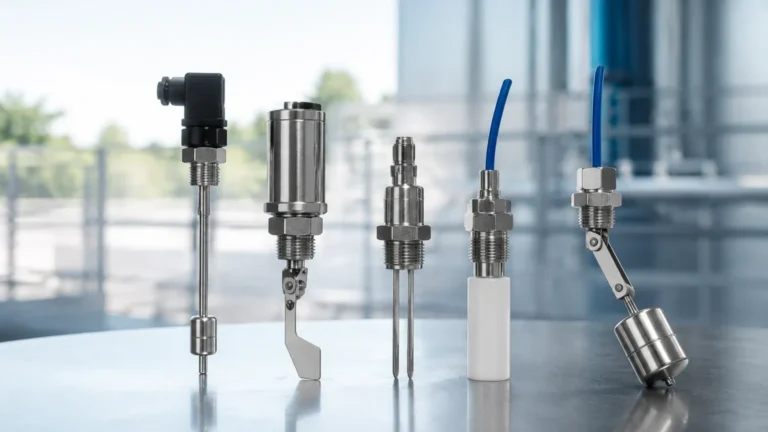
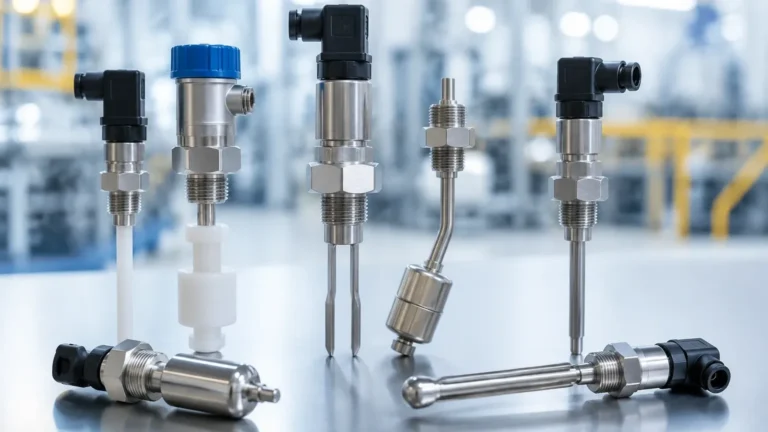
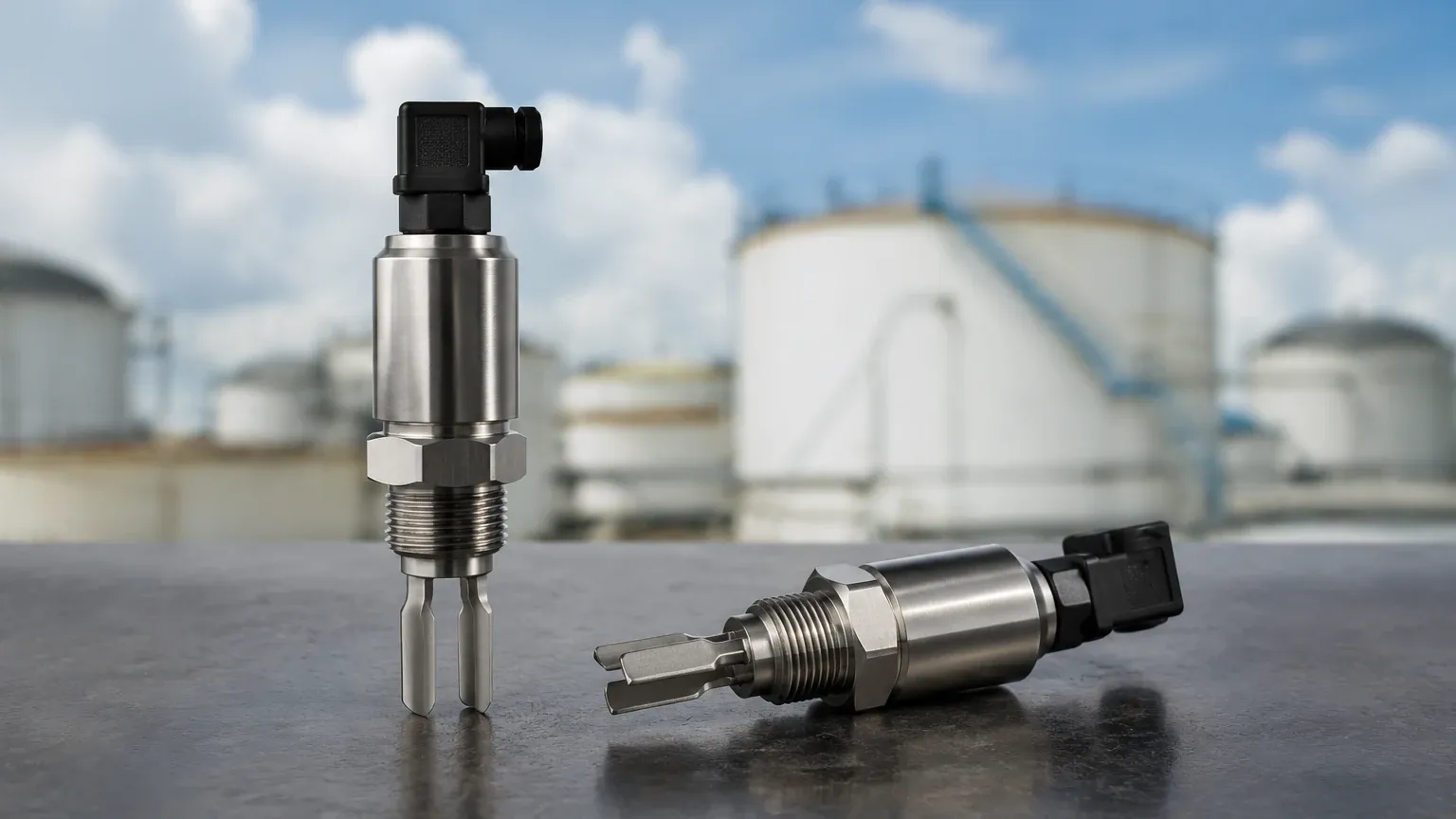
In the landscape of industrial automation, point level detection serves as a critical safeguard for process efficiency and equipment safety. Among the various technologies available, the level switch fork—commonly referred to as a vibrating fork level switch or a tuning fork sensor—is recognized for its reliability and versatility. This instrument is designed to detect the presence or absence of liquids or granulated solids at a specific height within a tank, silo, or pipeline.
As a professional manufacturer, Welk provides these solutions to industries ranging from water treatment to chemical processing, where precise switching is required to prevent overflows, protect pumps from dry running, or manage inventory levels. Understanding the underlying physics and selection criteria is essential for engineers tasked with integrating these devices into complex process environments.
Measurement Principles of Vibrating Level Switches
The operation of a level switch fork is based on the principle of resonance and frequency shift. Unlike float switches that rely on buoyancy or capacitive sensors that measure dielectric changes, the vibrating fork utilizes mechanical vibration driven by electronics.
Piezoelectric Excitation
At the heart of the device is a pair of piezoelectric crystals located within the sensor housing. One crystal acts as a driver, converting electrical energy into mechanical energy to vibrate the fork tines at their natural resonant frequency in free air. For liquid applications, this frequency is typically around 1,200 Hz to 1,400 Hz, while for solids, it may differ depending on the density of the target material.
Frequency Shift Detection
The second piezoelectric crystal acts as a receiver, monitoring the vibration frequency and amplitude. When the medium (liquid or solid) reaches the level of the fork and submerses the tines, the frequency of vibration changes significantly due to the increased mass and damping effect of the material.
1. In Air: The fork vibrates freely at its resonant frequency.
2. In Media: The density of the liquid or solid dampens the vibration, causing a shift in frequency or a decrease in amplitude.
3. Signal Conversion: The internal electronics detect this shift and compare it against a pre-set threshold. Once the threshold is crossed, the device triggers an output signal, such as a relay, PNP/NPN transistor, or a 4-20mA loop current change.
This principle makes the level switch fork largely immune to changes in the physical properties of the medium, such as conductivity, dielectric constant, or pressure, provided the density remains within the sensor's operating range.
Key Features and Design of the Level Switch Fork
The mechanical design of the fork is as critical as the electronics. Most industrial forks are constructed from high-grade stainless steel (316L) to ensure corrosion resistance and structural integrity.
Fork Geometry
The shape of the tines is engineered to prevent material buildup. For liquids, the tines are often polished to allow droplets to shed easily. For solids, the forks may be larger and more robust to withstand the impact of falling granules or powders. Some designs feature a "short fork" profile, which is ideal for installation in small-diameter pipes (e.g., DN25 or DN50) where space is limited.
Material Coatings
In highly aggressive chemical environments, such as those involving concentrated acids or bases, standard stainless steel may be insufficient. In these cases, manufacturers like Welk offer forks coated with PFA (Perfluoroalkoxy) or ECTFE (Halar®). These coatings provide a chemical barrier while maintaining the mechanical sensitivity required for vibration.
Output Options
Modern Level Switches offer various output configurations to interface with Programmable Logic Controllers (PLCs) or Distributed Control Systems (DCS):
* Relay (SPDT/DPDT): Used for direct control of pumps or valves.
* Transistor (PNP/NPN): Ideal for high-speed switching and direct PLC input.
* Two-wire Contact: Often used in SIL (Safety Integrity Level) rated loops for overfill prevention.
Selection Criteria for Industrial Applications
Selecting the correct level switch fork requires an analysis of the medium's density, viscosity, and the environmental conditions of the vessel. The following table provides a general guideline for evaluating fork suitability.
| Parameter | Liquid Level Fork | Solid Level Fork |
| :— | :— | :— |
| Minimum Density | > 0.5 g/cm³ (optional 0.4 g/cm³) | > 0.01 g/cm³ (for light powders) |
| Maximum Viscosity | Up to 10,000 mm²/s (cSt) | N/A |
| Process Temperature | -50°C to +150°C (standard) | -40°C to +250°C (high-temp versions) |
| Process Pressure | Up to 64 bar (928 psi) | Up to 25 bar (362 psi) |
| Typical Media | Water, oils, acids, alkalis | Flour, cement, plastic pellets, sand |
Critical Factors to Consider
1. Viscosity: While forks are excellent for most liquids, extremely viscous fluids (like heavy resins or molasses) may cause a delay in the fork's return to the vibrating state after the level drops, as the material clings to the tines.
2. Bulk Density: For solids, the bulk density must be sufficient to dampen the vibration. Very light, aerated powders may require specialized high-sensitivity forks.
3. Turbulence and Foam: Vibrating forks are generally unaffected by surface foam or turbulence, making them superior to ultrasonic or optical switches in agitated tanks.
Installation Guidelines and Best Practices
Proper installation is paramount to ensuring the longevity and accuracy of a level switch fork. Failure to follow orientation guidelines can lead to false readings or mechanical damage.
Orientation and Positioning
* Side Mounting: This is the most common installation for high or low-level alarms. The fork should be oriented so that the tines are vertical (side-by-side) rather than horizontal (one above the other). This prevents liquid from being trapped between the tines and allows solids to flow through without bridging.
* Top Mounting: When installed from the top of a tank, the fork is often attached to an extension pipe to reach the desired switching point. It is important to ensure the extension is rigid enough to prevent excessive swaying in agitated liquids.
* Pipe Mounting: For pump dry-run protection, the fork can be installed directly into a pipeline. In this scenario, the tines must be aligned parallel to the flow direction to minimize flow resistance and prevent cavitation.
Avoiding Interference
* Inflow Streams: Never install a level switch fork directly in the path of a filling stream. The force of the falling material can damage the tines or cause false triggers. Use a baffle plate if the sensor must be located near an inlet.
* Nozzle Length: The fork tines must extend fully into the vessel. If the mounting nozzle is too long, material may collect in the dead space, causing the sensor to indicate a "full" state even when the tank level is low.
Limitations and Troubleshooting
While the level switch fork is a robust "fit-and-forget" solution for many, it does have specific limitations.
Material Bridging
In applications involving sticky solids or slurries, material can bridge the gap between the two tines. Once bridged, the fork will continue to signal that it is covered, regardless of the actual level. In such cases, a single-rod vibrating sensor or a capacitive probe may be more appropriate.
Mechanical Stress
In silos containing heavy ores or large rocks, the mechanical impact of falling material can bend or snap the tines. Protective shields or heavy-duty fork designs are required for these aggressive environments.
Troubleshooting Common Issues
* False Alarms: Often caused by heavy coating or buildup. Cleaning the tines or adjusting the sensitivity setting (if available) usually resolves the issue.
* No Signal Change: Check the power supply and wiring. If the electronics have failed due to moisture ingress (often through the cable gland), the unit may need replacement. Ensure the housing cover is tightened to the manufacturer's torque specification.
Frequently Asked Questions (FAQ)
Q: Can a level switch fork be used in aerated liquids?
A: Yes, but the density of the aerated liquid must remain above the minimum threshold of the sensor (typically 0.5 g/cm³). If the aeration is so severe that the effective density drops below this, the switch may not detect the liquid.
Q: Is calibration required for a new installation?
A: Generally, no. Most vibrating forks are factory-calibrated to detect standard liquid densities. For solids, some models feature a sensitivity switch (High/Low) to account for variations in bulk density, but a full calibration procedure is rarely necessary.
Q: How does the level switch fork handle coating?
A: The vibration of the fork has a natural self-cleaning effect for light coatings. However, if the coating becomes thick enough to change the resonant frequency significantly, the switch will trigger. For applications with heavy scaling, regular inspection is recommended.
Q: What is the difference between a liquid fork and a solids fork?
A: Liquid forks are typically smaller and vibrate at a higher frequency. Solids forks have larger tines to provide a greater surface area for the material to act upon, ensuring reliable detection of low-density powders or granules.
By adhering to these technical guidelines and understanding the mechanical requirements of the application, engineers can effectively utilize the level switch fork to provide reliable point level control across diverse industrial processes. For specific configuration options and technical support, consulting with a manufacturer like Welk ensures that the instrument is tailored to the unique demands of the facility.