Level Sensor Ifm
Level Sensor Ifm
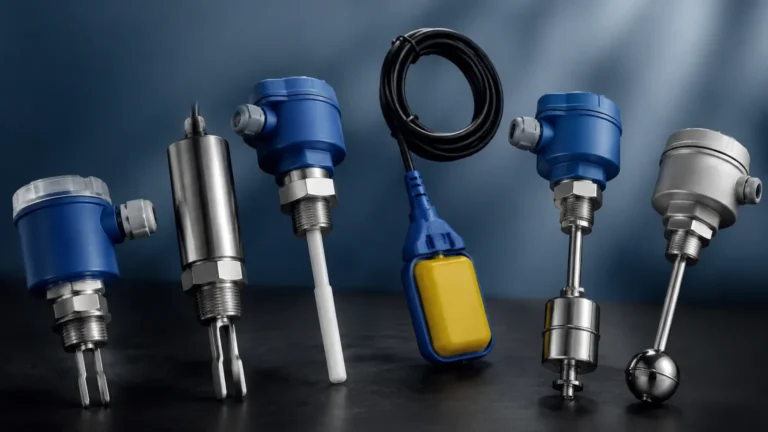
In the landscape of industrial automation, the precision of level measurement is a cornerstone of process safety, efficiency, and quality control. Selecting a level sensor often leads engineers to evaluate specialized components like the level sensor ifm, a brand synonymous with robust electronic sensors and IO-Link integration. Whether managing hydraulic fluids in mobile machinery or monitoring storage tanks in food production, understanding the underlying technology is essential before selecting the appropriate Level Switches or continuous transmitters for a specific application.
This guide examines the technical principles, selection criteria, and installation requirements for level sensors, providing a practical reference for engineers looking to optimize their measurement systems.
Understanding Level Measurement Principles
Before deciding on a specific sensor model, it is vital to understand the physics of how different technologies interact with the media. Level sensors are generally categorized into point level detection (switches) and continuous level measurement.
Capacitive Measurement
Capacitive sensors operate on the principle of electrical capacitance. A capacitor consists of two conductive plates separated by an insulator (dielectric). In level sensing, the sensor probe and the tank wall (if conductive) act as the plates. As the media rises, it replaces air, changing the dielectric constant between the "plates" and thus changing the capacitance.
* Best for: Detecting the presence or absence of liquids, pastes, and bulk solids.
* Advantage: No moving parts, making them highly reliable for point level detection.
Ultrasonic Measurement
Ultrasonic sensors emit high-frequency sound pulses that reflect off the surface of the medium. The sensor measures the time-of-flight (ToF) for the echo to return. Because the speed of sound is known, the distance to the surface can be calculated accurately.
* Best for: Non-contact continuous measurement in open or closed tanks.
* Advantage: Not affected by the dielectric properties or color of the liquid.
Radar (Microwave) Technology
Radar sensors use electromagnetic waves. Guided Wave Radar (GWR) sends pulses down a probe, while non-contact radar emits waves through the air. These waves reflect off the surface due to a change in the dielectric constant ($ε_r$).
* Best for: Applications with varying temperatures, pressures, or vapors that might interfere with ultrasonic signals.
* Advantage: Extremely high precision and capable of penetrating foam in certain configurations.
Hydrostatic Pressure
This method measures the pressure exerted by a liquid column at the bottom of a tank. The pressure is directly proportional to the height of the liquid and its density ($P = ρ ⋅ g ⋅ h$).
* Best for: Deep tanks, wells, and vented vessels.
* Advantage: Simple installation and highly effective for liquids with constant density.
The Role of Level Sensor IFM in Industrial Automation
When searching for a level sensor ifm, users are typically looking for sensors that integrate seamlessly into modern digital architectures. IFM Electronic is well-regarded for its focus on IO-Link technology, which allows for bidirectional communication between the sensor and a PLC. This capability enables remote parameterization and detailed diagnostic feedback, such as internal temperature or signal quality indicators.
In many process environments, point level detection is the primary requirement for overfill protection or pump dry-run prevention. In these scenarios, Level Switches are deployed as critical safety components. A level sensor ifm often utilizes electronic sensing rather than mechanical floats, reducing the risk of mechanical failure in high-vibration environments like mobile hydraulics or food processing lines.
Selection Criteria for Point and Continuous Level Sensors
Choosing the right sensor requires a detailed analysis of the medium and the environment. The following table provides a comparison of common technologies used in industrial level sensing.
Practical Selection Table
| Technology | Typical Application | Media Compatibility | Max Pressure (Approx.) | Key Advantage |
| :— | :— | :— | :— | :— |
| Capacitive | Point level (switches) | Liquids, powders, oils | 10 bar (145 psi) | Compact, no moving parts |
| Ultrasonic | Continuous level | Water, wastewater | 2 bar (29 psi) | Non-contact measurement |
| Radar (GWR) | Continuous level | Oils, chemicals, water | 40 bar (580 psi) | High precision, ignores foam |
| Hydrostatic | Continuous level | Water, fuels, milk | Varies by depth | Ideal for vented tanks |
| Electronic Switch | Point level | Coolants, oils, water | 25 bar (362 psi) | Fast response, IO-Link |
Media Considerations
1. Dielectric Constant (ε_r): Low dielectric fluids (like certain oils) require more sensitive radar or capacitive sensors. If the ε_r is below 2.0, standard capacitive switches may require specific tuning.
2. Viscosity and Build-up: For sticky media, sensors with flush-mount diaphragms or high-frequency capacitive fields are preferred to prevent false triggers caused by residue.
3. Hygienic Requirements: In the food and pharmaceutical sectors, sensors must meet 3-A or EHEDG standards, featuring stainless steel (316L) housings and specific process connections like Tri-Clamp.
Installation and Commissioning Best Practices
Proper installation is as critical as sensor selection. Even a high-quality level sensor ifm can fail to perform if placed incorrectly within the vessel.
Positioning and Orientation
* Avoid the Inflow: Never install a level sensor directly in the path of the filling stream. Turbulence and the falling liquid will cause erratic readings or false switching.
* Wall Clearance: For ultrasonic and non-contact radar sensors, maintain a minimum distance from the tank wall (typically 200 mm or 8 inches) to prevent interference from wall reflections.
* Dead Zones: Every sensor has a "dead zone" or "blocking distance" near the sensor face where measurement is impossible. Ensure the maximum expected level does not enter this zone.
Process Connections
Industrial sensors usually come with standard threads like G 1/2, G 3/4, or NPT. In pressurized systems, ensure the sealing material (such as FKM, EPDM, or PEEK) is chemically compatible with the media. For electronic Level Switches, the M12 connector is the industry standard, providing an IP67 or IP69K rated connection that resists moisture ingress.
Calibration and IO-Link Setup
One of the advantages of modern electronic sensors is the ability to set switch points via software. Instead of manually adjusting a potentiometer, users can define the "Normally Open" (NO) or "Normally Closed" (NC) states and hysteresis values through an IO-Link master or a dedicated display on the sensor head. This ensures repeatability across multiple machines.
Operational Limitations and Troubleshooting
No single technology is a universal solution. Understanding the limitations helps in preventing downtime.
1. Foam Interference: Ultrasonic sensors often struggle with heavy foam, as the sound waves are absorbed rather than reflected. In these cases, Guided Wave Radar or hydrostatic pressure sensors are superior.
2. Vapor and Condensation: In high-temperature water tanks, steam can condense on the sensor face. Some radar sensors use a specific PTFE lens design to encourage droplets to run off, maintaining signal integrity.
3. Pressure Variations: Hydrostatic sensors in sealed tanks require a second pressure sensor to compensate for the headspace pressure. Without this, the level reading will be inaccurate as the tank pressure changes.
4. Turbulence: In agitated tanks, a stilling well (a pipe surrounding the sensor) can be used to provide a calm surface for more accurate continuous measurement.
Frequently Asked Questions (FAQs)
Q: Can a capacitive level sensor ifm detect through a plastic tank wall?
A: Yes, certain capacitive sensors are designed for "non-contact" detection through non-metallic walls. The wall thickness and the dielectric constant of the liquid inside determine the effectiveness.
Q: What is the benefit of IO-Link in level switches?
A: IO-Link allows the sensor to transmit not just the binary switch state, but also the actual process value (e.g., 0-100% level) and diagnostic data. This simplifies replacement, as the parameters can be automatically pushed to a new sensor from the PLC.
Q: How do I handle build-up on the sensor probe?
A: For point level detection in viscous media, look for sensors with "active zone" technology that ignores the film left on the probe. Regular cleaning cycles and choosing a flush-mount design also mitigate this issue.
Q: Is radar always better than ultrasonic?
A: Not necessarily. While radar is more precise and handles vacuum/pressure better, ultrasonic sensors are often more cost-effective for simple water level applications in open atmospheric conditions.
Conclusion
Selecting a level sensor ifm or a similar high-performance instrument requires a balance between technical requirements and budgetary constraints. By understanding the measurement principles—from capacitance to radar—and accounting for the physical properties of the media, engineers can ensure long-term reliability. Whether your application calls for complex continuous monitoring or simple, robust Level Switches, the key to success lies in meticulous selection and adhering to installation best practices. For specialized applications, always consult the technical data sheets to confirm chemical compatibility and pressure ratings before commissioning.