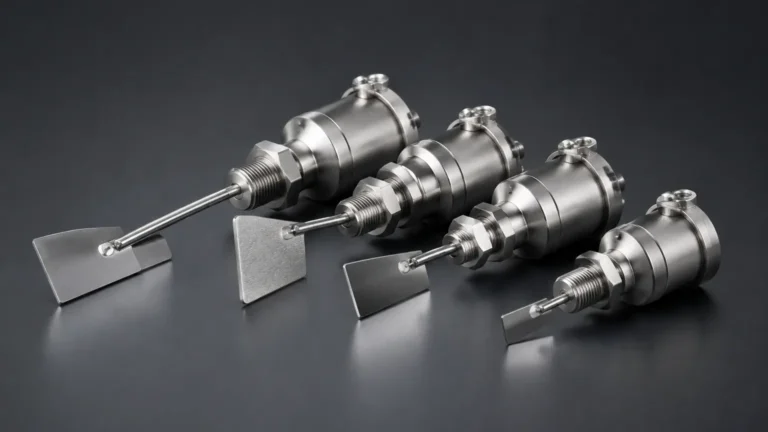
K Tek Level Switches
K Tek Level Switches
In the landscape of industrial automation, level switches serve as the primary line of defense for overfill protection, pump control, and dry-run prevention. Among the established names in this sector, K-Tek—now a specialized brand under the ABB Group—has long been recognized for its robust engineering, particularly in high-pressure and high-temperature environments. For engineers and plant operators, understanding the nuances of K-Tek level switches, alongside broader industry standards, is essential for maintaining process safety and operational efficiency.
This guide explores the technical principles, selection criteria, and practical applications of these instruments, providing a comprehensive reference for integrating reliable Level Switches into modern industrial workflows.
Fundamental Principles of Level Switch Technologies
Before selecting a specific model, it is critical to understand the physical principles that govern how different level switches detect the presence or absence of a medium. Level switches are binary devices; they do not provide a continuous measurement but rather a discrete signal (on/off) when a specific level is reached.
Magnetic Reed Switches
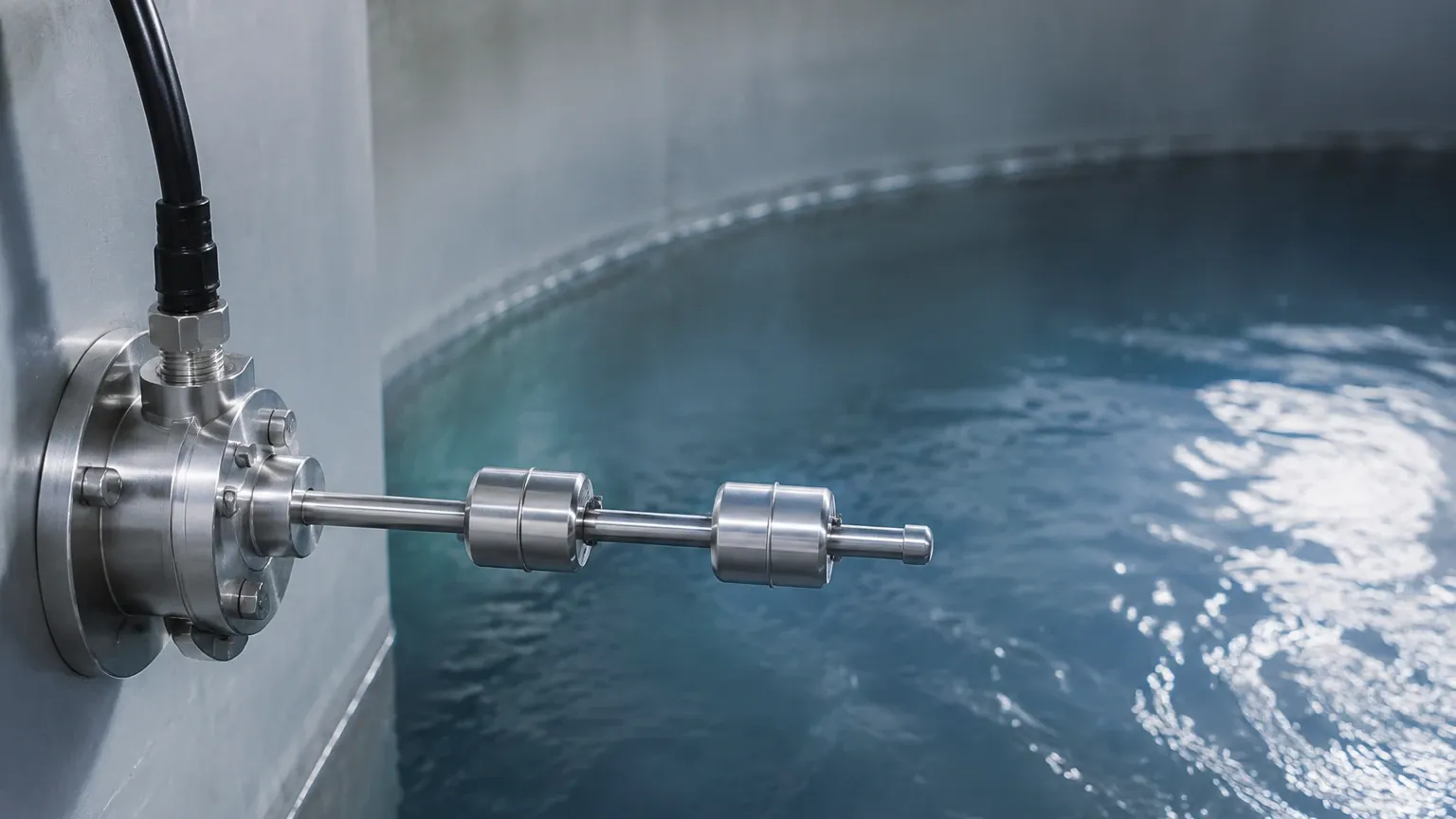
Most K-Tek level switches, particularly those used in conjunction with magnetic level gauges, operate on the principle of magnetic coupling. A float containing a permanent magnet moves with the liquid level. When the float reaches the position of the switch—which is mounted externally to the chamber—the magnetic field closes or opens a hermetically sealed reed switch. This design ensures that the electrical components never come into contact with the process fluid, significantly reducing the risk of leaks or corrosion.
Vibrating Fork (Tuning Fork) Switches
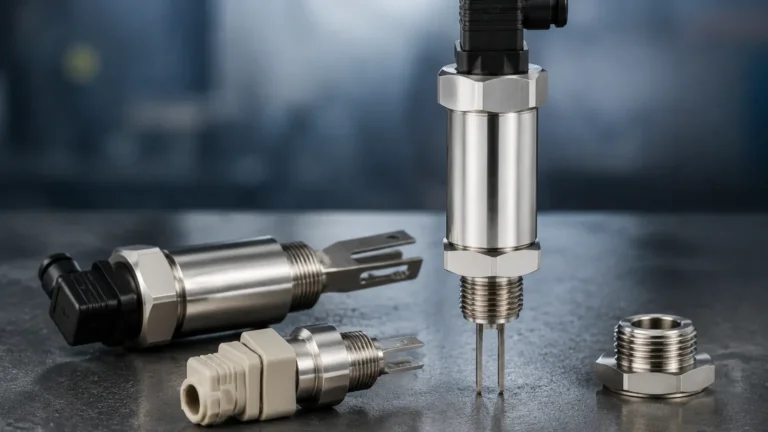
This technology utilizes a sensing element in the shape of a tuning fork that is piezo-electrically energized to vibrate at its natural frequency in air. When the fork is submerged in a liquid or covered by a solid, the frequency changes or the vibration is damped. The internal electronics detect this shift and trigger the output. This method is highly resistant to changes in pressure, temperature, and dielectric constants.
Capacitance and RF Admittance
Capacitance switches measure the change in electrical capacitance between a sensing electrode and the tank wall (or a reference probe). As the process material displaces air, the dielectric constant changes, altering the capacitance. Advanced RF Admittance switches improve upon this by using a "guard" element to ignore the effects of material build-up on the probe, making them ideal for sticky or viscous fluids.
Thermal Dispersion
These switches consist of two temperature sensors. One is heated, and the other monitors the ambient process temperature. The temperature difference between the two sensors is greatest when the probe is in air. When a liquid (which has higher thermal conductivity) contacts the probe, heat is dissipated more rapidly, reducing the temperature difference and triggering the switch.
Key Characteristics of K-Tek Level Switches
K-Tek's reputation is built on specific product lines designed for the most demanding process conditions. Their switches are often categorized by their mounting style and the specific environmental challenges they are designed to overcome.
The MS Series (Magnetic Switches)
The MS series, such as the MS50 or MS10, is perhaps the most iconic of the K-Tek range. These are typically used as accessories for Magnetic Level Gauges (MLGs). Because they are non-invasive, they can be adjusted or replaced without depressurizing the vessel. They are frequently found in oil and gas refineries where high-pressure steam or volatile hydrocarbons are present.
Magnetostrictive Integration
While magnetostrictive technology is often used for continuous level measurement, K-Tek pioneered the use of these transmitters to provide highly accurate point-level switching. By setting software-defined trip points, a single probe can act as multiple virtual level switches, providing both a 4-20mA signal and discrete relay outputs.
Buoyancy-Based External Cage Switches
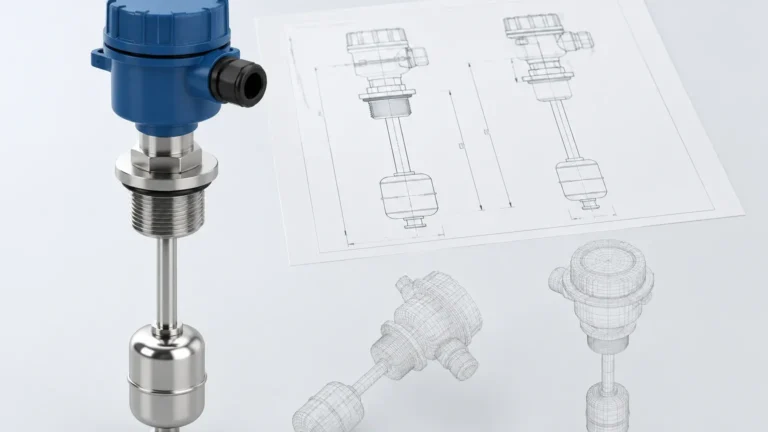
For applications where internal tank mounting is not feasible, K-Tek offers external cage switches. These consist of a self-contained chamber (cage) piped to the side of the tank. The level in the cage matches the level in the tank, and a heavy-duty float or displacer operates the switch mechanism. These are standard in boiler water level control and high-pressure separator applications.
Selection Criteria for Industrial Level Switches
Choosing the correct switch requires a thorough analysis of the process media and the physical environment. The following table provides a comparison of common technologies to assist in the selection process.
| Technology | Media Type | Temp. Range | Pressure Range | Best For |
| :— | :— | :— | :— | :— |
| Magnetic Reed | Clean Liquids | -195°C to 538°C | Up to 345 bar | External mounting on MLGs, high pressure. |
| Vibrating Fork | Liquids/Solids | -50°C to 250°C | Up to 64 bar | Overfill protection, pump protection. |
| Capacitance | Liquids/Slurries | -40°C to 200°C | Up to 100 bar | Interface detection, coating materials. |
| Thermal Dispersion | Liquids/Gases | -70°C to 450°C | Up to 400 bar | Flow/No-flow detection, heavy oil. |
Material Compatibility
The wetted parts of the switch must be compatible with the process fluid. While 316 Stainless Steel is the industry standard, highly corrosive environments may require exotic alloys like Hastelloy C-276, Monel, or Titanium. For magnetic switches, the housing material (often aluminum or stainless steel) must also be selected based on the atmospheric conditions (e.g., salt spray in offshore environments).
Hazardous Area Certifications
In B2B industrial procurement, compliance is non-negotiable. Switches must carry the appropriate certifications for their installation zone, such as ATEX, IECEx, or FM/CSA. This includes explosion-proof housings for Class I, Div 1 areas or intrinsically safe designs for lower-energy circuits.
Installation and Maintenance Best Practices
Even the most advanced K-Tek level switches will fail if installed incorrectly. Adhering to engineering best practices ensures longevity and accuracy.
1. Orientation and Positioning:
* For vibrating fork switches, ensure the forks are oriented so that liquid can drain freely and does not become trapped between the tines.
* For magnetic switches mounted on level gauges, ensure the switch is positioned exactly at the desired trip point and securely fastened to prevent sliding due to vibration.
2. Turbulence and Agitation:
* Avoid installing switches directly in the path of an inlet flow or near an agitator. If turbulence is unavoidable, use a stilling well or a bypass chamber to provide a stable surface for measurement.
3. Wiring and Sealant:
* Always use a "drip loop" in the conduit to prevent moisture from entering the housing. Use appropriate thread sealant on NPT connections to maintain the IP rating of the enclosure.
4. Calibration and Testing:
* While many reed-based switches are factory-set, electronic switches (like capacitance or ultrasonic) require field calibration. Perform a "wet test" whenever possible by raising the actual liquid level to verify the switch point.
Limitations and Common Risks
No single technology is a universal solution. Understanding the limitations of level switches is key to risk mitigation.
* Build-up and Coating: Mechanical switches and some capacitance probes can fail if the process material creates a thick coating or "bridges" the sensing element. In these cases, vibrating forks or RF Admittance probes with coating rejection are preferred.
* Specific Gravity Changes: Buoyancy-based switches (floats and displacers) are sensitive to changes in liquid density. If the specific gravity (SG) of the fluid drops significantly below the design specification, the float may not rise, leading to a failure to trip.
* Mechanical Wear: While magnetic reed switches are hermetically sealed, they have a finite number of cycles. In applications with high-frequency switching, solid-state electronics or non-contacting sensors may offer a longer service life.
Frequently Asked Questions (FAQs)
Q: Can K-Tek switches be used in cryogenic applications?
Yes, certain magnetic level switches and displacer-style switches are specifically engineered for cryogenic service, using extended necks to keep the electrical housing away from extreme cold, functioning reliably down to -195°C (-319°F).
Q: What is the difference between a SPDT and DPDT switch contact?
A Single Pole Double Throw (SPDT) switch has one set of contacts (Common, Normally Open, Normally Closed). A Double Pole Double Throw (DPDT) switch has two independent sets of contacts, allowing one switch to control two separate circuits simultaneously (e.g., a pump and a local alarm).
Q: How do I handle high-vibration environments?
In environments with heavy machinery vibration, mechanical reed switches may experience "chatter." It is recommended to use switches with high vibration resistance ratings or to employ an electronic time delay in the control system to filter out momentary contact closures.
Q: Are these switches suitable for sanitary food and beverage applications?
While K-Tek specializes in heavy industrial applications, many of the principles apply to sanitary environments. However, for food and beverage, one must ensure the switch has 3-A or EHEDG certification and features a polished surface finish (typically Ra < 0.8 µm) to prevent bacterial growth.
By carefully evaluating the process requirements and understanding the strengths of various Level Switches, engineering teams can specify solutions that provide years of maintenance-free service, even in the most challenging industrial sectors.