Level Switch No
Level Switch No
In the field of industrial process control, the term "NO" refers to a "Normally Open" contact state. For engineers and technicians specifying instrumentation, understanding the distinction between Normally Open (NO) and Normally Closed (NC) configurations is fundamental to system safety, pump control, and alarm logic. A level switch no configuration ensures that the electrical circuit remains open—meaning no current flows—when the switch is in its resting or "normal" state.
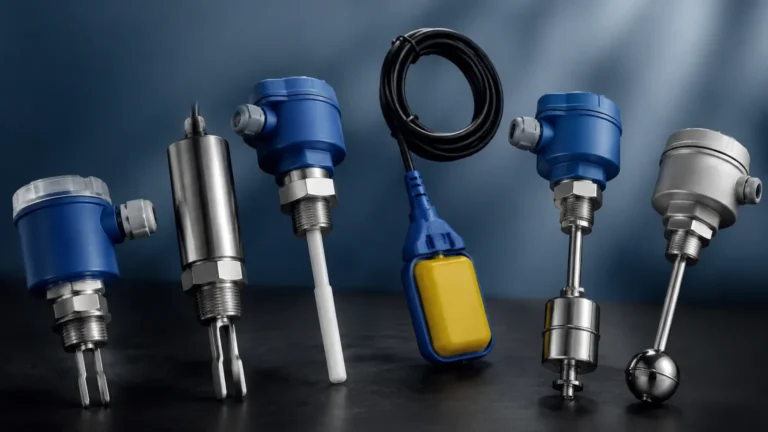
At Welk, we manufacture a wide array of Level Switches designed to provide reliable point-level detection across diverse industries, from wastewater treatment to chemical processing. This guide examines the technical principles of NO level switches, their application logic, and the critical factors involved in selecting the right technology for your specific process environment.
Measurement Principles of Level Switches
Before selecting a specific contact configuration, it is essential to understand how different level switch technologies interact with the medium to trigger a state change. While the electrical output might be "Normally Open," the physical mechanism used to detect the level varies significantly.
Float Level Switches
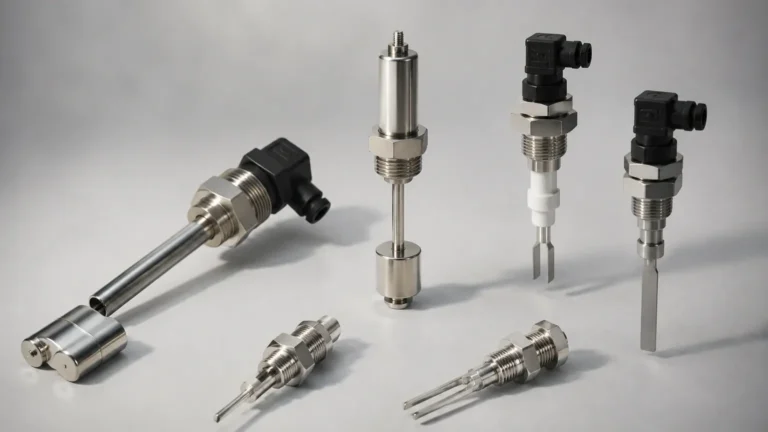
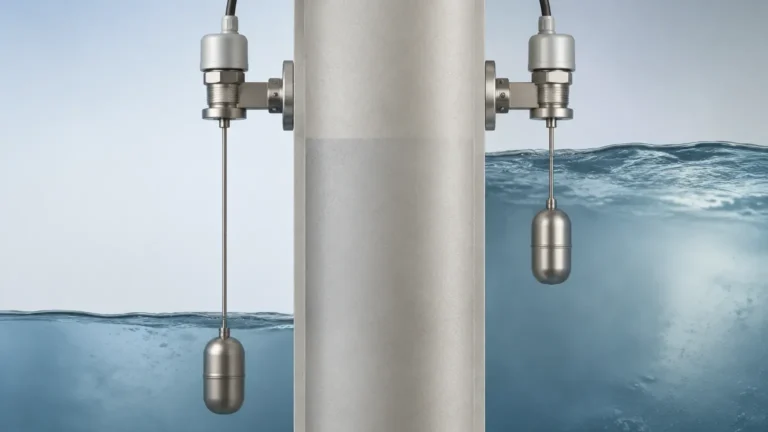
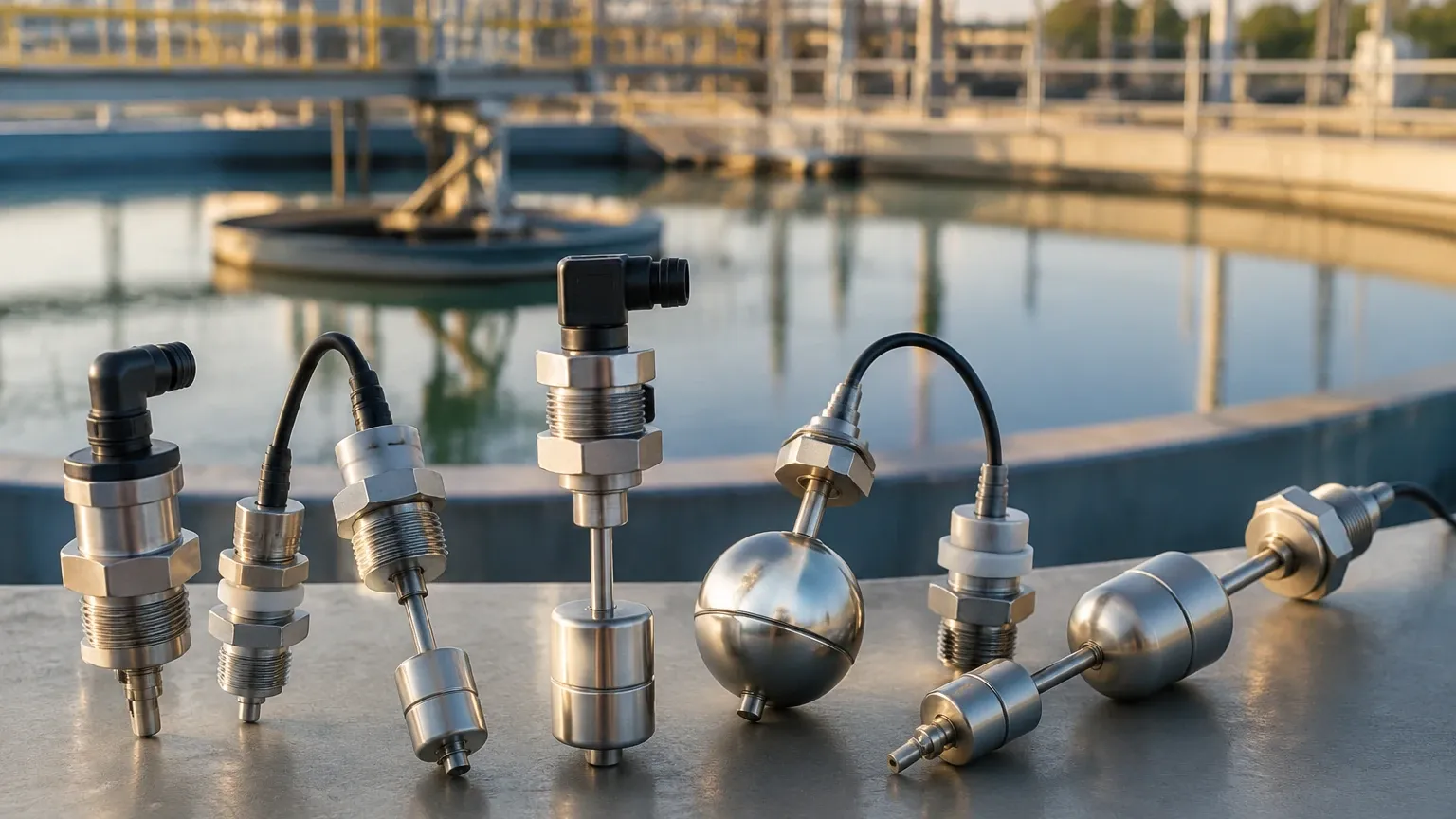
Float switches are among the most common and cost-effective technologies. They operate on the principle of buoyancy. A float containing an internal magnet moves up and down a stem as the liquid level rises or falls. Inside the stem, a hermetically sealed reed switch is positioned. When the magnet in the float aligns with the reed switch, the magnetic field forces the reed contacts to close (in an NO setup) or open (in an NC setup).
Vibrating Level Switches (Tuning Fork)
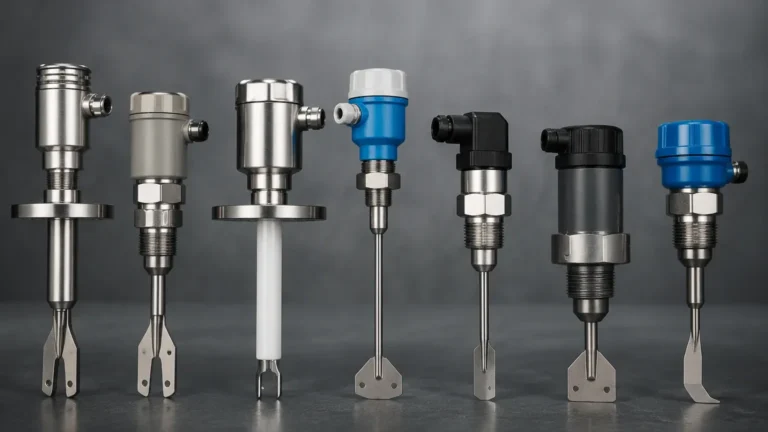
Vibrating switches utilize a tuning fork-shaped sensing element that is vibrated at its natural resonant frequency by piezoelectric crystals. When the fork is immersed in a liquid or solid, the frequency changes or the vibration is damped. The internal electronics detect this shift and switch the output relay or transistor. In a "Level Switch NO" configuration, the circuit remains open while the fork vibrates freely in the air and closes when the material covers the forks.
Capacitance Level Switches
Capacitive sensors treat the probe and the tank wall (or a reference electrode) as two plates of a capacitor. The medium acts as the dielectric. As the level rises and covers the probe, the dielectric constant changes, leading to a change in measured capacitance. Once a pre-set threshold is reached, the switch changes state. These are ideal for powders, granulates, and liquids with consistent dielectric properties.
Conductivity Level Switches
These switches are used for conductive liquids. They employ a low-voltage electrode. When the liquid touches the electrode, it completes a circuit between the probe and the tank wall (or a ground electrode). This technology is strictly for liquids like water, acids, or alkalis and cannot be used with oils or non-conductive hydrocarbons.
Defining the "Normally Open" (NO) State
In the context of level measurement, the "normal" state is typically defined as the condition of the switch when it is not being acted upon by the process medium (e.g., a dry state for a high-level alarm).
* Normally Open (NO): The circuit is interrupted (open) when the level is below the sensing point. When the level rises and reaches the switch, the contact closes, allowing current to flow to a PLC, motor starter, or alarm bell.
* Normally Closed (NC): The circuit is complete (closed) when the level is below the sensing point. The circuit opens when the level reaches the switch.
The Importance of Fail-Safe Logic
Choosing between NO and NC is often a matter of "fail-safe" design. A fail-safe system is designed to return to a safe state in the event of a power failure or wire break.
1. High-Level Alarm (Overfill Prevention): Engineers often use an NC contact for high-level alarms. If a wire breaks, the circuit opens, triggering the alarm as if an overfill occurred. This alerts maintenance to a fault. If an NO switch were used and a wire broke, the system would remain open even if the tank overflowed, and the alarm would never sound.
2. Low-Level Protection (Pump Dry-Run): For protecting a pump from running dry, an NC contact is often used when the tank is full. If the level drops or the wire breaks, the circuit opens, stopping the pump.
However, many modern industrial Level Switches provided by Welk feature SPDT (Single Pole Double Throw) contacts, allowing the user to wire the device as either NO or NC depending on the specific logic requirements of the control system.
Practical Selection Table
Choosing the right level switch requires balancing the physical properties of the medium with the mechanical requirements of the tank.
| Technology | Best Suited For | Temperature Range | Pressure Limits | Advantages |
| :— | :— | :— | :— | :— |
| Float Switch | Clean liquids, water, oils | -20°C to 120°C | Up to 40 bar | Low cost, no power required for reed types |
| Tuning Fork | Liquids, powders, slurries | -40°C to 150°C | Up to 64 bar | Not affected by foam or bubbles, high reliability |
| Capacitive | Solids, non-conductive liquids | -40°C to 200°C | Up to 25 bar | No moving parts, adjustable sensitivity |
| Conductive | Conductive liquids (water/acid) | -20°C to 100°C | Up to 10 bar | Extremely simple, multiple points on one probe |
Installation Considerations
Proper installation is critical to ensuring that a level switch no functions correctly over its intended service life.
Orientation and Mounting
* Top Mounting: Common for float switches with long stems or ultrasonic sensors. Ensure the stem is vertical to prevent the float from binding.
* Side Mounting: Common for tuning forks and small float switches. For tuning forks, ensure the "paddles" are oriented vertically so that material can drain off easily and not accumulate between the tines.
Wiring and Cable Entry
When wiring a level switch no, always use shielded cable if the signal is traveling long distances to a PLC to avoid electromagnetic interference. One of the most common causes of switch failure is moisture ingress through the cable entry. Always use a proper cable gland and create a "drip loop" so that condensation or rainwater runs off the cable before reaching the housing.
Turbulence and Agitation
If the tank has an agitator or high-velocity inflow, the physical force can damage floats or cause "chattering" (rapid opening and closing of the contact). In these environments, a stilling well (a pipe surrounding the switch) should be installed to provide a calm area for measurement.
Limitations and Prohibitions
While level switches are versatile, certain conditions prohibit their use or require specialized versions:
1. Coating and Buildup: In applications with sticky liquids (like molasses or heavy crude), a standard float switch or tuning fork may fail. The material can "bridge" the tuning fork tines or weigh down a float, causing it to stay in the "closed" position regardless of the actual level.
2. High Viscosity: Extremely viscous fluids may prevent a float from moving or dampen a tuning fork prematurely.
3. Corrosive Environments: Standard stainless steel (304 or 316) may not be sufficient for concentrated acids. In these cases, PTFE or PVDF coatings are required.
4. Explosive Atmospheres: In oil and gas or chemical plants, switches must be ATEX or IECEx certified. An NO switch in a hazardous area must be used with an intrinsically safe barrier to prevent sparks.
Maintenance and Troubleshooting
A level switch no is generally a low-maintenance device, but regular checks are recommended to ensure process safety.
* Visual Inspection: Check for corrosion on the housing and ensure the cable gland is tight.
* Mechanical Test: For float switches, manually move the float to ensure it slides freely and triggers the expected signal in the control room.
* Cleaning: For tuning forks or capacitive probes in dirty applications, periodically remove the sensor and clean any buildup that could interfere with the vibration or dielectric measurement.
Common Troubleshooting Steps
* Switch won't close: Check for a broken wire, a stuck float, or excessive buildup on the sensor face. If it is a capacitive switch, the sensitivity may need to be increased.
* Switch won't open: This often indicates a "welded" reed switch (caused by a current surge) or material bridging the sensor. Ensure that the electrical load does not exceed the switch's contact rating (e.g., 0.5A at 220VAC).
Frequently Asked Questions (FAQ)
Q: Can I convert a Normally Open (NO) float switch to Normally Closed (NC)?
A: Yes, in many simple vertical float switches, you can remove the retaining clip, flip the float 180 degrees, and replace it. This reverses the magnet's orientation relative to the reed switch, effectively changing the logic from NO to NC.
Q: What is the difference between a level switch and a level transmitter?
A: A level switch provides a discrete "on/off" signal at a specific point (e.g., 80% full). A level transmitter provides a continuous signal (e.g., 4-20mA or 0-10V) representing the exact level from 0% to 100%.
Q: Why does my NO switch trigger an alarm when the power goes out?
A: This depends on how your control system is programmed. If the PLC is looking for a "continuity" signal to prove the system is healthy, a power loss will look like an open circuit (NO state), which the system may interpret as a fault or a specific level condition.
Q: Can I use a level switch to start a pump directly?
A: Most reed-based level switches have very low contact ratings (often less than 1 Amp). They should never be used to power a pump motor directly. Instead, the switch should trigger a relay or a motor contactor that handles the high-current load of the pump.
For technical assistance in selecting the correct Level Switches for your project, contact the Welk engineering team. We provide customized OEM/ODM services to ensure our instruments meet the specific pressure, temperature, and chemical requirements of your industrial application.