Level Sensor Online
Level Sensor Online
In the modern industrial landscape, the process of selecting and procuring a level sensor online has evolved from simple transactional purchasing to a complex engineering evaluation. For plant managers, systems integrators, and procurement specialists, the digital marketplace offers a vast array of technologies designed to monitor liquids, slurries, and solids. However, the convenience of online sourcing must be balanced with a rigorous understanding of measurement principles and application-specific requirements to ensure long-term reliability and process safety.
Selecting the right instrument involves more than comparing technical specifications; it requires a deep dive into the physics of the media being measured and the environment in which the sensor will operate. This guide serves as a practical engineering reference for navigating the technical nuances of level measurement technologies.
Understanding Level Measurement Principles
Before evaluating specific hardware, it is essential to distinguish between the two primary modes of measurement: point level detection and continuous level measurement.
Point Level Detection
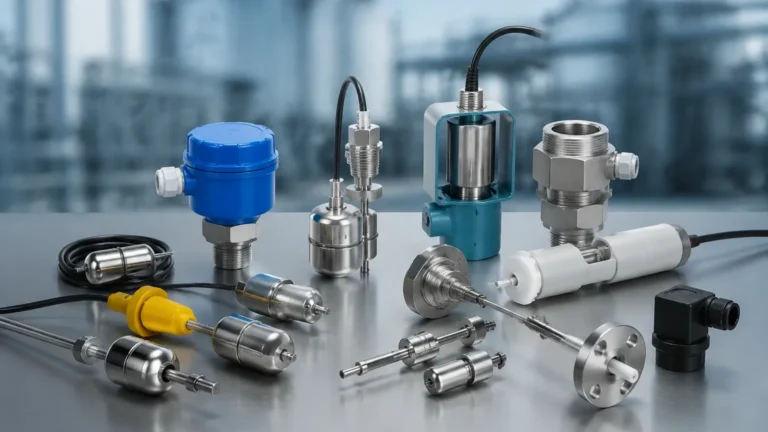
Point level detection is used to determine if a material has reached a specific height in a vessel. These devices, commonly known as Level Switches, act as high-level alarms to prevent overfills or low-level alarms to protect pumps from running dry. The principle of operation varies by type:
- Vibration (Tuning Fork): The sensor fork vibrates at its resonant frequency in air. When covered by media, the frequency shifts, triggering the switch.
- Buoyancy (Float): A float moves with the liquid level, mechanically or magnetically actuating a reed switch.
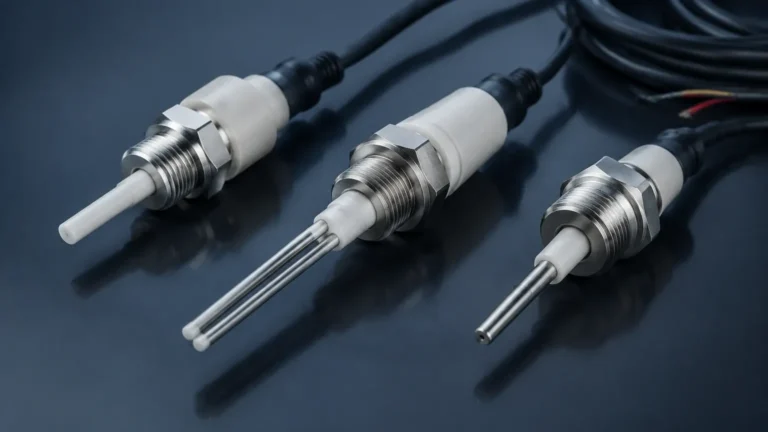
- Conductivity: Uses the electrical conductivity of the liquid to complete a circuit between two electrodes.
Continuous Level Measurement
Continuous measurement provides a real-time tracking of the level throughout the entire range of the tank. This is critical for inventory management and process control. Common principles include:
- Time-of-Flight (ToF): Radar and ultrasonic sensors emit a signal that reflects off the material surface. The time taken for the signal to return is proportional to the distance.
- Hydrostatic Pressure: Based on the principle that the pressure at the bottom of a liquid column is directly proportional to the height of the liquid ($P = \rho gh$).
- Capacitance: Measures the change in electrical capacitance between two electrodes (or one electrode and the tank wall) as the media displaces air.
Technical Overview of Level Switches
When searching for a level sensor online, level switches are often the first line of defense in process safety. They are valued for their robustness and simplicity.
Vibrating Level Switches
Vibrating fork switches are highly versatile. Because they rely on a frequency shift rather than electrical properties or density changes, they are largely unaffected by flow, bubbles, or foam. They are ideal for most clean liquids and can be calibrated to ignore light coating or buildup on the forks.
Float Level Switches
Float switches remain a cost-effective solution for water and oil applications. They are available in various materials, such as 316L stainless steel or PP (polypropylene), to match chemical compatibility requirements. However, they are mechanical devices and may be prone to sticking if the media contains high levels of suspended solids or high viscosity.
Rotary Paddle Switches
Designed specifically for bulk solids and powders, these switches utilize a low-speed motor that rotates a paddle. When the material reaches the paddle, the rotation is impeded, which trips a microswitch to signal the level state. These are commonly found in grain silos, cement hoppers, and plastic pellet bins.
Continuous Level Measurement Technologies
For applications requiring more than a simple "on/off" signal, continuous sensors provide a 4-20mA, Modbus, or HART output to a control system.
Radar Level Meters
Radar technology is the gold standard for challenging environments. Non-contact radar emits microwave pulses (typically in the 26GHz or 80GHz range). Since microwaves do not require a medium for propagation, they are unaffected by vacuum, high pressure, or temperature fluctuations. They are particularly effective for corrosive chemicals and volatile liquids.
Ultrasonic Level Sensors
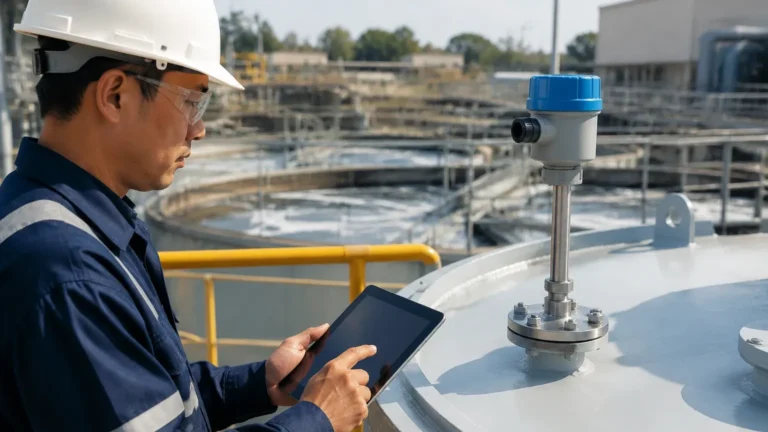
Ultrasonic sensors are a popular choice for water treatment and open-channel flow measurement. They emit sound waves and are generally more cost-effective than radar. However, they are sensitive to air temperature changes (which affect the speed of sound) and can be blocked by heavy steam, dust, or foam.
Hydrostatic Level Transmitters
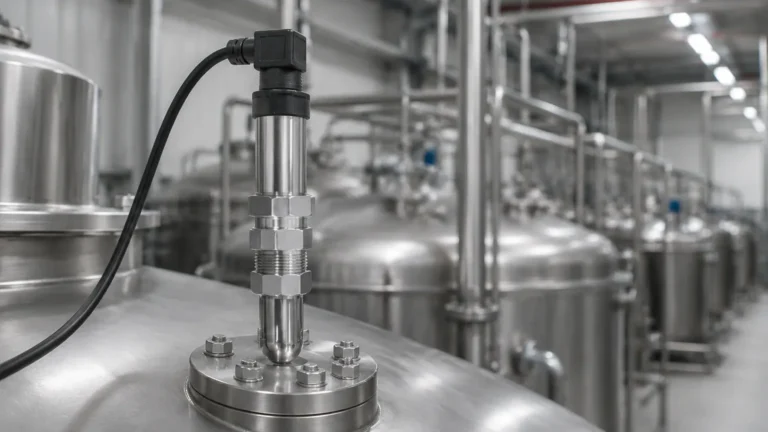
These sensors are submerged at the bottom of a tank or well. They are excellent for deep wells or pressurized vessels where top-mounting is not feasible. Accuracy depends on the consistency of the liquid's density; if the density changes significantly due to temperature or composition, the reading will require compensation.
Selection Criteria for Online Procurement
When evaluating a level sensor online, use the following table to narrow down the technology based on your specific application parameters:
| Technology | Media Type | Typical Accuracy | Max Pressure | Key Advantage |
| :— | :— | :— | :— | :— |
| Radar | Liquid/Solid | ±2 mm | 40 bar+ | Non-contact, high precision |
| Ultrasonic | Liquid | ±0.25% of range | 3 bar | Cost-effective for water |
| Hydrostatic | Liquid | ±0.1% to 0.5% | Dependent on depth | Easy installation in deep wells |
| Level Switches | Liquid/Solid | ±1 mm (repeatability) | 64 bar | Critical safety/alarm logic |
| Magnetic Gauge | Liquid | ±5 mm | 100 bar+ | Visual indication, no power required |
Key Evaluation Questions:
1. What is the dielectric constant (DC) of the media? Radar sensors require a minimum DC to reflect the signal effectively. Low DC fluids like hydrocarbons may require guided wave radar.
2. Is there turbulence or foam? Foam can absorb ultrasonic and radar signals. In such cases, a hydrostatic transmitter or a displacement-based sensor may be more reliable.
3. What are the process connections? Ensure the sensor's flange or thread size (e.g., G1/2", 2" NPT, DN50) matches your tank's existing ports.
4. What output is required? Determine if you need a simple relay for a switch or a digital signal (4-20mA/HART) for a PLC.
Installation Considerations and Best Practices
Proper installation is as critical as selecting the right technology. Even the most advanced level sensor online will fail if mounted incorrectly.
* Dead Zones (Blocking Distance): All ToF sensors (radar and ultrasonic) have a "dead zone" directly beneath the sensor where measurements cannot be taken. Ensure the sensor is mounted high enough so the maximum liquid level never enters this zone.
* Obstructions: Avoid mounting sensors near internal tank structures like ladders, agitators, or inflow pipes. These can cause "false echoes" that interfere with the true level reading.
* Nozzle Geometry: The height and diameter of the mounting nozzle can affect the signal beam. For 80GHz radar, narrower nozzles are acceptable, but lower frequency sensors may require wider openings.
* Submersible Venting: Hydrostatic sensors must have a vented cable to compensate for changes in atmospheric pressure. Ensure the vent tube is protected from moisture and debris.
Limitations and Common Pitfalls
While digital tools make it easy to find a level sensor online, users should be aware of the following limitations:
1. Material Buildup: In applications with sticky media (like wastewater or molasses), buildup on the sensor face can cause signal attenuation. Self-cleaning functions or non-contact sensors are preferred here.
2. Vapor and Dust: High-density dust in silos can scatter ultrasonic signals. Radar is generally more resistant but may still require a dusting attachment for extreme cases.
3. Temperature Gradients: Rapid temperature changes in the headspace of a tank can cause condensation on the sensor lens. Choosing a sensor with a PTFE or specialized coating can help shed droplets.
4. Improper Grounding: Industrial level sensors are sensitive to electrical noise. Ensure the instrument is properly grounded according to the manufacturer's guidelines to prevent signal fluctuations.
Frequently Asked Questions (FAQ)
Q: Can I use an ultrasonic sensor for a vacuum tank?
No. Ultrasonic sensors require air or gas to transmit sound waves. In a vacuum, there is no medium for the sound to travel through. Use radar or hydrostatic sensors instead.
Q: How often do level switches need calibration?
Most modern vibrating and magnetic level switches are factory-calibrated and require minimal maintenance. However, periodic functional tests (proof testing) are recommended, especially in safety-critical applications.
Q: What is the difference between 2-wire and 4-wire sensors?
2-wire sensors use the same pair of wires for both power and the 4-20mA output signal, making them easier to wire. 4-wire sensors have separate pairs for power and signal, which is often necessary for high-power devices like certain radar units.
Q: How do I handle measurement in a tank with an agitator?
Use software filtering (false signal suppression) to "map out" the agitator blades. Alternatively, use a stilling well to provide a calm surface for the sensor to measure.
Conclusion
Sourcing a level sensor online provides engineers with unparalleled access to diverse measurement solutions. By prioritizing a thorough understanding of the application environment—including media properties, vessel geometry, and potential interference—you can select an instrument that provides accurate and maintenance-free service. Whether you are implementing a simple Level Switch for overflow protection or a high-frequency radar for complex process control, the key to success lies in matching the physics of the sensor to the realities of the plant floor.