Rotary Paddle Level Switches
Rotary Paddle Level Switches
In the field of bulk solids management, ensuring reliable point-level detection is critical for preventing silo overfills, equipment damage, and production downtime. Among the various technologies available, rotary paddle level switches remain one of the most widely adopted solutions due to their mechanical simplicity, robustness, and cost-effectiveness. These devices are specifically engineered to detect the presence or absence of powders, granules, and other dry bulk materials in bins, hoppers, and silos.
As a core component of industrial automation, Level Switches provide essential binary feedback to control systems. While newer electronic technologies have emerged, the rotary paddle design continues to be the preferred choice for heavy-duty applications where high material density or harsh environmental conditions might compromise more sensitive sensors.
Measurement Principles of Rotary Paddle Technology
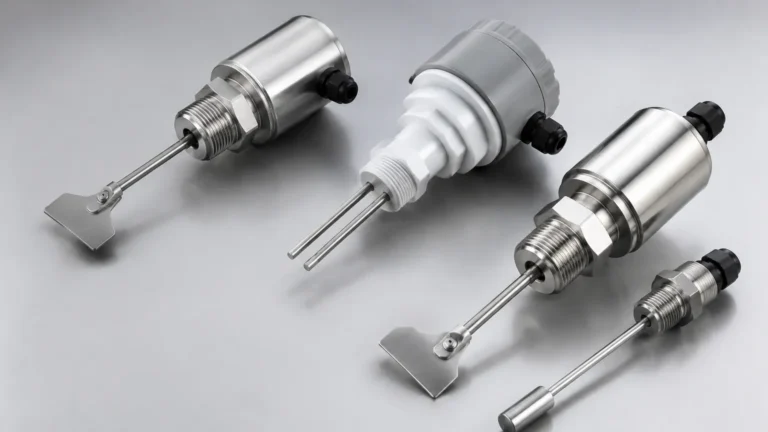
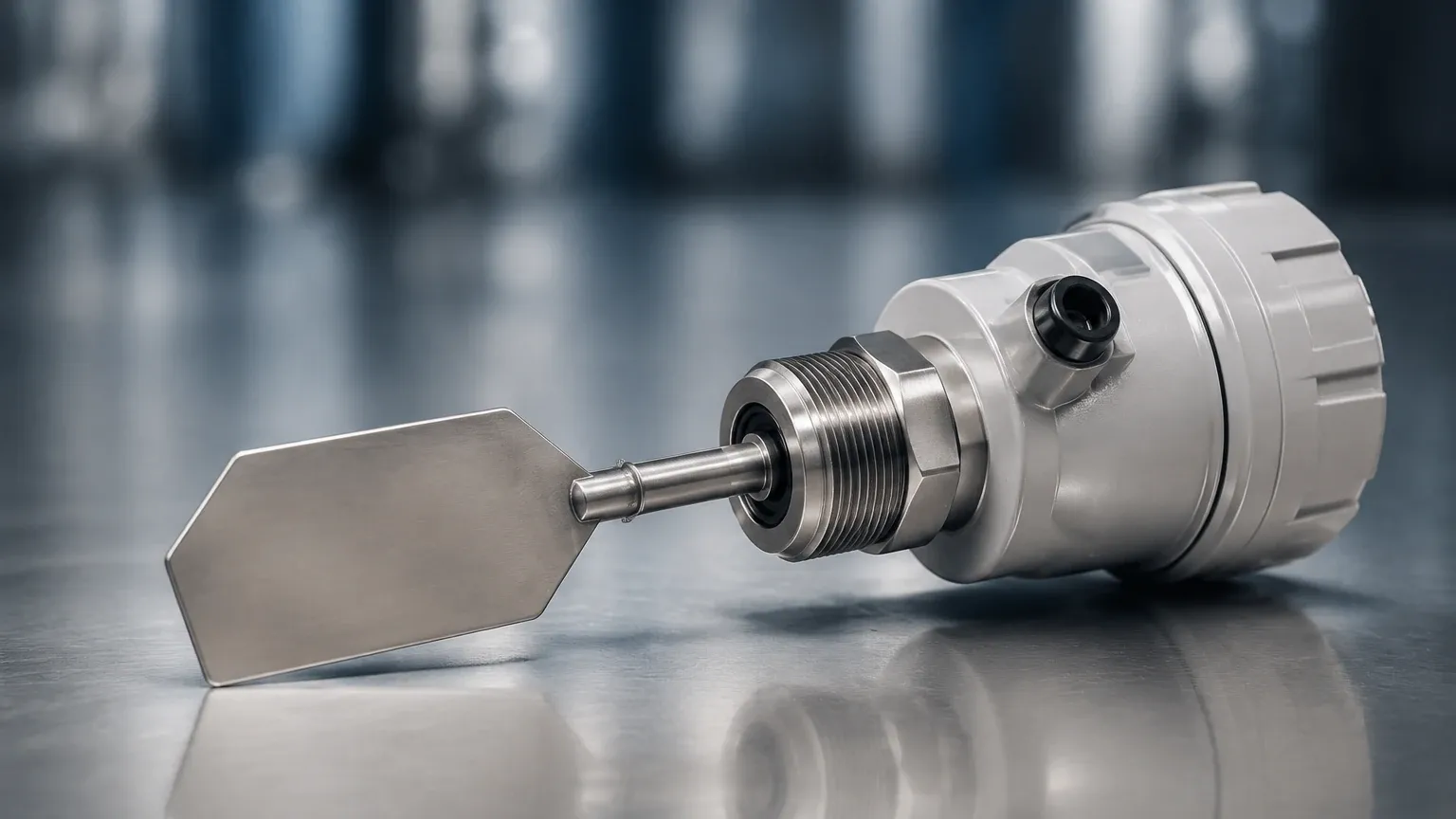
The operation of a rotary paddle level switch is based on the simple principle of mechanical resistance. The device consists of a low-speed synchronous motor, a rotating shaft, and a paddle (or vane) extending into the vessel.
Normal Operation (Unimpeded)
When the material level is below the paddle, the motor rotates the shaft and paddle freely at a constant speed—typically one revolution per minute (1 RPM). During this state, the internal microswitch remains in its "normal" position, indicating that the material has not reached the designated level.
Detection State (Obstructed)
As the bulk material rises and reaches the paddle, it creates mechanical resistance that impedes the paddle's rotation. Because the motor is mounted on a pivoted frame inside the housing, the resulting torque causes the motor to rotate slightly around its own axis. This movement triggers two distinct actions:
1. Signal Output: It activates a microswitch (or a pair of switches) that changes the electrical state of the output circuit (e.g., from Normally Open to Normally Closed).
2. Motor Protection: It disconnects the power to the motor itself. This prevents the motor from stalling under load, which significantly extends the service life of the internal components.
Resetting
When the material level falls and the paddle is no longer obstructed, a calibrated tension spring pulls the motor back to its original position. This restores power to the motor, causing the paddle to resume rotation and resetting the signal output.
Key Components and Construction
To withstand the abrasive and often heavy nature of bulk solids, rotary paddle level switches are constructed with high-durability materials. Standard configurations usually include:
* The Motor: Synchronous motors are used for their consistent speed and ability to handle frequent start-stop cycles.
* The Housing: Typically made of die-cast aluminum or reinforced polymers, rated for IP65 or IP66 to protect against dust ingress and moisture.
* The Shaft and Paddle: Generally manufactured from 304 or 316 stainless steel. The shaft may be rigid or flexible (using a spring-loaded coupling) to absorb the impact of falling material.
* Seals and Bearings: High-quality dust seals prevent fine powders from entering the motor housing, while heavy-duty bearings support the shaft against lateral loads.
Selection Criteria for Industrial Applications
Choosing the correct rotary paddle level switch requires an understanding of the material properties and the physical environment of the vessel. The following table outlines the primary evaluation criteria for standard industrial models.
Technical Selection Table
| Parameter | Standard Specification | High-Performance Options |
| :— | :— | :— |
| Bulk Density | > 100 g/l (0.1 g/cm³) | Adjustable sensitivity for < 50 g/l |
| Process Temperature | -20°C to +80°C | Extended shafts for up to +250°C |
| Process Pressure | Atmospheric to 0.5 bar | High-pressure seals up to 10 bar |
| Power Supply | 220V AC / 110V AC | 24V DC / 12V DC |
| Output Type | SPDT Microswitch (5A/250V) | DPDT or Transistor outputs |
| Mounting Connection | G 1" or G 1 1/2" Threaded | Flanged (ANSI/DIN) or NPT |
Paddle Geometry Selection
The shape of the paddle is determined by the density and flowability of the material. A larger paddle surface area is required for very light materials to ensure enough torque is generated to stop the motor.
* Standard Scimitar Paddle: Used for general-purpose grains and granules; can often be inserted through a small mounting hole without removing the paddle.
* Cross/Four-Blade Paddle: Ideal for very light powders (e.g., fly ash or flour) where maximum surface area is needed.
* Single-Blade/Flat Paddle: Suitable for heavy, dense materials like sand or cement where high mechanical stress is expected.
Installation Guidelines and Best Practices
Proper installation is paramount to the longevity of rotary paddle level switches. Mechanical failure is rarely a result of the device itself, but rather the forces exerted by the material flow.
1. Mounting Location
* Top Mounting: Used for high-level detection. The shaft length can be extended (up to 3 meters or more) to reach the desired switching point. For long extensions, a protective pipe or a flexible shaft is recommended to prevent bending.
* Side Mounting: Used for both high and low-level detection. The switch should be installed at a slight downward angle (approx. 15-20°) to allow material to shed off the paddle and prevent buildup near the seal.
2. Protection from Material Flow
If the switch is installed directly beneath the material inlet, it will be subjected to the constant impact of falling solids. This can lead to premature mechanical failure. A protective baffle or "shield" (typically an inverted V-shaped metal plate) should be installed approximately 150mm to 200mm above the paddle to deflect the flow.
3. Wiring and Conduit
Always install the electrical conduit with a "drip loop" to prevent moisture from following the cable into the housing. Ensure the cable gland is tightened to maintain the IP rating of the enclosure.
Limitations and Considerations
While rotary paddle level switches are highly versatile, they are not suitable for every application. Engineers should be aware of the following limitations:
* Not for Liquids: The mechanical resistance of liquids is generally insufficient to trigger the torque mechanism of a standard rotary paddle. For liquid applications, float switches or ultrasonic sensors are required.
* Mechanical Wear: Because they contain moving parts, they are subject to wear over time, especially in abrasive environments. Regular inspection of the paddle and seals is necessary.
* Caking and Bridging: If the material is extremely sticky or prone to bridging, it may encase the paddle, preventing it from rotating even after the vessel is empty. In these cases, vibrating rod or tuning fork switches may be more appropriate.
* Sensitivity Limits: Very low-density materials (e.g., expanded polystyrene) may not provide enough resistance. While some units have adjustable spring tension, there is a physical limit to how light the material can be for this technology.
Comparison: Rotary Paddle vs. Other Level Switches
| Technology | Best Use Case | Primary Advantage | Limitation |
| :— | :— | :— | :— |
| Rotary Paddle | Bulk solids, grains, sand | Robust, low cost, easy to troubleshoot | Moving parts wear out |
| Vibrating Fork | Fine powders, light granules | No moving parts, high sensitivity | Can be affected by material buildup |
| Capacitive | Non-conductive solids/liquids | Compact, no moving parts | Sensitive to moisture changes |
| Diaphragm | Large bins, heavy materials | Flush mounting, non-intrusive | Limited sensitivity to light solids |
Maintenance and Troubleshooting
To ensure the reliability of rotary paddle level switches, a basic maintenance schedule should be implemented.
1. Visual Inspection: Every 6 to 12 months, check the paddle for signs of erosion or bending.
2. Seal Integrity: Verify that the dust seal at the shaft entry is intact. If fine dust is found inside the motor housing, the seal must be replaced immediately.
3. Spring Tension Check: If the material density has changed, the internal spring tension may need adjustment to ensure the motor resets correctly.
Common Troubleshooting Steps
* Paddle doesn't rotate but vessel is empty: Check for power supply issues or a burnt-out motor. Alternatively, check if the internal spring has snapped or become unhooked.
* Signal stays active after material drops: This is often caused by material buildup (caking) around the paddle or a failed return spring.
* Intermittent signals: Check for loose wiring or a microswitch that is nearing the end of its electrical life.
Frequently Asked Questions (FAQs)
Q: Can I use a rotary paddle switch for high-temperature applications like hot ash?
A: Yes, but you must use a high-temperature version. These models feature a thermal separator (a heat sink or extension) between the mounting flange and the motor housing to protect the electronics from heat conduction.
Q: How do I adjust the sensitivity of the switch?
A: Most units have an internal spring with multiple attachment points. By moving the spring to a different notch, you can increase or decrease the torque required to trigger the switch. High tension is for heavy materials; low tension is for light materials.
Q: What is the typical lifespan of a rotary paddle motor?
A: In a well-designed unit where the motor shuts off when the paddle is obstructed, the motor can last for several years of continuous operation. Lifespan is significantly reduced if the motor is allowed to stall under power.
Q: Can these switches be used in explosive environments?
A: Yes. For applications involving combustible dust (like grain or coal), it is mandatory to use ATEX or IECEx certified explosion-proof housings to prevent the device from becoming an ignition source.
By understanding the mechanical requirements and environmental constraints of a project, engineers can effectively implement rotary paddle technology to provide reliable, long-term level monitoring for almost any bulk solid application.