High Level Switches
High Level Switches
In industrial process control, the detection of a maximum fill point is a critical safety and operational requirement. High level switches serve as the primary safeguard against tank overfills, which can lead to environmental contamination, equipment damage, and significant financial loss. These devices are designed to provide a discrete output—typically a relay or transistor signal—when a liquid or solid reaches a predetermined height within a vessel. Unlike continuous level transmitters that provide a constant data stream of the level, a high level switch acts as a point-level detector, triggering alarms or shut-off valves at a specific threshold.
Selecting the appropriate technology for high level detection requires a deep understanding of the medium's physical properties, the vessel's environment, and the specific risks associated with an overfill event. This guide examines the fundamental measurement principles, selection criteria, and installation best practices for industrial Level Switches.
Understanding Measurement Principles
Before selecting a device, engineers must evaluate how different sensing technologies interact with the process media. High level switches utilize various physical phenomena to detect the presence of material.
Float and Displacement Switches
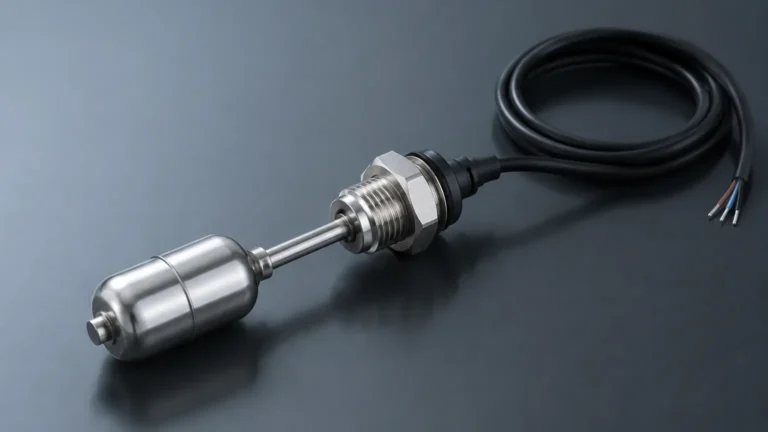
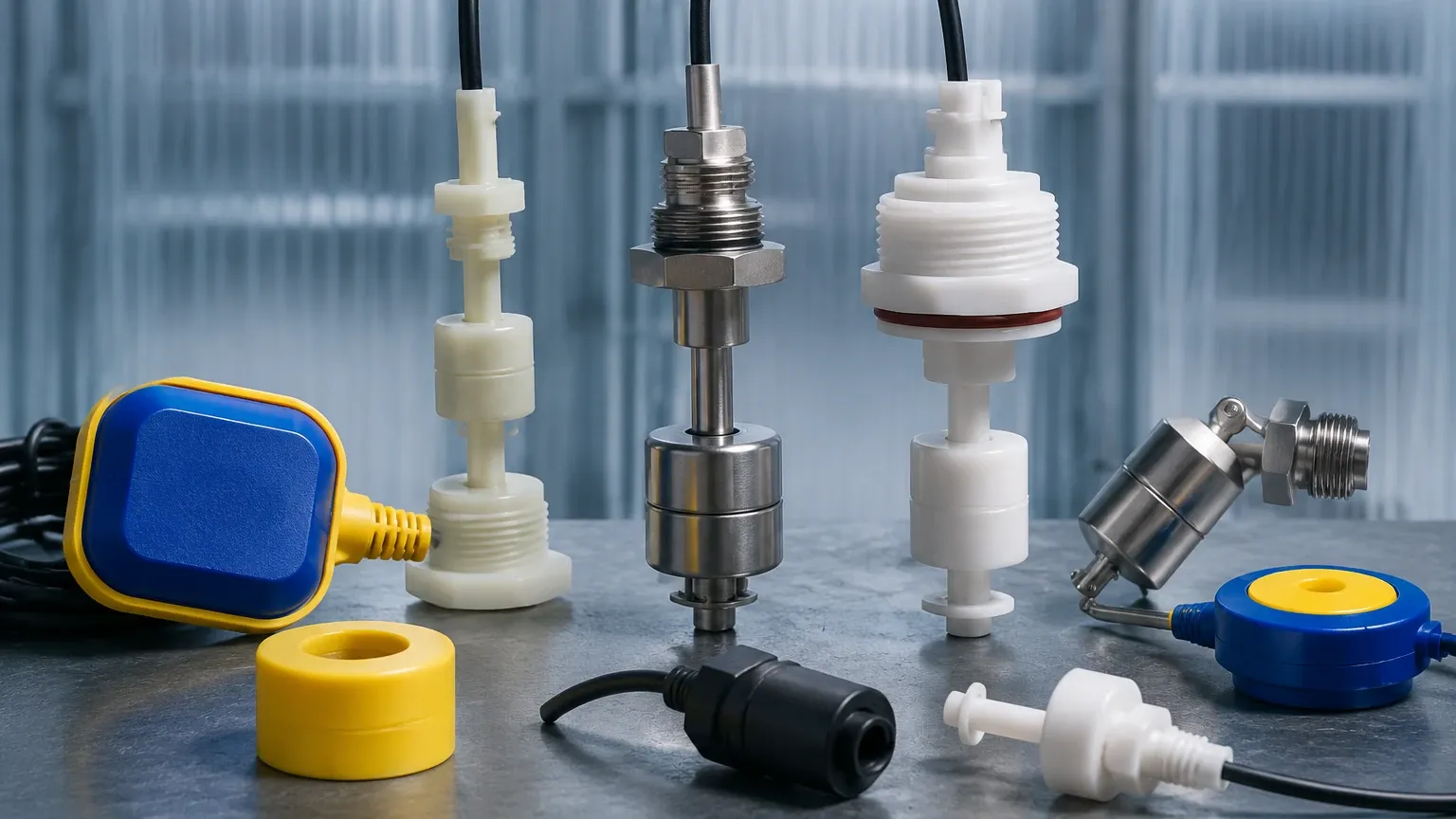
Float-based switches operate on the principle of buoyancy. A float, typically made of stainless steel or plastic, contains a magnet and moves along a stem as the liquid level rises. When the float reaches the high-level set point, the internal magnet actuates a reed switch. These are highly reliable for clean, non-coating liquids. Displacement switches work similarly but use a weighted displacer that becomes lighter when submerged, triggering a spring-loaded mechanism.
Vibrating Tuning Fork Switches
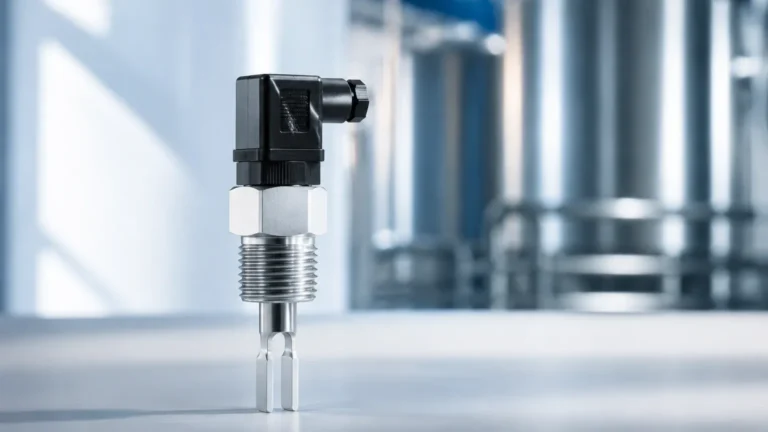
Vibrating fork switches utilize piezoelectric crystals to vibrate a metal fork at its natural resonance frequency. When the fork is submerged in liquid or covered by solids, the frequency changes. The internal electronics detect this shift and trigger the switch. This technology is widely favored for high level switches because it is largely unaffected by flow, bubbles, foam, or vibration, making it an excellent choice for overfill protection.
Capacitive Level Switches
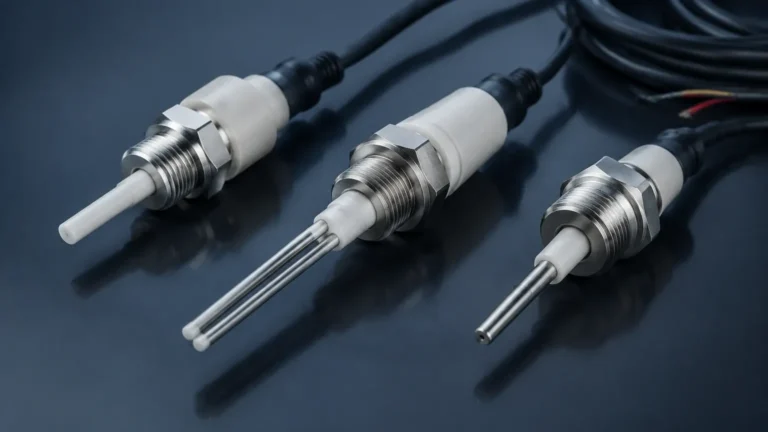
Capacitive sensors treat the probe and the tank wall (or a second probe) as two plates of a capacitor. As the medium rises and covers the probe, the dielectric constant changes, increasing the measured capacitance. These switches are versatile and can be used for both liquids and granulated solids. They are particularly effective for detecting high levels in corrosive environments, provided the electronics can compensate for material build-up on the probe.
Ultrasonic Level Switches
Ultrasonic point-level switches typically consist of a sensor head with a gap. An ultrasonic signal is transmitted across this gap. When the gap is filled with liquid, the signal is transmitted efficiently; when it is filled with air or gas, the signal is attenuated. This "gap-fill" principle allows for rapid detection without moving parts. Non-contact ultrasonic switches can also be used, though they are more commonly configured as continuous transmitters.
Conductivity Switches
For conductive liquids like water or acids, conductivity switches use low-voltage electrodes. When the liquid touches the high-level electrode, an electrical circuit is completed between the probe and the tank wall (or a reference probe), triggering the output. While simple and cost-effective, they cannot be used with non-conductive oils or hydrocarbons.
Selecting the Right High Level Switch
Choosing the correct instrument involves matching the technology to the specific application requirements. The following table provides a comparison of common technologies used for high level detection.
| Technology | Suitable Media | Viscosity Limit | Key Advantage | Limitation |
| :— | :— | :— | :— | :— |
| Float | Clean Liquids | Low | Low cost, no power required | Moving parts can jam |
| Vibrating Fork | Liquids, Slurries, Powders | Medium/High | Fail-safe, foam resistant | Susceptible to heavy build-up |
| Capacitive | Liquids, Solids | Medium | No moving parts, adjustable | Requires calibration |
| Ultrasonic (Gap) | Clean Liquids | Low | Fast response, compact | Affected by heavy aeration |
| Conductivity | Conductive Liquids | Low | Very economical | Only for conductive media |
When evaluating high level switches, consider the following environmental factors:
1. Pressure and Temperature: Ensure the sensor body and seals can withstand the maximum process pressure, often measured in bar (or PSI), and temperature in Celsius (or Fahrenheit).
2. Chemical Compatibility: The wetted parts (316L stainless steel, PTFE, PP) must be resistant to the process media to prevent corrosion.
3. Fail-Safe Requirements: For high-level applications, a "fail-safe high" configuration is standard. This means the switch is energized when the level is low and de-energizes when the level reaches the high point or if power is lost, ensuring the system defaults to an alarm state.
Industrial Applications and Overfill Protection
High level switches are found in nearly every industry involving bulk storage or fluid processing. Their primary role is often related to Safety Instrumented Systems (SIS).
* Water and Wastewater Treatment: High level detection in chemical dosing tanks prevents the spill of hazardous coagulants or disinfectants. In wet wells, they trigger backup pumps to prevent sewage overflows during heavy rain events.
* Chemical Processing: In reactors and storage vats, high level switches prevent the hazardous mixing of chemicals that could occur if a tank overflows into a common secondary containment area.
* Oil and Gas: Storage tanks for crude oil or refined products utilize redundant high-level switches (often called "High-High" switches) to meet API 2350 standards for overfill protection.
* Food and Beverage: Detecting the high level in silos for flour, sugar, or grain ensures that pneumatic conveying systems shut down before the silo is over-pressurized or blocked.
Installation and Mounting Guidelines
Proper installation is as critical as selecting the right technology. A poorly positioned high level switch may fail to trigger or provide frequent false alarms.
Positioning
High level switches should be mounted at a height that allows sufficient reaction time for the control system to stop the inflow. This "buffer volume" calculation must account for the maximum flow rate of the pump and the time required for valves to close fully. Generally, a switch should be installed at least 150 mm to 300 mm (6 to 12 inches) below the absolute top of the tank.
Orientation
* Top Mounting: Ideal for float switches with long rods or ultrasonic sensors. Ensure the probe is vertical to prevent mechanical binding.
* Side Mounting: Common for vibrating forks and capacitive switches. The device should be tilted slightly downward (approx. 20 degrees) if the media is prone to leaving a coating, allowing the liquid to drip off the sensing element.
Avoiding Interference
Avoid installing high level switches directly in the path of the filling stream. The turbulence and force of the incoming material can cause mechanical damage or false triggers. If the tank has an agitator, ensure the switch is placed in a "dead zone" where the vortex will not cause the level to appear higher or lower than it actually is.
Limitations and Operational Challenges
While highly effective, high level switches are not without limitations. Engineers must be aware of the following challenges:
* Media Build-up: In applications involving sticky or viscous fluids, material can accumulate on the sensor. Vibrating forks and capacitive switches are better at handling this than mechanical floats, but extreme build-up can still dampen vibrations or create a conductive path, leading to a false "high" signal.
* Foam and Turbulence: Some technologies, like basic ultrasonic or optical switches, may struggle to distinguish between the liquid surface and a thick layer of foam. Vibrating forks are generally the most robust solution for foamy applications.
* Specific Gravity Changes: Float switches are calibrated for a specific density. If the process media changes (e.g., switching from water to a light oil), the float may no longer sit at the correct level, or it may fail to float entirely.
* Maintenance Access: High level switches are often located at the top of tall tanks. Installation should include considerations for safe access for periodic testing and cleaning.
Frequently Asked Questions
Q: What is the difference between a High Level (HL) and a High-High Level (HHL) switch?
A: A High Level switch is typically used for process control, such as stopping a pump during a normal filling cycle. A High-High Level switch is a secondary, redundant safety device set at a higher point. It is often part of an independent safety loop designed to shut down the system if the primary control fails.
Q: Can a high level switch be used for solids?
A: Yes, but the technology must be compatible. Vibrating forks (specifically designed for solids), rotating paddles, and capacitive probes are commonly used for high-level detection in grain, plastic pellets, and cement silos.
Q: How often should high level switches be tested?
A: This depends on the criticality of the application and local regulations. For safety-critical overfill protection, a "proof test" is typically conducted annually. This involves manually raising the level or removing the sensor to simulate a high-level condition to ensure the entire alarm loop functions correctly.
Q: Are wireless high level switches available?
A: Yes, wireless versions of many Level Switches are available for remote locations where running signal cable is cost-prohibitive. These usually operate on battery power and use protocols like WirelessHART or LoRaWAN.
By carefully matching the sensing principle to the process conditions and following rigorous installation standards, facilities can ensure that their high level switches provide reliable, long-term protection against the risks of overfilling.