Level Switch Sor
Level Switch Sor
In the realm of industrial process control, point level detection serves as a critical safety and operational layer. Among the various technologies available, the level switch SOR (Static-O-Ring) design has long been recognized for its robust mechanical construction and reliability in demanding environments. These instruments are engineered to detect the presence or absence of liquid or solid materials at a specific height within a vessel, triggering alarms, pumps, or valves to prevent overfills or dry-run conditions.
Selecting the right Level Switches requires a deep understanding of the underlying physics, the chemical properties of the media, and the mechanical constraints of the installation site. This guide explores the principles, selection criteria, and practical application of SOR-style level switches and their modern alternatives.
Understanding the Principles of Level Switch SOR Technology
Level switches generally operate on one of several physical principles: buoyancy, conductivity, capacitance, or ultrasonic wave propagation. The "SOR" style is most frequently associated with mechanical buoyancy-based designs, specifically displacement and float mechanisms.
Displacement Principle
Displacement level switches operate based on Archimedes' Principle. Unlike a float, a displacer is intentionally heavier than the liquid it is intended to measure. It is suspended from a spring mechanism. When the liquid level rises and reaches the displacer, the buoyant force exerted by the liquid reduces the effective weight of the displacer. This change in weight allows the spring to retract, moving a magnetic sleeve into the field of an externally mounted switch mechanism. This magnetic coupling ensures that the process fluid remains hermetically sealed from the electrical components.
Float Principle
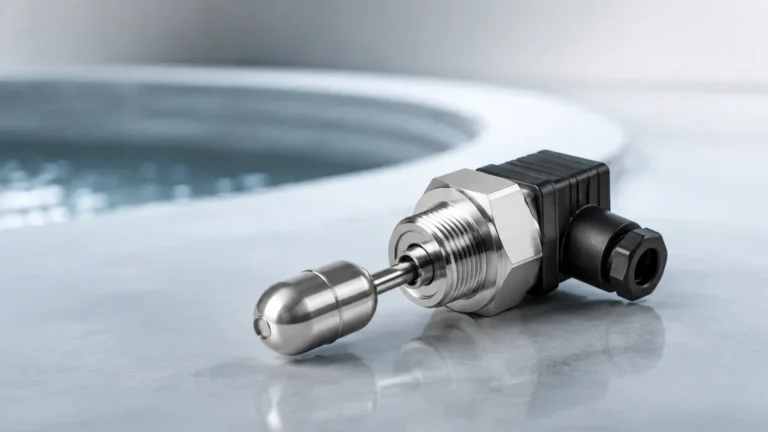
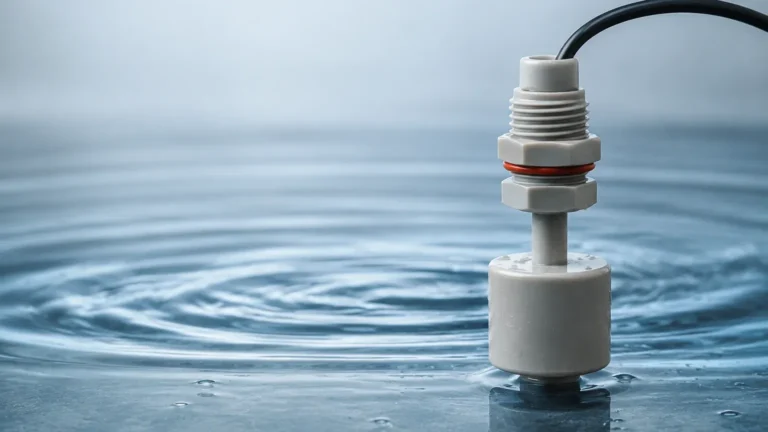
Float-operated switches utilize a buoyant object that is lighter than the process fluid. As the liquid level rises, the float moves upward. This movement is typically transmitted through a rod or a pivoting arm to actuate a microswitch or a reed switch. Float switches are highly effective for clean liquids but can be sensitive to turbulence and coating.
Electronic Point Level Detection
While mechanical switches are traditional, many modern industrial applications utilize electronic versions, such as ultrasonic or RF capacitance switches. These provide the same "SOR" functionality—point level switching—without moving parts, which can be advantageous in high-vibration environments or with viscous fluids that might cause mechanical sticking.
Key Selection Criteria for Level Switch SOR Applications
Choosing a level switch involves more than just identifying the tank height. Engineers must evaluate several technical parameters to ensure long-term reliability.
1. Specific Gravity (SG)
For mechanical switches, the specific gravity of the liquid is the most critical factor. A displacer or float must be calibrated to the density of the fluid. If the SG is too low, the buoyant force may be insufficient to actuate the switch. Standard SOR-style switches are often rated for specific gravities ranging from 0.40 to 1.50.
2. Operating Pressure and Temperature
Process conditions dictate the materials and housing types required. Mechanical level switches can handle extreme pressures (up to 345 bar / 5000 psi) and temperatures (up to 400°C / 750°F) depending on the construction. It is essential to verify that the flange or NPT connection and the internal seals can withstand these limits.
3. Material Compatibility
The wetted parts—the components in direct contact with the fluid—must be resistant to corrosion. Common materials include:
* 316/316L Stainless Steel: Standard for water and many chemicals.
* Hastelloy C: Used for highly corrosive acids.
* Monel: Preferred for hydrofluoric acid and seawater applications.
4. Switching Requirements
Consider the electrical output needed for the control system. Options typically include:
* SPDT (Single Pole Double Throw): Standard for simple alarm or pump control.
* DPDT (Double Pole Double Throw): Used when two separate circuits must be switched simultaneously (e.g., an alarm and a PLC input).
* Hermetically Sealed Switches: Essential for hazardous locations to prevent ignition of explosive vapors.
Practical Selection Table
| Feature | Displacement Switch | Float Switch | Ultrasonic Switch |
| :— | :— | :— | :— |
| Best Use Case | High pressure, heavy turbulence | Clean liquids, low cost | Viscous fluids, no moving parts |
| Specific Gravity | Sensitive (Requires calibration) | Less sensitive | Not applicable |
| Maintenance | Low (if clean) | Moderate (moving parts) | Very Low |
| Max Temperature | Up to 400°C | Up to 250°C | Up to 150°C |
| Pressure Rating | Very High | Moderate | Moderate |
Installation and Maintenance Guidelines
Proper installation is vital for the performance of a level switch SOR system. Incorrect mounting can lead to false triggers or mechanical failure.
Mounting Configurations
* Top Mounting: The switch is installed on a flange or thread at the top of the tank. This is common for displacer switches where the sensing element hangs down into the vessel.
* Side Mounting: Float switches are often side-mounted, allowing the float to move horizontally or in a short vertical arc. This is ideal for high or low-level alarms where top access is restricted.
* External Chambers: For maintenance without process shutdown, switches can be mounted in an external cage or bridle. This allows the instrument to be isolated from the main vessel via valves.
Stilling Wells
In tanks with high agitation or turbulence (e.g., near an inlet pipe), a stilling well should be used. A stilling well is a vertical pipe that surrounds the sensing element, providing a calm surface area for the float or displacer to operate accurately.
Calibration and Testing
Mechanical switches should undergo periodic "proof testing." This involves manually raising the level in the chamber or using a test lever (if equipped) to ensure the switch contacts transition correctly. For displacer switches, ensure the suspension wire or rod is not kinked, as this can affect the weight-to-buoyancy ratio.

Common Industrial Applications
Level switch SOR technology is ubiquitous across heavy industries due to its "set and forget" nature.
* Oil & Gas: Used in separators to detect oil/water interfaces and in flare headers to detect liquid carryover.
* Power Generation: Critical for boiler feedwater heaters and steam drum level alarms where high temperature and pressure are constant.
* Chemical Processing: Monitoring storage tanks for aggressive chemicals where electronic sensors might fail due to vapor interference.
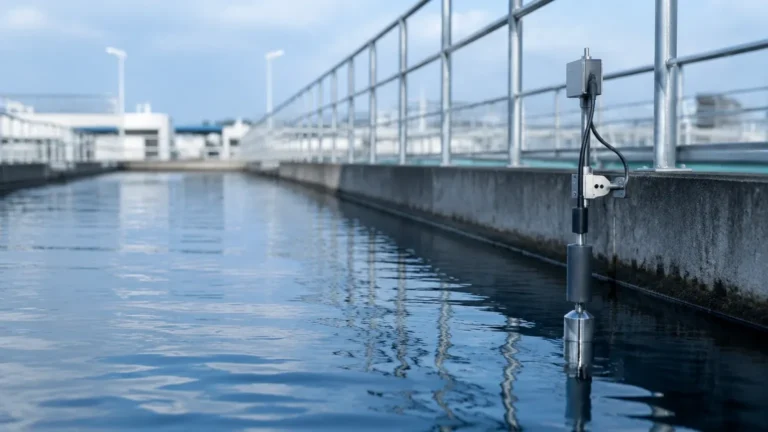
* Water Treatment: Controlling pump cycles in sumps and reservoirs.
Limitations and Risk Mitigation
While highly reliable, these switches are not universal solutions. Engineers must be aware of specific limitations:
1. Media Buildup: In applications with "dirty" liquids, solids can accumulate on the displacer or float, changing its weight and causing it to stay in the "on" or "off" position. Regular inspection is required in these environments.
2. Vibration: Heavy mechanical vibration can cause premature wear on microswitch contacts or lead to "nuisance switching." In such cases, choosing a switch with a dampened mechanism or switching to a solid-state electronic sensor is recommended.
3. Coating and Scaling: If the process fluid tends to crystallize or scale, it can jam the mechanical linkages. For these applications, non-contact radar or ultrasonic level switches are often a superior choice.
Frequently Asked Questions (FAQs)
Q: What is the difference between a float and a displacer?
A: A float is lighter than the liquid and stays on the surface. A displacer is heavier than the liquid and relies on the change in its apparent weight (buoyancy) to trigger the switch. Displacers are generally more stable in turbulent conditions.
Q: Can level switch SOR units be used in hazardous areas?
A: Yes, most industrial-grade level switches are available with ATEX, IECEx, or UL/CSA certifications for Class I, Div 1 areas. These typically feature explosion-proof enclosures or intrinsically safe wiring.
Q: How do I handle liquids with changing specific gravity?
A: If the SG of your liquid varies significantly, a mechanical switch may become inaccurate. In these scenarios, it is better to use a technology that is independent of density, such as an ultrasonic level switch or a radar-based point level sensor.
Q: What is the typical lifespan of a mechanical level switch?
A: In clean, non-corrosive environments, a high-quality mechanical switch can last 10 to 20 years. However, the internal microswitch or reed switch has a finite number of electrical cycles, usually ranging from 100,000 to 1,000,000 operations.
Conclusion
The level switch SOR remains a cornerstone of industrial level control because of its simplicity and physical reliability. By understanding the specific gravity requirements, pressure limits, and installation best practices, facilities can ensure safe and efficient operations. For modern applications requiring minimal maintenance or handling complex fluids, exploring the full range of Level Switches—from mechanical to ultrasonic—is the best path toward optimizing process uptime.