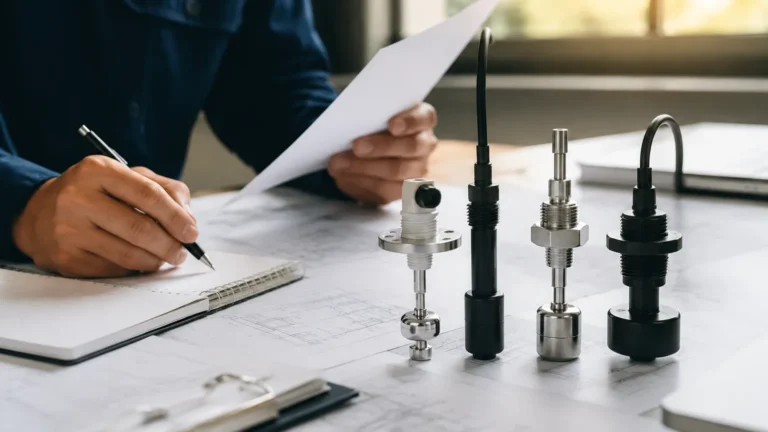
Siemens Level Switches
Siemens Level Switches
In industrial process automation, point level detection serves as a critical safeguard for inventory management and equipment protection. Siemens level switches are engineered to provide reliable signaling when a material reaches a specific height within a tank, silo, or pipe. These devices are fundamental in preventing vessel overfills, protecting pumps from running dry, and automating the replenishment of bulk solids and liquids.
Selecting the appropriate technology requires an understanding of the physical properties of the medium, the environmental conditions of the process, and the specific mechanical requirements of the installation. This guide examines the primary measurement principles utilized in the Siemens SITRANS and Pointek portfolios, offering technical insights for engineering selection.
Measurement Principles of Point Level Detection
Before selecting a specific model of Siemens level switches, it is essential to understand the physics behind the different sensing technologies. Each principle offers distinct advantages depending on whether the application involves liquids, slurries, or granular solids.
Vibrating Fork Technology (Tuning Fork)
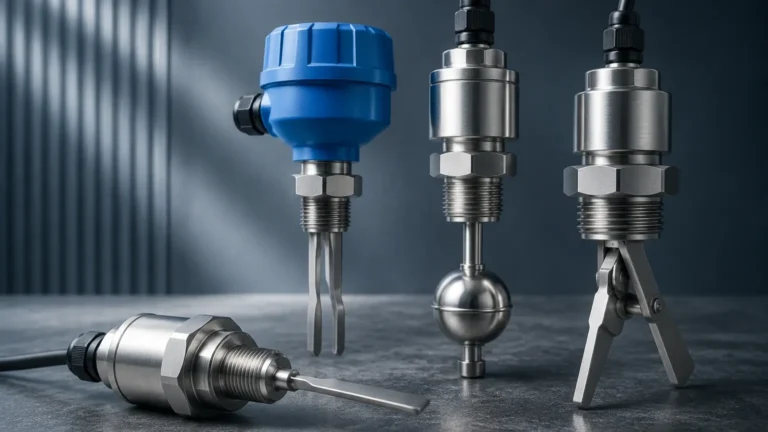
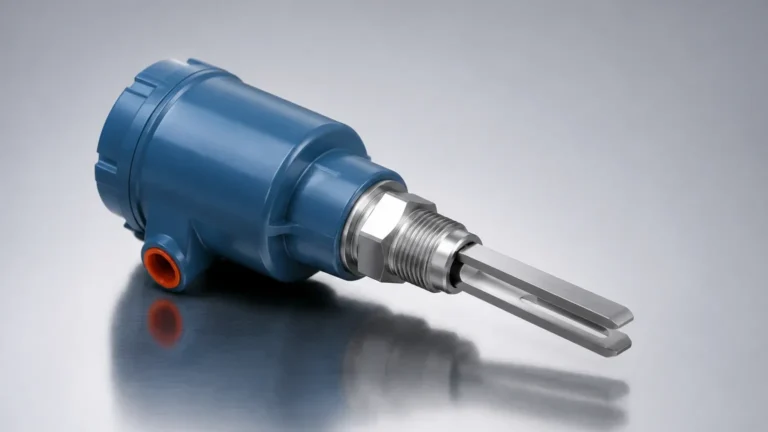
This technology utilizes a piezoelectric crystal to vibrate a metal fork at its natural resonance frequency in the air. When the fork is submerged in a liquid or covered by solids, the frequency changes or the vibration is dampened. The internal electronics detect this shift and toggle the output state. This method is highly resistant to changes in pressure, temperature, and dielectric constants.
Rotary Paddle Principle
Primarily used for bulk solids, a low-speed motor rotates a paddle. When the material level rises to reach the paddle, the rotation is impeded. The resulting torque trips a microswitch that stops the motor and signals the level alarm. When the material level falls, a spring returns the motor to its original position, restarting the rotation.
Capacitance and Inverse Frequency Shift
Capacitive switches treat the sensor probe and the vessel wall as two plates of a capacitor. As material fills the space between them, the capacitance changes based on the dielectric constant of the medium. Siemens often uses Inverse Frequency Shift technology, which is more sensitive than traditional capacitance, allowing for accurate detection even in applications with significant material buildup on the probe.
Ultrasonic Point Level
Ultrasonic switches emit high-frequency sound pulses. The time taken for the echo to return (or the attenuation of the signal) determines the presence of the material. This is a non-contact or gap-sensing method often used for liquids where mechanical contact is undesirable.
Overview of Siemens Level Switch Series
The Siemens portfolio is categorized into several distinct product lines, each optimized for specific industrial environments.
SITRANS LVS Series (Vibrating Fork for Solids)
The SITRANS LVS100 and LVS200 are designed for bulk solids. The LVS200 is particularly robust, capable of detecting materials with densities as low as 5 g/l (0.3 lb/ft³). These are often used in the food and beverage industry for flour or plastic pellets in the chemical industry.
SITRANS LPS200 (Rotary Paddle)
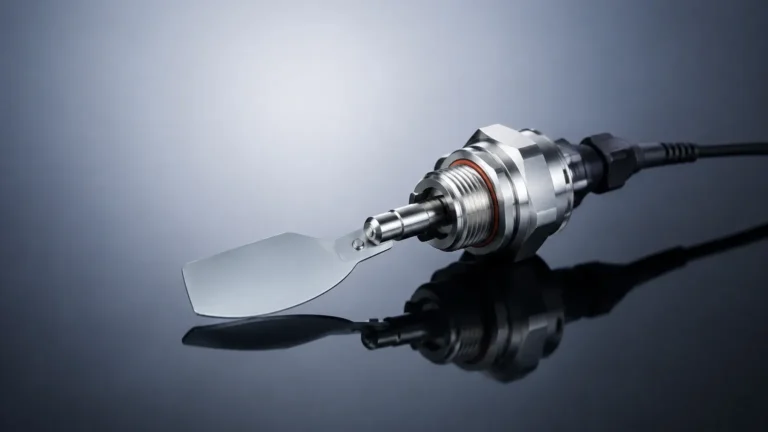
The LPS200 is a mechanical workhorse for solids. It features a hinged paddle design that can be installed in various orientations. It is suitable for grains, feed, cement, and coal. Its mechanical nature makes it immune to electrical interference or dielectric changes in the material.
SITRANS CLS Series (Capacitance)
* CLS100: A compact switch for confined spaces, ideal for interface detection or liquid level in small pipes.
* CLS200: A versatile switch for both liquids and solids, often used in high-pressure or high-temperature environments.
* CLS300: Designed for heavy-duty applications like mining or abrasive materials where a rugged probe is required.
Pointek ULS200 (Ultrasonic)
This non-contact switch is effective for liquids, slurries, and fluid bulk solids. Because it does not touch the medium, it is an excellent choice for corrosive chemicals or sticky substances that would foul a contact-based probe.
Technical Selection Criteria
When evaluating Siemens level switches or equivalent industrial Level Switches, engineers must confirm several parameters to ensure long-term reliability.
| Feature | Vibrating Fork (LVS) | Rotary Paddle (LPS) | Capacitance (CLS) | Ultrasonic (ULS) |
| :— | :— | :— | :— | :— |
| Primary Medium | Fine solids / Liquids | Granular bulk solids | Liquids, Solids, Slurries | Liquids, Slurries |
| Material Density | Very low to high | Medium to high | N/A (Dielectric dependent) | N/A |
| Build-up Immunity | Medium | Low | High (with Active Shield) | High (Non-contact) |
| Moving Parts | No | Yes | No | No |
| Max Temperature | Up to 150°C (302°F) | Up to 800°C (1472°F) | Up to 400°C (752°F) | Up to 60°C (140°F) |
| Max Pressure | Up to 10 bar (145 psi) | Up to 0.5 bar (7 psi) | Up to 35 bar (511 psi) | Up to 0.5 bar (7 psi) |
Media Properties
* Dielectric Constant (εr): Critical for capacitance switches. Materials with εr < 1.5 require specialized high-sensitivity probes.
* Viscosity: High-viscosity liquids may cause "bridging" on vibrating forks, leading to false positives.
* Particle Size: Large, heavy rocks in mining applications can damage thin vibrating forks or small paddles.
Installation Considerations and Best Practices
Proper installation is as important as selecting the right technology. Failure to follow mechanical guidelines often results in premature sensor failure or inaccurate readings.
1. Mounting Position: For solids, switches should be mounted away from the material inflow stream to avoid mechanical impact and false triggers. If mounting in the flow path is unavoidable, a protective baffle or shield should be installed above the sensor.
2. Orientation:
* Vibrating Forks: Should be oriented so that the flat face of the forks is parallel to the flow of material to prevent buildup between the tines.
* Rotary Paddles: Vertical mounting is preferred for high-level detection; side mounting is common but requires the paddle to be positioned where material will not bridge.
3. Cable Entries: Always point cable glands downward to prevent moisture from entering the housing via the cable. Use a drip loop in the wiring.
4. Process Connections: Ensure the thread type (NPT, BSP, or Flanged) matches the vessel nozzle. Over-tightening can damage the sensor housing or the vessel's mounting point.
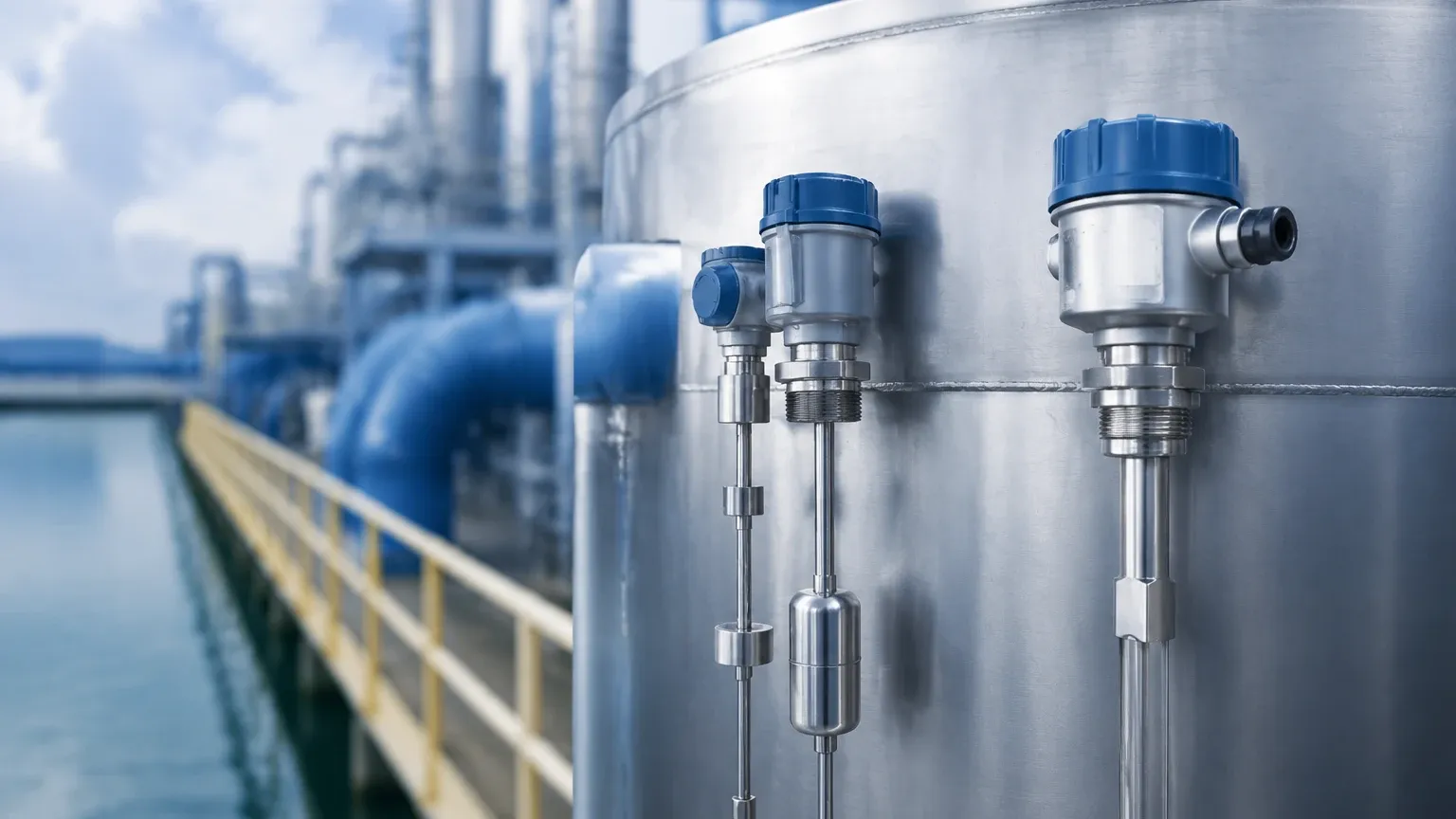
Limitations and Common Risks
While Siemens level switches are highly reliable, certain conditions can challenge their performance:
* Material Buildup: In sticky applications, material can coat the sensor. While capacitance switches with "active shield" technology can ignore this, vibrating forks may eventually fail if the coating becomes thick enough to dampen the vibration permanently.
* Turbulence and Foam: In liquid tanks with high agitation, mechanical switches may chatter. Ultrasonic switches may lose signal if thick foam absorbs the sound waves.
* Vacuum Conditions: Some rotary paddles are not sealed for high-vacuum applications, which can pull lubricants out of the motor bearings or allow dust ingress.
* Electrostatic Discharge (ESD): In plastic pellet silos, high levels of static electricity can damage the electronics of ungrounded capacitance switches.
Maintenance and Troubleshooting
Level switches are generally low-maintenance, but periodic checks are recommended, especially in safety-critical applications like overfill prevention.
* Visual Inspection: Check for corrosion on the probe and integrity of the housing seals.
* Functional Test: Many Siemens switches include a local LED or a test magnet point that allows operators to simulate an alarm state without filling the tank.
* Cleaning: For contact-based sensors in sticky media, scheduled cleaning of the sensing element prevents false alarms.
Frequently Asked Questions (FAQ)
Q: Can I use a vibrating fork switch for both liquids and solids?
A: Generally, no. The frequency and mechanical design of a fork for liquids (like the SITRANS LVL series) differ from those designed for solids (LVS series). Solids require a lower frequency to handle different grain sizes and densities.
Q: How do I handle interface detection (e.g., oil on top of water)?
A: Capacitance switches (SITRANS CLS) are the preferred choice for interface detection. They can be calibrated to trigger only when the probe makes contact with the higher dielectric material (water) while ignoring the lower dielectric material (oil).
Q: What is the benefit of a remote-mounted transmitter?
A: For applications with high vibration or extreme heat at the process connection, a remote-mounted switch allows the sensitive electronics to be located in a more stable environment, connected to the probe via a specialized cable.
Q: Are these switches suitable for hazardous areas?
A: Yes, most Siemens level switches are available with ATEX, IECEx, or FM certifications for use in explosive dust or gas atmospheres. Always verify the specific marking on the nameplate before installation in a classified zone.
Conclusion
Siemens level switches provide a robust range of solutions for point level monitoring across the water, chemical, and bulk material industries. By matching the measurement principle—whether vibrating, rotary, capacitive, or ultrasonic—to the specific needs of the process, facilities can ensure operational safety and efficiency. For specialized requirements or alternative industrial configurations, exploring a broad range of Level Switches allows engineers to find the most cost-effective and technically sound solution for their specific application.