Level Switch Vegaswing 51
Level Switch Vegaswing 51
In the field of industrial automation, point level detection serves as a critical safety and process control mechanism. Whether preventing a tank from overflowing or ensuring a pump does not run dry, the reliability of a level sensor is paramount. The level switch vegaswing 51 has established itself as a standard-setting instrument in this category, utilizing vibrating level technology to provide precise switching in liquid applications.
As a professional manufacturer of industrial level measurement instruments, Welk recognizes the importance of understanding specific high-performance models like the Vegaswing 51 while evaluating the broader market for Level Switches. This article provides a technical overview of the vibrating level principle, the specific capabilities of the Vegaswing 51, and engineering considerations for selecting point level instrumentation.
The Principle of Vibrating Level Detection
Before diving into the specifics of the level switch vegaswing 51, it is essential to understand the underlying measurement principle: the vibrating fork (or tuning fork) method. This technology is widely regarded for its immunity to changing liquid properties such as conductivity, dielectric constant, pressure, and temperature.
Piezoelectric Excitation
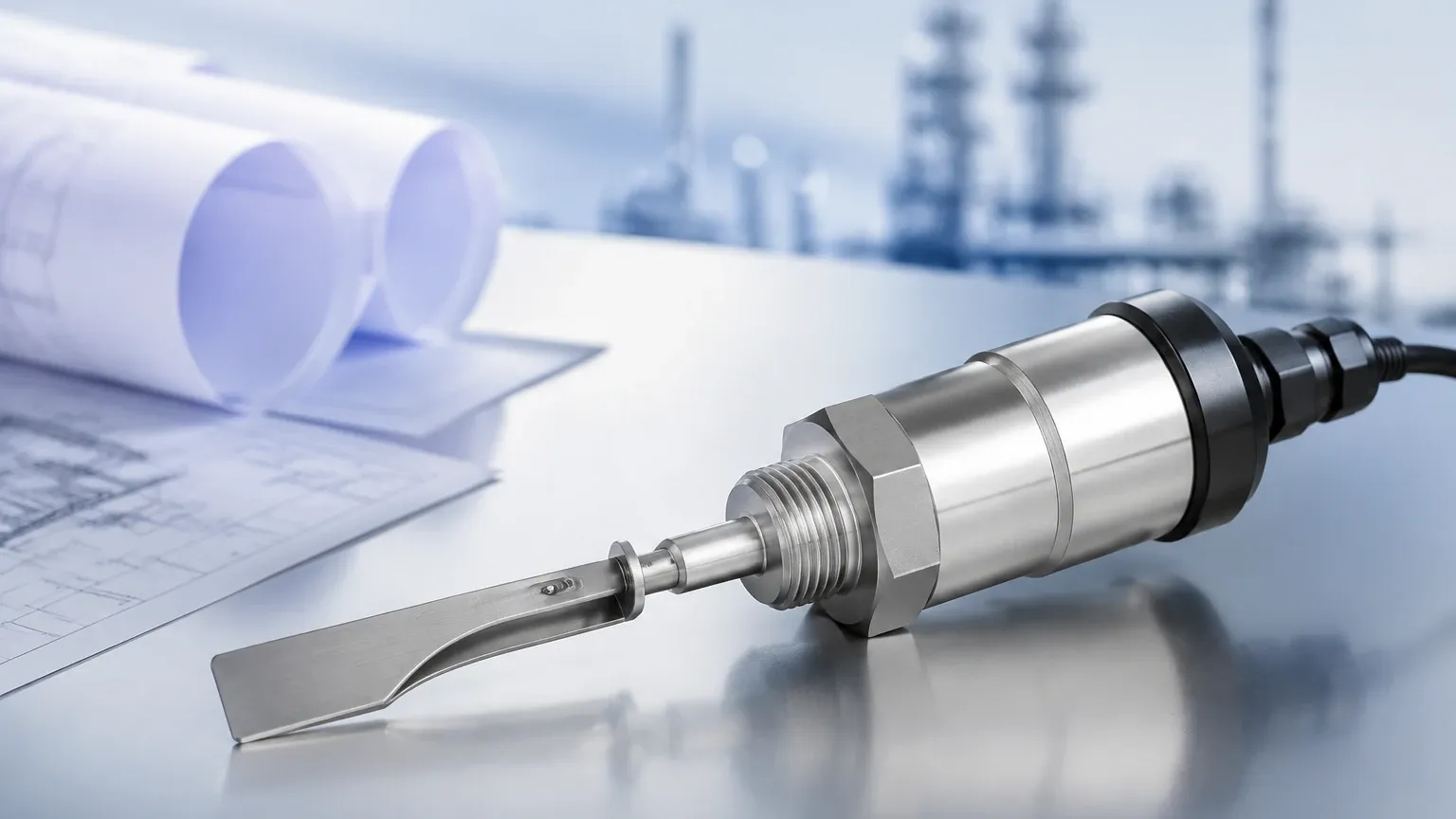
The sensing element consists of a tuning fork that is piezoelectrically energized. An internal ceramic crystal drives the fork to vibrate at its natural resonance frequency in the air. For most industrial forks, this frequency is approximately 1,200 Hz to 1,400 Hz.
Frequency Shift
When the tuning fork is immersed in a liquid medium, the frequency of vibration changes. The density of the liquid dampens the vibration, causing a measurable shift in the resonance frequency. The electronics within the sensor monitor this frequency continuously. Once the shift exceeds a predefined threshold, the device changes its switching state (e.g., from "open" to "closed").
Advantages of the Principle
* Buildup Resistance: Because the fork vibrates at a high frequency, it is naturally resistant to the effects of turbulence, bubbles, and minor foam.
* No Calibration: Unlike capacitive sensors that require tuning to the specific dielectric of the medium, vibrating switches are generally "plug-and-play."
* Maintenance-Free: With no moving parts subject to mechanical wear, these sensors offer long-term stability in harsh environments.
Technical Profile of the Vegaswing 51
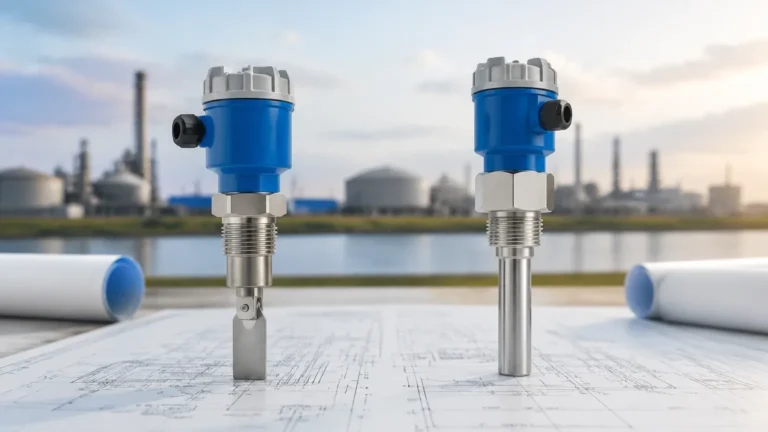
The level switch vegaswing 51 is a compact, universal point level switch designed for liquids. It is frequently employed in small tanks, pipes, and vessels where space is limited but high reliability is required.
Key Specifications
* Process Temperature: -40 °C to +150 °C (-40 °F to +302 °F).
* Process Pressure: -1 to +64 bar (-100 to +6400 kPa).
* Viscosity Range: 0.1 to 10,000 mPa·s.
* Density Range: Standard version detects liquids with a density > 0.7 g/cm³ (optional settings for > 0.5 g/cm³).
* Materials: Typically constructed from 316L stainless steel (1.4435 or 1.4404) for wetted parts.
Design Variations
The device is available with various thread sizes, most notably the G1/2 and G3/4 threads, allowing for direct installation into small-diameter pipes. The electrical outputs usually include a transistor (PNP) or a contactless electronic switch, making it compatible with most PLC inputs and industrial control systems.
Selection Criteria for Industrial Level Switches
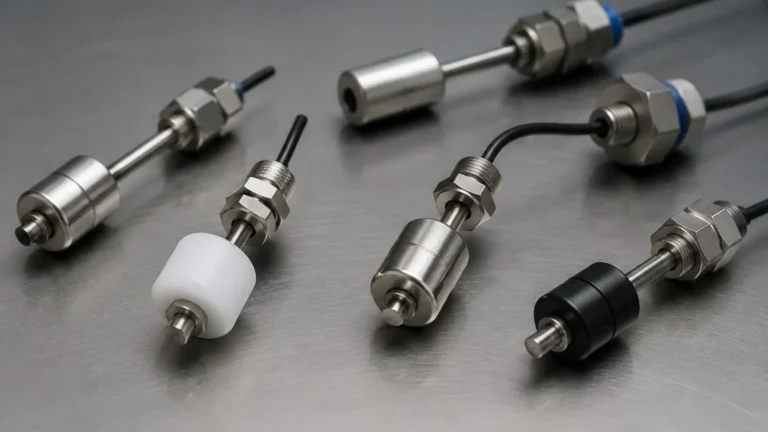
When specifying Level Switches for a project, engineers must look beyond the basic model number. The following table provides a comparison of selection criteria for the level switch vegaswing 51 and alternative technologies often provided by manufacturers like Welk.
| Criteria | Vibrating Fork (Vegaswing 51) | Ultrasonic Level Switch | Float Level Switch |
| :— | :— | :— | :— |
| Medium Type | Liquids (clean or slightly dirty) | Liquids and some solids | Clean liquids only |
| Buildup Sensitivity | Low (Self-cleaning effect) | High (Crystal face must be clean) | High (Moving parts may jam) |
| Mounting Orientation | Any (Vertical or Horizontal) | Usually Vertical | Usually Vertical |
| Pressure Rating | Up to 64 bar | Generally lower (up to 10-20 bar) | Variable (limited by float) |
| Cost Profile | Moderate | Moderate to High | Low |
| Maintenance | Minimal | Low | High (Mechanical wear) |
Installation Considerations
Proper installation is vital to ensure the level switch vegaswing 51 operates without false triggers or mechanical failure.
1. Orientation and Flow
While vibrating forks can be mounted in any position, the orientation of the fork blades is critical in flowing media. The blades should be oriented parallel to the flow direction to minimize resistance and prevent the accumulation of debris between the forks. In horizontal pipes, mounting the sensor from the side is preferred over top-mounting to avoid air pockets.
2. Turbulence and Agitators
If the sensor is installed in a tank with an agitator, it should be positioned where it is not directly in the path of the fluid vortex. If the liquid is highly turbulent, a protective shield or a stilling well may be necessary to prevent mechanical stress on the fork blades.
3. Switching Point
The switching point of the Vegaswing 51 is typically at the center of the fork blades when mounted vertically. If mounted horizontally, the switching point is slightly above the lower edge of the fork. Engineers must account for this 10–15 mm variance when setting high-level alarms.
Limitations and Common Risks
Despite its versatility, the level switch vegaswing 51 is not a universal solution for every application. Engineers should be aware of the following limitations:
* Solid Media: This specific model is designed for liquids. Using a liquid-tuned fork in powders or granulates will result in failure because the vibration frequency shift for solids requires a different fork geometry and lower frequency.
* Extreme Buildup: While resistant to thin films, highly viscous or "sticky" media that bridge the gap between the two fork blades will cause a permanent "covered" signal. For such applications, a single-rod vibrating sensor or a flush-mounted capacitive sensor may be more appropriate.
* Gas Bubbles/Aeration: If the liquid is heavily aerated or contains a high volume of gas bubbles, the effective density may drop below the sensor's threshold (e.g., < 0.5 g/cm³), leading to a failure to detect the liquid level.
Industrial Applications
The level switch vegaswing 51 is commonly found in the following sectors:
* Water and Wastewater: For dry-run protection of centrifugal pumps and overflow monitoring in chemical dosing tanks.
* Food and Beverage: Monitoring levels in storage tanks for juices, oils, and cleaning agents (CIP compatible versions available).
* Chemical Industry: Detecting levels of aggressive liquids in small process vessels where stainless steel 316L is chemically compatible.
* Mechanical Engineering: Integrated into cooling systems, lubricant reservoirs, and hydraulic power units.
Frequently Asked Questions (FAQ)
Does the Vegaswing 51 require periodic calibration?
No. The device is factory-calibrated to detect the density shift between air and water. It does not require field adjustment unless you are dealing with extremely low-density liquids, in which case a simple DIP switch adjustment (if available on the specific electronics module) may be used.
Can it be used in hazardous areas?
Yes, there are versions of the Vegaswing 51 with ATEX, IECEx, and FM approvals for use in explosive atmospheres. Always verify the specific certification on the device nameplate before installation in a hazardous zone.
What happens if the fork blades are damaged?
If the fork blades are bent or corroded, the resonance frequency will change permanently. This usually results in an error signal or a failure to switch. Vibrating forks should be handled with care during installation to avoid mechanical impact.
How does it compare to Welk's ultrasonic level sensors?
While the level switch vegaswing 51 provides a discrete point signal (on/off), Welk's ultrasonic sensors are typically used for continuous level measurement. For high-level safety shutdowns, a point level switch is often used as a redundant backup to a continuous ultrasonic or radar transmitter.
Conclusion
The level switch vegaswing 51 remains a reliable choice for industrial point level detection due to its compact design and robust measurement principle. By understanding the technical boundaries of vibrating fork technology—such as density requirements and installation orientation—process engineers can ensure long-term operational safety. For broader application needs, exploring the full range of Level Switches allows for the selection of the most cost-effective and technically sound solution for any industrial automation environment.