Level Zwave
Level Zwave
In the evolving landscape of industrial automation and smart infrastructure, the integration of wireless protocols into level measurement has become a critical area of focus for engineers and facility managers. Among the various wireless communication standards, Z-Wave—a low-power, mesh-networking protocol—has gained traction for specific level monitoring applications. While traditionally associated with home automation, the "level Zwave" ecosystem is increasingly intersecting with light industrial and commercial water management systems.
Understanding how to implement level switches within a Z-Wave network requires a firm grasp of both the physical measurement principles and the communication constraints of the protocol. This guide provides a technical overview of level sensing technologies compatible with wireless integration, selection criteria for industrial-grade performance, and the practicalities of deploying these systems in professional environments.
Measurement Principles for Wireless Level Switches
Before selecting a wireless interface, it is essential to understand the underlying sensing technology. A level switch is a point-level measurement device that detects the presence or absence of a substance at a specific height. When integrated with Z-Wave, these sensors transmit a binary state (ON/OFF or Full/Empty) to a central gateway.
1. Float-Based Switching
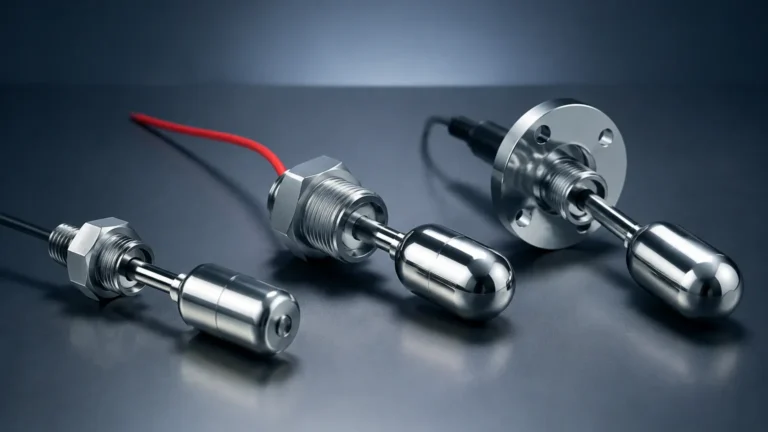
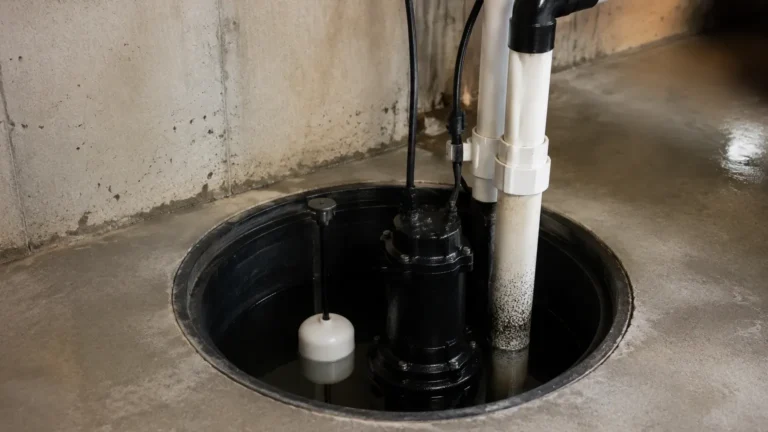
Float switches operate on the principle of buoyancy. A float containing a magnet moves with the liquid level; when it reaches a predetermined point, the magnetic field actuates a reed switch. In a Z-Wave configuration, this mechanical action triggers the radio module to send an alert. These are highly reliable for clean liquids but can be prone to fouling in viscous or debris-heavy fluids.
2. Ultrasonic Level Detection
Ultrasonic sensors use the "time-of-flight" principle. The sensor emits a high-frequency sound pulse that reflects off the surface of the liquid and returns to the transducer. The device calculates the distance based on the time taken for the echo to return. While often used for continuous measurement, many Z-Wave ultrasonic units are configured as Level Switches to trigger high or low-level alarms when the distance crosses a specific threshold.
3. Capacitive Sensing
Capacitive level switches detect changes in electrical capacitance between two electrodes (or one electrode and the tank wall) caused by the presence of a medium. Since different materials have different dielectric constants, the sensor can distinguish between air and the liquid. These are compact and have no moving parts, making them suitable for smaller tanks or chemical storage where mechanical floats might fail.
4. Optical Level Sensing
Optical sensors use an infrared LED and a phototransistor. When the sensor tip is in the air, the IR light is reflected back within the tip. When submerged in liquid, the light is refracted into the fluid, causing the transistor to change state. This is an excellent choice for leak detection or high-precision point level switching in clean environments.
Technical Evaluation and Selection Criteria
Selecting a level Zwave solution requires balancing the wireless protocol's capabilities with the physical demands of the application. Engineers must confirm several technical parameters before deployment.
Fluid Compatibility and Material Selection
The wetted parts of the sensor must be chemically compatible with the stored medium. For water treatment, reinforced plastics like Polypropylene (PP) are standard. However, for oil-based liquids or mild chemicals, Stainless Steel (316L) or PVDF may be required.
Signal Propagation and Mesh Networking
Z-Wave operates in the sub-GHz frequency range (approximately 908.42 MHz in the US and 868.42 MHz in Europe). This allows for better penetration through walls compared to 2.4 GHz Wi-Fi. However, metal tanks act as Faraday cages, effectively blocking the signal. In such cases, the Z-Wave transmitter must be mounted externally or use an external antenna to communicate with the mesh network.
Power Management
Many wireless level switches are battery-powered to simplify installation in remote areas. It is vital to evaluate the reporting frequency. A switch that reports every 5 minutes will deplete its battery significantly faster than one that only reports on state changes. For critical industrial applications, hardwired power with a Z-Wave battery backup is the preferred configuration.
Selection Table: Comparison of Level Sensing Technologies
| Technology | Best For | Limitations | Maintenance Level |
| :— | :— | :— | :— |
| Mechanical Float | Water tanks, Sump pumps | Moving parts can jam | Moderate |
| Ultrasonic | Non-contact, Corrosives | Affected by foam/vapor | Low |
| Capacitive | Granular solids, Slurries | Requires calibration | Low |
| Optical | Precision leak detection | Sensitive to coating/algae | Moderate |
| Hydrostatic | Deep wells, Large tanks | Sensitive to density changes | Low |
Installation and Engineering Considerations
Successful deployment of a level Zwave system depends on precise installation. Unlike standard wired industrial sensors (4-20mA or Modbus), wireless nodes require specific environmental considerations.
Dead Band Management
In ultrasonic level switches, the "dead band" is the area immediately below the sensor where measurement is impossible (typically 50 mm to 200 mm depending on the model). The sensor must be mounted high enough to ensure the maximum liquid level does not enter this zone, which would result in false readings or signal loss.
Mounting Orientation
* Top-Down: Standard for ultrasonic and capacitive probes. Ensure the sensor is perpendicular to the liquid surface.
* Side-Mount: Common for float and optical switches. Ensure the entry point is sealed with appropriate NPT or G-thread fittings to prevent leaks under pressure.
Integration with Gateways
For an industrial environment, the Z-Wave gateway should support local processing. Relying on cloud-based logic for a high-level alarm on a chemical tank introduces unnecessary latency and risk. The "level Zwave" switch should be associated directly with a controller that can trigger a local relay or shut off a pump even if the primary internet connection is lost.
Limitations and Industrial Risks
While Z-Wave offers flexibility, it is not a universal solution for all industrial level measurement needs. Engineers must be aware of the following constraints:
1. Range Constraints: The typical indoor range is approximately 30 meters (100 feet). While mesh networking allows devices to act as repeaters, high-interference environments with heavy machinery may require more robust industrial wireless protocols like WirelessHART or LoRaWAN.
2. Scalability: Z-Wave networks are limited to 232 nodes. For large-scale facilities with hundreds of tanks, this may necessitate multiple gateways and complex network management.
3. Environmental Sealing: Many Z-Wave consumer devices are not rated for outdoor or hazardous (Ex/ATEX) environments. Ensure the chosen level switch has an IP67 or IP68 rating if it will be exposed to moisture or dust.
4. Data Latency: Wireless mesh networks can experience latency during heavy traffic. For safety-critical overflow prevention, a hardwired Level Switches system is often required by local regulations as a secondary backup.
Practical Checklist for Project Implementation
Before finalizing a level Zwave installation, confirm the following project details:
* Tank Geometry: Is the tank tall and narrow (favoring ultrasonic) or wide and shallow (favoring float)?
* Media Properties: Does the liquid produce foam, steam, or turbulence? (Foam can absorb ultrasonic pulses).
* Distance to Gateway: Are there significant obstructions (concrete walls, metal partitions) between the sensor and the nearest mesh repeater?
* Alarm Criticality: What is the consequence of a missed signal? If the risk is high, consider a dual-technology approach (e.g., a Z-Wave ultrasonic sensor for monitoring and a hardwired float switch for emergency shut-off).
Frequently Asked Questions (FAQ)
Q: Can I use a Z-Wave level switch in a metal tank?
A: Only if the radio transmitter is located outside the tank. If the entire unit is inside a sealed metal tank, the Z-Wave signal will be blocked. Use a sensor with a remote probe or an external antenna.
Q: How long do batteries typically last in a wireless level sensor?
A: Depending on the reporting interval and battery type (e.g., CR123A or AA), life expectancy ranges from 1 to 3 years. Using the Z-Wave Plus (700 or 800 series) protocol significantly improves battery efficiency.
Q: Is Z-Wave secure enough for industrial level monitoring?
A: Modern Z-Wave devices use S2 (Security 2) encryption, which provides robust protection against hacking. However, for critical infrastructure, it should be part of a multi-layered security strategy.
Q: Can Z-Wave sensors measure solids like grain or powder?
A: Yes, but you must use specific technologies like capacitive or heavy-duty ultrasonic sensors designed for solids, as the angle of repose of the material can affect standard distance measurements.
By carefully selecting the appropriate sensing technology and respecting the operational boundaries of the Z-Wave protocol, engineers can implement effective, flexible level monitoring solutions that bridge the gap between traditional industrial sensing and modern IoT connectivity.