Level Switch 1 2 Npt
Level Switch 1 2 Npt
In the landscape of industrial process control, point-level detection remains a fundamental requirement for safety, automation, and inventory management. Among the various configurations available to engineers, the level switch 1 2 npt represents one of the most common and versatile specifications for process connections. This standardized 1/2-inch National Pipe Thread (NPT) interface allows for seamless integration into existing piping manifolds, small tanks, and hydraulic systems across industries ranging from water treatment to chemical processing.
Selecting the correct level switch involves more than just matching a thread size; it requires a deep understanding of the underlying measurement principles, the physical properties of the media, and the environmental conditions of the installation site. This guide explores the engineering nuances of Level Switches with 1/2" NPT connections to assist in technical decision-making.
Measurement Principles of Level Switches
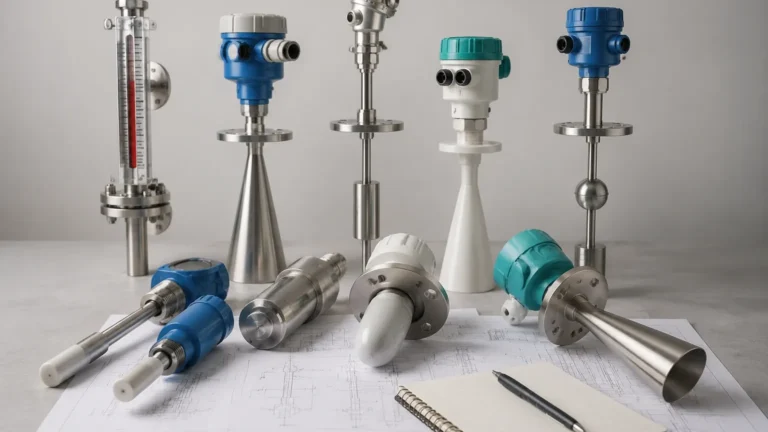
Before selecting a specific model, it is essential to understand how different technologies detect the presence or absence of material at a specific point. Each principle offers distinct advantages depending on whether the media is a liquid, a solid, or a slurry.
Float-Operated Level Switches
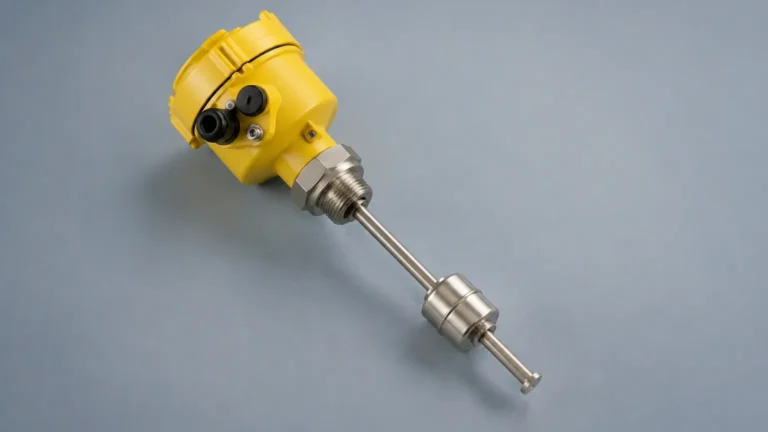
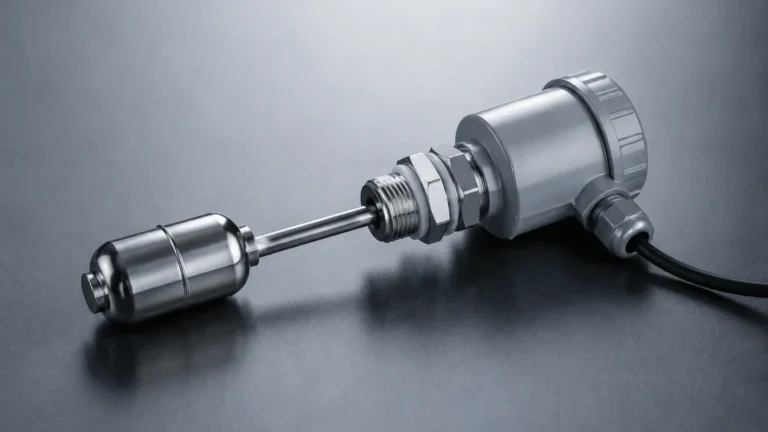
Float switches are the most traditional form of point-level detection. They operate on the principle of buoyancy. A float containing a permanent magnet moves with the liquid level. When the float reaches a predetermined point, the magnetic field actuates a hermetically sealed reed switch located within the stationary stem.
These switches are highly reliable for clean liquids but can be prone to failure if the media contains debris that might jam the mechanical movement or if the liquid is highly viscous. They are frequently specified with a 1/2" NPT mounting for small-scale sumps and fuel tanks.
Vibrating (Tuning Fork) Level Switches
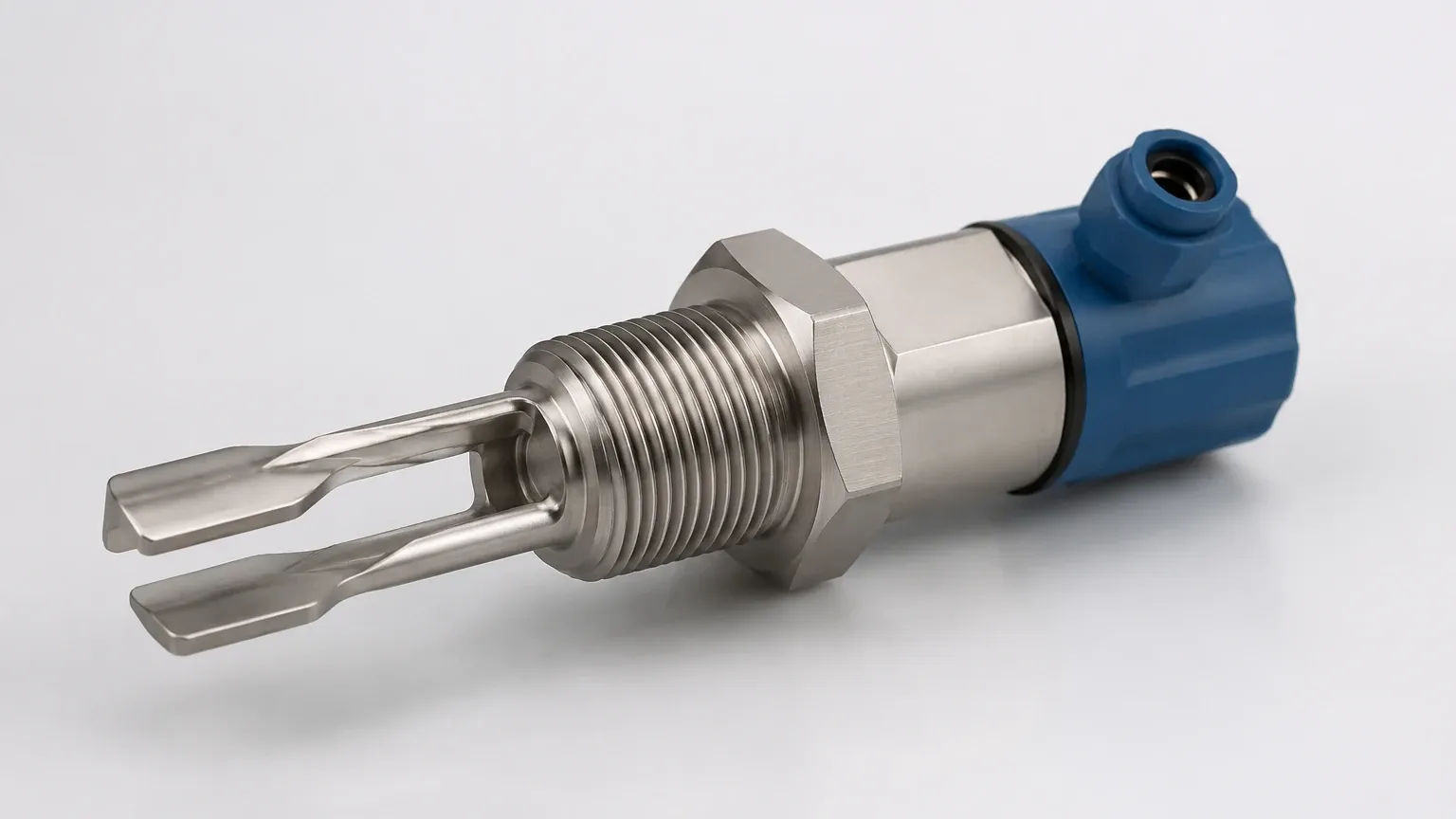
Vibrating level switches utilize a tuning fork-shaped sensing element that is piezoelectrically energized to vibrate at its natural resonance frequency in air. When the fork is covered by a liquid or solid, the frequency shifts or the vibration is dampened. An electronic circuit detects this change and converts it into a switching signal.
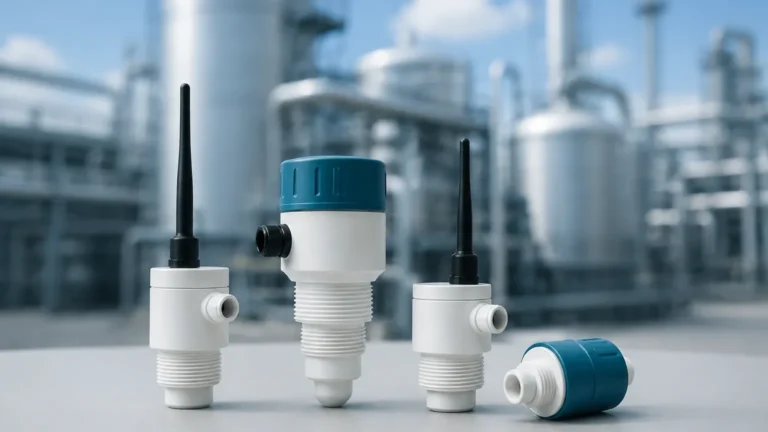
This technology is highly resistant to changes in flow, turbulence, bubbles, and foam. Because the sensing element is compact, a level switch 1 2 npt configuration is often used for overfill protection in pipes or small vessels where space is limited.
Capacitance Level Switches
Capacitance switches measure the change in electrical capacitance between the sensor probe and the tank wall (or a reference electrode). As the media covers the probe, the dielectric constant changes, altering the capacitance. These are "solid-state" devices with no moving parts, making them suitable for high-pressure and high-temperature environments. They are particularly effective for detecting powders, granules, and non-conductive liquids.
Conductive Level Switches
Conductive switches are used exclusively with conductive liquids (such as water or acids). The probe acts as one electrode, and the tank wall (or a second probe) acts as the other. When the liquid touches the probe, an electrical circuit is completed. These are simple and cost-effective but cannot be used with oils or purified water with low conductivity.
The Significance of the 1/2 NPT Process Connection
The "1/2 NPT" designation refers to the National Pipe Thread Tapered standard, which is widely used in North America and parts of Asia for pressure-tight seals. In a level switch 1 2 npt setup, the thread is tapered at a rate of 1 in 16 (0.75 inches per foot or 62.5 mm per meter).
Why 1/2-Inch?
1. Standardization: Most industrial manifolds and small-bore piping systems are designed with 1/2-inch ports. This makes the 1/2" NPT switch a "drop-in" solution for many maintenance and repair operations (MRO).
2. Compactness: It provides a balance between structural integrity and space-saving. It is large enough to house robust internal components like reed switches or piezoelectric crystals but small enough for mounting in tight quarters.
3. Pressure Rating: Tapered threads create a seal by wedging the threads together. When combined with PTFE tape or pipe sealant, a 1/2" NPT connection can often withstand pressures up to 50 bar (725 psi) or higher, depending on the material of the switch body (e.g., 316 Stainless Steel).
Practical Selection Criteria
When specifying a level switch, engineers must evaluate several factors beyond the thread size to ensure long-term reliability.
| Criteria | Considerations |
| :— | :— |
| Media Density | For float switches, the specific gravity (SG) of the liquid must be higher than the float's SG. Typical floats require an SG of 0.7 or higher. |
| Viscosity | High-viscosity liquids (e.g., heavy oils) may cause float sticking or slow response times in vibrating forks. |
| Chemical Compatibility | The wetted materials (Stainless Steel, PP, PVDF, or PTFE) must be compatible with the process media to prevent corrosion. |
| Operating Temperature | Standard switches handle up to 80°C (176°F), while specialized high-temperature versions can exceed 200°C (392°F). |
| Electrical Output | Options include SPDT/DPDT relays, PNP/NPN transistors, or two-wire AC/DC switches. |
| Hazardous Areas | If flammable gases or dust are present, the switch must carry ATEX, IECEx, or UL explosion-proof certifications. |
Installation Guidelines for 1/2 NPT Level Switches
Proper installation is critical to prevent false triggering and mechanical fatigue. Follow these engineering best practices:
1. Orientation:
* Side Mounting: Ensure the switch is installed horizontally. For vibrating forks, the tines should be oriented vertically (one above the other) if the media is a slurry to prevent material buildup between the tines.
* Top Mounting: Ensure the probe length is sufficient to reach the desired switching point. For float switches, ensure there is enough clearance from the tank wall to prevent the float from dragging.
2. Sealing the Thread:
* Clean both the male and female threads thoroughly.
* Apply PTFE tape or a compatible pipe sealant to the male thread, leaving the first two threads bare to prevent sealant from entering the process.
* Tighten to the manufacturer’s recommended torque. Over-tightening can crack the female port or deform the switch housing.
3. Avoiding Turbulence:
* Do not install the switch directly in the path of a fill stream. The force of the incoming liquid can damage the probe or cause erratic switching. Use a baffle or stilling well if turbulence is unavoidable.
4. Wiring and Conduit:
* Always point conduit entries downward to prevent moisture from traveling along the cable and into the electronics housing (the "drip loop" principle).
Limitations and Common Risks
While a level switch 1 2 npt is a versatile tool, it is not a universal solution. Engineers should be aware of the following limitations:
* Coating and Buoyancy: In applications with sticky media (like molasses or wastewater), material can build up on the probe. This "coating" can cause a capacitance switch to stay in the "on" state even after the level drops. In such cases, switches with "active shield" technology or vibrating forks with high-frequency vibration are preferred.
* Pressure Spikes: In hydraulic systems, rapid valve closures can create pressure spikes (water hammer). If the switch is not rated for these peaks, the internal seals or sensing elements may fail.
* Interface Detection: Standard level switches detect the presence of any liquid. If you need to detect the interface between two liquids (e.g., oil and water), specialized capacitance or ultrasonic sensors are required.
Frequently Asked Questions (FAQ)
Q: Can I use a 1/2" NPT level switch in a 1-inch port?
A: Yes, by using a reducer bushing (1" NPT male to 1/2" NPT female). However, ensure the material of the bushing matches the process requirements and that the added length does not interfere with the switch's sensing range.
Q: What is the difference between NPT and BSPT?
A: NPT (National Pipe Thread) has a 60° thread angle, while BSPT (British Standard Pipe Taper) has a 55° angle. They are not compatible. Attempting to force a 1/2" NPT switch into a 1/2" BSPT port will result in a leak or damaged threads.
Q: How do I test if my level switch is functioning?
A: For float switches, you can manually move the float (if accessible) and check for continuity with a multimeter. For electronic switches (vibrating fork or capacitance), most units feature an LED indicator that changes color when the state changes. Always perform testing in a de-energized or safe state if working in hazardous areas.
Q: Is a 1/2" NPT connection suitable for food and beverage applications?
A: Generally, no. Food and beverage applications usually require "hygienic" or "sanitary" connections (like Tri-Clamp) because threads can harbor bacteria. However, NPT connections are acceptable in non-contact areas or utility lines (water/steam) within food plants.
Conclusion and Next Steps
The level switch 1 2 npt remains a cornerstone of industrial automation due to its reliability and ease of installation. By matching the measurement principle to the specific characteristics of your media and adhering to strict installation standards, you can ensure accurate point-level detection for years of service.
For those requiring specific technical drawings or material certifications for their project, it is recommended to consult with a specialist. You can Review product options and application support to find the exact configuration that meets your pressure, temperature, and chemical compatibility requirements.