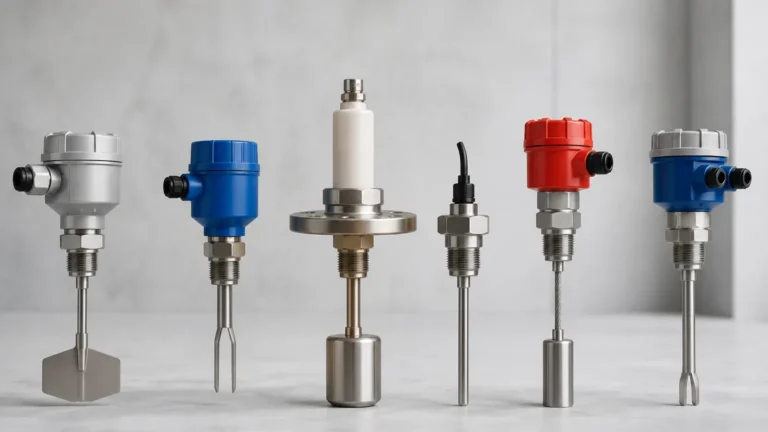
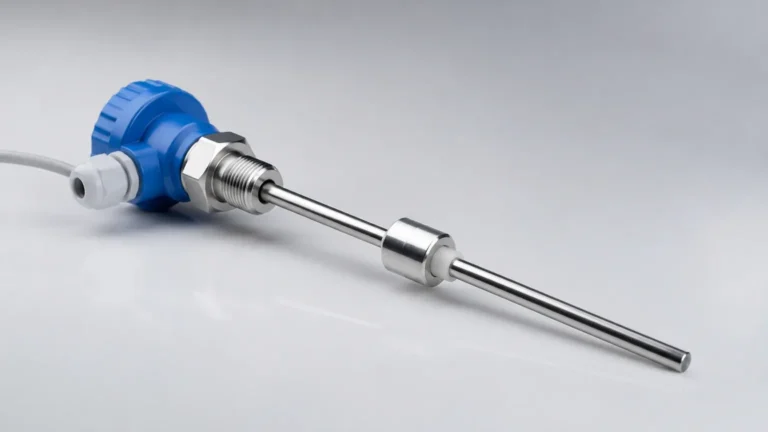
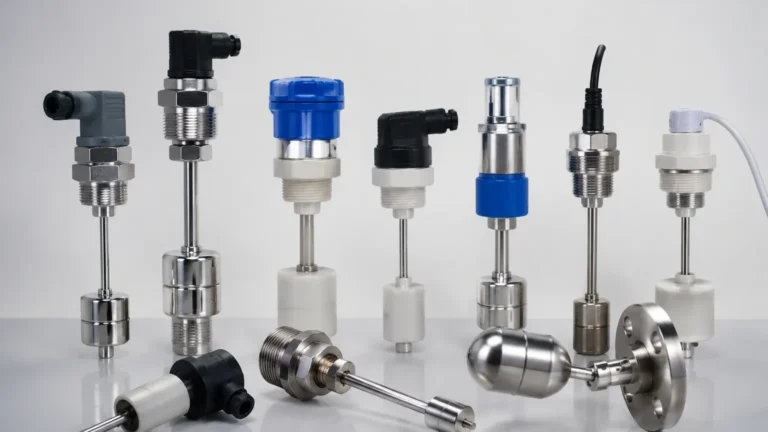
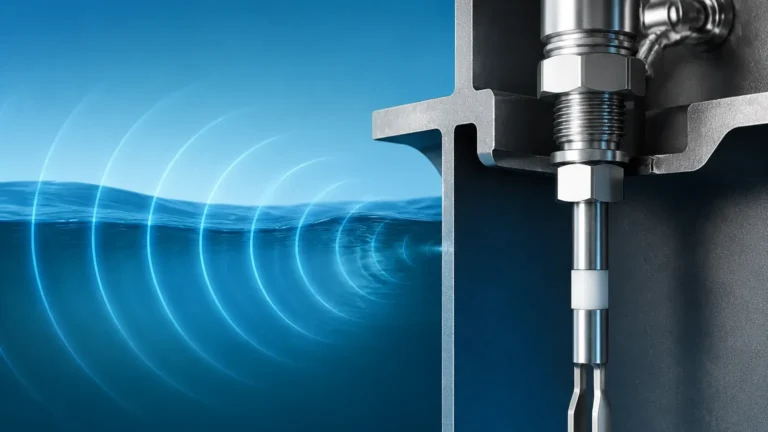
5 Light Switches
5 Light Switches
In the landscape of industrial automation and process control, point-level detection serves as a critical safety and operational threshold. While many engineers are familiar with mechanical floats or ultrasonic transmitters, the category of "light switches"—specifically optical level switches and those utilizing light-based sensing technologies—offers unique advantages in terms of size, response speed, and reliability. These devices, often referred to as Level Switches, provide discrete output signals when a substance reaches a specific height within a tank or vessel.
This guide examines five distinct types of light-based or light-indicated level switches used in modern B2B industrial environments, explaining their measurement principles, selection criteria, and practical application boundaries.
Measurement Principles of Optical Level Detection
Before selecting a specific model, it is essential to understand the physics of optical level measurement. Most industrial optical level switches operate on the principle of Total Internal Reflection.
An optical level switch typically consists of an infrared LED and a phototransistor housed within a transparent sensing tip, usually shaped as a prism.
1. Dry State: When the sensor tip is surrounded by air (gas), the light emitted by the LED is reflected internally within the prism and directed back to the phototransistor. This indicates a "low" or "empty" state.
2. Wet State: When the liquid rises and covers the sensing tip, the refractive index at the interface changes. The light from the LED escapes into the liquid rather than reflecting back to the sensor. The phototransistor detects this loss of light and triggers a switching output, indicating a "high" or "full" state.
Because this method does not rely on density, conductivity, or dielectric constants, it is highly versatile for various liquid types, provided they are not excessively viscous or prone to heavy coating.
1. Standard Infrared Optical Level Switches
The most common form of "light switch" in level measurement is the infrared optical switch. These are compact, solid-state devices with no moving parts, making them ideal for high-vibration environments where mechanical floats might fail.
* Applications: Leak detection in double-walled tanks, cooling systems, and pharmaceutical processing.
* Advantages: Extremely small footprint (often M12 or 1/2" NPT threads) and rapid response times (often <1ms).
* Limitations: May struggle with highly reflective liquids or fluids that leave a thick, opaque residue on the prism.
2. Fiber Optic Level Switches
Fiber optic switches extend the capability of light-based sensing into hazardous or high-temperature areas. In this configuration, the electronic components (LED and receiver) are located in a remote, safe enclosure, while the light is transmitted via fiber optic cables to a passive sensing head in the tank.
* Applications: Explosive environments (ATEX/IECEx zones) where electrical signals must be minimized, and high-temperature chemical reactors.
* Advantages: Complete immunity to Electromagnetic Interference (EMI) and Radio Frequency Interference (RFI).
* Technical Specification: Often capable of operating in temperatures exceeding 200°C (392°F) depending on the fiber cladding.
3. Laser Point Level Switches
Laser-based switches use a focused beam of coherent light to detect the presence of a surface. Unlike the prism-based optical switch, laser switches can often perform non-contact detection over short distances.
* Applications: Molten metal level detection, high-speed bottling lines, and detecting the level of clear plastics or glass.
* Advantages: High precision and the ability to detect levels through sight glasses or across open channels.
* Selection Note: When using laser switches, the angle of incidence is critical to ensure the reflected light returns to the receiver.
4. Multi-Point Optical Switch Arrays
In applications requiring more than a single high/low alarm, a "5 light switch" configuration—or a multi-point array—is often employed. This involves mounting five independent optical sensing points along a single probe or at different heights in a vessel.
* Functionality: This allows for granular control, such as triggering a pump at point 1, an alarm at point 4, and an emergency shut-off at point 5.
* B2B Context: Custom OEM/ODM manufacturers like Welk provide these integrated probes to reduce the number of tank penetrations required for complex process logic.
5. LED-Indicated Industrial Level Switches
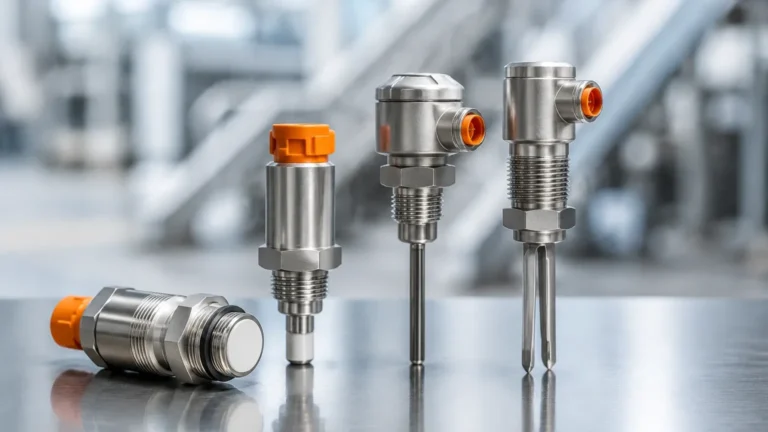
While the previous four types use light as the *sensing* medium, many industrial applications define a "light switch" as a robust level switch (such as a tuning fork or capacitance probe) that features high-visibility LED status lights on the housing. In large-scale plants, these visual indicators are vital for floor operators to verify tank status at a glance.
* Technology: These often utilize Vibrating Tuning Fork technology, which is unaffected by foam, bubbles, or suspended solids.
* Visual Feedback: Usually configured with green for "normal" and red for "alarm" states.
Technical Selection Table
| Feature | Infrared Optical | Fiber Optic | Laser Switch | Multi-Point Array | Tuning Fork (LED) |
| :— | :— | :— | :— | :— | :— |
| Measurement Type | Contact (Prism) | Contact (Passive) | Non-Contact | Contact (Multi) | Contact (Vibration) |
| Media | Clean Liquids | Harsh Chemicals | Solids/Liquids | Clean Liquids | Slurries/Liquids |
| Max Temp | 85°C – 125°C | Up to 250°C | 60°C (Standard) | 100°C | 150°C+ |
| Max Pressure | 50 bar (725 psi) | 20 bar (290 psi) | N/A (Non-contact) | 40 bar | 64 bar (928 psi) |
| Response Time | < 1 ms | < 5 ms | < 10 ms | < 1 ms | 0.5 – 1.0 s |
Installation and Engineering Considerations
Successful deployment of light-based level switches requires adherence to specific engineering guidelines to prevent false triggering.
Mounting Orientation
Optical switches can be mounted horizontally (side-wall) or vertically (top-down). If mounted horizontally, the prism should be angled or positioned so that liquid drains off completely when the level drops. For vertical mounting, ensure the sensor is not placed directly beneath a fill pipe, as splashing can cause intermittent "wet" signals.
Ambient Light Interference
In open-top tanks or near large windows, ambient sunlight or overhead industrial lighting can potentially interfere with the phototransistor. It is recommended to use sensors with modulated light (pulsed infrared) which allows the receiver to distinguish the sensor's own light from background noise.
Wiring and Integration
Most industrial Level Switches offer standard output configurations:
* PNP/NPN: For direct connection to PLCs.
* Relay Output: For switching higher current loads like small pumps or valves.
* Two-wire (Loop Powered): For integration into existing 4-20mA control loops.
Limitations and Constraints
While highly effective, light-based switches are not universal solutions. Engineers should be aware of the following constraints:
1. Coating and Fouling: If a liquid is highly viscous (like heavy oil or molasses), it may form a film over the prism. Even after the liquid level drops, the film may continue to reflect or refract light, causing a "stuck" high alarm.
2. Bubbles and Aeration: In highly agitated tanks, large air bubbles may pass over the prism of an optical switch, causing it to momentarily report a "dry" state. Increasing the output delay (damping) in the control logic can mitigate this.
3. Opacity: Extremely opaque liquids may require higher-powered infrared emitters to ensure the light can penetrate the media effectively during the "wet" phase.
Frequently Asked Questions (FAQ)
Q: Can optical level switches detect the interface between two liquids?
A: Generally, no. Optical switches detect the change in refractive index between a gas and a liquid. Detecting the interface between two liquids (e.g., oil and water) usually requires a capacitance or hydrostatic transmitter.
Q: Are these switches suitable for food and beverage applications?
A: Yes, provided the housing is made of food-grade materials like Stainless Steel 316L and the prism is Polysulfone or Glass. Many Welk models are designed with these hygienic requirements in mind.
Q: How do I clean the sensor tip if it becomes fouled?
A: Most prisms can be cleaned with standard industrial solvents or mild detergents. It is important to avoid abrasive cleaners that could scratch the prism surface, as scratches can scatter light and cause false readings.
Q: What is the typical lifespan of an optical light switch?
A: Because they are solid-state and have no moving parts to wear out, these switches often have an MTBF (Mean Time Between Failures) exceeding 100,000 hours of continuous operation.
Conclusion
Selecting the right "light switch" for level measurement depends heavily on the physical properties of the media and the environmental conditions of the plant. Whether utilizing the precision of a laser, the safety of fiber optics, or the simplicity of a standard infrared optical probe, these devices provide the accuracy and reliability required for modern industrial automation. For complex multi-point requirements or customized OEM solutions, consulting with a specialist manufacturer ensures that the selected Level Switches meet the rigorous demands of the application.