Magnetrol Level Switch 910 Manual
Magnetrol Level Switch 910 Manual
In industrial process control, the reliability of point-level detection is fundamental to preventing tank overflows, protecting pumps from dry running, and ensuring the safety of pressurized vessels. The Magnetrol Model 910 represents a classic mechanical approach to these challenges. This guide serves as a technical reference for engineers and maintenance personnel seeking to understand the operation, installation, and selection criteria associated with the Magnetrol level switch 910 manual, while providing a broader context for modern Level Switches used in global automation.
Measurement Principles of Buoyancy-Based Level Switches
Before diving into the specifics of the Model 910, it is essential to understand the physical principles that govern its operation. Mechanical level switches typically rely on Archimedes' Principle, which states that any object, wholly or partially immersed in a fluid, is buoyed up by a force equal to the weight of the fluid displaced by the object.
The Displacement and Float Mechanism
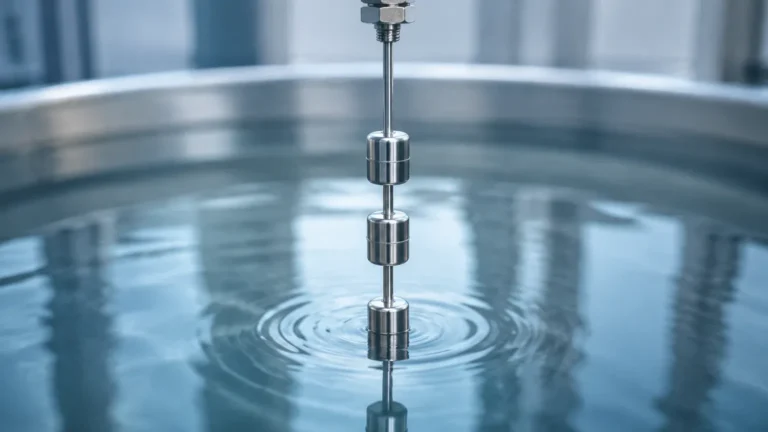
In a float-actuated switch like the 910, a float—designed to be lighter than the process liquid—rides on the surface of the medium. As the liquid level rises or falls, the float moves accordingly. This mechanical movement is transmitted to a switching element.
Magnetic Coupling
One of the defining features of the Magnetrol design is the use of magnetic coupling. The float is connected to a rod containing a permanent magnet. This rod moves inside a non-magnetic pressure tube (often referred to as an enclosing tube). Outside this tube, a switch mechanism is mounted. When the float moves the internal magnet into the field of the external switch, the switch is actuated. This design is highly valued because it eliminates the need for seals or bellows that could leak, ensuring the process remains hermetically sealed from the electrical components.
Technical Specifications and Selection Criteria
When consulting a Magnetrol level switch 910 manual, the primary focus is often on ensuring the hardware matches the process conditions. The 910 is generally a single-stage, float-actuated switch designed for vertical mounting.
Material Compatibility
Selection begins with the wetted materials. Standard options usually include 316 Stainless Steel or Carbon Steel. In chemical applications involving corrosive media, the choice of material is critical to prevent pitting or stress corrosion cracking.
Specific Gravity (SG)
The float must be engineered to displace enough liquid to overcome its own weight and the weight of the rod and magnet. Most 910 models are designed for liquids with a specific gravity of 0.60 or higher. If the liquid is too light (e.g., certain hydrocarbons), the float will sink, and the switch will fail to actuate.
Pressure and Temperature Ratings
The Model 910 is frequently used in high-pressure environments. Standard ratings often reach up to 41 bar (600 psi) at 38°C, though these ratings decrease as the operating temperature increases. It is vital to verify the pressure-temperature curve provided in the technical documentation to avoid mechanical failure of the pressure tube.
| Feature | Specification Detail |
| :— | :— |
| Mounting | Vertical (Top-mounted) |
| Minimum Specific Gravity | 0.60 (Standard) |
| Max Pressure | Up to 41 bar (600 psi) |
| Max Temperature | Up to 260°C (500°F) depending on switch type |
| Switch Types | SPDT or DPDT (Dry contact or Hermetically sealed) |
Installation Considerations and Best Practices
Proper installation is the most significant factor in the longevity of Level Switches. The following steps are typically outlined in the Magnetrol level switch 910 manual to ensure accurate performance.
Vertical Alignment
Because the 910 relies on a vertical rod and float assembly, the unit must be installed within 3 degrees of vertical. If the unit is tilted, the friction between the rod and the enclosing tube increases, which can lead to sticking or inconsistent switching points.
Preventing Turbulence
In tanks with high agitation or inflow, the float can bounce erratically, leading to "chattering" of the electrical contacts. To prevent this, engineers often install a stilling well—a pipe with vent holes that surrounds the float to provide a calm liquid surface. The manual specifies that the internal diameter of the stilling well must allow sufficient clearance for the float (typically at least 12 mm or 0.5 inches of clearance).
Electrical Wiring
When wiring the switch, it is imperative to use the correct conduit entries. Most industrial models provide dual conduit entries to separate high-voltage power from signal lines. Ensure that the housing cover is tightened properly to maintain the NEMA or IP rating of the enclosure, especially in outdoor or wash-down environments.
Limitations of Mechanical Level Switches
While the Magnetrol 910 is a robust and time-tested instrument, mechanical technology has inherent limitations that modern engineers must consider:
1. Mechanical Wear: Moving parts are subject to wear over time. The pivot points and the magnetic linkage can eventually degrade, requiring replacement.
2. Coating and Scaling: If the process liquid is prone to crystallization or heavy coating (such as in wastewater or certain chemical resins), the float can become stuck to the rod or the walls of the tank.
3. Vibration Sensitivity: High-frequency vibration in the plant can cause the mechanical switch contacts to trigger prematurely or wear out faster due to micro-arcing.
4. Single Point Only: The 910 provides a single point of detection. If multiple levels need to be monitored, multiple units or a different technology, such as a guided wave radar or ultrasonic sensor, may be more cost-effective.
Maintenance and Troubleshooting
A comprehensive maintenance schedule is necessary for safety-critical applications. The Magnetrol level switch 910 manual suggests periodic "proof testing" of the switch.
Proof Testing Procedure
To test the switch without draining the entire tank, some installations include a test lifting lever. By manually pulling the lever, the operator can lift the float rod to simulate a high-level condition. If a lever is not present, the liquid level must be raised manually, or the switch assembly must be removed and tested in a bucket of water (assuming the SG is compatible).
Common Troubleshooting Steps
* Switch does not actuate: Check for a collapsed float (due to over-pressure) or a bent float rod. Verify that the specific gravity of the liquid has not dropped below the design threshold.
* Switch stays actuated: This often indicates that debris is lodged between the float and the tank wall or that the magnet has become disconnected from the rod.
* Intermittent signal: Inspect the electrical terminals for corrosion or loose connections. In high-temperature applications, ensure the wire insulation is rated for the ambient heat near the enclosure.
Comparing Float Switches to Electronic Alternatives
In the modern landscape of industrial automation, manufacturers like Welk offer a variety of Level Switches that can serve as alternatives to the mechanical 910, depending on the application requirements.
Ultrasonic Level Switches
Ultrasonic switches use high-frequency sound waves to detect the presence of liquid. They have no moving parts, making them ideal for sticky or dirty liquids that would jam a float switch. However, they can be affected by foam or heavy vapors.
Tuning Fork (Vibrating) Switches
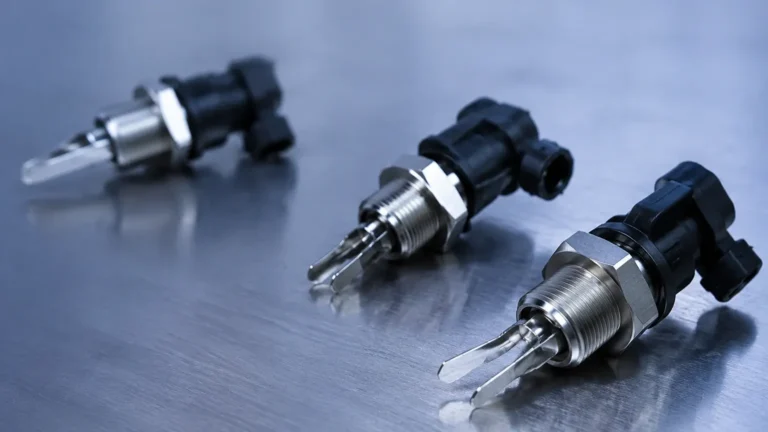
These switches use a vibrating fork that changes its frequency when immersed in liquid. They are extremely reliable, compact, and resistant to turbulence. They are often preferred for overfill protection in small vessels where a large float assembly like the 910 would not fit.
Radar Level Sensors
While often used for continuous measurement, radar can also be configured for point-level switching. Radar is unaffected by changes in density, pressure, or temperature, making it the "gold standard" for complex chemical processes, though at a higher price point than mechanical switches.
Frequently Asked Questions (FAQ)
Q: Can the Magnetrol 910 be used in hazardous areas?
A: Yes, provided the unit is ordered with an explosion-proof or intrinsically safe enclosure. Always check the nameplate for ATEX, IECEx, or UL certifications before installing in a classified zone.
Q: What is the difference between SPDT and DPDT in these manuals?
A: SPDT (Single Pole Double Throw) has one set of contacts (Common, Normally Open, Normally Closed). DPDT (Double Pole Double Throw) has two independent sets of contacts, allowing you to trigger two separate circuits (e.g., an alarm and a pump shutdown) simultaneously.
Q: How often should I calibrate my level switch?
A: Mechanical float switches do not require "calibration" in the way electronic sensors do, but they do require verification. An annual inspection of the float and a functional test of the switch mechanism is recommended for standard industrial service.
Q: Is it possible to change the set point of a Model 910?
A: The set point of a 910 is generally fixed by the length of the float rod. To change the set point significantly, a different rod length or a different model (such as a side-mounted switch) may be required.
Conclusion
The Magnetrol level switch 910 remains a staple in the industry due to its simple physics and robust construction. However, successful implementation requires a deep understanding of the manual's specifications regarding specific gravity, pressure, and installation geometry. For applications where mechanical floats may struggle—such as with coating liquids or restricted space—exploring the full range of modern Level Switches is advisable to ensure the highest levels of process safety and efficiency.