Food-grade Platform Sensor
Food-grade Platform Sensor
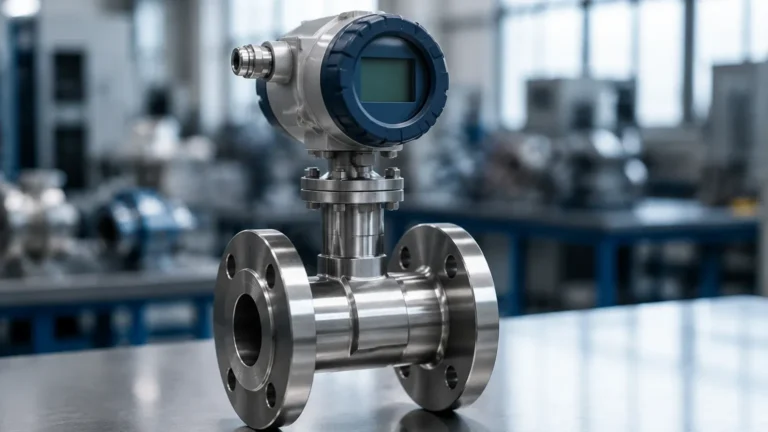
In the food, beverage, and pharmaceutical industries, maintaining the integrity of the production chain is a regulatory and operational necessity. A food-grade platform sensor—whether referring to a weight-based platform scale or a level measurement sensor mounted on a process platform—must meet stringent hygiene standards while providing precise data. These instruments are critical for inventory management, batch processing, and ensuring that storage vessels do not overflow or run dry.
Selecting the right technology for a food-grade platform sensor requires an understanding of both the physical measurement principles and the sanitary requirements of the environment. This guide explores the various technologies used in these applications, selection criteria, and best practices for installation and maintenance.
Measurement Principles for Food-Grade Applications
Level and weight measurement in food-grade environments typically relies on four primary technologies. Each has distinct advantages depending on the physical properties of the medium and the vessel's geometry.
1. Radar Level Measurement (Non-Contact)
Radar sensors, particularly those operating at 80 GHz, are increasingly the standard for food-grade applications. They emit high-frequency microwave pulses that reflect off the surface of the product. The time-of-flight is measured to determine the distance. Because radar is non-contact, there is no risk of contaminating the product, and the sensor is unaffected by steam, dust, or pressure changes. For more detailed technical specifications on these systems, you can visit the Main Page to review product options and application support.
2. Ultrasonic Level Measurement
Ultrasonic sensors use sound waves to detect the level of liquids or solids. While cost-effective, they are more sensitive to environmental factors than radar. In food processing, heavy steam or high-temperature cleaning cycles can interfere with the speed of sound, leading to measurement errors. However, for ambient temperature water storage or simple beverage tanks, they remain a viable non-contact solution.
3. Hydrostatic Pressure Measurement
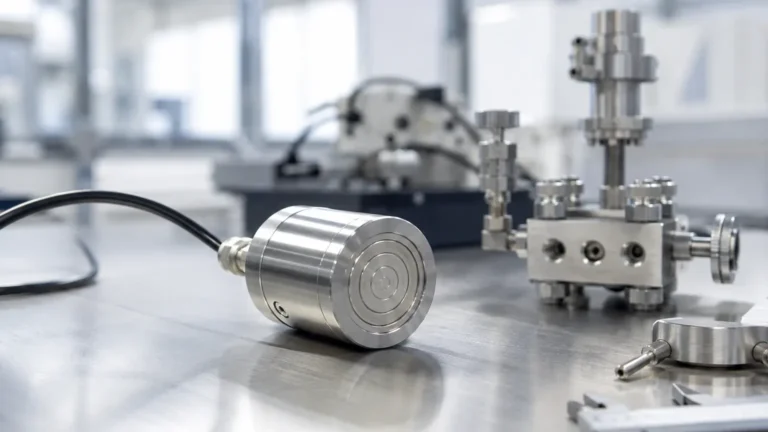
This method measures the pressure exerted by a liquid column. For food-grade use, these sensors must feature a flush-mounted diaphragm. This design ensures there are no "dead zones" where food particles can collect and rot. The pressure is directly proportional to the height of the liquid, making it a reliable choice for vented tanks.
4. Load Cells (Weight-Based Platform Sensors)
When a "platform sensor" refers to a weighing system, load cells are installed under the legs or support structure of a vessel. This provides a direct measurement of mass. This is often preferred for high-viscosity products or materials that foam excessively, as the measurement is independent of the product's surface condition or dielectric constant.
Key Evaluation Criteria for Food-Grade Sensors
When specifying a food-grade platform sensor, the following criteria are non-negotiable for ensuring both process accuracy and food safety.
Material Compliance and Surface Finish
All wetted parts (parts that come into contact with the product) must be made from non-toxic, corrosion-resistant materials. The industry standard is 316L stainless steel. Furthermore, the surface roughness (Ra) must be less than 0.8 µm to prevent bacterial adhesion. Plastics used in seals or housings, such as PTFE or EPDM, must be FDA-compliant.
CIP and SIP Compatibility
Clean-in-Place (CIP) and Steam-in-Place (SIP) are standard cleaning protocols. A food-grade platform sensor must withstand high temperatures (often up to 130°C or 150°C for SIP) and aggressive chemical cleaning agents (caustics and acids) without degrading or losing calibration.
Ingress Protection (IP Rating)
Due to frequent washdowns with high-pressure water, sensors must have a high IP rating. IP67 is a minimum, but IP69K is preferred for sensors located in areas subject to direct high-pressure, high-temperature jet cleaning.
Selection Table: Comparing Sensor Technologies
| Technology | Accuracy | Contact Type | Ideal Media | Limitations |
| :— | :— | :— | :— | :— |
| 80 GHz Radar | ±1 mm | Non-contact | Liquids, pastes, solids | High initial cost |
| Ultrasonic | ±0.25% of range | Non-contact | Clear liquids | Affected by foam and steam |
| Hydrostatic | ±0.1% to 0.5% | Contact (Flush) | Homogeneous liquids | Sensitive to density changes |
| Load Cells | ±0.03% to 0.1% | External | Any (Mass-based) | Difficult to retrofit on existing tanks |
Practical Installation Considerations
Correct installation is as important as selecting the right sensor. In food-grade environments, the primary goal is to eliminate areas where biological growth could occur.
1. Sanitary Fittings: Use standard sanitary connections such as Tri-Clamp, SMS, or Varivent. These allow for easy removal for manual inspection and ensure a leak-proof, hygienic seal.
2. Mounting Position: For non-contact sensors like radar or ultrasonic, the sensor should be mounted away from the filling inlet to avoid interference from the incoming product stream. It should also be perpendicular to the product surface.
3. Nozzle Height: Ensure the mounting nozzle is short enough that it doesn't create a "dead space" where the sensor's signal could be blocked or where product could accumulate during cleaning.
4. Vibration Isolation: For platform-based weighing sensors (load cells), ensure the vessel is isolated from pipe vibrations using flexible couplings. Any mechanical stress from the piping will be interpreted as weight, leading to significant errors.
Common Risks and Limitations
While modern food-grade platform sensors are highly advanced, they are not without limitations. Engineers should be aware of the following risks:
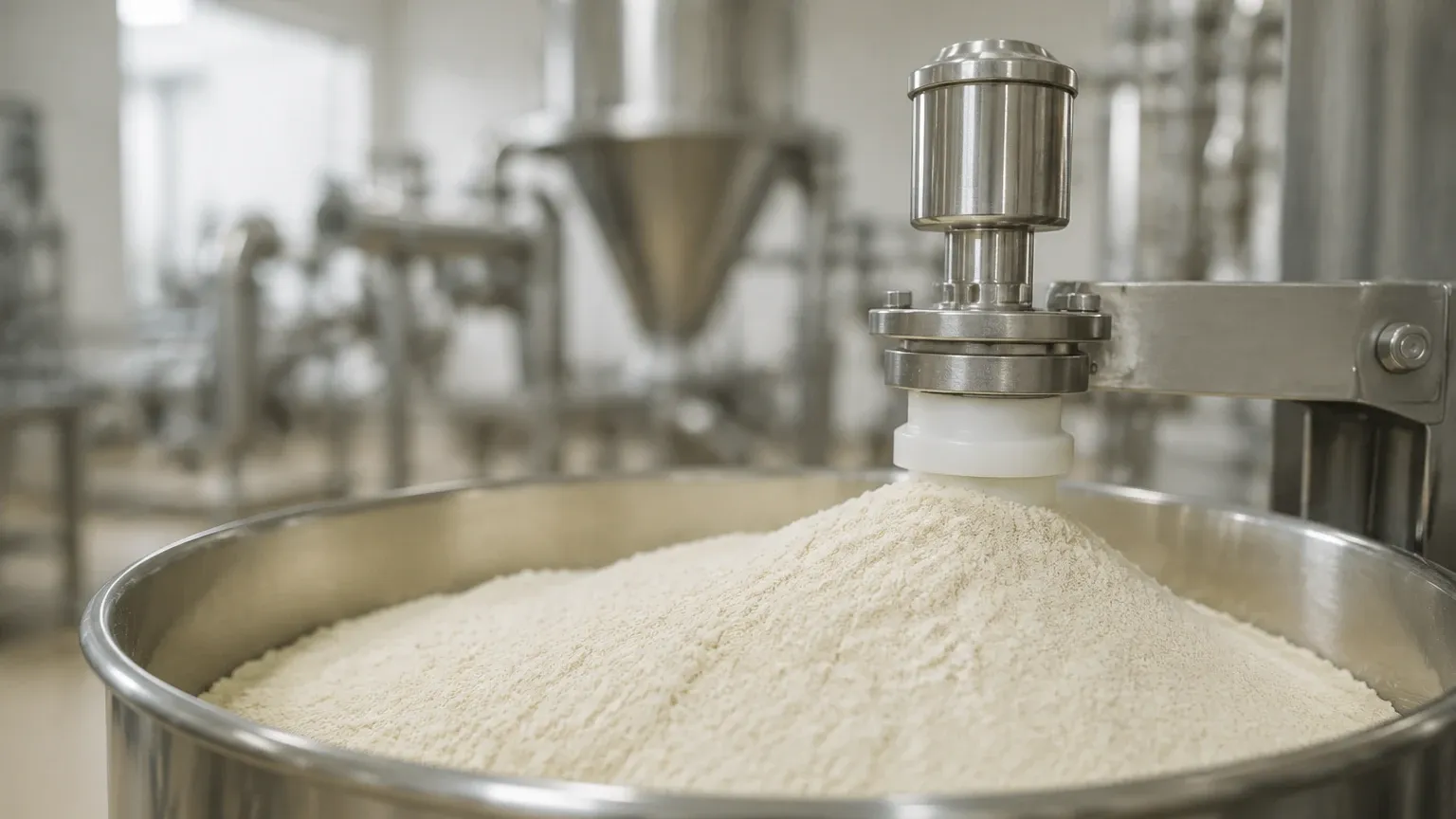
* Foam Interference: In dairy or brewery applications, thick foam can absorb ultrasonic signals or cause false reflections for radar. High-frequency radar (80 GHz) is better at penetrating foam, but extreme cases may require specialized signal processing.
* Condensation: Heavy condensation on the sensor face can cause "near-field" interference. Many food-grade radar sensors use a convex PTFE antenna design that allows droplets to run off, maintaining signal integrity.
* Density Fluctuations: Hydrostatic sensors calculate level based on a fixed density. If the product recipe changes or the temperature fluctuates significantly (altering the density), the level reading will be inaccurate unless compensated by a temperature sensor and a PLC.
* Mechanical Damage: Flush diaphragms on hydrostatic sensors are very thin and can be damaged by abrasive particles or improper manual cleaning. They should be handled with extreme care during maintenance.
Digital Integration: Industry 4.0 in Food Processing
Modern food-grade platform sensors are no longer just simple 4-20mA devices. The integration of IO-Link and other digital protocols allows for real-time diagnostics. For example, a sensor can signal the control system if its lens is becoming coated with residue or if the internal temperature is exceeding safe limits during a cleaning cycle. This predictive maintenance capability reduces unplanned downtime and ensures that food safety is never compromised by a failing instrument.
Frequently Asked Questions (FAQ)
Q: Can I use a standard industrial sensor in a food-grade application?
A: Generally, no. Standard sensors often use materials that can leach chemicals or have threads and crevices that harbor bacteria. Food-grade sensors must be certified (e.g., 3-A, EHEDG, or FDA) and feature specific sanitary designs.
Q: What is the benefit of 80 GHz radar over 26 GHz radar?
A: 80 GHz radar has a much narrower beam angle. This allows it to be installed in smaller tanks or vessels with internal obstructions (like agitators) without receiving false echoes. It also provides better accuracy and handles condensation more effectively.
Q: How often should a food-grade platform sensor be calibrated?
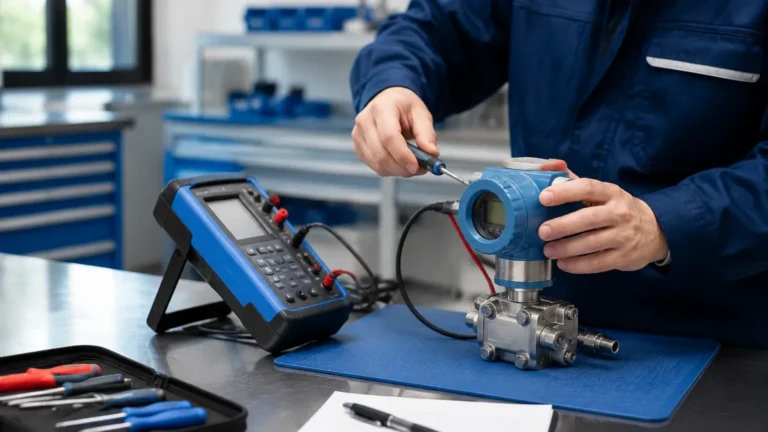
A: This depends on the criticality of the process and local regulations. Typically, sensors are checked annually. However, weight-based platform sensors may require more frequent checks if they are subject to heavy mechanical loading or temperature swings.
Q: Does the sensor need to be removed during CIP?
A: If the sensor is rated for the temperature and chemicals used in the CIP process, it does not need to be removed. In fact, many sensors are designed to be cleaned along with the tank to ensure the entire system remains sterile.
By carefully selecting a food-grade platform sensor that matches the specific needs of the medium and the vessel, manufacturers can ensure high precision, regulatory compliance, and long-term reliability. For those looking to compare specific models or explore customized measurement solutions, the Main Page provides comprehensive resources for industrial level measurement technology.