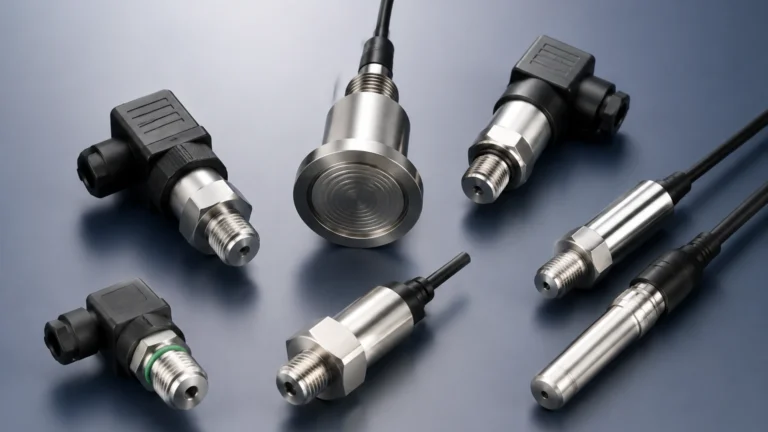
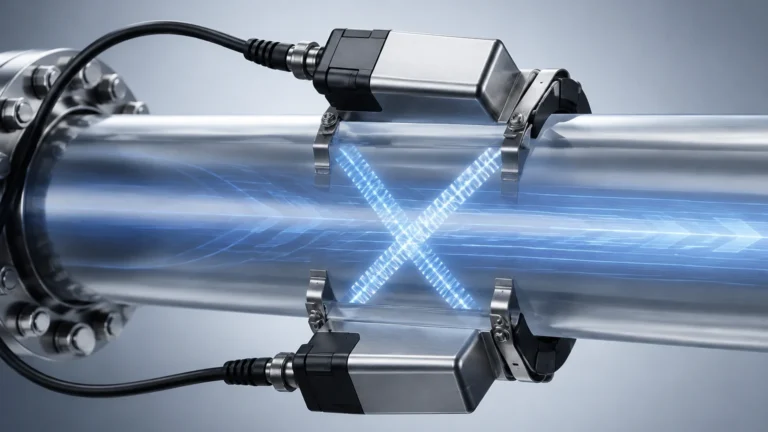
High Accuracy Low Pressure Transducer
High Accuracy Low Pressure Transducer
In industrial process control and level measurement, the ability to detect minute changes in pressure is fundamental to operational efficiency and safety. A high accuracy low pressure transducer is a specialized instrument designed to convert physical pressure—often in ranges below 1 bar (14.5 psi)—into a precise electrical signal. These devices are critical in applications where even a slight deviation in measurement can lead to significant errors in volume calculation, flow rate monitoring, or environmental control.
For engineers and system integrators, selecting the right sensor requires a deep understanding of the underlying measurement principles, the factors affecting accuracy, and the specific demands of the installation environment. This guide provides a technical overview of low-pressure sensing technology to assist in the selection and implementation of these high-precision instruments.
Understanding the Measurement Principles of Low Pressure Transducers
Before selecting a high accuracy low pressure transducer, it is essential to understand how different sensing technologies interact with low-force inputs. At low pressures, the mechanical displacement of the sensing element is minimal, necessitating technologies that offer high sensitivity without sacrificing stability.
Piezoresistive Sensing
Piezoresistive transducers utilize a silicon or metal diaphragm with integrated strain gauges. When pressure is applied, the diaphragm deforms, changing the electrical resistance of the gauges. In low-pressure applications, micro-machined silicon diaphragms (MEMS) are often used because they can be made extremely thin, allowing for high sensitivity to pressures as low as 10 mbar (0.145 psi). These sensors are valued for their high output signal and robust performance in general industrial automation.
Ceramic Capacitive Sensing
Ceramic capacitive sensors operate by measuring the change in capacitance between a flexible ceramic diaphragm and a fixed base plate. This technology is inherently "dry," meaning it does not require internal transmission fluids like silicone oil. This is particularly advantageous for low-pressure measurement because it eliminates the risk of "oil-fill effect"—where the expansion of internal fluids due to temperature changes creates a false pressure reading. Ceramic sensors are highly resistant to overpressure and chemical corrosion, making them ideal for aggressive media.
Silicon-on-Sapphire (SoS)
For applications requiring extreme stability and high accuracy, Silicon-on-Sapphire technology is often employed. By bonding silicon strain gauges to a sapphire diaphragm, manufacturers create a sensor that is virtually free of hysteresis. Sapphire is chemically inert and maintains its elastic properties over a wide temperature range, providing exceptional long-term stability in low-pressure ranges.
The Critical Role of Accuracy in Low-Range Applications
In high-pressure systems, an error of 0.5% might be negligible. However, in low-pressure applications—such as measuring the level of a shallow water tank or monitoring cleanroom pressure—the same percentage error represents a much larger portion of the total measurement.
Total Error Band (TEB)
When evaluating a high accuracy low pressure transducer, professionals should look beyond the simple "accuracy" rating (often expressed as a percentage of Full Scale, or % FS). The Total Error Band (TEB) is a more comprehensive metric that includes non-linearity, hysteresis, repeatability, and thermal errors over a specified temperature range. In low-pressure sensing, thermal drift is the most significant contributor to error, as the signal-to-noise ratio is lower than in high-pressure devices.
Hydrostatic Level Measurement
In the context of level measurement, hydrostatic pressure is calculated using the formula $P = \rho gh$ (where $P$ is pressure, $
ho$ is fluid density, $g$ is gravity, and $h$ is height). For a water tank only 1 meter (3.28 ft) deep, the pressure at the bottom is approximately 98 mbar (1.42 psi). To measure this level with 1 cm (0.39 in) precision, the transducer must have an accuracy better than 0.1% FS. This level of precision is why a high accuracy low pressure transducer is indispensable for shallow tank monitoring and environmental water management.
Key Selection Criteria for a High Accuracy Low Pressure Transducer
Selecting the appropriate instrument involves balancing technical specifications with the realities of the application site. The following criteria are essential for B2B procurement and engineering design.
1. Pressure Type (Gauge vs. Absolute): For most low-pressure level applications, a gauge pressure sensor is required. These sensors are vented to the atmosphere to compensate for changes in barometric pressure. Without proper venting, a change in weather could be misinterpreted as a change in liquid level.
2. Material Compatibility: The wetted parts (diaphragm and housing) must be compatible with the process media. While 316L stainless steel is standard, aggressive chemicals may require Hastelloy C, Tantalum, or PTFE coatings.
3. Signal Output: Standard 4-20 mA analog outputs are common for long-distance transmission and noise immunity. However, digital protocols like RS485 (Modbus) or HART are increasingly preferred for high-accuracy applications because they eliminate the digital-to-analog conversion errors at the controller level.
4. Temperature Compensation: Ensure the transducer features active temperature compensation. Low-pressure sensors are particularly sensitive to "zero shift" caused by temperature fluctuations.
Practical Selection Table: Comparing Sensing Technologies
| Feature | Piezoresistive (Silicon) | Ceramic Capacitive | Silicon-on-Sapphire |
| :— | :— | :— | :— |
| Sensitivity | Very High | High | Moderate |
| Long-term Stability | Good | Excellent | Superior |
| Overpressure Resistance | Moderate | Very High | High |
| Media Compatibility | Requires isolation (Oil-filled) | Excellent (Dry cell) | Excellent |
| Typical Accuracy | 0.25% to 0.1% FS | 0.2% to 0.05% FS | 0.1% to 0.02% FS |
| Best For | General automation, HVAC | Corrosive media, Food & Bev | Laboratory, Aerospace, Oil & Gas |
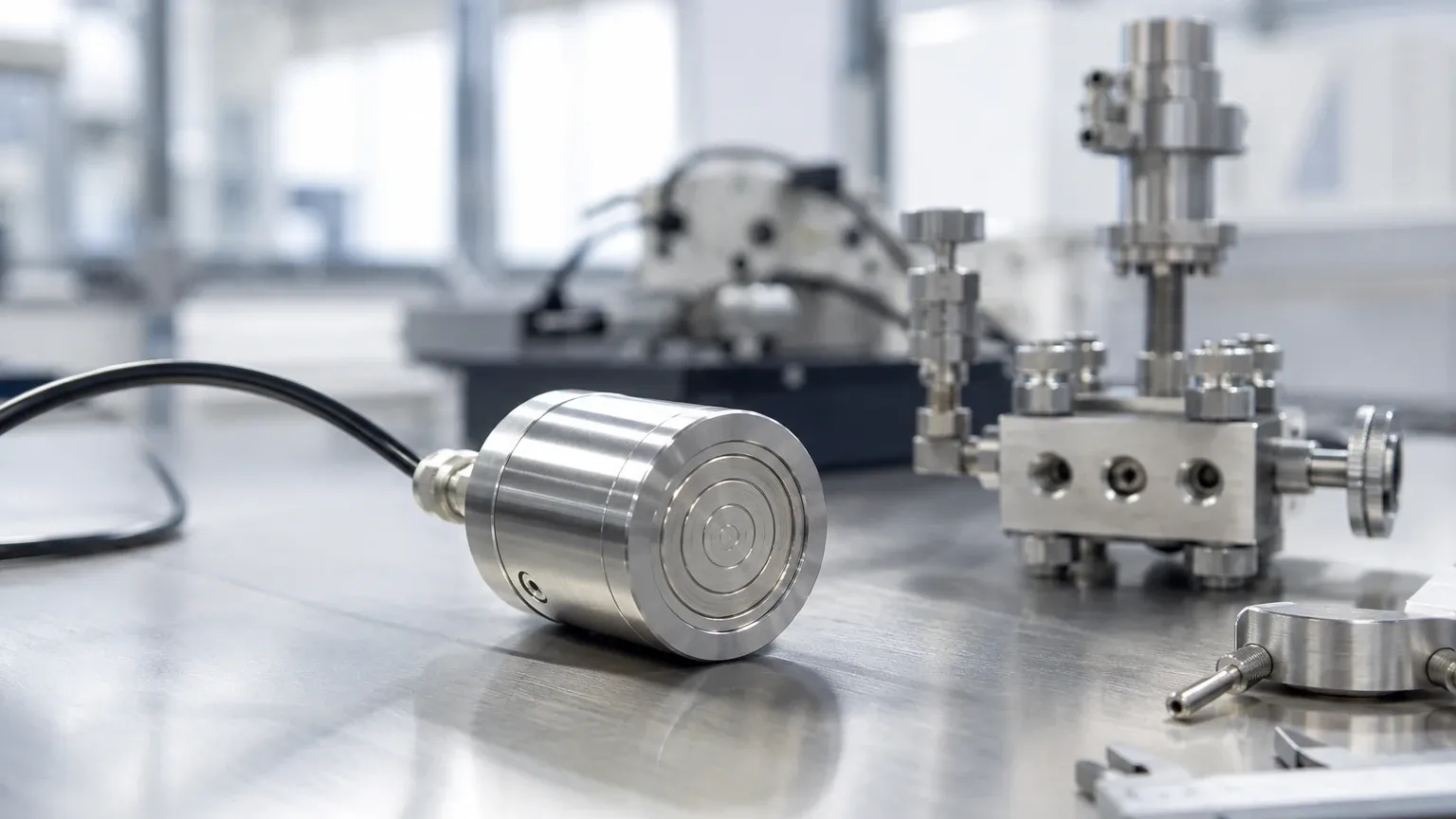
Installation Guidelines for Reliable Performance
Even the most accurate transducer will provide poor data if installed incorrectly. For low-pressure systems, installation precision is as important as the sensor's specifications.
Venting and Moisture Protection
Gauge pressure transducers utilize a vent tube in the cable to reference atmospheric pressure. It is vital that this tube remains unobstructed and protected from moisture. If water enters the vent tube, it can block the reference or damage the internal electronics. Using a specialized vent filter or a bellows assembly is recommended in high-humidity environments.
Mounting Position
Low-pressure sensors are sensitive to orientation. The weight of the internal oil fill or the diaphragm itself can cause a "position effect" or zero shift if the sensor is mounted in a different orientation than it was calibrated in (usually vertical). Always zero the sensor in its final mounting position to ensure the highest accuracy.
Turbulence and Vibration
In tanks with agitators or high-flow inlets, the transducer should be installed in a stilling well. This protects the delicate low-pressure diaphragm from mechanical shocks and turbulent pressure spikes that could lead to signal noise or premature sensor failure.
Limitations and Common Risks in Low Pressure Sensing
While a high accuracy low pressure transducer offers significant benefits, there are inherent limitations to consider:
* Overpressure Events: Low-pressure diaphragms are thin and susceptible to damage from pressure surges (water hammer). Always verify that the sensor's overpressure rating exceeds the maximum possible surge in the system.
* Clogging: In wastewater or slurry applications, the small pressure ports of some transducers can become clogged. In these cases, a flush-diaphragm design should be used to prevent buildup.
* Long-term Drift: All sensors drift over time. For high-accuracy applications, establish a calibration schedule (e.g., annually) to verify the zero point and span.
Frequently Asked Questions (FAQ)
Q: Why is 4-20 mA still the standard for high accuracy transducers?
A: The 4-20 mA current loop is highly resistant to electrical noise (EMI/RFI) and can travel long distances without signal degradation. For high-accuracy needs, however, ensuring the receiving PLC has a high-resolution A/D converter (16-bit or higher) is necessary to maintain the sensor's precision.
Q: Can I use a high-pressure transducer for a low-pressure application?
A: It is not recommended. Using a 10 bar sensor to measure 100 mbar means you are using only 1% of the sensor's range. The error, which is calculated based on the 10 bar Full Scale, would be larger than the actual measurement you are trying to take.
Q: What is the difference between "Accuracy" and "Precision"?
A: Accuracy refers to how close the measurement is to the true value. Precision (or repeatability) refers to how consistently the sensor provides the same reading under the same conditions. For process control, high repeatability is often as important as absolute accuracy.
Conclusion
Achieving reliable measurement in low-pressure environments requires more than just a standard sensor; it demands a high accuracy low pressure transducer tailored to the specific chemical and physical constraints of the application. By understanding the trade-offs between piezoresistive, capacitive, and sapphire technologies, and by adhering to strict installation protocols, engineers can ensure long-term data integrity.
For those seeking reliable, accurate, and cost-effective level measurement solutions, it is important to consult with manufacturers who provide customized OEM/ODM services to match specific industrial requirements. To explore a wide range of industrial level measurement instruments, including radar, ultrasonic, and hydrostatic solutions, you may Review product options and application support at the Welk main site.