Best Switches for Enterprise Level Network Security
Best Switches for Enterprise Level Network Security
In the modern industrial landscape, the convergence of Operational Technology (OT) and Information Technology (IT) has redefined how facilities manage their assets. For large-scale enterprises, level measurement is no longer a localized task performed by isolated mechanical devices. Instead, it is a critical component of a networked ecosystem where data integrity and hardware reliability are the foundations of system safety. When engineers evaluate the best switches for enterprise level network security, they must look beyond software firewalls to the physical layer—the industrial level switches that provide the primary data for automated control systems.
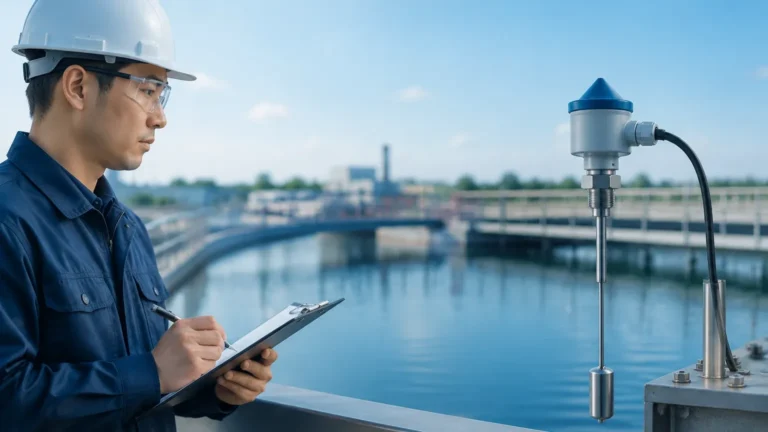
Industrial Level Switches serve as the "eyes" of an enterprise-level network, detecting the presence or absence of liquids and solids in tanks, silos, and pipelines. In sectors such as chemical processing, water treatment, and oil and gas, a failure in these devices does not just result in a process interruption; it can lead to environmental hazards, equipment damage, or security vulnerabilities within the automated control loop. This guide explores the technical principles of these switches and how their integration into enterprise networks demands a focus on both physical and data reliability.
Measurement Principles of Industrial Level Switches
Before selecting a switch for an enterprise-scale application, it is essential to understand the underlying physics that drive detection. Different media and environmental conditions require specific sensing technologies to ensure consistent performance.
1. Vibrating Tuning Fork Level Switches
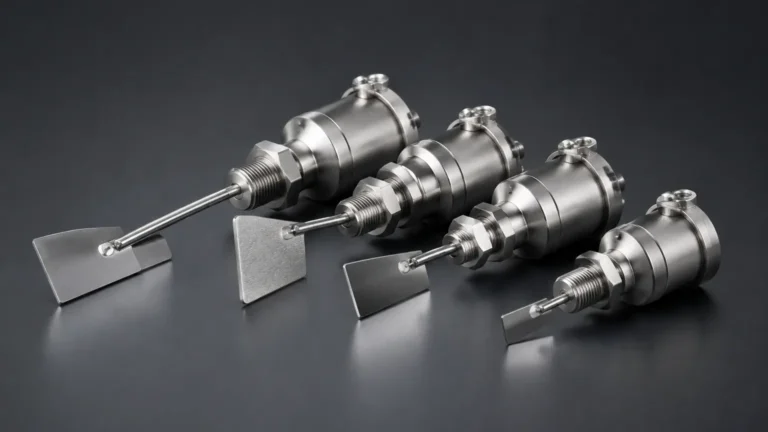
The tuning fork switch operates on the principle of frequency shifting. A piezoelectric crystal excites the fork to vibrate at its natural resonance frequency (typically around 1200 Hz to 1400 Hz). When the fork is submerged in a liquid or covered by a solid, the frequency changes. The internal electronics detect this shift and trigger a switch output.
* Advantages: These switches are immune to bubbles, turbulence, and external vibrations. They are ideal for high-precision applications where the dielectric constant or conductivity of the medium may vary.
* Enterprise Application: Often used as high-level alarms in chemical storage tanks where accuracy is paramount for preventing overfills.
2. Float Level Switches
Float switches are among the most established technologies in level measurement. They rely on buoyancy to move a float containing a permanent magnet along a stem. As the float rises or falls with the liquid level, the magnetic field actuates a reed switch or a microswitch located inside the stem.
* Advantages: Simple, cost-effective, and requiring no power for the sensing element itself. They are highly reliable for clean liquids.
* Enterprise Application: Widely used in water treatment facilities and sump pump control within industrial infrastructure.
3. Capacitance Level Switches
Capacitance switches measure the change in electrical capacitance between a sensing electrode and the tank wall (which acts as the ground). As the material level rises, it displaces air (with a low dielectric constant) with the process medium (with a higher dielectric constant), increasing the measured capacitance.
* Advantages: Suitable for both liquids and solids, including corrosive materials and powders. They have no moving parts, reducing mechanical wear.
* Enterprise Application: Effective for monitoring dry bulk solids in silos or sticky liquids in food processing.
4. Ultrasonic Point Level Switches
Ultrasonic switches use high-frequency sound waves. In a point-level configuration, a transducer sends an ultrasonic signal across a gap in the sensor tip. When the gap is filled with liquid, the signal is transmitted; when it is filled with air, the signal is attenuated.
* Advantages: Non-contact versions exist, but point-level gap sensors are excellent for detecting liquids without being affected by density or conductivity changes.
* Enterprise Application: Used in hazardous areas where mechanical contact must be minimized.
Integration and the Role of Best Switches for Enterprise Level Network Security
In an enterprise environment, a level switch is more than a simple on/off trigger; it is a data node. The concept of "security" in this context refers to the integrity of the signal and the resilience of the hardware against failure or tampering. Identifying the best switches for enterprise level network security involves evaluating how these devices communicate with the broader Industrial Control System (ICS) or Supervisory Control and Data Acquisition (SCADA) network.
Signal Integrity and Anti-Interference
Modern industrial networks are often saturated with electromagnetic interference (EMI) from high-voltage motors and wireless communication. A high-quality level switch must feature robust shielding and signal processing to ensure that the "switch" signal received by the PLC (Programmable Logic Controller) is accurate. If a switch provides a false positive or fails to trigger due to electronic noise, it creates a "security hole" in the operational logic, potentially leading to a system-wide shutdown or an environmental breach.
Redundancy and Fail-Safe Design
For enterprise-level operations, fail-safe functionality is a mandatory security feature. This means the switch is wired or programmed so that a loss of power or a broken wire is interpreted as an "alarm" state. This "de-energize to trip" philosophy ensures that the system defaults to a safe condition, protecting the enterprise's physical assets and the integrity of the network's automated responses.
Connectivity Protocols
While traditional switches use dry contacts or 4-20mA loops, enterprise-ready switches often incorporate digital protocols such as HART, Modbus, or Foundation Fieldbus. These protocols allow for remote diagnostics and status monitoring. From a network security perspective, the ability to verify the health of a sensor remotely prevents "silent failures" that could be exploited or overlooked during manual inspections.
Selection Criteria for Enterprise-Scale Applications
Choosing the correct instrument requires a systematic evaluation of the process environment. The following table provides a comparison of common technologies used in enterprise industrial settings.
Selection Table: Level Switch Technologies
| Technology | Suitable Media | Max Pressure (Approx.) | Max Temperature | Key Advantage |
| :— | :— | :— | :— | :— |
| Tuning Fork | Liquids, Fine Powders | 40 bar | 150°C | High reliability, no calibration needed |
| Float | Clean Liquids | 30 bar | 120°C | Simple, no power required for sensing |
| Capacitance | Liquids, Solids, Slurries | 60 bar | 200°C | No moving parts, handles high pressure |
| Ultrasonic | Non-foaming Liquids | 10 bar | 80°C | Independent of liquid properties |
| Magnetic Gauge | Hazardous Liquids | 100+ bar | 400°C | Visual indication plus switch output |

Practical Installation Considerations
To maintain the security and reliability of an enterprise level network, the physical installation of level switches must follow strict engineering standards. Even the most advanced switch will fail if improperly positioned.
1. Avoid the Fill Stream: Never install a level switch directly in the path of the incoming material. The turbulence and force of the falling liquid or solid can cause false triggers or physical damage to the sensor probe.
2. Orientation and Mounting: Tuning fork switches should be mounted so that the forks are oriented vertically (for solids) or horizontally (for liquids) to prevent material buildup between the tines. Float switches must have sufficient clearance from tank walls to avoid sticking.
3. Wiring and Conduit: Use shielded cables to protect signal integrity. Ensure that conduit entries are sealed with proper cable glands to prevent moisture ingress, which is a leading cause of short circuits and signal degradation in industrial environments.
4. Dead Zones: Be aware of the "dead zone" or "unmeasurable range" near the mounting point. For ultrasonic or capacitance switches, the material must be within the active sensing range to ensure a valid switch point.
Maintenance and Limitations
While modern Level Switches are designed for longevity, they are not "set and forget" devices. An enterprise maintenance strategy should include:
* Periodic Proof Testing: Regularly simulating a high-level or low-level condition to verify that the switch and the subsequent network alarm respond correctly.
* Cleaning: In applications involving viscous or coating liquids (like wastewater or crude oil), probes must be checked for buildup that could insulate the sensor or impede mechanical movement.
* Environmental Limits: Ensure the process temperature and pressure do not exceed the switch's rated specifications. Exceeding these limits can lead to seal failure, which compromises the physical security of the containment vessel.
Limitations to Consider
* Foam: Many level switches, particularly ultrasonic and capacitance types, can struggle with heavy foam, which may be interpreted as a liquid level or may absorb the signal entirely.
* Coating: While some capacitance switches feature "active shield" technology to ignore buildup, heavy coating remains a challenge for mechanical floats and tuning forks.
Frequently Asked Questions (FAQs)
How do level switches contribute to enterprise network security?
In an industrial context, security involves the prevention of unauthorized or accidental changes to the process state. Level switches provide the raw data that prevents overflows or dry-run conditions. By ensuring these switches are reliable and integrated into a secure PLC/SCADA network, an enterprise protects its physical and digital infrastructure from catastrophic failure.
Can I use a level switch for continuous level measurement?
No. A level switch is a point-level detection device that provides a binary (on/off) signal at a specific height. For continuous monitoring (e.g., 0% to 100% volume), you would require a level transmitter, such as a radar or hydrostatic sensor.
What is the difference between a NPN/PNP output and a Relay output?
NPN and PNP are solid-state transistor outputs typically used for high-speed switching and direct connection to PLC inputs. Relay outputs provide a mechanical contact (SPDT or DPDT) and are generally used for switching higher loads, such as small motors or solenoid valves, directly.
Why is the dielectric constant important for capacitance switches?
The dielectric constant ($\\epsilon$) determines how well a material can store electrical energy. Capacitance switches rely on the difference between the dielectric of the air ($\\epsilon \\approx 1$) and the process material. If the difference is too small, the switch may not reliably detect the material.
Are these switches suitable for hazardous (Ex) areas?
Yes, many level switches are designed with intrinsically safe (IS) or explosion-proof (Ex d) ratings. When integrating these into an enterprise network, it is vital to use appropriate safety barriers or explosion-proof conduits to maintain the integrity of the hazardous area classification.
By selecting high-quality instrumentation from established manufacturers like Welk and following rigorous installation and integration practices, industrial enterprises can ensure their level monitoring systems provide the reliability and security required for modern automated operations.
Download Best Switches for Enterprise Level Network Security as a PDF