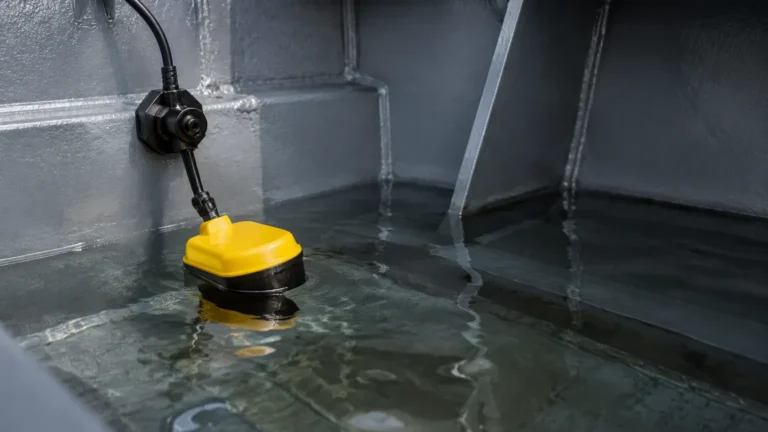
Floor Level Switches
Floor Level Switches
In industrial and commercial infrastructure, the early detection of liquid on floor surfaces is a critical safety and operational requirement. Floor level switches, often categorized as leak detection sensors or point-level controllers, serve as the first line of defense against equipment damage, environmental contamination, and hazardous working conditions. Whether monitoring a data center for coolant leaks or a chemical warehouse for hazardous spills, selecting the correct technology is essential for reliable performance.
As a specialized subset of Level Switches, floor-mounted units are designed to trigger an alarm or shut down processes the moment a liquid film reaches a specific height—often as low as 0.5 mm to 1 mm. This article explores the technical principles, selection criteria, and installation best practices for these vital instruments.
Measurement Principles of Floor Level Switches
Unlike standard tank-mounted sensors, floor level switches must operate in open environments and detect very small volumes of liquid. Several physical principles are employed to achieve this sensitivity.
Conductivity-Based Detection
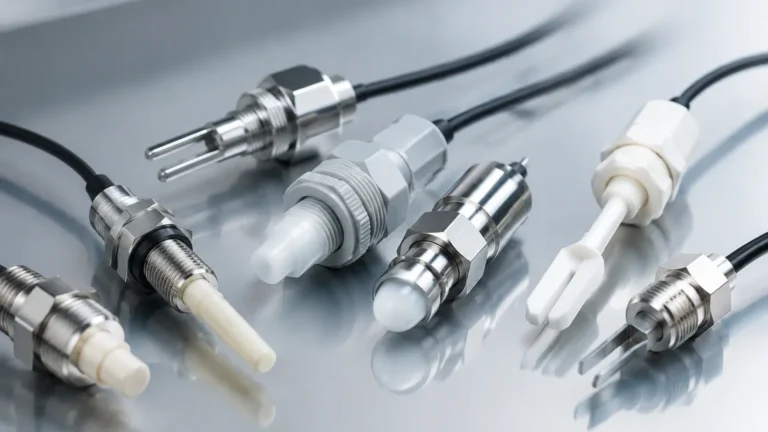
Conductive floor level switches utilize two or more electrodes. When a conductive liquid (such as water, acids, or bases) bridges the gap between the electrodes, an electrical circuit is completed. This change in resistance is detected by a controller, which then toggles a relay or sends a digital signal. This technology is robust and cost-effective but is limited to conductive fluids and can be susceptible to false alarms if the floor is naturally damp or if metallic debris creates a bridge.
Optical Refraction
Optical sensors use an infrared LED and a light receiver housed within a prism. In dry conditions, the infrared light reflects internally within the prism and returns to the receiver. When liquid touches the prism, the refractive index changes, causing the light to escape into the liquid. The receiver detects the loss of signal and triggers the switch. Optical floor level switches are highly sensitive and have no moving parts, making them ideal for clean environments like laboratories or server rooms.
Float-Operated Mechanisms
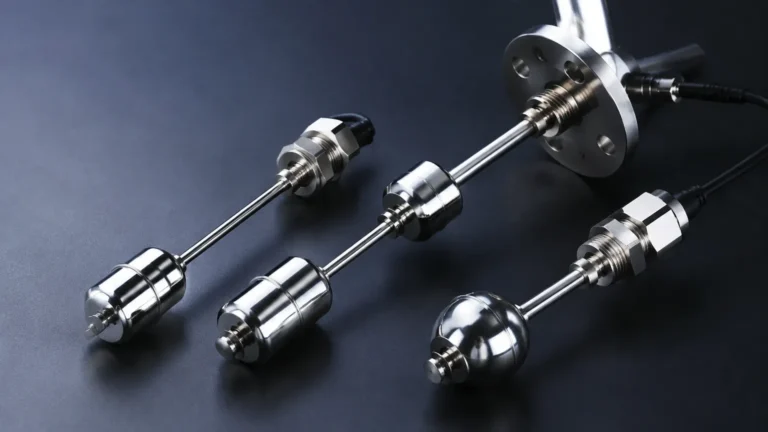
Float switches utilize buoyancy. A small, low-profile float containing a magnet rises as liquid accumulates. This magnetic field actuates a reed switch within the stationary stem. While traditional float switches are often too bulky for floor applications, specialized "puddle" or "sump" switches are designed with horizontal orientations or weighted bases to detect liquid levels starting at 10 mm to 20 mm (0.4 to 0.8 inches).
Ultrasonic and Gap Sensors
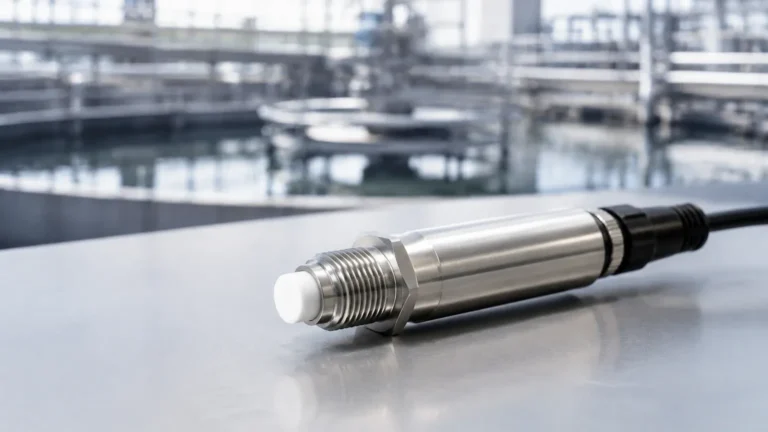
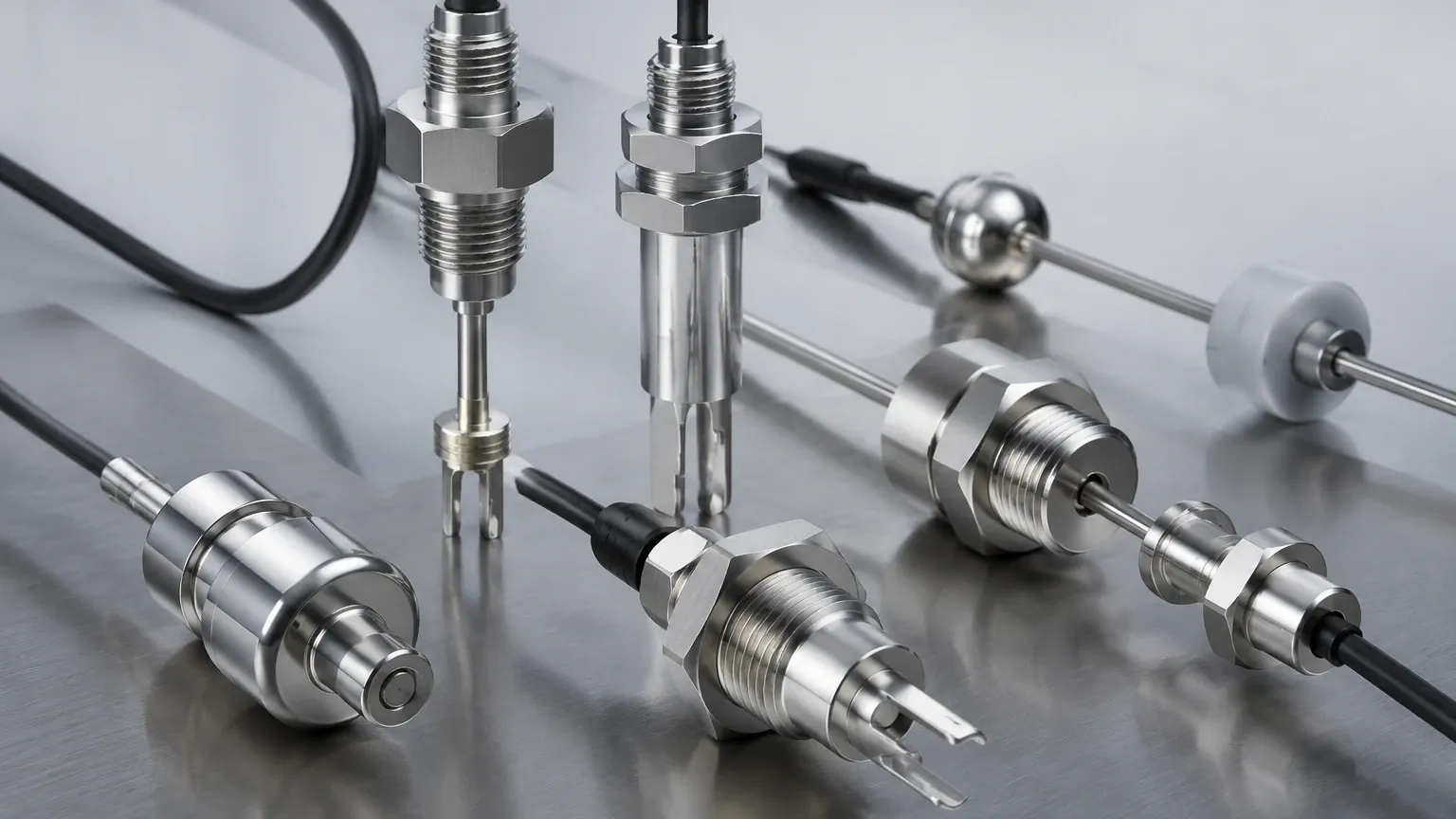
Ultrasonic point level switches use a piezoelectric crystal to create high-frequency vibrations across a small gap. When liquid fills the gap, the vibration is dampened or the acoustic transmission increases (depending on the design). This technology is highly reliable for non-conductive fluids like oils and fuels where conductivity probes would fail.
Technical Selection Criteria
Choosing the right instrument requires an analysis of the fluid properties and the surrounding environment. The following table summarizes the primary considerations for different technologies.
| Technology | Suitable Fluids | Sensitivity (Min Level) | Pros | Cons |
| :— | :— | :— | :— | :— |
| Conductive | Water, Acids, Alkalis | 1 mm – 2 mm | Low cost, robust | Requires conductive fluid, probe fouling |
| Optical | Most liquids (Clear/Dark) | < 1 mm | No moving parts, compact | Affected by thick coatings or foam |
| Float | Non-coating liquids | 10 mm+ | Simple, no power (passive) | Moving parts, requires more depth |
| Ultrasonic | Oils, Chemicals, Water | 2 mm – 5 mm | High reliability, non-contact | Higher cost, complex electronics |
Material Compatibility
The housing of the floor level switch must be compatible with the potential spill. For general water detection, ABS plastic or stainless steel (304/316) is standard. However, in chemical processing plants where aggressive solvents or concentrated acids may be present, PTFE (Teflon) or PVDF housings are necessary to prevent the sensor itself from dissolving during a leak event.
Output and Integration
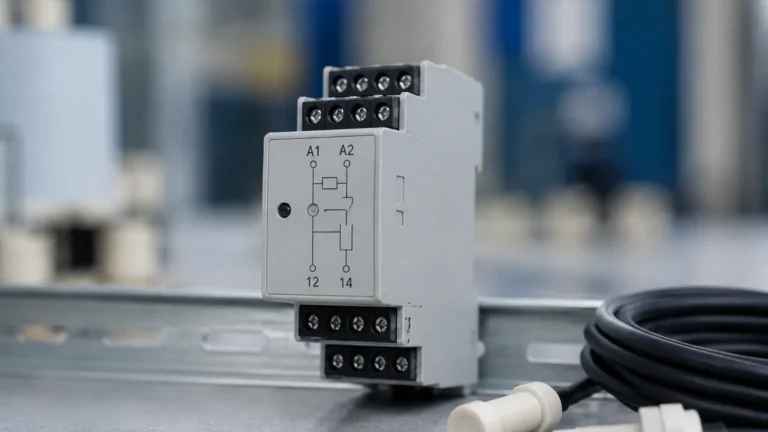
Industrial floor level switches typically offer several output options:
* Relay Contact (SPDT): Direct control of a pump or local siren.
* Transistor (NPN/PNP): Integration with PLCs (Programmable Logic Controllers).
* Two-wire Current Loop: For long-distance signal transmission in large facilities.
Key Applications in Industry
Floor level switches are integrated into safety instrumented systems (SIS) across various sectors to prevent catastrophic failures.
1. Data Centers and Telecommunications: Placed under raised floors near CRAC (Computer Room Air Conditioning) units to detect chilled water leaks that could short-circuit electrical busways.
2. Chemical Storage Bunds: Installed in secondary containment areas (bunds) to alert operators if a primary tank has breached its integrity.
3. Mechanical Rooms: Monitoring for boiler blowdown leaks or pump seal failures in HVAC systems.
4. Semiconductor Cleanrooms: Detecting ultra-pure water (UPW) or chemical leaks where even a small spill can contaminate a sterile environment.
Installation and Positioning Guidelines
Proper placement is as important as the technology itself. A poorly positioned sensor will fail to detect a leak until significant damage has occurred.
* Low Point Identification: Use a spirit level or laser level to identify the lowest point of the floor or containment area. Liquids will naturally gravitate toward these points.
* Distance from Sources: While you want to detect leaks early, placing a sensor directly under a valve that occasionally drips during maintenance can lead to "nuisance" alarms. Position the switch slightly offset from direct drip paths but within the drainage flow.
* Surface Preparation: For optical or conductive sensors that sit flush on the floor, the surface must be clean and level. Uneven concrete can create gaps that allow liquid to flow around the sensor without triggering it.
* Securing the Device: Floor level switches should be weighted or bolted down. In a flood event, a lightweight sensor might float or be moved by the current, failing to maintain its calibrated trigger point.
Limitations and Operational Risks
While highly effective, floor level switches have specific limitations that engineers must account for during the design phase:
* Surface Tension: Very small volumes of liquid may bead up due to surface tension and fail to bridge the electrodes of a conductive switch or reach the prism of an optical switch.
* Debris and Contamination: In industrial environments, dust, metal shavings, or oil films can coat the sensor. Regular cleaning is required to ensure the liquid can physically contact the sensing element.
* False Triggers: High humidity or condensation in cold environments can trigger sensitive conductivity probes. In such cases, adjusting the sensitivity threshold or using an optical sensor with a coated lens may be necessary.
Maintenance and Testing Protocols
Because floor level switches are safety devices that may sit idle for years, a rigorous testing schedule is mandatory. Welk recommends a functional "wet test" at least once every six months.
1. Visual Inspection: Check for corrosion on electrodes or clouding of optical lenses.
2. Functional Loop Test: Manually apply a small amount of the target liquid to the sensor and verify that the alarm reaches the central control room and that any interlocks (such as valve closures) actuate correctly.
3. Cleaning: Wipe sensors with a lint-free cloth and an appropriate solvent (if applicable) to remove buildup.
Frequently Asked Questions (FAQs)
Q: Can floor level switches detect oil leaks?
A: Yes, but conductivity-based switches will not work because oil is non-conductive. For oil detection, optical or ultrasonic gap switches are the preferred choice.
Q: What is the minimum liquid height required for detection?
A: This depends on the technology. High-precision optical sensors can detect liquid as shallow as 0.5 mm, while standard float-based floor switches may require 10 mm to 20 mm of accumulation.
Q: How many sensors do I need for a large room?
A: This is determined by the floor topography. If the floor is perfectly flat, one sensor every 50 to 100 square meters may suffice. However, if there are structural barriers or multiple low points, each low point requires its own sensor.
Q: Are there wireless floor level switches?
A: While wired versions are standard for industrial reliability, wireless IoT-based floor switches are increasingly used in commercial buildings to reduce installation costs. However, for critical industrial safety, wired connections to a PLC remain the gold standard.
For more detailed specifications and to view our full range of industrial measurement solutions, visit our dedicated section on Level Switches.