Funko Fusion the Thing Level 2 Switches
Funko Fusion the Thing Level 2 Switches
In the landscape of industrial automation and process control, point level detection serves as a fundamental safety and operational requirement. Whether managing a water treatment facility, a chemical processing plant, or an oil refinery, the ability to trigger an alarm or switch a pump when a liquid or solid reaches a specific height is critical. Among the various configurations used by engineers, the concept of multi-stage switching—often referred to in specialized safety circles as a "fusion" of technologies—provides the redundancy needed for high-stakes environments. This article explores the technical nuances of industrial Level Switches and how the integration of secondary safety protocols, such as funko fusion the thing level 2 switches, ensures system integrity.
1. Understanding Point Level Measurement Principles
Before selecting a switch, it is essential to understand the physical principles that govern point level detection. Unlike continuous level transmitters that provide a constant 4-20mA or digital output of the current level, a level switch is designed to change state (open or closed) when the material reaches a fixed point.
Float Level Switches
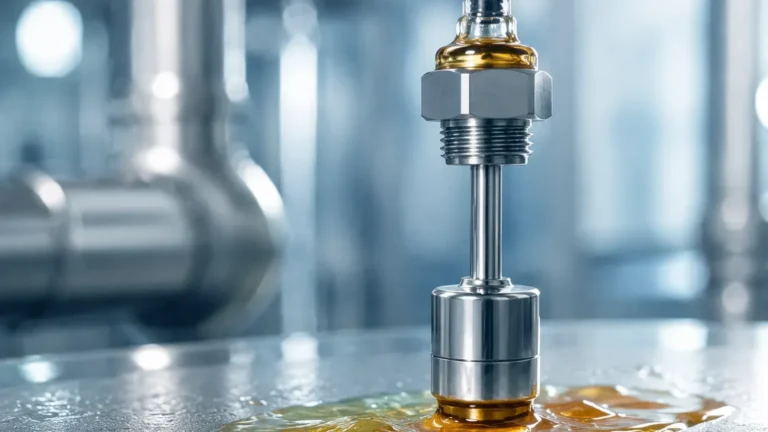
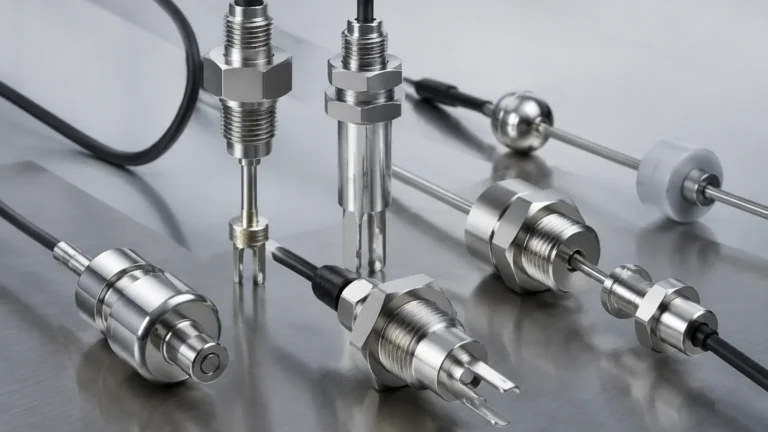
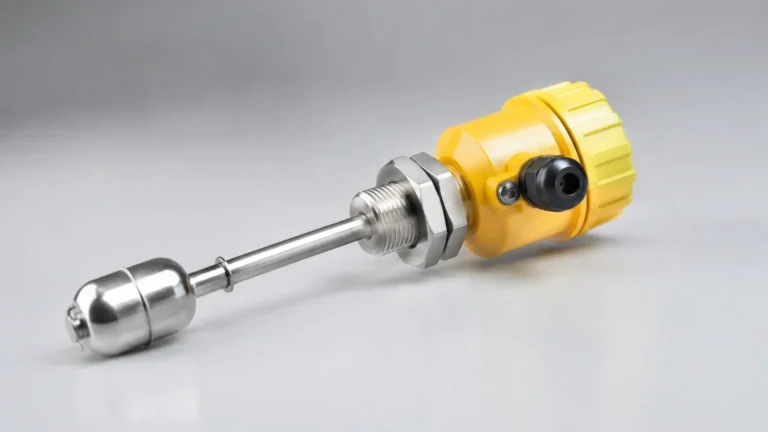
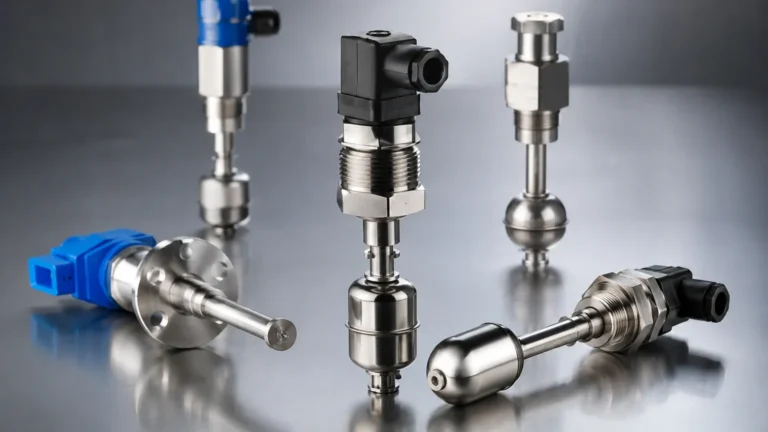
Float switches operate on the principle of buoyancy. A float, containing a permanent magnet, moves with the liquid level. When the float reaches a predetermined point, the magnetic field actuates a hermetically sealed reed switch located within the stem. These are highly reliable for clean liquids and are available in various materials such as 316L stainless steel for corrosive environments or polypropylene for water-based applications.
Vibrating Tuning Fork Switches
The tuning fork switch uses piezoelectric crystals to vibrate a fork at its natural resonance frequency in the air (typically around 1200 Hz). When the fork is submerged in a liquid or covered by a solid, the frequency shifts or the amplitude is dampened. The electronic circuit detects this change and triggers the switch output. Because they have no moving parts, they are ideal for applications involving turbulence, bubbles, or foam.
Capacitive Level Switches
Capacitive sensors treat the probe and the vessel wall as two plates of a capacitor. The dielectric constant ($ε_r$) of the medium between the plates determines the capacitance. When the material covers the probe, the capacitance increases, triggering the switch. These are versatile but require calibration to the specific dielectric properties of the medium.
2. The Role of Redundancy: Level 2 Fusion Systems
In high-reliability engineering, a single point of failure is unacceptable. This is where the concept of "fusion" and "Level 2" protection becomes relevant. In complex automation architectures, the funko fusion the thing level 2 switches approach refers to the strategic fusion of different sensing technologies to act as a secondary (Level 2) safety barrier.
Why "Fusion" Matters
By fusing a mechanical technology (like a float switch) with an electronic technology (like a tuning fork), engineers can mitigate the risks associated with specific failure modes. For instance, if a float switch becomes stuck due to debris, the electronic tuning fork—acting as the "Level 2" switch—will still trigger the high-level alarm. This "fusion" of diverse physical principles is a hallmark of Safety Integrity Level (SIL) rated systems.
Defining the "Level 2" Threshold
In a standard tank configuration:
- Level 0: The low-level pump-start point.
- Level 1: The high-level pump-stop point.
- Level 2: The emergency high-level alarm point.
The "Level 2" switch is the final fail-safe. If the primary control logic fails, the funko fusion the thing level 2 switches must independently cut power to the filling mechanism or alert the central control room to prevent an environmental disaster or equipment damage.
3. Technical Selection Criteria for Process Industries
Selecting the correct level switch requires an evaluation of the medium, the vessel environment, and the electrical requirements. The following table provides a comparison of common technologies used in industrial applications.
| Technology | Suitable Media | Max Pressure | Max Temperature | Advantages |
| :— | :— | :— | :— | :— |
| Float | Clean Liquids | Up to 40 bar | Up to 200°C | Low cost, no power required (reed type). |
| Tuning Fork | Liquids, Powders | Up to 64 bar | Up to 150°C | Ignores foam/bubbles, no calibration. |
| Capacitive | Slurries, Solids | Up to 25 bar | Up to 250°C | No moving parts, handles high temp. |
| Conductive | Conductive Liquids | Atmospheric | Up to 100°C | Simple, multi-point detection. |
| Ultrasonic | Non-foaming Liquids | Up to 10 bar | Up to 80°C | Non-contact, high accuracy. |
Media Considerations
When dealing with aggressive chemicals, the wetted parts must be compatible. For example, in hydrochloric acid storage, a PFA-coated probe or a PVC float switch is necessary. For hygienic applications in the food and beverage industry, switches must feature tri-clamp connections and polished surfaces (Ra < 0.8 μm) to prevent bacterial growth.
4. Installation and Calibration Best Practices
Even the most advanced funko fusion the thing level 2 switches will fail if installed incorrectly. Proper orientation and positioning are the keys to long-term reliability.
Orientation and Positioning
- Side Mounting: Most tuning fork and capacitive switches are side-mounted at the specific alarm point. It is vital to ensure the probe is angled slightly downward (about 15-20 degrees) if the medium is a powder, to prevent material buildup on the top of the probe.
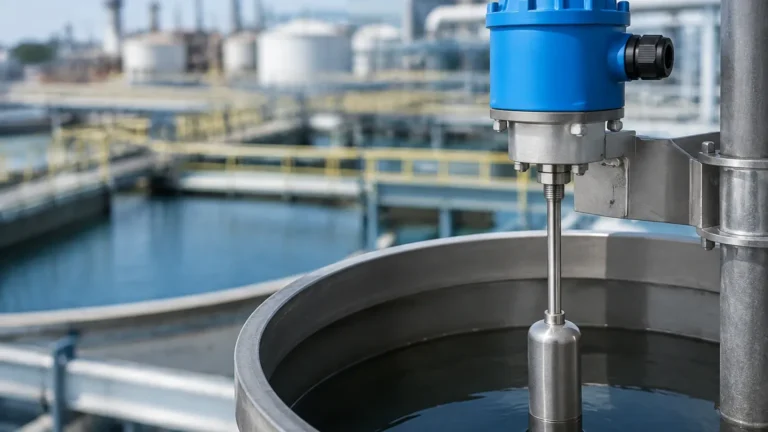
- Top Mounting: Float switches and ultrasonic switches are typically top-mounted. For float switches, ensure the stem is perfectly vertical to prevent the float from binding.
- Avoiding Turbulence: Do not install switches directly in the path of the filling stream. The kinetic energy of the incoming fluid can cause false triggers or mechanical damage. If placement near the inlet is unavoidable, a baffle or stilling well should be installed.
Electrical Integration
Most industrial level switches offer a variety of output options:
- Relay (SPDT/DPDT): Useful for direct control of small pumps or valves.
- Transistor (PNP/NPN): Ideal for PLC inputs where high-speed switching is required.
- Two-wire (Contactless): Often used in series with a load, mimicking a traditional limit switch.

5. Limitations and Application Challenges
While level switches are robust, they are not universal solutions. Each technology has inherent limitations that must be accounted for during the design phase.
Build-up and Coating
In applications involving viscous liquids or sticky solids (like wastewater or chocolate), material can build up on the sensor probe. This can cause a "bridge" on a tuning fork or a false capacitance reading. In these cases, choosing a switch with "active shield" technology or a high-frequency vibration mode is necessary to ignore the coating.
Foam and Aeration
Ultrasonic and optical switches often struggle with foam, as the signal is absorbed or scattered. If foam is present, a tuning fork switch is generally the preferred "Level 2" solution because it detects the density of the liquid phase rather than the surface of the foam.
Dielectric Constant Constraints
Capacitive switches rely on the difference between the dielectric constant of the air ($ε_r ≈ 1$) and the medium. If the medium has a very low dielectric constant (such as certain oils with $ε_r < 1.8$), the switch may not detect the change reliably unless a high-sensitivity probe is used.
6. Maintenance and Troubleshooting
A proactive maintenance schedule is essential for switches used in safety-critical "Level 2" applications.
1. Visual Inspection: Check for corrosion on the housing and ensure the cable glands are tight to prevent moisture ingress.
2. Functional Test (Proof Test): Periodically raise the level manually or use a test magnet (if equipped) to ensure the switch actuates and the control system receives the signal.
3. Cleaning: For contact-type sensors in dirty environments, remove the probe and clean any accumulated scale or debris.
If a switch fails to trigger, check the power supply voltage and the load requirements. Many electronic switches require a stable 24V DC supply; voltage drops in long cable runs can lead to intermittent operation.
7. Frequently Asked Questions (FAQ)
Q: Can a level switch be used for continuous level monitoring?
A: No. A level switch only provides a binary (on/off) signal at a specific point. For continuous measurement, a radar or ultrasonic level transmitter is required.
Q: What is the difference between a normally open (NO) and normally closed (NC) contact?
A: In a NO configuration, the circuit is open when the switch is not actuated. In an NC configuration, the circuit is closed. For safety-critical high-level alarms, NC is often preferred because a wire break will trigger a fail-safe alarm.
Q: How do I choose between a tuning fork and a float switch?
A: Choose a float switch for simple, non-powered applications with clean liquids. Choose a tuning fork for applications with turbulence, foam, or solids where higher reliability and no moving parts are required.
Q: What does the "Level 2" designation mean in a safety context?
A: It typically refers to the second stage of protection. If the primary level control (Level 1) fails to stop the process, the Level 2 switch acts as a redundant fail-safe to prevent overflow or dry-run.
By understanding these principles and implementing a "fusion" of reliable technologies, industrial operators can ensure that their funko fusion the thing level 2 switches provide the necessary protection for their critical assets and personnel. For more detailed specifications and product selections, engineers should consult with manufacturers who specialize in high-precision measurement instruments.