Gateron Switches Explained
Gateron Switches Explained
In the realm of industrial automation and process control, the term "switch" encompasses a vast spectrum of technology, ranging from the tactile components found in human-machine interfaces (HMI) to the ruggedized sensors used for monitoring bulk solids and liquids. When exploring the mechanics of actuation, many engineers and system designers encounter the term "Gateron switches explained" in the context of control room peripherals and high-end input devices. However, in the field, the focus shifts toward industrial Level Switches, which perform the critical task of point-level detection in harsh environments.
This article provides a comprehensive guide to understanding switch technologies, bridging the gap between the precision mechanics of high-quality input switches and the robust engineering required for industrial level measurement.
Measurement Principles of Level Switches
Before selecting a switch for a specific application, it is essential to understand the underlying measurement principles. Industrial level switches operate by detecting a change in a physical property—such as buoyancy, vibration, or capacitance—and converting that change into a discrete electrical signal (on/off).
1. Buoyancy (Float) Principle
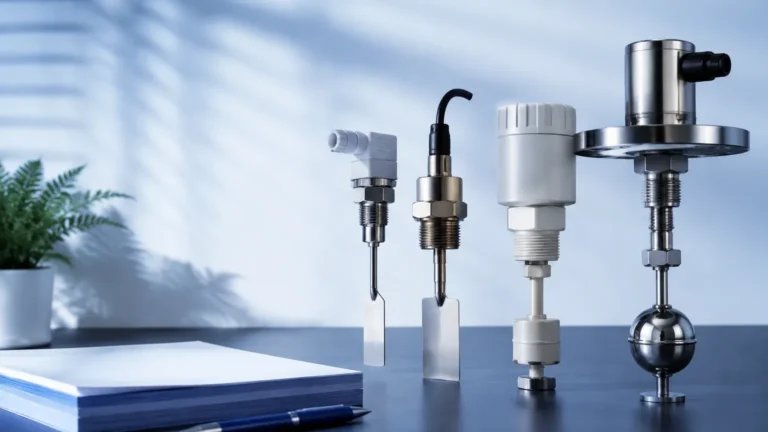
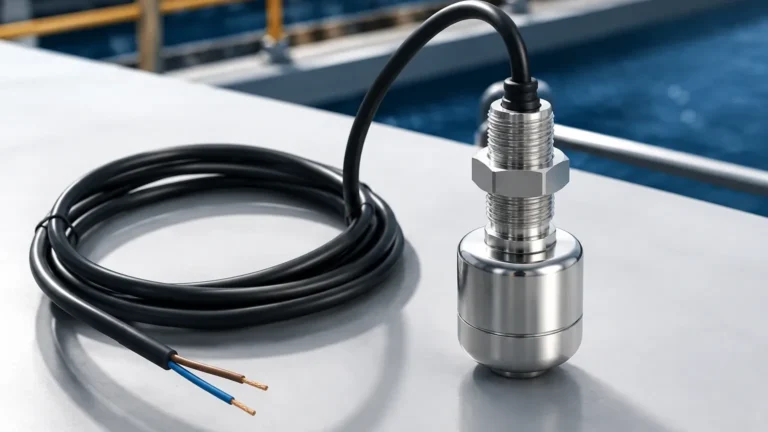
Float level switches utilize a magnetic float that rises and falls with the liquid level. As the float reaches a predetermined point, its internal magnet actuates a reed switch or a microswitch. This is the most traditional form of level detection, valued for its simplicity and independence from the electrical properties of the liquid.
2. Vibrating (Tuning Fork) Principle
A tuning fork sensor vibrates at its natural frequency in the air. When the fork is submerged in a liquid or covered by a solid, the frequency changes or the vibration is damped. An internal electronic circuit detects this change and triggers the switch output. These are highly reliable for preventing overfill in tanks.
3. Capacitance Principle
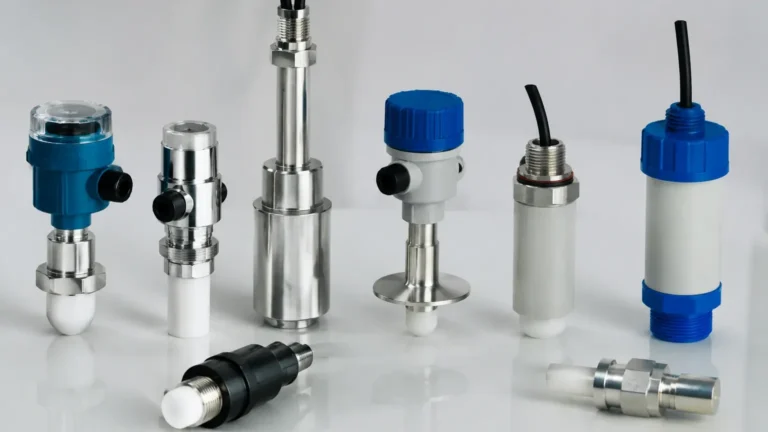
Capacitive switches measure the change in electrical capacitance between the sensor probe and the tank wall. When the medium (liquid or solid) displaces the air around the probe, the dielectric constant changes, altering the capacitance and triggering the switch.
4. Rotary Paddle Principle
Commonly used for bulk solids, a motor-driven paddle rotates slowly. When the material reaches the paddle, the rotation is impeded. The resulting torque triggers a microswitch that stops the motor and signals a high-level state.
Actuation Mechanics: Gateron Switches Explained
While industrial sensors detect process media, the control interfaces used by operators often rely on mechanical switches for data entry and system overrides. This is where the concept of gateron switches explained becomes relevant to the B2B sector. Gateron is a leading manufacturer of mechanical switches known for their smoothness and durability, often used in the keyboards that interface with SCADA systems and industrial PCs.
The Relationship to Industrial Control
In an industrial setting, the "feel" and reliability of a switch are paramount. Gateron switches are categorized by their actuation style:
* Linear Switches: These provide a smooth, consistent keystroke without a tactile bump. In a control room, these are preferred for rapid, repetitive inputs where fatigue reduction is critical.
* Tactile Switches: These feature a noticeable bump at the actuation point. This provides physical feedback to the operator that a command has been registered, which is vital in high-stakes environments where visual confirmation might be delayed.
* Clicky Switches: These provide both a tactile bump and an audible click. While less common in loud factory floors, they are used in quiet control hubs to ensure positive engagement.
Understanding these mechanics helps engineers specify the right HMI hardware to complement their industrial Level Switches. Just as a Gateron Red switch is chosen for its low resistance (approx. 45g actuation force), an industrial float switch is chosen for its specific gravity rating and pressure tolerance.
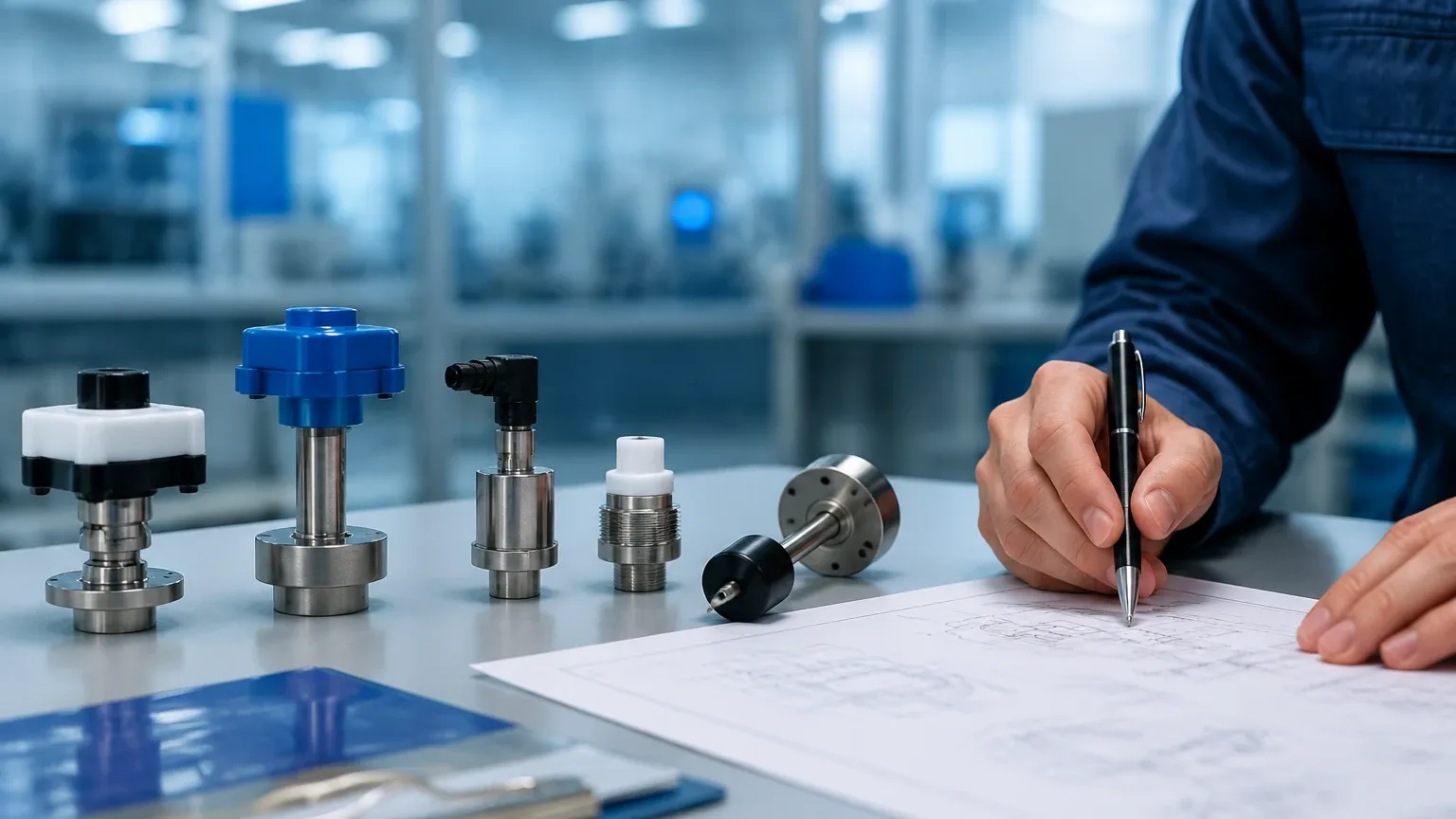
Selection Criteria for Industrial Level Switches
Choosing the correct industrial switch requires a detailed analysis of the process media and the environmental conditions. The following table outlines the primary considerations for common industrial applications.
Selection Table: Level Switch Technologies
| Technology | Suitable Media | Max Temperature | Max Pressure | Key Advantage |
| :— | :— | :— | :— | :— |
| Float Switch | Clean liquids, water | 150°C | 40 bar | Low cost, simple installation |
| Tuning Fork | Liquids, powders, grains | 250°C | 64 bar | No calibration required, foam insensitive |
| Capacitive | Corrosive liquids, pastes | 200°C | 100 bar | No moving parts, handles high pressure |
| Rotary Paddle | Bulk solids, sand, gravel | 80°C | 0.5 bar | Robust for heavy materials |
| Ultrasonic | Non-foaming liquids | 90°C | 3 bar | Non-contact, high accuracy |
Installation Considerations
Proper installation is the most significant factor in the longevity and accuracy of a level switch. Engineers must account for the physical dynamics within the vessel.
1. Mounting Orientation: Most switches can be mounted either horizontally (from the side of the tank) or vertically (from the top). Vertical mounting is often preferred for float switches to avoid mechanical binding, while tuning forks are frequently side-mounted to detect specific point levels.
2. Turbulence and Agitation: In tanks with mixers or high-velocity inflow, a stilling well or a protective baffle should be installed. This prevents the mechanical stress of moving fluid from damaging the probe or causing false trips.
3. Dead Zones: Every switch has a "dead zone" or a minimum distance from the mounting point where it cannot accurately detect the medium. This must be factored into the tank's safety volume calculations.
4. Wiring and Housing: For outdoor or wash-down environments, ensure the switch housing meets IP67 or IP68 standards. In hazardous locations (oil and gas), explosion-proof (Ex d) or intrinsically safe (Ex i) ratings are mandatory.
Limitations and Environmental Factors
No single switch technology is universal. Understanding limitations prevents system failures:
* Viscosity and Coating: Capacitive and tuning fork switches can struggle if the medium is highly viscous or prone to leaving a thick coating on the sensor. In these cases, specialized "coat-rejecting" electronics or self-cleaning probes are necessary.
* Material Density: For bulk solids, the material must have a minimum density (measured in g/cm³) to trigger a tuning fork or rotary paddle. If the material is too light (like fine fly ash), the damping effect may be insufficient.
* Dielectric Constant: Capacitive switches require the medium to have a dielectric constant significantly different from air. If the dielectric constant fluctuates (common in chemical mixing), the switch may require frequent recalibration.
Practical Maintenance Guidelines
To ensure the reliability of Level Switches, a routine maintenance schedule should be implemented:
* Visual Inspection: Check for corrosion on the probe or float and ensure the cable glands are tight to prevent moisture ingress.
* Functional Test: Periodically manually actuate the switch (if safe) to verify that the control logic in the PLC (Programmable Logic Controller) responds correctly.
* Cleaning: For media that tends to crystallize or build up, remove the sensor and clean it with a compatible solvent. Avoid abrasive tools that could damage the polished surfaces of tuning forks or the protective coatings of capacitive probes.
Frequently Asked Questions (FAQ)
Q: Can I use a liquid level switch for dry powders?
A: Generally, no. A float switch relies on buoyancy, which does not exist in powders. However, tuning fork switches are often designed in two versions: one optimized for the density of liquids and another for the lower density of solids.
Q: What is the difference between a microswitch and a reed switch in a level sensor?
A: A reed switch is hermetically sealed and actuated by a magnetic field, making it ideal for clean, low-power signaling. A microswitch is a mechanical snap-action switch that can handle higher electrical currents (often up to 5A or 10A) and is typically used in heavy-duty float or rotary switches.
Q: How does temperature affect switch performance?
A: High temperatures can cause the internal electronics to drift or fail. If your process exceeds 100°C, look for switches with remote electronics or high-temperature cooling fins that dissipate heat away from the sensitive components.
Q: Why is "Gateron switches explained" relevant to industrial engineers?
A: While Gateron produces keyboard switches, the fundamental principles of actuation—force, travel distance, and electrical contact reliability—are the same principles used to design the internal components of industrial sensors. Understanding the quality of the HMI (the keyboard) is just as important as understanding the quality of the field sensor for overall system uptime.
Conclusion
Whether you are specifying a high-performance mechanical keyboard for a workstation or selecting a ruggedized Level Switches for a chemical processing plant, the core requirement remains the same: reliable, predictable actuation. By understanding the measurement principles, environmental limitations, and mechanical characteristics of these devices, engineers can build more resilient and efficient automation systems. For critical applications, always consult the manufacturer's technical data sheet to ensure the device's pressure and temperature ratings align with your specific process requirements.