Level Switch Low
Level Switch Low
In industrial automation and process control, a level switch low (LSL) serves as a critical safeguard, ensuring that liquid or solid levels do not drop below a predetermined threshold. This point-level detection is fundamental to preventing equipment damage, maintaining product quality, and ensuring the safety of the operational environment. Whether it is protecting a centrifugal pump from running dry or triggering an automated refill sequence in a chemical reactor, the selection and implementation of the correct level switch low configuration are vital engineering decisions.
Understanding the Role of Low-Level Detection in Industrial Processes
A level switch low is a device designed to provide a discrete output—typically a relay contact or a transistor switch—when the material level in a vessel falls to a specific point. Unlike continuous level transmitters that provide a constant stream of data (e.g., 4-20mA or Modbus), a level switch is optimized for "alarm" or "control" states.
In most process architectures, the "Low" level is the first warning sign, while a "Low-Low" (LSLL) level often triggers an emergency shutdown (ESD). The primary objectives of installing a level switch low include:
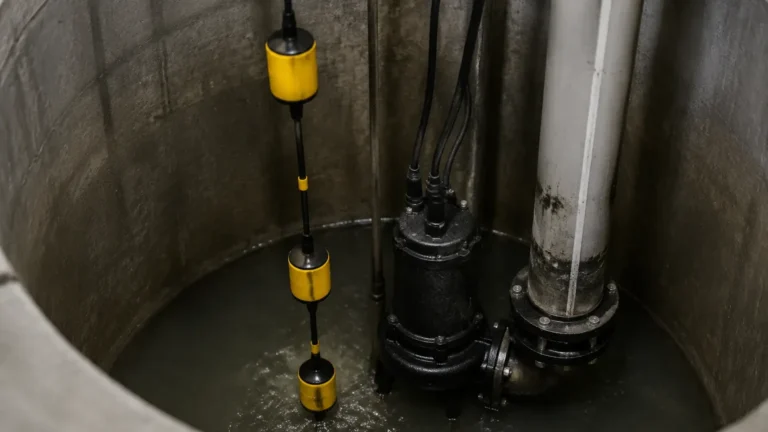
1. Pump Protection: Preventing cavitation and mechanical seal failure by ensuring pumps do not operate without sufficient suction head.
2. Inventory Management: Signaling the need for replenishment in storage tanks to avoid production halts.
3. Process Safety: Maintaining minimum liquid buffers in heat exchangers to prevent tube exposure and subsequent overheating.
4. Environmental Compliance: Ensuring secondary containment areas or sumps are monitored for minimum levels where specific chemical balances must be maintained.
Operating Principles for Low-Level Point Measurement
To select the appropriate instrument, engineers must first understand the physical principles governing different Level Switches. Each technology interacts differently with the process media and the vessel environment.
Float-Based Level Switches
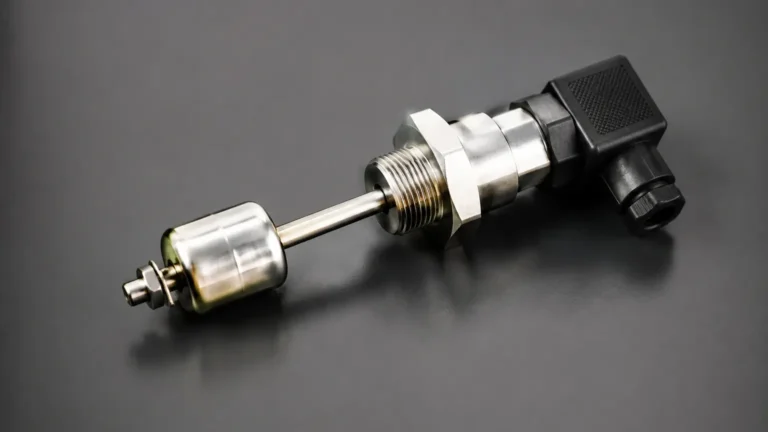
Float switches operate on the principle of buoyancy. A float, containing a magnet, moves with the liquid level. When the level drops to the switch point, the magnet actuates a reed switch or a microswitch.
* Pros: Simple, requires no external power (for reed types), and cost-effective.
* Cons: Susceptible to mechanical jamming if the media contains solids or high viscosity; limited to liquids.
Vibrating Fork (Tuning Fork) Technology
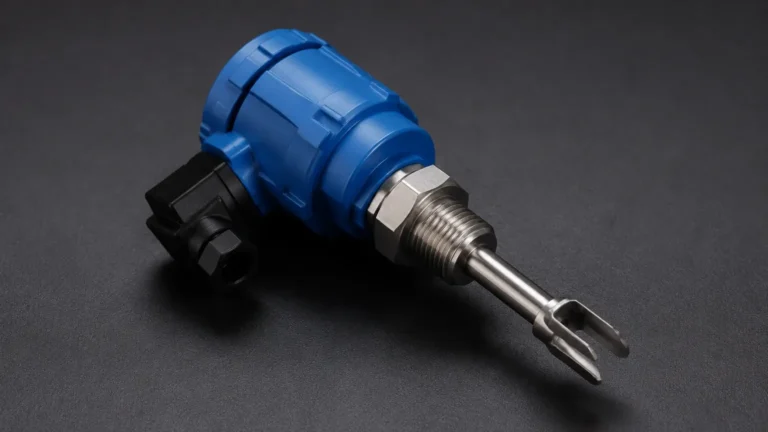
These switches utilize a fork-shaped sensing element that vibrates at its natural resonant frequency in air. When the fork is submerged in liquid or covered by solids, the frequency changes. For a level switch low application, the switch is normally submerged; the alarm triggers when the fork becomes uncovered and the frequency increases back to its natural state.
* Pros: Highly reliable, unaffected by bubbles, foam, or vibration; requires minimal maintenance.
* Cons: Can be affected by significant material build-up between the tines.
Capacitance Level Switches
Capacitance switches measure the change in electrical capacitance between the sensor probe and the tank wall (or a reference probe). As the level drops and the dielectric constant of the material around the probe changes from that of the liquid to that of air, the switch changes state.
* Pros: No moving parts; suitable for high temperatures and pressures.
* Cons: Requires calibration for specific media; sensitive to changes in the dielectric constant of the fluid.
Ultrasonic Point Level Switches
These sensors use high-frequency sound waves. In a typical gap-style ultrasonic switch, a signal is transmitted across a gap. When liquid is present, the signal travels through; when the level drops below the gap, the signal is attenuated by the air.
* Pros: Non-contact options available; excellent for hazardous chemicals.
* Cons: Performance can be degraded by heavy foam or high-pressure vapors that alter sound speed.
Selection Criteria for Level Switch Low Applications
Choosing the right level switch low requires a detailed analysis of the process conditions. Engineers should use the following criteria to evaluate potential instruments:
| Criteria | Considerations |
| :— | :— |
| Media Type | Liquid, slurry, or granular solid? Is it corrosive or abrasive? |
| Viscosity | High-viscosity fluids may cause float switches to stick or tuning forks to require higher torque versions. |
| Temperature & Pressure | Standard switches often handle up to 80°C (176°F), but high-pressure steam or cryogenic applications require specialized housings and seals. |
| Vessel Geometry | Is there internal piping or agitators that could interfere with the sensor? |
| Electrical Output | Does the control system require a dry contact relay, PNP/NPN, or a NAMUR signal for intrinsic safety? |
| Certification | Are ATEX, IECEx, or SIL2 ratings required for the specific installation zone? |
Critical Installation Guidelines for Reliable Low-Level Switching
The physical placement of a level switch low is just as important as the technology itself. Improper installation is the leading cause of false alarms or, more dangerously, a failure to trip when needed.
Mounting Orientation
Most point-level switches can be mounted either horizontally (through the side of the tank) or vertically (from the top). For low-level detection, side mounting at the exact trip point is often preferred for precision. However, if the tank is buried or inaccessible from the side, a vertical probe with an extended length must be used.
Avoiding the Vortex and Turbulence
In tanks with high-speed agitators or bottom-drain outlets, a vortex can form. If an LSL is placed too close to the center of the vortex, it may trigger prematurely even if the average volume in the tank is sufficient. In such cases, the use of a stilling well—a perforated pipe that surrounds the sensor—is recommended to dampen turbulence and provide a stable measurement surface.
Fail-Safe Logic
In B2B industrial applications, the "fail-safe" configuration is paramount. For a level switch low, the switch should typically be wired in a "Normally Closed" (NC) state when the sensor is submerged. This means that if power is lost or a wire is cut, the system perceives a "low level" and triggers a safety shutdown. This "de-energize to trip" philosophy ensures that a component failure results in a safe state rather than allowing a pump to run dry unnoticed.
Identifying and Mitigating Common Operational Risks
Even the most advanced level switch low can encounter challenges in a live industrial environment. Awareness of these risks allows for better preventative maintenance.
1. Material Build-up (Coating): In chemical and food processing, media can dry or congeal on the sensor probe. This "coating" can fool a capacitance or tuning fork sensor into thinking it is still submerged even when the level has dropped. Selecting switches with "active shield" technology or coating-rejection logic is essential for these applications.
2. Aeration and Foam: Some liquids entrain air or produce a thick layer of foam. A float switch might sink in foam (triggering a low alarm prematurely), while an ultrasonic switch might reflect off the top of the foam rather than the liquid. Understanding the density of the foam versus the liquid is critical for float selection.
3. Mechanical Wear: In applications involving abrasive slurries, the sensing elements of tuning forks or floats can erode over time. Regular visual inspections and the use of hardened materials (like Hastelloy or ceramic coatings) can extend the service life.
Comparative Analysis of Low-Level Sensing Technologies
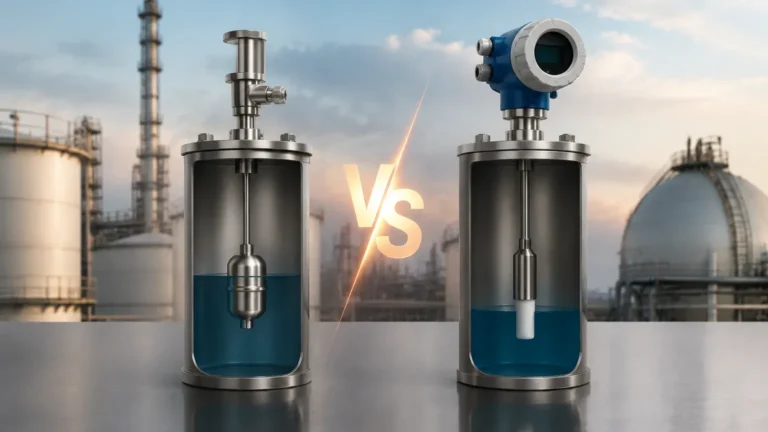
To assist in the engineering selection process, the following table summarizes how common technologies perform in specific low-level scenarios.
| Technology | Best For | Limitation | Maintenance Level |
| :— | :— | :— | :— |
| Float Switch | Clean water, fuels | Build-up, moving parts | Moderate |
| Vibrating Fork | Most liquids, powders | High viscosity/clogging | Low |
| Capacitance | High temp/pressure | Requires calibration | Moderate |
| Ultrasonic (Gap) | Acids, oils | Heavy foam | Low |
| Optical | Clear liquids, small spaces | Probe staining | Moderate |
Maintenance and Functional Testing
A level switch low is often a "silent" component that does nothing for months until a crisis occurs. Therefore, functional testing (Proof Testing) is mandatory, especially in SIL-rated systems.
* Manual Trip Testing: Many modern electronic level switches include a test button or a magnetic test point that allows technicians to simulate a low-level condition without draining the tank.
* Cleaning Cycles: In wastewater or resin applications, sensors should be pulled and cleaned on a schedule dictated by the rate of accumulation.
* Calibration Check: For capacitance-based LSLs, the dielectric constant of the fluid should be verified if the process chemistry changes, as this can shift the switch point.
Frequently Asked Questions (FAQ)
Q: Can a level switch low be used for both an alarm and a pump start?
A: Yes, often through a control relay. A single switch can signal a low alarm, while a second switch (Level Switch High) signals the pump to stop. Alternatively, a single continuous transmitter can be programmed with multiple setpoints to handle both functions.
Q: What is the difference between an LSL and an LSLL?
A: An LSL (Level Switch Low) is typically a functional alarm used to manage the process (e.g., start a refill). An LSLL (Level Switch Low-Low) is a safety-critical alarm used to prevent catastrophic failure (e.g., stopping a heater to prevent a fire).
Q: How do I handle a level switch low in a tank with heavy agitation?
A: Use a vibrating fork switch with a short extension or a float switch inside a stilling well. Vibrating forks are generally more resistant to the physical forces of agitation than large floats.
Q: Is it possible to detect low levels of dry bulk solids?
A: Yes, vibrating rod switches or rotary paddle switches are commonly used as a level switch low in silos to indicate when the supply of grain, plastic pellets, or cement is nearly exhausted.
For engineers and procurement professionals, ensuring the reliability of low-level detection is a matter of matching the physical properties of the media with the appropriate sensing technology. By adhering to strict installation standards and fail-safe wiring practices, industrial facilities can significantly reduce the risk of equipment damage and process instability.