Level 3 Switches
Level 3 Switches
In the landscape of industrial automation and process safety, the term "level 3 switches" often serves as a point of convergence for two distinct engineering requirements: high-integrity safety systems (SIL 3) and multi-point level control configurations. Within the context of modern level measurement, level switches are fundamental components used to prevent tank overfills, protect pumps from dry running, and manage complex filling or emptying cycles.
Selecting the appropriate Level Switches requires a deep understanding of the physical properties of the media, the environmental conditions of the vessel, and the specific safety or logic requirements of the control architecture. This guide explores the principles of level switching, the nuances of high-integrity safety levels, and the technical criteria for implementing reliable point-level detection in industrial environments.
Understanding Level Switch Principles
Before selecting a specific device, engineers must understand the underlying measurement principles that govern how a switch detects the presence or absence of a material. Unlike continuous level transmitters that provide a constant signal (such as 4-20mA or RS485), a level switch provides a discrete output—typically a relay or transistor signal—when the material reaches a predefined point.
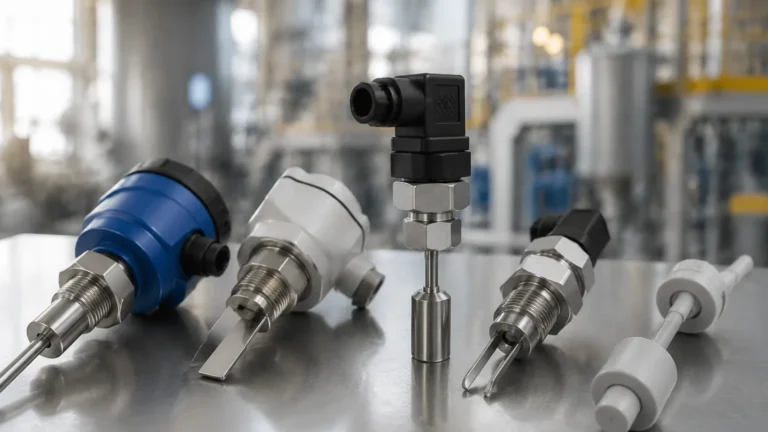
Vibrating Tuning Fork Switches
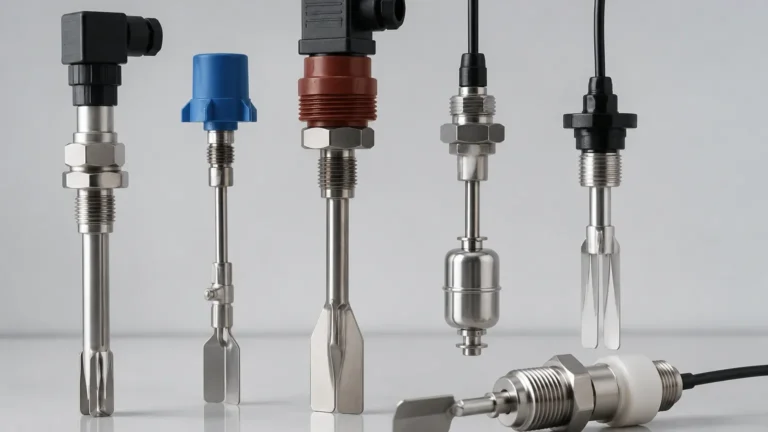
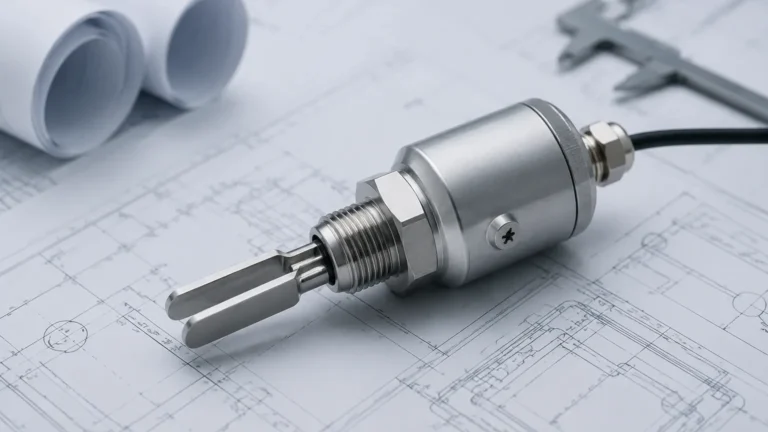
These switches utilize piezoelectric crystals to vibrate a fork-shaped probe at its natural frequency. When the probe is submerged in liquid or covered by solids, the frequency changes. The internal electronics detect this shift and trigger the switch output. These are highly versatile and unaffected by flow, turbulence, bubbles, or foam.
Float Level Switches
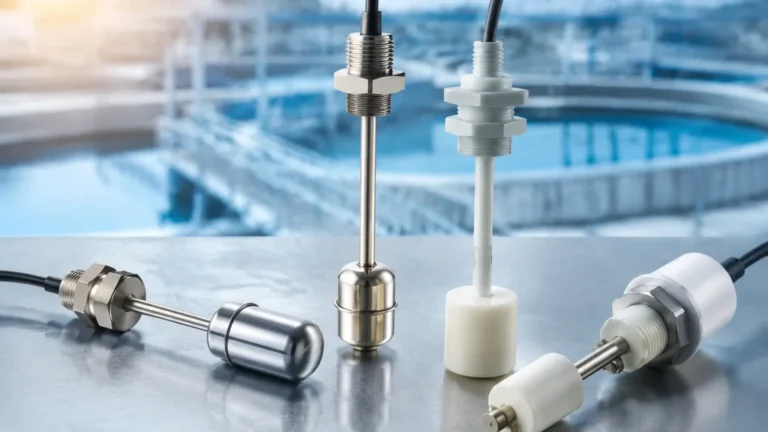
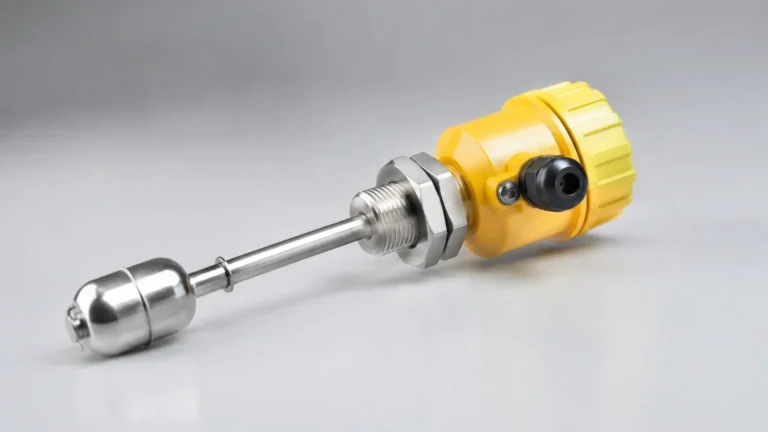
Operating on the principle of buoyancy, a float containing a magnet moves with the liquid level. When the float reaches a specific point, the magnetic field actuates a reed switch or a microswitch. This is a purely mechanical-to-electrical interface, making it robust for many clean liquid applications.
Capacitance Level Switches
These sensors measure the change in electrical capacitance between the sensor probe and the tank wall (or a reference electrode). As the media covers the probe, the dielectric constant changes, altering the capacitance. These are effective for both liquids and solids but require calibration based on the dielectric constant of the material.
Ultrasonic Level Switches
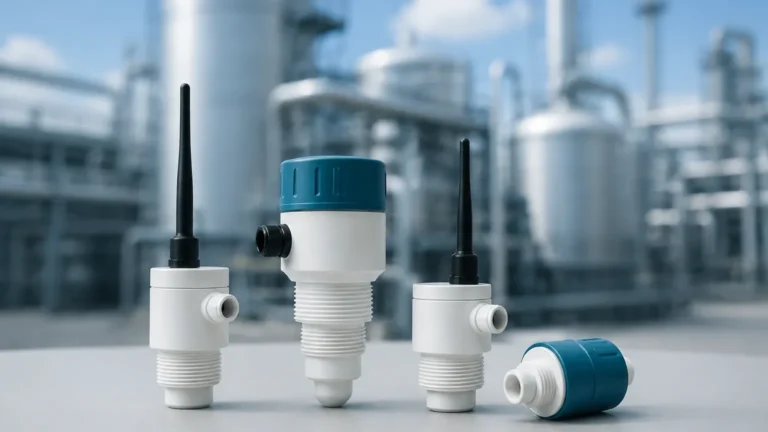
Ultrasonic switches use a pair of crystals (transmitter and receiver) separated by a small gap. When the gap is filled with liquid, ultrasonic waves travel across it; when the gap contains air or gas, the waves are attenuated. This "gap technology" is ideal for non-contact-sensitive liquids.
The Context of "Level 3" in Industrial Switching
When engineers search for "level 3 switches," they are typically referring to one of three technical contexts within a B2B or industrial framework:
1. Safety Integrity Level 3 (SIL 3): In hazardous industries like oil and gas or chemical processing, a level switch may be part of a Safety Instrumented System (SIS). A SIL 3 rating indicates a high level of reliability and risk reduction, often achieved through hardware redundancy and advanced self-diagnostics.
2. 3-Point Level Control: This refers to a control logic setup where three distinct switches (or a single probe with three switching points) are used to manage a process. For example: a "Low" switch to start a pump, a "High" switch to stop the pump, and a "High-High" switch to trigger an emergency alarm.
3. Industrial Network Integration (Layer 3): In the context of IIoT and Industry 4.0, smart level switches are increasingly integrated into the plant’s broader network. This involves moving data from the field level (Level 0/1) through gateways to the enterprise network (Layer 3), allowing for remote monitoring and predictive maintenance.
Technical Selection Criteria
Choosing the right instrument involves more than just selecting a technology; it requires matching the device specifications to the process environment. Welk provides a range of solutions tailored to these specific variables.
| Feature | Vibrating Fork | Float Switch | Capacitance | Ultrasonic (Gap) |
| :— | :— | :— | :— | :— |
| Media State | Liquid / Solids | Liquids Only | Liquid / Solids | Liquids Only |
| Viscosity Limit | Up to 10,000 cP | Low to Medium | High | Low to Medium |
| Pressure Range | Up to 64 bar (928 psi) | Up to 40 bar (580 psi) | Up to 100 bar (1450 psi) | Up to 40 bar (580 psi) |
| Temp. Range | -50°C to 150°C | -20°C to 120°C | -40°C to 200°C | -40°C to 130°C |
| Maintenance | Low | Moderate (Moving parts) | Low | Low |
Media Compatibility
The chemical compatibility of the wetted parts is paramount. Stainless steel (316L) is standard, but aggressive chemicals may require coatings like PTFE (Polytetrafluoroethylene) or specialized plastics like PP or PVDF. For level 3 switches used in high-purity water treatment, electropolished surfaces may be necessary.
Process Conditions
* Turbulence: If the tank has an agitator, vibrating forks or capacitance probes are preferred over float switches, which can be physically damaged by mechanical stress.
* Coating and Buildup: In applications with sticky media (e.g., wastewater or syrups), vibrating forks with "active shield" technology or specific capacitance settings are required to ignore material buildup on the probe.
Installation and Engineering Considerations
Proper installation is the most critical factor in ensuring the longevity and accuracy of level switches. Even the most advanced SIL 3 rated device will fail if improperly mounted.
1. Orientation: Most level switches can be mounted horizontally (through the side of the tank) or vertically (from the top). For vibrating forks, the tines should be oriented so that liquid can easily drain off them, preventing "false positives" caused by trapped droplets.
2. Nozzle Length: Ensure the active sensing element of the switch extends past the mounting nozzle into the vessel. If the sensor is recessed within a nozzle, material may become trapped, leading to switching errors.
3. Wiring and Power: For high-reliability applications, use shielded cables to prevent electromagnetic interference (EMI). In SIL 3 configurations, redundant wiring paths and fail-safe power supplies are standard requirements.
4. Dead Zones: Every switch has a small "dead zone" near the mounting thread where it cannot accurately detect media. This must be accounted for in the tank design to ensure the switch triggers at the exact required physical level.

Limitations and Practical Challenges
While level switches are highly reliable, they are not universal solutions. Engineers should be aware of the following limitations:
* Interface Detection: Standard switches may struggle to distinguish between two different liquids (e.g., oil and water). Specialized capacitance or multipoint float switches are needed for interface applications.
* Gas Pockets: In pressurized systems, gas pockets can form around the sensor, causing a "dry" signal even when the tank is full. Strategic venting or the use of vibrating forks (which are less sensitive to gas) can mitigate this.
* Mechanical Wear: Float switches involve moving parts. Over time, pivots can wear or the float can become punctured. Regular inspection cycles are necessary for mechanical switches in critical service.
Frequently Asked Questions (FAQs)
1. Can a level switch be used for continuous level measurement?
No. A level switch only provides an "on/off" signal at a specific point. For continuous measurement (e.g., 0% to 100% volume), you should use a radar, ultrasonic, or hydrostatic level transmitter.
2. What is the difference between a NPN and PNP output in electronic switches?
This refers to the type of transistor output. PNP switches provide a positive voltage signal when triggered (sourcing), while NPN switches connect the load to the negative/ground (sinking). The choice depends on the input requirements of your PLC (Programmable Logic Controller).
3. How do I test a SIL 3 level switch without emptying the tank?
High-integrity switches often include a "proof test" button or a magnetic test point. When activated, the electronics simulate a high-level condition to verify that the relay and alarm circuits are functioning correctly without needing to raise the actual liquid level.
4. Are level switches suitable for dry bulk solids like grain or plastic pellets?
Yes, but specific technologies like vibrating rods or rotating paddles are better suited for solids than float or ultrasonic gap switches. The bulk density of the material must be high enough to trigger the sensor’s mechanism.
5. Why would I choose a level switch over a radar transmitter?
Cost and simplicity. Level switches are significantly more affordable and easier to configure than radar transmitters. If you only need to know if a tank is full or empty, a switch is the more cost-effective engineering choice.
Conclusion
Whether implementing a basic pump control or a complex SIL 3 safety loop, the selection of level switches must be grounded in physical reality. By matching the measurement principle to the media properties and ensuring robust installation, facilities can achieve high levels of operational safety and efficiency. For specialized applications or custom OEM requirements, Welk offers a comprehensive portfolio of industrial level measurement instruments designed to meet the rigors of modern process automation.