Level of Switches
Level of Switches
In the landscape of industrial automation, point level detection remains a fundamental requirement for safety, process efficiency, and inventory management. The term "level of switches" refers to the specific height or point within a vessel where a binary state change occurs—transitioning from "empty" to "full" or vice versa. Unlike continuous level transmitters that provide a constant data stream of the volume or height, level switches are designed to trigger specific actions when a substance reaches a predetermined threshold.
Professional engineering teams rely on these devices to prevent tank overfills, protect pumps from dry running, and manage the automated replenishment of silos. Understanding the various measurement principles and the specific "level of switches" required for an application is the first step in ensuring long-term operational reliability.
Measurement Principles of Level Switches
Before selecting a device, it is essential to understand the physics behind how different sensors detect the presence or absence of a medium. Each technology interacts with the material properties—such as density, conductivity, or dielectric constant—in unique ways.
1. Float Level Switches (Buoyancy Principle)
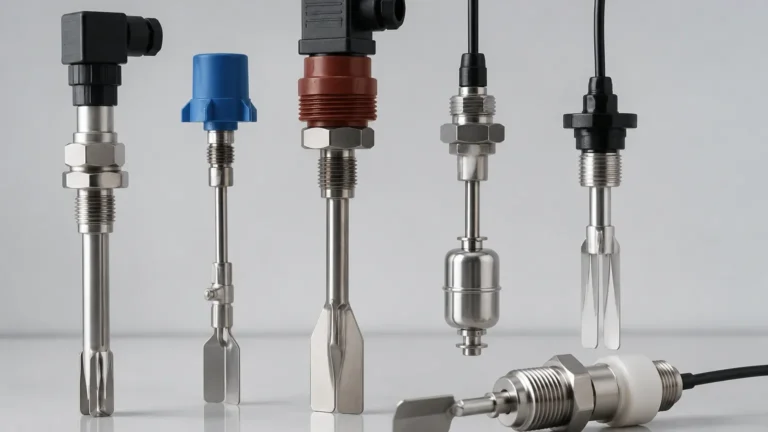
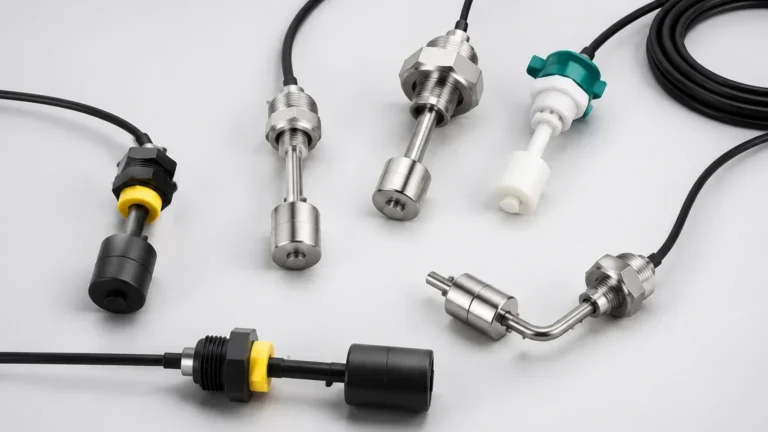
Float switches are among the most established technologies. They operate on the principle of buoyancy, where a float moves along with the liquid level. Inside the float or the guiding tube, a magnet actuates a reed switch when the float reaches the designated level.
* Best for: Clean, non-coating liquids with low viscosity.
* Mechanism: Mechanical movement of the float triggers an electrical contact.
2. Vibrating Fork Level Switches (Frequency Damping)
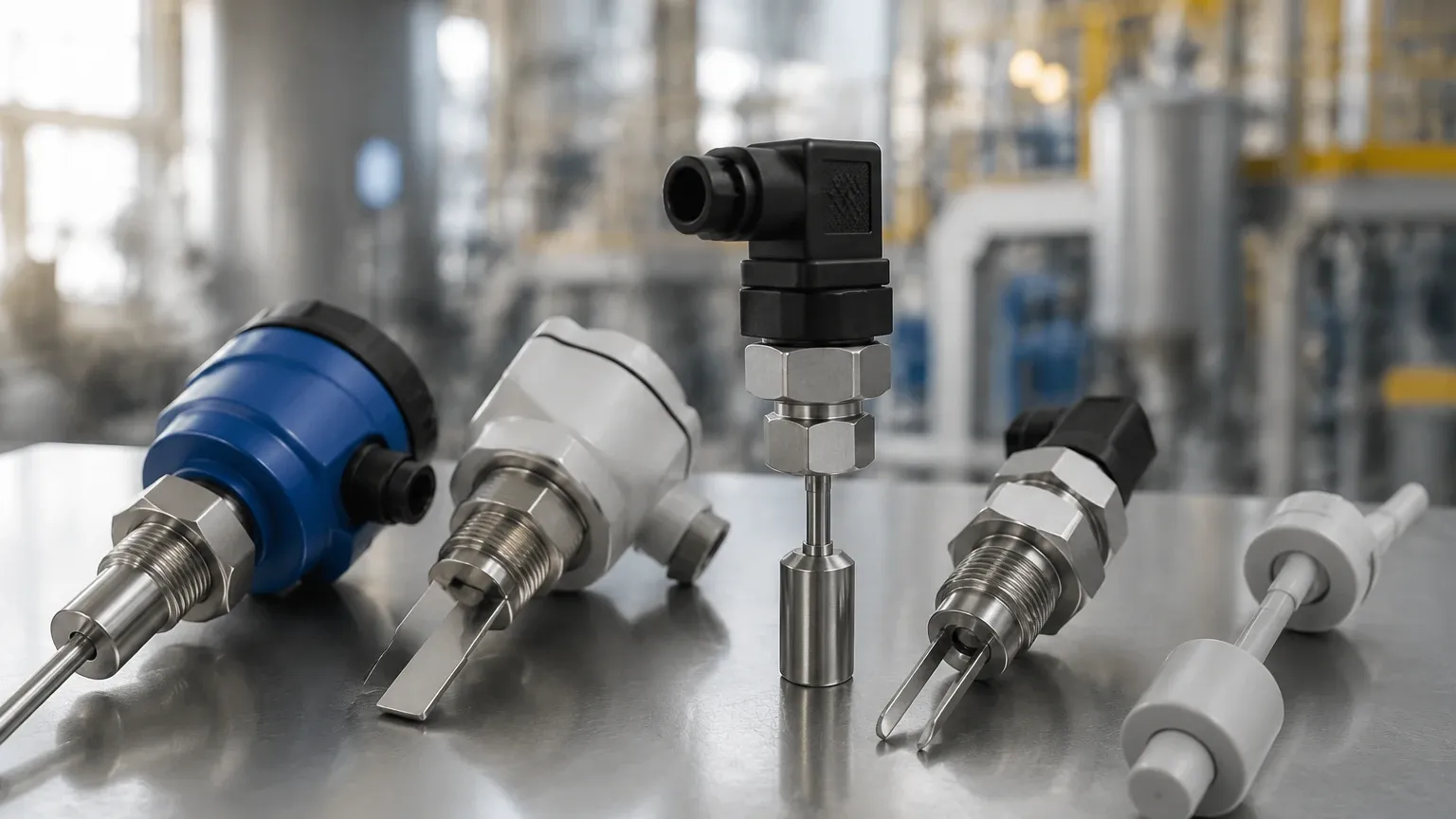
Vibrating or "tuning fork" switches use piezoelectric crystals to vibrate a pair of metal tines at their natural resonant frequency. When the tines are immersed in a liquid or solid, the frequency changes or the vibration is damped. The electronics detect this shift and switch the output.
* Best for: A wide range of liquids, powders, and fine-grained solids.
* Mechanism: Frequency monitoring; highly resistant to changes in flow, bubbles, or foam.
3. Capacitance Level Switches (Dielectric Principle)
These sensors treat the probe and the vessel wall (or a second probe) as two plates of a capacitor. As the material rises and covers the probe, the dielectric constant changes, increasing the measured capacitance. Once a specific threshold is reached, the switch is triggered.
* Best for: Corrosive materials, high-temperature applications, and materials with a consistent dielectric constant.
* Mechanism: Measurement of electrical capacitance between the sensor and the environment.
4. Conductive Level Switches (Electrical Resistance)
Conductive switches are designed for liquids that conduct electricity. Two or more electrodes are placed in the tank. When the liquid touches the electrodes, it completes an electrical circuit, allowing a small current to flow and triggering the relay.
* Best for: Water, acids, and alkaline solutions.
* Mechanism: Circuit completion through the conductive medium.
5. Rotary Paddle Switches (Mechanical Resistance)
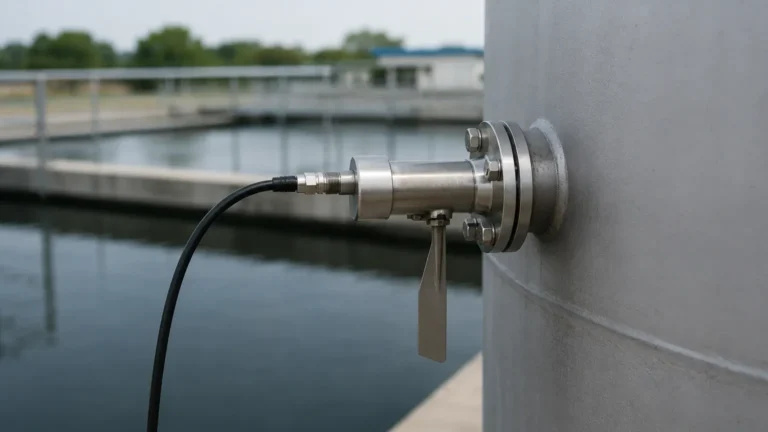
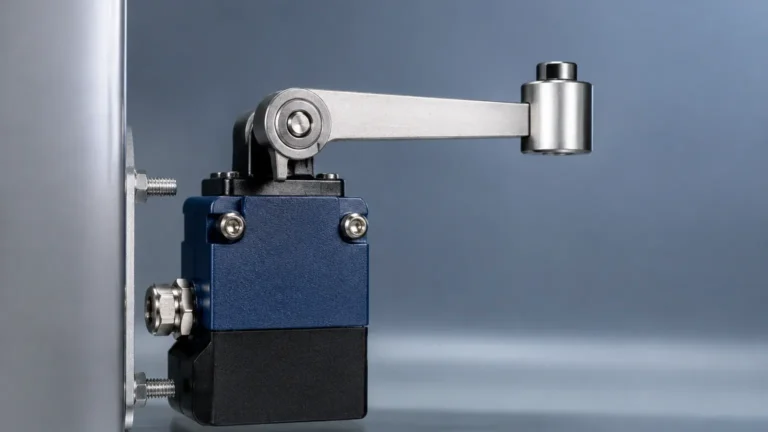
Primarily used for bulk solids, a motor slowly rotates a paddle. When the material reaches the paddle, the rotation is impeded. The resulting torque causes the motor to shift, actuating a microswitch and cutting power to the motor.
* Best for: Grains, sand, plastic pellets, and heavy ores.
* Mechanism: Mechanical resistance against a rotating element.
Technical Selection Criteria
Choosing the correct Level Switches requires a detailed analysis of the process environment. Engineers must evaluate the "level of switches" based on the following technical parameters:
Media Characteristics
* State: Is the material a liquid, a slurry, or a bulk solid?
* Density: For float switches, the float must be less dense than the liquid. For vibrating forks, the density must be sufficient to damp the vibration (typically > 0.5 g/cm³).
* Viscosity: Highly viscous materials can cause "clinging" on mechanical parts, leading to false positives.
* Conductivity/Dielectric Constant: Essential for conductive and capacitive sensors respectively.
Process Conditions
* Pressure: Standard switches may handle up to 20 bar (290 psi), but high-pressure variants are required for boilers or pressurized reactors.
* Temperature: Standard electronics are often rated up to 80°C (176°F). For high-temperature steam or molten materials, remote electronics or specialized heat sinks are necessary.
* Chemical Compatibility: The wetted parts (Stainless steel 316L, PTFE, PP, or Hastelloy) must be resistant to the medium to prevent corrosion.
Comparative Selection Table
| Technology | Media Type | Temp. Range | Pressure Range | Maintenance Level |
| :— | :— | :— | :— | :— |
| Float | Clean Liquids | -20 to 150°C | Up to 40 bar | Moderate (Mechanical) |
| Vibrating Fork | Liquids/Solids | -50 to 250°C | Up to 64 bar | Low (No moving parts) |
| Capacitive | Liquids/Solids | -40 to 200°C | Up to 25 bar | Low (Requires calibration) |
| Conductive | Conductive Liquids| -20 to 100°C | Up to 10 bar | Low (Electrode cleaning) |
| Rotary Paddle | Bulk Solids | -20 to 80°C | Atmospheric | Moderate (Mechanical) |
Installation Considerations
The physical placement of the sensor determines the accuracy of the detected level of switches. Improper installation is the leading cause of premature failure or false triggering.
1. Orientation:
* Side Mounting: Ideal for high or low-level alarms. Ensure the probe is angled slightly downward if the material is prone to build-up.
* Top Mounting: Used for adjustable high-level points. Ensure the probe length is correctly calculated for the desired trigger point.
2. Avoidance of Turbulence: If the tank has an agitator or a high-velocity inlet, the switch should be installed behind a baffle or in a stilling well to prevent mechanical damage or erratic switching.
3. Nozzle Length: For vibrating fork switches, the tines must extend fully into the vessel. If the mounting nozzle is too long, material can become trapped in the nozzle, causing the switch to remain in the "covered" state even when the tank is empty.
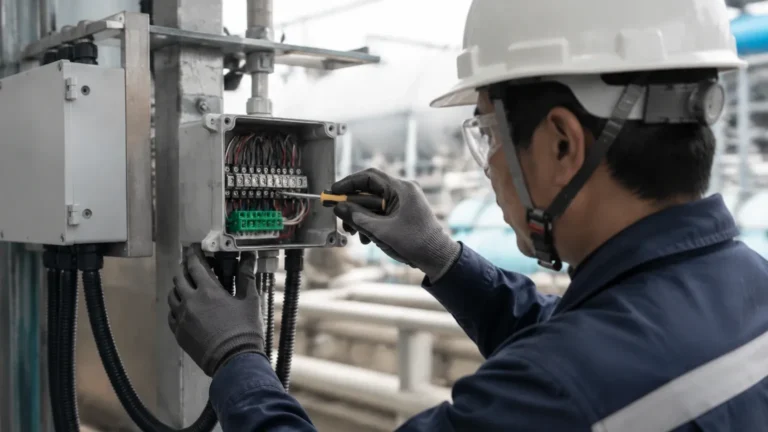
4. Wiring and Grounding: Capacitive and conductive switches require proper grounding to the metal tank wall. In plastic tanks, a ground reference electrode must be provided.
Limitations and Risks
While level switches are robust, they are not universal solutions. Engineers must be aware of the following risks:
* Material Build-up (Coating): In applications with sticky substances like resins or syrups, material may coat the sensor. Capacitive switches with "active shield" technology can ignore this coating, but standard float or fork switches may fail.
* Foam and Bubbles: Some technologies, like ultrasonic or optical switches, may struggle with heavy foam. Vibrating forks are generally the most reliable in aerated liquids.
* Mechanical Wear: Rotary paddles and float switches have moving parts that will eventually wear out, especially in abrasive environments like mining or cement production.
* False Trips from Bridging: In solids handling, material can "bridge" across the tines of a fork or between a probe and the tank wall, creating a false high-level signal.
Frequently Asked Questions (FAQ)
Q: Can a level switch be used for continuous measurement?
No. A level switch only provides a binary (on/off) signal. If you need to know the exact percentage of volume in a tank, a continuous level transmitter (such as radar or ultrasonic) is required.
Q: What is the difference between a "Normally Open" (NO) and "Normally Closed" (NC) contact?
In a "Normally Open" configuration, the circuit is open when the switch is not activated. In a "Normally Closed" configuration, the circuit is closed. NC is often preferred for safety-critical applications (fail-safe) because a broken wire will trigger an alarm.
Q: How do I handle level detection in hazardous areas?
For environments with explosive dust or gases, you must use switches with ATEX, IECEx, or UL hazardous area certifications. These devices are designed to be intrinsically safe or explosion-proof to prevent ignition.
Q: Is calibration required for all level switches?
Float and vibrating fork switches generally do not require calibration—they are "plug and play." Capacitive switches, however, usually require a sensitivity adjustment to distinguish between the air and the specific dielectric constant of the medium.
Conclusion
Defining the precise level of switches within a process system is a critical engineering task that impacts the safety and efficiency of the entire facility. By matching the measurement principle to the specific properties of the media and the environmental conditions of the vessel, operators can achieve reliable point level control. Whether utilizing the simplicity of a float switch or the advanced frequency damping of a vibrating fork, professional-grade Level Switches provide the necessary safeguards for modern industrial automation. Before final implementation, always verify the chemical compatibility of wetted parts and ensure the installation location is free from direct flow interference.