Level Switch Diaphragm
Level Switch Diaphragm
In the field of industrial automation and process control, point level detection is a fundamental requirement for preventing tank overfills, ensuring pump protection, and managing inventory in silos. Among the various technologies available, the diaphragm level switch—often referred to as a pressure-sensitive level switch—remains a staple for bulk solids and certain liquid applications. This article provides a technical overview of the level switch diaphragm, its operating principles, material considerations, and best practices for industrial implementation.
Understanding the Level Switch Diaphragm Principle
The operation of a diaphragm-style level switch is based on simple mechanical pressure. Unlike ultrasonic or radar sensors that use wave reflection, these Level Switches rely on the physical contact and weight of the process material to trigger an electrical signal.
Mechanical Activation
When the material (typically bulk solids like grain, plastic pellets, or powders) rises to the height of the sensor, it exerts horizontal pressure against a flexible membrane—the level switch diaphragm. As the material accumulates, the force overcomes the internal spring tension or the atmospheric pressure behind the membrane. This movement pushes a mechanical linkage or a plunger, which in turn actuates a microswitch.
Once the material level drops and the pressure is released, the diaphragm returns to its original position, and the microswitch resets. This "normally open" or "normally closed" contact change is then used to trigger alarms, start/stop conveyors, or interface with a Programmable Logic Controller (PLC).
Sensitivity and Bulk Density
The effectiveness of a level switch diaphragm is highly dependent on the bulk density of the material. Most industrial units feature an adjustable sensitivity setting, usually controlled by a spring-loaded mechanism. For lightweight materials (e.g., sawdust or expanded polystyrene), a very sensitive diaphragm with low spring tension is required. Conversely, for heavy ores or dense aggregates, the tension must be higher to prevent false triggers caused by vibration or minor material shifts.
Key Components and Construction
A standard diaphragm level switch consists of three primary assemblies: the housing, the diaphragm itself, and the switch mechanism.
1. The Housing: Usually constructed from cast aluminum or reinforced polymers, the housing protects the internal electrical components from the environment. It is typically designed for flush mounting on the side wall of a vessel.
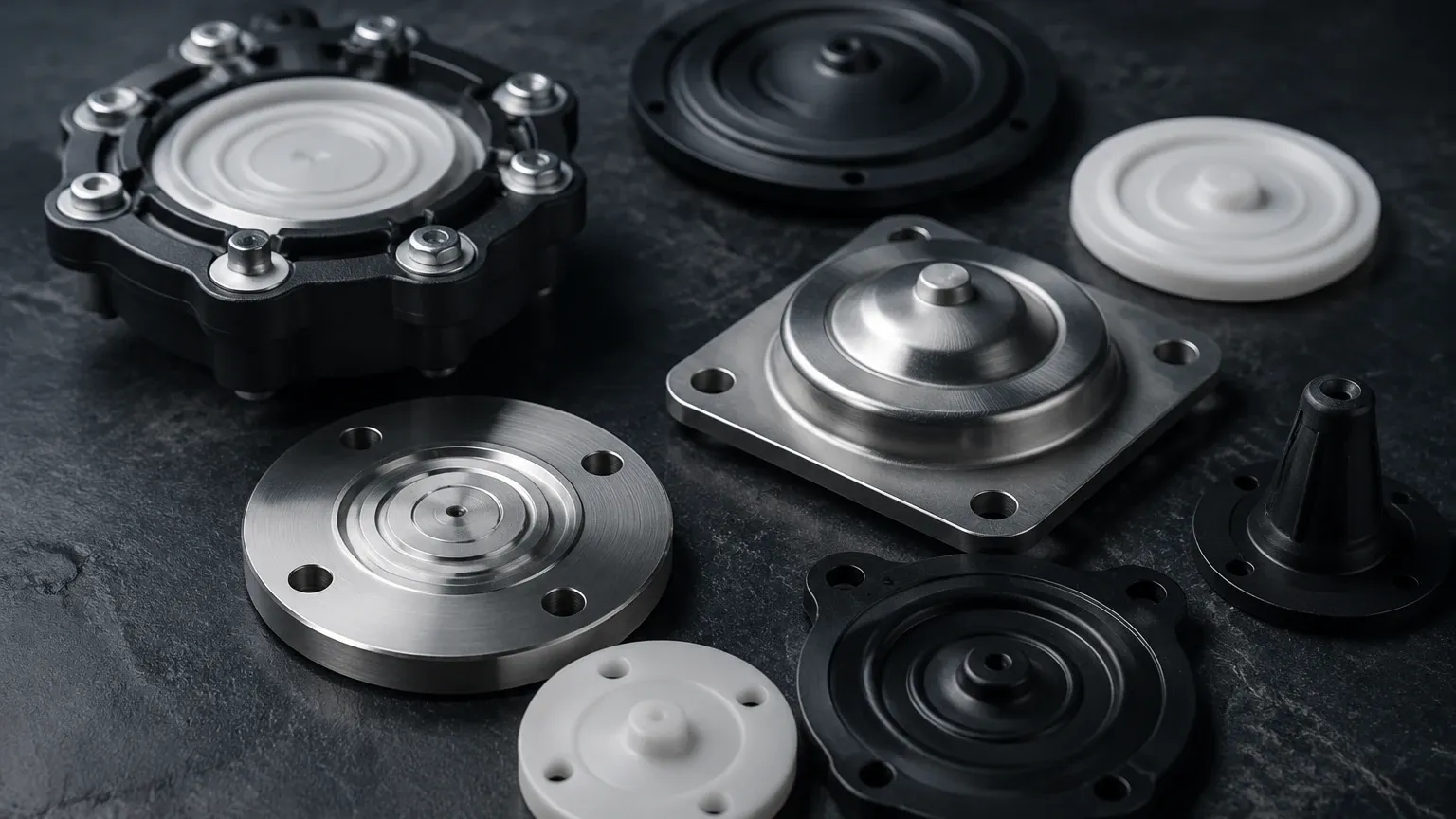
2. The Diaphragm (Membrane): This is the sensing element. It must be flexible enough to respond to pressure but durable enough to withstand the abrasive or corrosive nature of the process media.
3. The Switch Assembly: This includes the microswitch (SPDT or DPDT configurations), the sensitivity adjustment screw, and the terminal block for wiring.
Material Selection for Level Switch Diaphragms
Selecting the appropriate material for the level switch diaphragm is the most critical decision in the engineering phase. The material must be compatible with the chemical properties, temperature, and abrasiveness of the stored product.
| Material | Temperature Range | Characteristics | Common Applications |
| :— | :— | :— | :— |
| Neoprene | -30°C to +80°C | General purpose, good flexibility, cost-effective. | Grain, plastic pellets, non-corrosive powders. |
| Silicone | -40°C to +200°C | High temperature resistance, food-grade options. | Hot fly ash, food processing, high-heat industrial bins. |
| Viton (FKM) | -20°C to +180°C | Excellent chemical resistance to oils and acids. | Chemical processing, petroleum-based solids. |
| Stainless Steel | -40°C to +250°C | Extremely durable, abrasive resistant, hygienic. | Mining, heavy aggregates, sanitary food applications. |
| Buna-N (Nitrile) | -30°C to +100°C | Oil and solvent resistant. | Oily seeds, industrial sludge, lubricated pellets. |
Application Engineering and Selection Criteria
When specifying a diaphragm level switch for a project, engineers must evaluate several factors beyond just the material of the membrane.
1. Material Particle Size and Abrasiveness
If the material consists of large, jagged rocks or highly abrasive ores, a rubber diaphragm may puncture or wear down rapidly. In such cases, a stainless steel diaphragm or a protective baffle plate is necessary. For fine powders, the diaphragm must be smooth to prevent material from "caking" or sticking to the surface, which could prevent the switch from resetting.
2. Vessel Pressure
Diaphragm level switches are generally designed for atmospheric (non-pressurized) vessels. Because the switch operates on a pressure differential between the process side and the internal side of the diaphragm, a pressurized tank can cause the switch to actuate prematurely or fail to actuate at all. Some advanced models include a vent or a pressure-compensation tube to equalize internal and external pressure.
3. Hazardous Environments
In industries such as grain handling or chemical manufacturing, dust explosion risks are high. It is mandatory to select Level Switches that carry ATEX, IECEx, or UL hazardous area certifications. These units feature explosion-proof housings and intrinsically safe electrical designs.
Installation and Engineering Best Practices
Proper installation is essential to ensure the longevity and accuracy of the level switch diaphragm. Poor placement is the leading cause of premature failure in these devices.
Mounting Location
* Avoid the Fill Stream: Never install a diaphragm level switch directly in the path of falling material. The kinetic energy of the material flow can damage the diaphragm or cause constant false triggering.
* Flush Mounting: The unit should be mounted flush with the inner wall of the silo. Any protrusion can cause material to bridge over the sensor, leading to a "stuck" signal.
* Angle of Repose: Consider the material's angle of repose. If the switch is mounted too high in a corner, the material may never reach it, even if the center of the silo is full.
Protection and Baffles
In heavy-duty applications, a "V-shaped" baffle or a protective shield should be installed above the switch. This shield deflects the vertical weight of the material column while still allowing the horizontal pressure to reach the diaphragm. This significantly extends the service life of the membrane.
Wiring and Conduit
Always use a "drip loop" in the electrical conduit to prevent moisture from entering the housing. Ensure that the cable entry is sealed with an appropriate gland to maintain the IP (Ingress Protection) rating of the enclosure, typically IP65 or IP66.
Comparison with Other Point Level Technologies
While the diaphragm switch is highly effective, it is useful to compare it against other common technologies found in the Welk product range to determine the best fit for specific industrial needs.
* Rotary Paddle Switches: These use a motor-driven paddle. When material covers the paddle, the rotation is impeded, triggering the switch. They are better for very light powders but have more moving parts than a diaphragm switch.
* Tuning Fork (Vibrating) Switches: These rely on frequency changes. They are highly sensitive and immune to turbulence but can be more expensive than mechanical diaphragm switches.
* Capacitance Probes: These detect changes in dielectric constants. They are excellent for liquids and solids but can struggle with material build-up on the probe unless they feature "coat-shield" technology.
Compared to these, the level switch diaphragm is often preferred for its simplicity, lack of external moving parts (the diaphragm is the only moving interface), and its ability to handle high-density bulk solids without the mechanical wear associated with rotary motors.
Maintenance and Troubleshooting
One of the primary advantages of the diaphragm level switch is its low maintenance requirement. However, periodic inspections are recommended to ensure system integrity.
Routine Inspection Checklist
1. Diaphragm Integrity: Check for tears, punctures, or hardening of the membrane. A hardened diaphragm (common in old Neoprene units) will lose sensitivity.
2. Material Build-up: Ensure that no material has hardened or bridged over the face of the switch. This is particularly common in hygroscopic materials that clump when exposed to humidity.
3. Switch Actuation: Manually press the diaphragm (if safe and accessible) to confirm that the microswitch clicks and the signal is received by the control room.
4. Seal Integrity: Check the housing gasket and conduit entries for signs of moisture or dust ingress.
Common Troubleshooting Issues
* Switch won't trigger: The material may be too light (low bulk density), or the spring tension is set too high. Alternatively, the diaphragm may be obstructed by a baffle that is too large.
* Switch won't reset: This is usually caused by material bridging or "caking" on the diaphragm. It can also occur if the vessel is under a slight vacuum, pulling the diaphragm inward.
* Intermittent signals: Often caused by vibration in the silo or loose electrical connections. Ensure the mounting bolts are tight and the sensitivity is adjusted to account for structural vibration.
Limitations of Diaphragm Level Switches
Despite their versatility, there are specific scenarios where a level switch diaphragm may not be the optimal choice:
* Liquid Interface: While some diaphragms work for liquids, hydrostatic pressure can be tricky to calibrate compared to dedicated float or ultrasonic switches.
* Sticky/Viscous Materials: Materials like wet clay or heavy resins will stick to the diaphragm and prevent it from returning to the neutral position.
* High-Pressure Vessels: As noted, standard diaphragm switches are not suitable for high-pressure process environments.
Frequently Asked Questions (FAQ)
Q: Can a diaphragm level switch be used for high-level and low-level detection?
A: Yes. They are commonly used for high-level (to prevent overflow) and low-level (to prevent the silo from emptying completely) detection. For low-level detection, the switch must be robust enough to handle the pressure of the entire material column above it.
Q: How do I choose between a rubber and a metal diaphragm?
A: Choose rubber (Neoprene/Silicone) for better sensitivity and lower cost in non-abrasive applications. Choose stainless steel for abrasive materials, high temperatures, or where food-grade hygiene is required.
Q: Is it possible to replace just the diaphragm without replacing the whole switch?
A: In many professional models, such as those provided by Welk, the level switch diaphragm is a replaceable component. This allows for cost-effective maintenance if the membrane is damaged by a foreign object.
Q: Does the mounting orientation matter?
A: Yes. Most diaphragm switches are designed for vertical side-wall mounting. Mounting them on a sloped hopper wall is possible, but the sensitivity may need to be recalibrated to account for the angle of the material pressure.
Conclusion
The diaphragm level switch remains a cornerstone of reliable point level detection in the bulk solids industry. By understanding the mechanical principles of the level switch diaphragm and carefully selecting materials based on the process environment, engineers can implement a robust, low-maintenance solution for inventory management. For a comprehensive range of industrial Level Switches, including diaphragm and ultrasonic variants, consulting technical specifications and material compatibility charts is the first step toward operational efficiency and safety.